
Which drone gives you the sharpest, smoothest 4K footage without a steep learning curve?
If you’ve ever wondered which one hits that sweet spot, you’re in the right place.
In this 2026 roundup we tested five top drones for 4K video.
We focused on image quality, flight features, ease of use, and real-world usability.
We didn’t just read spec sheets; we flew each candidate in real conditions.
That meant tracking moving subjects, shooting in mixed light, and long hover sessions.
The selection spans lightweight travel options to pro-oriented rigs built for demanding shoots.
Each entry balances camera performance, stabilization, obstacle avoidance, and battery life in different ways.
Whether you’re a solo creator, a travel vlogger, or a small film crew, this guide helps narrow the field quickly.
Expect candid takeaways about what works on location versus what looks good on paper.
Skip the marketing jargon and go straight to models that deliver usable 4K footage.
By the end you’ll know which drone best matches your shooting style and skill level.
We also weighed practical factors like portability, app reliability, and support networks.
After all, a great camera is useless if the software or logistics slow you down on location.
This guide is for readers who want real results, not marketing copy.
Read on and find the best drone for 4K video that fits your shooting style and budget.
1. DJI Mavic 4 Pro

DJI Mavic 4 Pro with DJI RC 2, 100MP 4/3 CMOS Hasselblad tri-camera
Ultra-high-resolution aerial imaging with a 100MP 4/3 sensor tri-camera, pro-level stabilization, and long-range intelligent flight modes.
Check PriceThe Mavic 4 Pro is a professional-grade aerial tool built around a triple camera system that gives you real creative control. The primary 25 MP Micro Four Thirds wide sensor shoots up to 6K/60 HDR and 100 MP stills with Hasselblad color, while two telephotos (12 MP and 50 MP) cover long-range shots in 4K/60 HDR.
Color and grading are covered too: DJI HNCS color and 10‑bit D‑Log profiles mean you get rich tones and latitude for heavy color work. For commercial projects or cinematic deliveries this sensor and color pipeline will save you time in post and preserve highlights and shadows.
On the flight side it’s impressive: up to 51 minutes of airtime, OcuSync 4+ transmission and top speed around 60 mph. The 360° Infinity Gimbal and upward 70° shooting give you dynamic framing options that used to require multiple rigs.
Safety and tracking are pro-level as well, with advanced obstacle sensing and 0.1‑lux low‑light avoidance using LiDAR. Robust tracking includes ActiveTrack 360 and vehicle tracking out to 656 ft, so you can confidently follow fast subjects without losing the shot.
In practice the Mavic 4 Pro is very stable in strong winds and is frequently praised for low‑light performance. The multiple focal lengths offer enormous creative flexibility, though switching between different sensors and settings can feel confusing at first.
If you’re a professional or serious prosumer looking for a single drone that covers wide cinema shots through long telephoto pulls, this is one of the most capable options. Be prepared for extra weight in your kit and a short learning curve to master the multi‑sensor workflow.
- Micro Four Thirds sensor: excellent image quality
- Best‑in‑class obstacle avoidance, incl. low light
- Long flight time and reliable long‑range transmission
- Versatile wide‑to‑telephoto camera system
- Heavier/bulkier; adds backpack weight
- Different sensors/settings per lens add complexity
2. DJI Mini 4 Pro
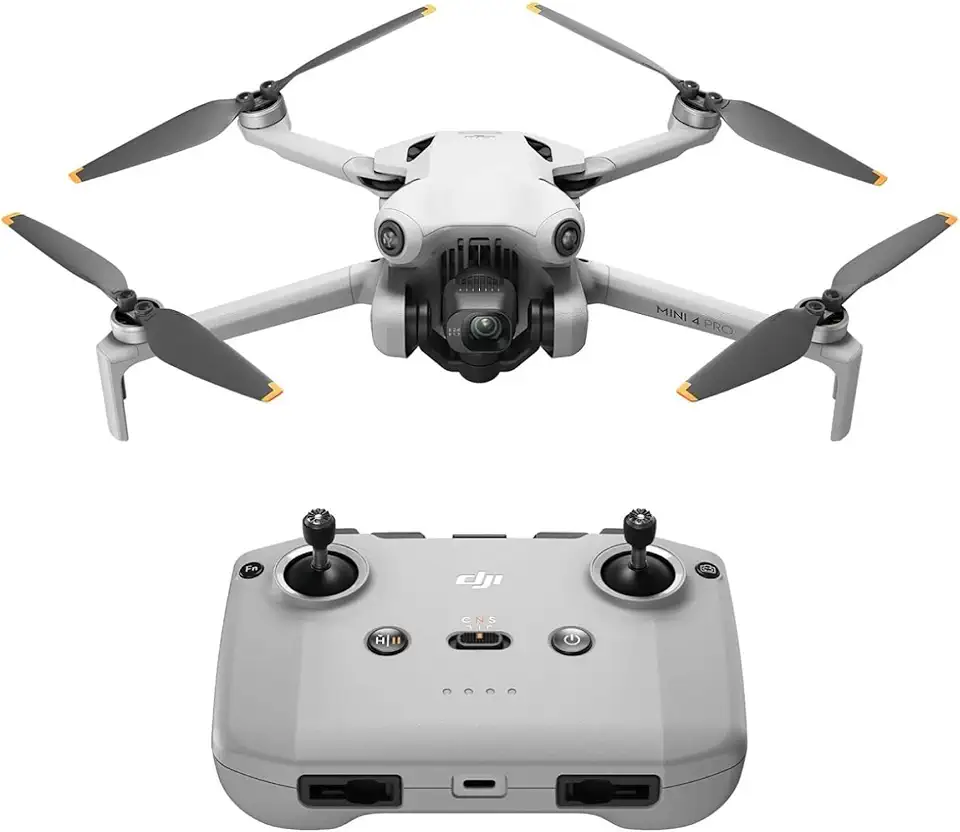
”DJI
Compact ultralight drone delivering cinematic 4K video, 34-minute flight time, obstacle sensing, and pocketable portability under regulatory weight limits.
Check PriceThe DJI Mini 4 Pro packs surprisingly pro-level imaging into a tiny frame. Its 1/1.3″ CMOS sensor records 4K/60 HDR and 4K/100 slow motion, with 10‑bit D‑Log M and HLG for richer color grading.
You can capture up to 48 MP stills and true vertical shooting makes it easy to create social-ready clips without extra editing. In the field the camera quality genuinely rivals larger drones, which is why travel and social creators love it.
At under 249 g (sub‑250g classification) the Mini 4 Pro is hugely portable and avoids many heavyweight restrictions. That weight, combined with DJI O4 transmission (up to 20 km), means you get long-range connectivity without hauling a heavy rig.
Flight capability is strong for the size: up to 34 min on the standard battery and as much as 45 min with the Plus battery. Safety and autonomous capture are excellent too, with omnidirectional obstacle sensing (APAS 5.0) and ActiveTrack 360 for confident single-operator shots.
If you’re an enthusiast or beginner-to-intermediate creator who values portability and advanced tracking, this is a nearly perfect tool. Be mindful that the smaller sensor won’t match full-size pro models in low light, and flight time under 45 minutes can limit very long shoots.
- Sub‑250 g — easier regs
- 4K/60 HDR + 4K/100 slow motion; 10‑bit D‑Log M & HLG
- Omnidirectional sensing (APAS 5.0) + ActiveTrack 360
- Up to 34 min (45 min with Plus battery)
- Flight time <45 min can limit extended shoots
- Smaller sensor vs pro models → less low‑light performance
3. Autel Robotics EVO II Pro V3
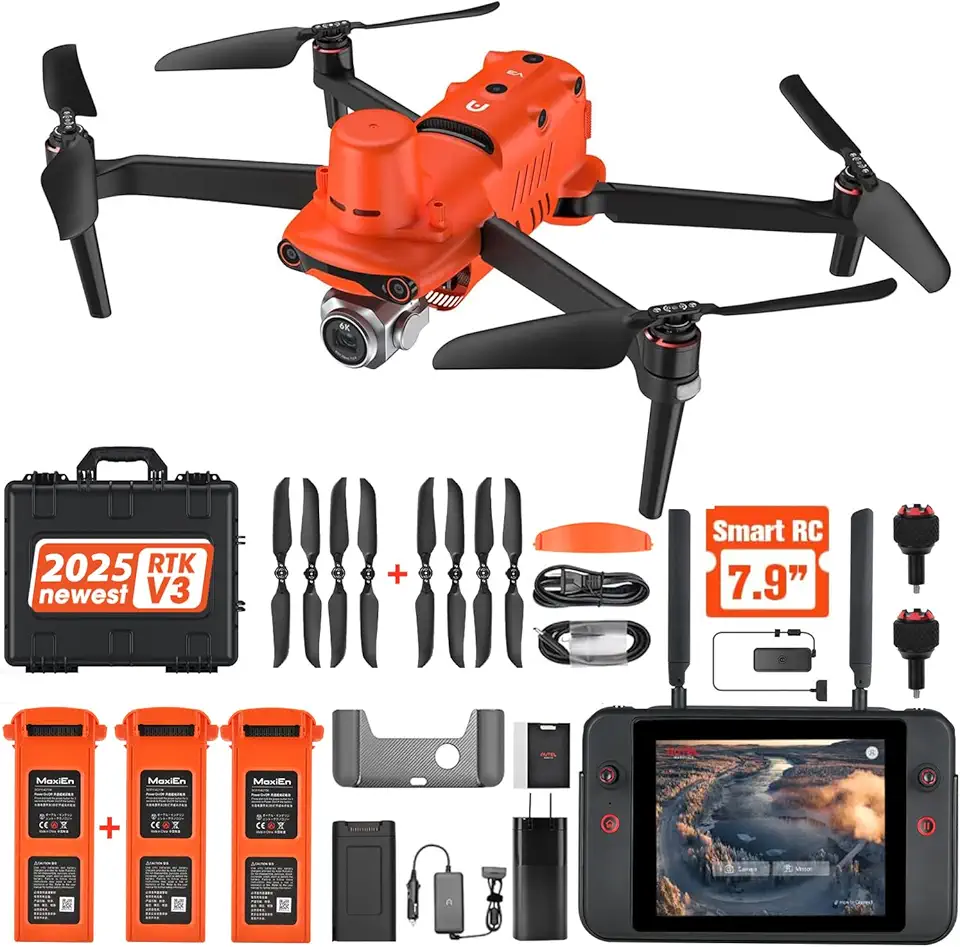
Autel EVO II Pro RTK V3 with Sony 1-inch 6K/30fps HDR camera, RTK & GNSS/PPK, 38 min
Survey-grade mapping and cinema capture with 6K HDR, 1-inch sensor, onboard RTK/GNSS precision, and long 38-minute endurance.
Check PriceAutel Robotics EVO II Pro V3 is the kind of drone I reach for when image quality matters most. It packs a 1‑inch CMOS sensor that captures 6K video and true 4K/60fps, with HDR and 10‑bit color for pleasing tones and heavy grading latitude.
In the field that sensor shines in challenging light, preserving highlight and shadow detail that smaller sensors lose. Colors feel natural and punchy, which makes color grading faster and more forgiving on tight schedules.
Flight performance is solid for extended shoots. Expect around 40 minutes of flight time, which means fewer battery swaps and longer continuous coverage for establishing shots and slow cinematic moves.
Safety and reliability are good—the EVO II Pro V3 offers omnidirectional obstacle avoidance and long‑range control, plus multiple intelligent flight modes and tracking. That combination lets you focus on composition while the drone handles pathing and subject following.
Be aware there’s a learning curve. The interface and advanced settings are more complex than entry-level machines, so plan a few practice flights before a client job. It’s also slightly bulkier than the most compact drones, which matters if you’re packing light for remote locations.
Overall, this is an excellent choice for filmmakers and advanced hobbyists who want high‑quality 4K/6K footage without relying on a single manufacturer’s ecosystem. If you value sensor performance, reliable obstacle sensing, and long flight times—and don’t mind investing time to learn the UI—this drone will serve you very well.
- 1‑inch sensor for excellent image quality
- 6K video and 4K/60fps with HDR & 10‑bit color
- About 40 minutes flight time
- Omnidirectional avoidance + long‑range control
- Complex UI/settings for beginners
- Slightly bulkier than compact drones
4. DJI Air 3S

DJI Air 3S with RC-N3, dual-camera (1-inch CMOS wide), 4K/60fps, 45 min
Versatile dual-camera aerial platform featuring a 1-inch wide sensor, smooth 4K/60 capture, extended 45-minute flight, and intelligent tracking.
Check PriceAs a photographer who shoots a lot of aerial video, the DJI Air 3S feels like the sweet spot between travel-friendly drones and full pro rigs. It uses a dual‑camera layout — a main 1/1.3″ CMOS wide plus a telephoto sensor — and records 4K/60 HDR video while capturing 12 MP stills, which gives you flexible framing without lugging multiple setups.
Flight characteristics are impressive for its class: the Air 3S weighs about 724 g and delivers around 45 minutes of flight time, with a transmission range up to 32 km. It also includes omnidirectional obstacle avoidance and advanced stabilization, so you get steady, usable 4K footage in a variety of shooting conditions.
In real‑world use the larger main sensor and the robust stabilization translate into cleaner imagery and better low‑light/HDR balance than typical compact drones. The platform feels stable and intuitive in the air, which lets you focus on composition and movement rather than struggling with flight settings.
If you’re an enthusiast or prosumer who wants a meaningful camera upgrade without jumping to a bulky, professional rig, the Air 3S is a very attractive option. Keep in mind it’s heavier than the Mini series and its larger form factor reduces portability, so it’s best for shoots where sensor quality and longer flight times matter more than ultimate pocketability.
- Dual cameras (1/1.3″ main + telephoto) for framing flexibility
- 4K/60 HDR and improved low‑light/HDR balance
- About 45 minutes flight time and up to 32 km range
- Omnidirectional obstacle avoidance and advanced stabilization
- Heavier (~724 g) — more registration/certification
- Larger form factor reduces portability
5. DJI Mini 4K (Budget Entry-Level Option)

”DJI
Lightweight sub-249g flyer with stabilized 3-axis gimbal, crisp 4K footage, user-friendly controls, and up to 31 minutes airborne.
Check PriceIf you’re stepping into aerial photography without a big budget, the DJI Mini 4K is a sensible first choice. It shoots true 4K at 30fps and captures 12 MP stills, so your travel and family clips look sharp straight out of the camera.
The 3‑axis gimbal does the heavy lifting for smooth footage, which is crucial when you’re hand‑flying around people or landscapes. As a photographer, I found the stabilization makes the 4K usable for social posts and simple edits without heavy post‑stabilization.
Weighing under 250 g, this drone is delightfully portable and often easier to handle under local registration rules. Flight time sits around 30 minutes—plenty for short shoots or a few scenic passes, but plan for battery swaps on longer outings.
Where it falls short for pros is color and control. There’s no 10‑bit video or log profiles, so heavy color grading options are limited. Advanced tracking and obstacle sensors are also missing, meaning you must fly more cautiously and avoid complex, cluttered environments.
That said, the Mini 4K’s GPS stability helps keep framing consistent for handheld-style shots and simple follow sequences. For a first‑time pilot or budget buyer who wants basic 4K without complex settings, it’s a compact, forgiving tool that lets you focus on composition rather than menus.
In short: great for beginners and travel shooters who value size, weight, and straightforward 4K capture. If you need cinematic grading, high frame rates, or automated tracking, you’ll outgrow it quickly.
- Under 250 g
- Standard 4K at 30fps
- 3‑axis gimbal for stable shots
- Flight time around 30 minutes; GPS stability
- No obstacle avoidance
- No 10‑bit/log video; 4K limited to 30fps
Active Track Mode
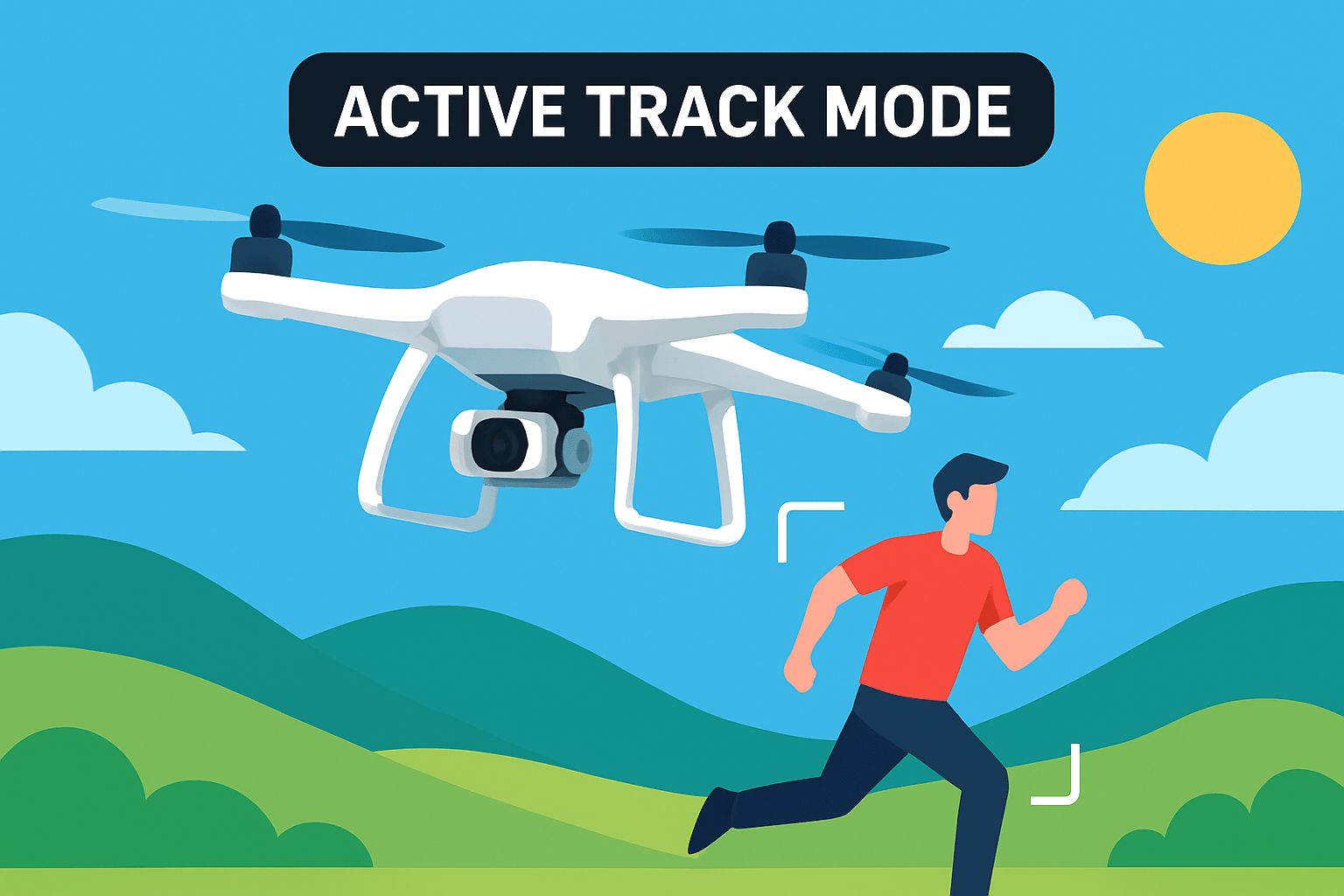
Active Track is one of those features that turns a one‑person shoot into a cinematic production. Think of it as a smart camera operator: you pick the subject, choose a mode that matches your desired movement, and the drone handles smooth framing while you focus on composition and pacing.
Trace or Follow modes are my go‑tos for behind‑the‑subject chase shots; set a comfortable distance and altitude so the gimbal has room to compensate for speed changes. Parallel/Profile is perfect for side‑on motion—biking or running—because it keeps a consistent profile and latitude for speed ramps in editing.
Spotlight locks the camera on the subject while you fly manual maneuvers, which is invaluable when you want creative freedom without losing your subject. Point of Interest (POI) gives you precise, repeatable orbits—great for establishing shots around a person, vehicle, or geological feature where consistent radius and altitude matter.
Obstacle sensing means the drone will pause or re‑route if it senses danger. Treat that as a safety net, not a substitute for planning: scout the path, keep line of sight, and be ready to take manual control if the tracking hesitates or the subject is obscured. Manual overrides are simple and essential—nudge the sticks to correct framing or break the lock for a different angle.
Tracking performs best with clear contrast between subject and background. Bright clothing, a distinctive silhouette, or a helmet can make the difference between a clean lock and the system losing its target in cluttered terrain. Expect struggles with tight forests, crowds, or when the subject ducks behind objects.
Finally, think like a cinematographer: mix tracking modes for variety, use higher frame rates for fast action, and add ND filters to keep your shutter speed cinematic. With a little planning and practice, Active Track will consistently deliver smooth 4K shots that feel intentional rather than automated.
Compatibility With Outdoor Environments
When I scout a location I think less about specs and more about how the drone will behave where I shoot. Omnidirectional obstacle sensing is a real game‑changer in tight, tree‑lined valleys and urban canyons. It won’t make you careless, but it will let you push creative moves with much less anxiety about an unexpected branch or wall.
Wind is the other big outdoors variable. Drones with stronger motors and a more aerodynamic shape hold position and keep the gimbal steady, which directly affects 4K sharpness. If you know you’ll be on a cliff or a windy beach, favor stability over ultra-lightweight portability, or plan for more conservative flight envelopes and shorter pans.
GPS and vision systems are your friend for precise hovering and repeatable shots. I use them for anchor points when doing multipass timelapses or when I need the drone to hold a composition while I adjust camera settings. Also set a sensible return‑home altitude to avoid unexpected terrain when flying long distances.
Many consumer drones tolerate light dust and drizzle, but heavy rain and salty spray will shorten electronics’ life. I avoid shooting in anything harsher than light mist and always wipe down gimbals and connectors after coastal work. If the forecast looks marginal, have a contingency plan rather than risking gear or footage.
Battery life and transmission range determine how far you can go and how long you can record uninterrupted 4K footage. Bring extra charged batteries and stagger flights so you always have a safe reserve for returning home. For long-range runs, fly conservatively and keep an eye on signal strength rather than pushing top speed.
Finally, portability is about more than weight. Quick deployment beats perfection when the light is right. I pack a compact kit that balances flight time, obstacle sensing, and transmission reliability so I can be in the air fast and capture the moment before it passes.
What People Ask Most
What is the best drone for shooting 4K video?
The best drone depends on your priorities like image quality, flight reliability, and portability. Choose a model that balances sensor performance, stabilization, and flight features to match your shooting needs.
Which drones can record true 4K video?
Many modern consumer and prosumer drones offer true 4K recording. Always verify the camera specifications from the manufacturer to confirm resolution and recording formats.
Do consumer drones record 4K video?
Yes, a range of consumer drones now record 4K video, from entry-level models to professional rigs. Check the camera specs and intended use to find the right balance of price and performance.
What features should I look for in a drone for 4K videography?
Prioritize sensor performance, reliable gimbal stabilization, and solid obstacle sensing and tracking for safer, cleaner shots. Also consider battery life, transmission reliability, and portability for real-world shooting needs.
Which drones offer 4K at 60fps?
Some newer drones support higher frame-rate 4K recording, which is useful for smoother motion and slow-motion playback. Confirm frame-rate capabilities in the product specifications before purchasing.
How important is gimbal stabilization for 4K drone footage?
Gimbal stabilization is essential for smooth, shake-free 4K footage and helps maintain sharpness while the drone moves. Mechanical stabilization typically delivers more consistent results than electronic-only solutions.
What camera specs matter for 4K drone video quality?
Important specs include sensor size, dynamic range, color profiles, and bit depth because they affect low-light performance and grading flexibility. Lens quality and robust stabilization also significantly influence final image quality.
Conclusion for Best 4K Video Drones
Choosing the right 4K drone ultimately comes down to prioritizing sensor size and image quality, obstacle avoidance and tracking, flight time and range, and how portable you need the kit to be.
Every option in this roundup balances those factors differently, so expect trade‑offs between pro-level image quality, ease of use, and how much gear you want to carry into the field.
Match your choice to your shooting needs—whether you’re chasing maximum dynamic range for cinematic work, longer endurance for extended shoots, or ultralight portability for travel and social content.
If you want to sharpen your aerial skills and make smarter gear decisions, explore more articles on our site to deepen your technique and planning approaches.
Have a question or a specific shooting scenario to discuss? Leave a comment below and we usually reply within a few hours.
Safe flying and happy shooting—your next great 4K aerial shot is just a few flights away.


0 Comments