
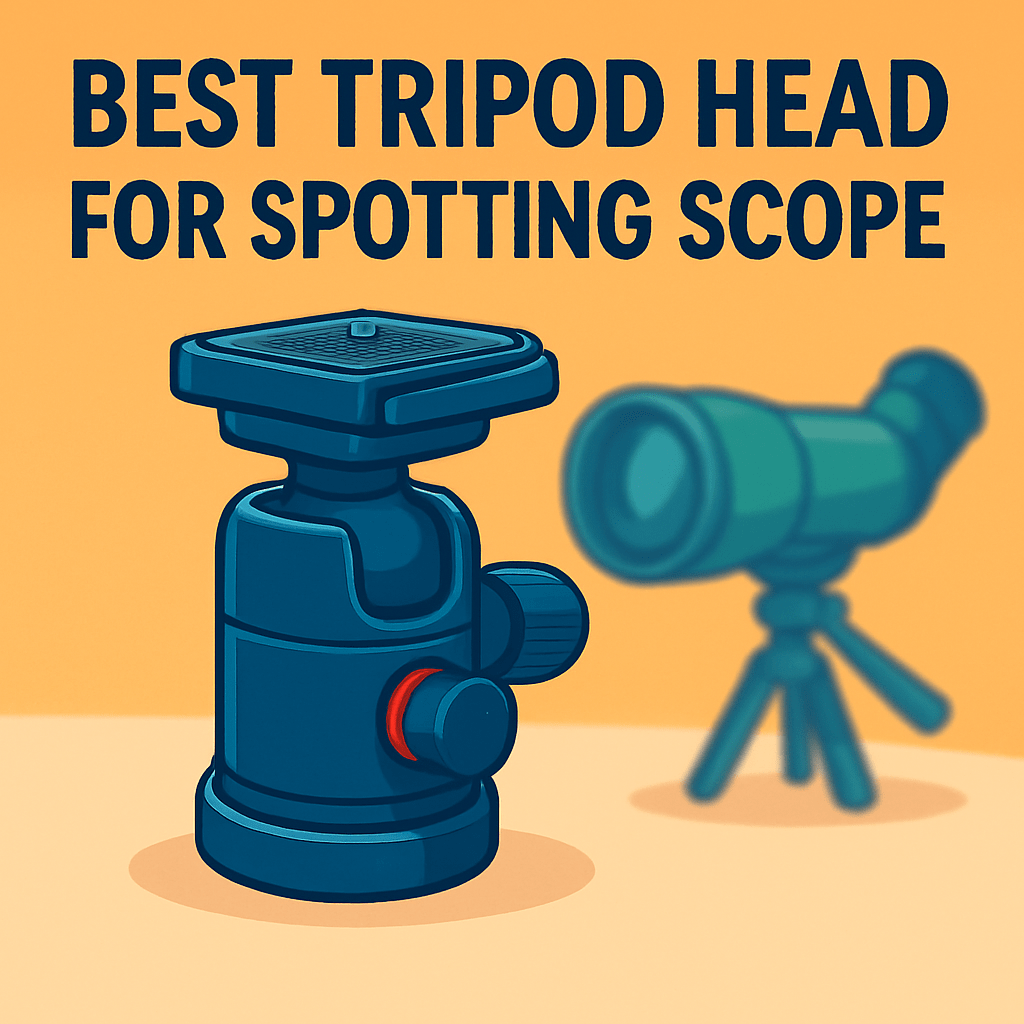
Ever tracked a distant raptor or watched a warbler only to have the view drift or jerk at the worst possible moment? Finding the best tripod head for spotting scope is the single gear choice that turns frustrating shakes into steady, followable glassing sessions.
At high magnifications stability isn’t optional—it’s essential. Smooth pan and tilt let you follow movement without re-acquiring the subject, while compatibility and weight trade-offs determine whether your rig lives in a pack or on a vehicle mount.
Birders, hunters, long-range observers and professional guides all care about the same core things, but in very different proportions. Backpackers prize low weight; outfitters and videographers prioritize buttery-smooth motion and rock-solid locks.
In this ultimate guide we’ll walk through the practical pros and cons of pan-and-tilt, pistol-grip, cine/fluid and classic heavy-duty heads so you can match form to function. No suspense—this is about helping you choose the best tripod head for spotting scope use, whether you’re stalking game at dawn or nailing slow panning shots at sunset.
Along the way you’ll learn how head weight, balance and quick-release compatibility influence real-world use and why a heavier head can be liberating or a burden depending on your routine. We’ll help you match head characteristics to scope size and shooting style so you end the day with a stable frame and fewer missed moments.
1. Sirui VA-5 Tripod Head

Sirui VA-5 Fluid Video Head with Quick Release Plate
Smooth, precise pan and tilt performance with dampened fluid control and fast-release convenience for professional video shoots.
Check PriceThe Sirui VA-5 is a pan-and-tilt head that gives you fluid-like performance where it matters most: the pan axis. As a photographer who spends long hours glassing, I appreciate how smooth the panning is and how precise the micro-adjustments are for tracking moving birds or game.
The pan-axis lock holds steady even at high magnifications, which means once you dial in a target it stays put without creeping. That stability makes the VA-5 excellent for stationary viewing, birding, hunting and general spotting work where lateral tracking is key.
Users report the tilt axis isn’t as smooth as the pan, so if you need ultra-fine vertical adjustments you may notice a difference. The handle can feel long for some operators, and older units have shown occasional click-stop jamming over time, though many find the head very reliable overall.
One of the practical benefits I rely on is Arca‑Swiss quick-release compatibility — it speeds swapping optics in the field and keeps balance adjustments predictable. Taken together, the VA-5 is a solid choice when you want exceptional pan fluidity, secure locks, and precision; just be mindful of the vertical feel and potential long-handle ergonomics if those are critical for your style.
- Exceptional pan-axis fluidity for fine adjustments
- Stable, secure locking for pan and tilt
- Arca‑Swiss quick-release compatible
- Well-regarded for reliability and precision
- Vertical axis not as smooth as pan
- Occasional mechanical issues over time (click-stop jamming)
2. Vanguard GH Series Pistol Grip Head

Vanguard Alta Pro 263AGH Tripod with GH-100 Grip Head
Sturdy, versatile support with multi-angle center column, quick adjustments and reliable stability for photographers and videographers.
Check PriceThe Vanguard GH Series pistol-grip head is built for speed and simplicity. Its single-hand pistol control makes quick, instinctive aiming effortless, which is ideal when a bird or animal appears and you need to re-acquire it fast.
It trades the ultra-smooth feel of a dedicated fluid pan-and-tilt for rapid repositioning. That means it’s excellent for coarse positioning and moving between targets quickly, but less suited when you need tiny, micrometer-like adjustments at very high magnifications.
One of the standout points is its strong locking mechanism. Users report that the head holds heavier, larger spotting scopes securely, so it pairs well with robust optics and carbon-fiber tripods without worrying about sag or drift.
As a working photographer, I’d recommend this head to hunters and wildlife observers who prioritize speed over buttery-smooth tracking. If your sessions are mostly about quickly sweeping horizons, glassing fields, or porting a heavier scope, this head gives you the responsiveness you want. If you shoot slow-moving video or require ultra-fine manual tracking, you might find it a bit jerky for that use.
It’s also user-friendly with a short learning curve, so even if you haven’t used pistol grips before you’ll be productive fast. Just be mindful that for precision glassing at high magnification you’ll compromise some micro-adjust smoothness in exchange for agility.
- Rapid, intuitive control of direction
- Strong, secure locking for heavy optics
- Compatible with carbon-fiber tripod setups
- User-friendly with minimal learning curve
- Not as smooth for precise micro-adjustments
- Can feel jerky for video or slow tracking
3. Outdoorsman Jim White 2.0 Pan Head
Effortless camera balancing for long telephoto lenses, enabling smooth tracking and fatigue-free wildlife or sports shooting.
Check PriceThe Outdoorsman Jim White 2.0 is a traditional pan-and-tilt head with a straightforward handle control that feels familiar to most optics users. It’s built for deliberate, accurate positioning rather than snap aiming, which suits careful glassing sessions.
In the field it’s notable for stability and strong locking when paired with heavier, longer spotting scopes. Once you lock it down there’s minimal movement, so high-magnification viewing stays steady without constant fiddling.
Mechanically it’s solid—durable components give it a reassuring, no-nonsense feel that holds up under regular use. The locks hold firmly at high magnification, which reduces drift and saves you time when tracking distant subjects.
Be aware the controls can feel stiff at first; that initial friction usually loosens with use and becomes smoother over time. The head is slightly heavier than ultralight alternatives, so it’s best suited to car-based outings or short approaches rather than long backpacking hikes.
For hunters and long-range observers who prioritize rock‑steady support for big scopes, this head is a dependable choice. If you want a rugged pan-and-tilt that won’t let a heavy spotting scope slip or sag, the Jim White 2.0 is a smart, practical pick.
- Very stable under heavy load
- Precise pan and tilt control
- Durable mechanical components
- Locks hold firmly at high magnification
- Slightly heavier than ultralight heads
- Initial handle stiffness requires break-in
4. Promaster SPCH20 Cine Head

ProMaster GH11 Gimbal Head Model 4756
Compact, responsive tilt control with rapid-release plate for stable handheld support during travel and run-and-gun shooting.
Check PriceThe Promaster SPCH20 is a fluid cine-style pan-and-tilt head with Arca‑Swiss compatibility that’s built for controlled, professional use. It gives that buttery-smooth feel you want when making micro-adjustments at high magnification.
User feedback highlights its smooth fluid movements for subtle micro-adjustments and calls it excellent value for the features it delivers. Warranty options are available, which adds confidence for serious users investing in a versatile head.
This head is designed for professional versatility and serves both optics and video needs well. If you’re a serious hobbyist or working pro who wants precise, slow motion without breaking the bank, this is a compelling choice.
Practically, the SPCH20 shines when you need steady, finely tuned panning and tilting—useful for following distant subjects or composing video shots. The Arca‑Swiss compatible quick release speeds swapping between scopes and cameras and helps maintain balance and repeatability.
Be aware of trade-offs: it’s heavier, less ideal for ultralight backpacking, and it may be more complex than needed for casual users who only want simple point-and-look operation. If portability is a top priority, this head’s weight and features could be more than you need; but if smooth motion and professional versatility matter most, it’s hard to beat at its price.
- Smooth fluid movement for slow, precise adjustments
- Good build quality and warranty support
- Arca‑Swiss compatible quick release
- Versatile for optics and video gear
- Heavier, less ideal for ultralight backpacking
- May be more complex than needed for casual users
5. Manfrotto 136 Tripod Head

Manfrotto 234RC Monopod Tilt Head with Quick Release
High-quality accessory delivering dependable performance, easy setup and durable construction to improve your imaging workflow.
Check PriceThe Manfrotto 136 is a robust pan-and-tilt head built around stability and mechanical precision. As a photographer who spends hours glassing, I appreciate gear that simply stays put when locked; this head is exactly that.
It earns its reputation by holding heavy spotting scopes without sag or drift. The pan and tilt actions are smooth, and the locks bite down tight so the view stays where you put it even at higher magnifications.
Where this head really shines is long-term durability. It’s a classic design with solid mechanics that will take years of hard use and still perform with precise adjustment control.
Expect a trade-off: the 136 is noticeably heavier and bulkier than many modern heads. That weight is the price for rock-solid support, so it’s best suited to basecamp setups or vehicle-based work rather than fast backpacking.
If you prioritize mechanical stability and longevity over every ounce of portability, the Manfrotto 136 is a compelling choice. For casual users or travelers who need a lightweight kit, its price and weight might be excessive.
- High load capacity and stability
- Smooth pan and tilt with tight locks
- Excellent long-term durability
- Precise adjustment control
- Heavier and bulkier than modern heads
- Price and weight can be excessive for casual or travel use
Weight and Portability Considerations
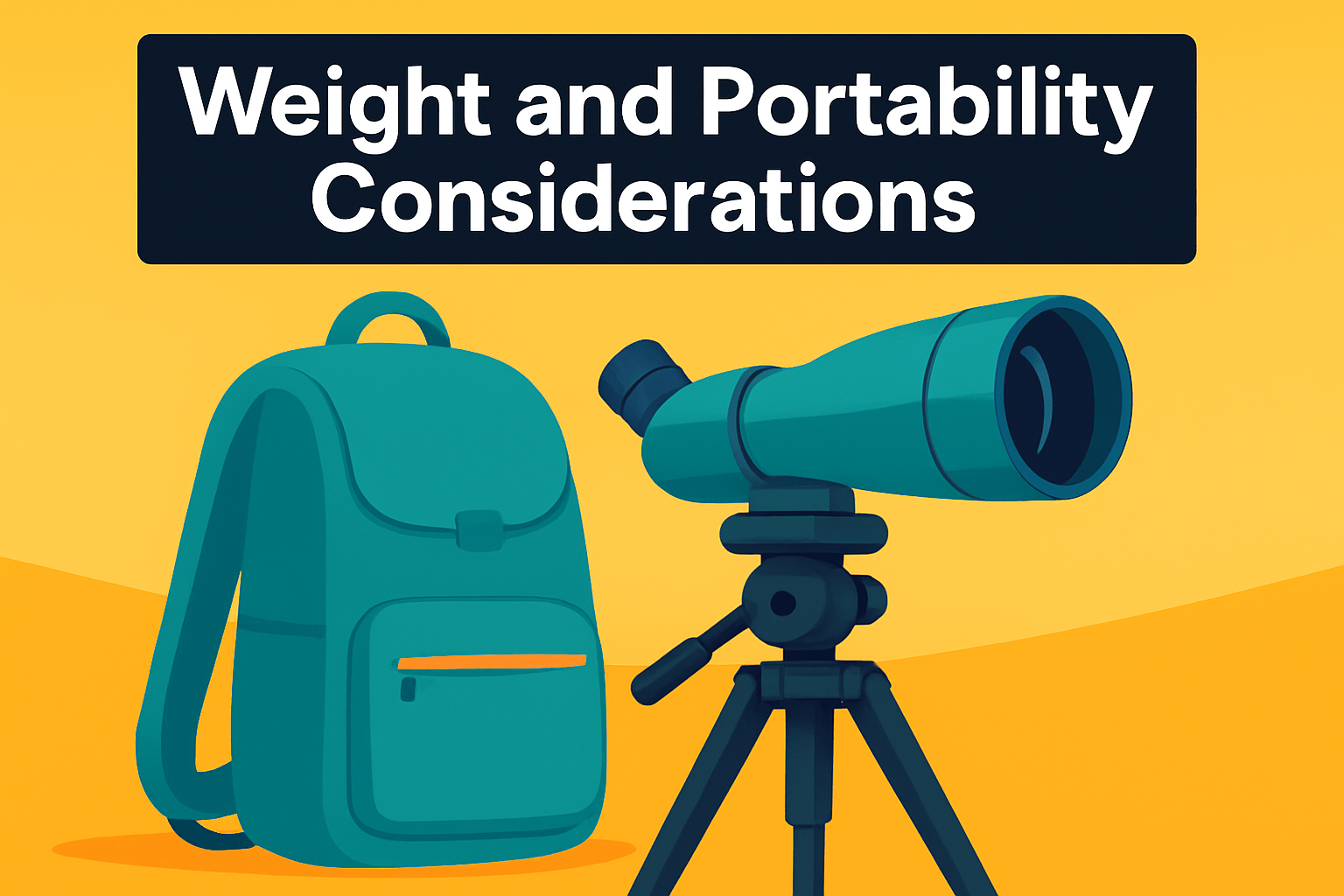
If you plan to hike miles to a glassing spot, weight becomes the single biggest factor. Lighter setups let you move farther and stay comfortable, so I’ll often choose a micro‑pan or a lightweight ball head when I’m carrying a compact scope (around 65mm objective or smaller). They give adequate stability for casual glassing without breaking my back.
When you step up to larger objectives—80mm, 115mm and beyond—the math changes. Those scopes demand a sturdier, often fluid head to hold steady at high magnifications. That extra smoothness adds ounces, so I reserve heavier heads for basecamp, vehicle-based sits, or short approaches where I can leave the kit set up.
Fluid heads are wonderful for buttery pans and slow tracking, but not all fluid designs are bulky. There are sub‑10‑ounce options that still support surprisingly large optics, so don’t dismiss fluid heads out of hand if weight is a concern. The trick is matching head capacity to your scope and expected use.
Avoid tall, extended center posts when you need absolute steadiness. Lower center of gravity reduces wobble at high power. Removable or short center posts are a small design choice that pays off when you’re trying to coax out fine detail through a scope.
Portability isn’t just about pounds. Quick setup features matter in the field. Arca‑Swiss compatible plates, compact folding legs, and the ability to stow or remove components make transitions faster and protect gear from knocks during a hike.
Always test the full, packed weight—not just the head itself. Mount your scope, add accessories, sling it on your pack, and walk a loop. If you find yourself leaving gear behind on practice hikes, it’s a clue to downsize.
Finally, balance your scope properly on the head. A well‑balanced rig puts less stress on locks, stays steadier, and feels lighter to carry. Small choices like a sliding dovetail plate or a non‑rotating quick release will make long days in the field far more enjoyable.
Balancing Your Optics
At high magnifications even the smallest imbalance shows up as drift or a jerky pan. Getting your scope balanced isn’t glamorous, but it’s one of the single best adjustments you can make for smooth, predictable movement. Do it once properly and your locks, gears and patience thank you every outing.
Start by loosely mounting the scope and sliding it forward or back on the plate until the center of gravity sits over the head. I test balance by slowly tilting the scope up and down and watching whether it holds position or wants to fall. If your head has counterbalance settings, dial them in so the scope stays put at level, up, and down positions.
Small hardware choices make this easier. A sliding dovetail or dedicated balance plate lets you fine-tune position quickly. Non-rotating quick‑release plates keep the scope from twisting during adjustments. If you swap optics often, an Arca‑style plate with a snug clamp makes repeated rebalancing faster and less fiddly.
Head type matters too. Ball heads let you level fast on uneven ground and then lock a nearly balanced setup. Traditional pan‑and‑tilt heads work brilliantly once the tripod is level; they reward precise balancing with rock‑steady holds. Keep in mind fluid or cine heads add weight but often include better counterbalance control for slow, butter‑smooth moves.
Balanced optics reduce strain on locks and bearings, prevent creep at long focal lengths, and give you far more control when tracking birds or scanning distant ridgelines. Before each outing, check the plate position, confirm the counterbalance, and give the scope a gentle tilt test—small preventive checks save you a lot of frustration in the field.
What People Ask Most
What is the best type of tripod head for a spotting scope?
There is no single best head; it depends on how you use the scope. Choose a pan-and-tilt or fluid head for precise, controlled movement, a pistol-grip for quick aiming, or a ball head for fast rough positioning and ease of leveling.
Should I use a ball head or a pan-tilt head for a spotting scope?
Use a ball head if you need quick, flexible positioning and easier leveling on uneven ground. Choose a pan-tilt head if you want finer, more controlled adjustments for careful tracking or high-magnification viewing.
Do I need a fluid head for smooth tracking with a spotting scope?
A fluid head helps deliver very smooth, buttery motion which is helpful for slow tracking and video work. It is not strictly necessary for casual observing, and it typically adds weight and complexity.
What weight capacity should a tripod head have for a spotting scope?
Pick a head rated to support the weight of your scope plus any accessories and allow a margin for safety. A higher-rated head reduces sag and keeps locks from working harder than they should.
How do I attach and secure a spotting scope to a tripod head?
Use a compatible quick-release plate or dovetail clamp and make sure the plate is seated and tightened securely. Balance the scope on the plate and engage the head locks to prevent drift during use.
Is an Arca‑Swiss compatible quick release necessary for spotting scopes?
It is not strictly necessary but it is very useful because it offers wide compatibility and quick, repeatable mounting. Many users prefer Arca‑Swiss for ease of swapping gear and consistent positioning.
Look for strong, positive locking mechanisms, smooth control for fine adjustments, and a design that matches your scope’s weight and intended use. Durability and a reliable quick-release system also help maintain stability over time.
Conclusion for Spotting Scope Tripod Heads
Choosing the right tripod head comes down to the trade-offs you can live with: pan-and-tilt heads for the finest precision, pistol-grip heads for rapid aiming, fluid/cine heads for the smoothest motion at the cost of weight, and ball heads for fast, rough setups.
Match the head type and overall weight to your scope and shooting scenario—lightweight setups for long hikes, heavier fluid or robust pan heads for basecamp, and specialized heads if you’re mixing optics with video.
Don’t overlook practical stability details like Arca‑Swiss compatibility, careful balancing, and a lower center-post setup, which all make a big difference at high magnifications.
Consider portability and balance as design choices, not afterthoughts, since the right combination reduces lock strain, improves control, and prolongs gear life.
If you want more practical guidance and tips to build confidence with your gear, keep exploring the articles on this site to sharpen your skills and setup choices.
Have a question or experience to share? Leave a comment below and we usually reply within a few hours.



0 Comments