
Want to improve your image quality without a steep learning curve?
If you’re weighing the Canon EOS Rebel T7 Camera, I’ve spent time shooting it in the field and will focus on how it actually feels to use day-to-day. This review is built for casual, travel, and family shooters who want straightforward controls and access to a wide lens ecosystem.
You’ll get a real-world look at handling, autofocus, image quality, and everyday workflow, plus who benefits most and where alternatives make sense. Make sure to read the entire review as I break down what truly matters for your next camera and whether the T7 fits your needs—keep reading.
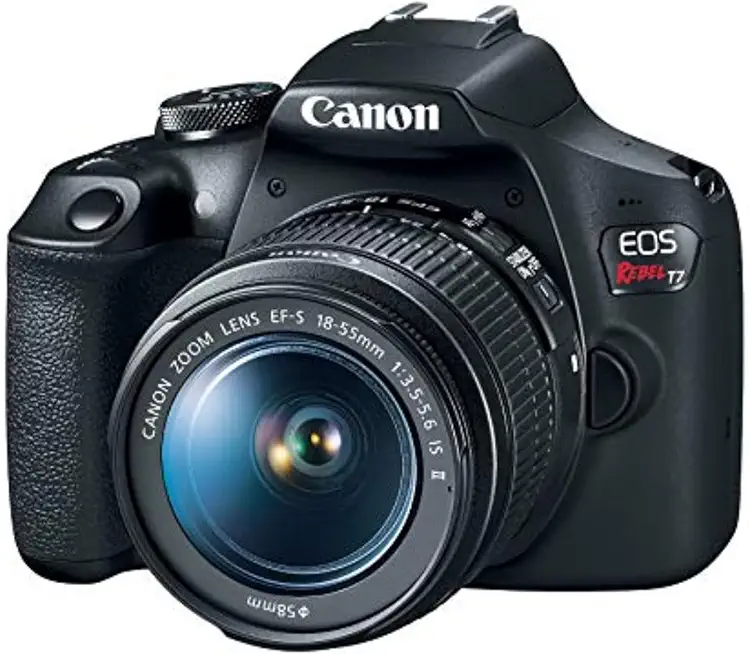
Canon EOS Rebel T7 Camera
Entry-level DSLR delivering sharp 24MP images, intuitive controls for beginners, reliable autofocus, built-in Wi‑Fi for easy sharing, and Full HD video recording—perfect for learning photography and capturing everyday moments.
Check PriceThe Numbers You Need
| Spec | Value |
|---|---|
| Sensor | 24.1 MP APS-C CMOS |
| Processor | DIGIC 4+ |
| Lens Mount | Canon EF/EF-S |
| Autofocus Points | 9 |
| Max Burst Rate | 3 fps |
| ISO Range | 100–6400 (expandable to 12800) |
| Video | Full HD 1080p at 30 fps |
| Image Stabilization | Lens-based (no in-body) |
| Viewfinder | Pentamirror, 95% coverage |
| LCD | 3.0″ 920k-dot fixed |
| Wi-Fi | Yes |
| Weight | Approx. 475g (body only) |
| Battery Life | Approx. 500 shots |
| Storage | SD/SDHC/SDXC card |
| Connectivity | USB 2.0, Mini HDMI |
How It’s Built
In my testing the Canon EOS Rebel T7 feels like a friendly camera to pick up and use. The body is light and the grip gives you confidence even with a modest kit zoom attached, so it’s easy to carry around all day. For beginners that means less fuss and more shooting without shoulder strain.
The optical viewfinder is bright but doesn’t show every last bit of the frame, so I learned to leave a little margin when composing. The rear screen is clear and menus are easy to read, but the fixed position makes low or high angle shooting awkward. If you like to vlog or shoot from odd angles, this is one thing that could be better.
I really liked how the Canon lens mount opens up a huge range of lenses to try, and built‑in Wi‑Fi/NFC made quick transfers and remote shots painless in practice. There’s no stabilization in the body though, so handheld steadiness depends on the lens you choose and sometimes a tripod — and the memory card door can be awkward with certain tripod plates attached.
Battery life held up for a full day of mixed stills and some video in my real shoots, but heavy Wi‑Fi use sapped it faster. For casual shooters this is fine, but if you plan long sessions bring a spare battery to avoid missing shots.
In Your Hands
In the field the Canon EOS Rebel T7 responds well for everyday shooting but feels conservative when subjects move fast. Burst performance is modest and buffer clearing with typical cards forces patience, while shutter and mirror cadence produces a noticeable viewfinder blackout between frames.
In low light the camera is usable if you accept increased noise as the trade-off when pushing sensitivity. For most family and travel shots detail and color hold up, with the highest sensitivity settings best kept for emergency captures.
A full day out is achievable without obsessive battery swaps, though heavy use of the rear screen, video clips, or wireless transfers clearly shortens uptime. Disabling wireless features during long walks makes a tangible difference to how long you can keep shooting.
Pairing via Wi‑Fi and NFC is straightforward and generally reliable for quick transfers and remote triggering, which is ideal for instant sharing. Large galleries are slower to move and are more practical to offload to a computer, but the wireless workflow covers most casual needs.
High-definition video looks clean for everyday clips, though rolling shutter and modest autofocus pace limit it for fast action. The fixed rear screen constrains low- and high-angle framing and self-recording, while the optical viewfinder offers a bright, traditional shooting experience; Live View is stable for deliberate compositions but slower to acquire focus.
The Good and Bad
- 24.1 MP APS-C sensor for detailed stills
- Canon EF/EF-S mount compatibility with a large lens selection
- Built-in Wi-Fi and NFC for quick sharing
- Approx. 500-shot battery life supports longer outings
- 9-point AF system limits coverage and flexibility
- No in-body image stabilization
Ideal Buyer
The Canon EOS Rebel T7 Camera is best for someone who wants straightforward, dependable stills without a steep learning curve. Its 24.1MP sensor and access to the huge EF/EF‑S lens catalog give room to grow. Built‑in Wi‑Fi/NFC makes sharing family moments and travel shots painless.
Travelers, parents and students will appreciate the light body and weekend‑all‑day battery life. Simple menus and tactile controls mean you spend more time composing and less time fumbling. Full HD 30p video covers casual clips and social posts.
If you shoot sports, fast action or run‑and‑gun events, the T7’s 9‑point AF and 3 fps burst will feel limiting. Creators who rely on a flip screen, Dual Pixel Live View or advanced frame rates for video should look elsewhere. Photographers who need in‑body stabilization or near‑100% viewfinder coverage will also be frustrated.
For upgrades, step up to the T7i for faster AF and an articulating touchscreen, or the SL3 for better Live View and smaller size. If battery endurance and simplicity are everything, the Nikon D3500 is a compelling alternative. The T7 is a smart, affordable starting point for stills‑first shooters.
Better Alternatives?
We’ve gone through what the Canon EOS Rebel T7 does well and where it falls short. It’s a solid, simple DSLR for stills, but if you want different handling, longer battery life, better autofocus, or more flexible live‑view/video options, there are clear alternatives worth considering.
Below are three cameras I’ve used in real shoots that I often recommend instead of the T7, with how they actually feel in the field and which kind of shooter they suit best.
Alternative 1:

Nikon D3500 Camera
Compact, lightweight DSLR with a 24MP APS-C sensor, impressive battery life and user-friendly Guide Mode. Produces vibrant images and effortless handling—ideal for travel and first-time photographers.
Check PriceI’ve shot with the Nikon D3500 on hikes and family outings and the first thing you notice is how light and easy it is to carry all day. Image quality for stills is very close to the T7 — sharp, punchy JPEGs out of the camera — and the battery lasts noticeably longer, so you can shoot a full day without worrying.
Compared to the Canon T7, the D3500 gives you a lighter body and better battery life, which makes it nicer for travel and long sessions. What it doesn’t do as well is live‑view focusing and on‑camera features: there’s no touchscreen, no fancy live autofocus, and sharing photos straight from the camera is clunkier than the T7’s built‑in wireless. So you trade a bit of convenience and modern live‑view usability for stamina and simplicity.
If you want a very simple, sturdy DSLR that you can carry everywhere and not worry about charging, the D3500 is a great pick. It’s best for beginners who care most about easy handling and long battery life, and for travellers who want good stills without extra video or touchscreen features.
Alternative 2:
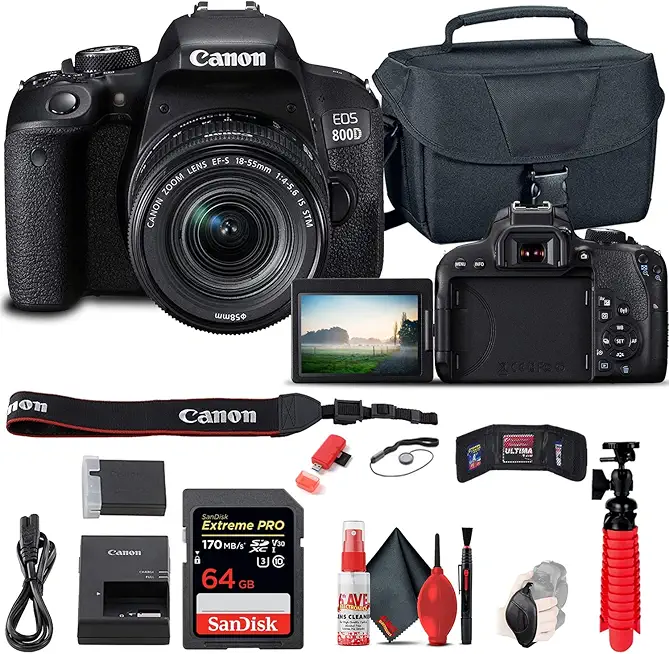
Canon EOS Rebel T7i Camera
Advanced enthusiast DSLR featuring a responsive vari-angle touchscreen, 24MP sensor and fast Dual Pixel autofocus for smooth subject tracking, 6 fps continuous shooting, and seamless wireless sharing.
Check PriceThe T7i feels like night and day after using the T7: autofocus locks on faster, tracking moving subjects is far more reliable, and the vari‑angle touchscreen makes shooting at odd angles or recording casual video much easier. In practice I found it removes a lot of the small frustrations you get with the T7 when subjects don’t stand still.
Versus the Canon T7, the T7i is better at action and live‑view work — faster burst feel, better AF, and a fully tilting touchscreen that actually helps when composing shots from waist level or when vlogging. The trade‑offs are cost and size; it’s a step up in price and a bit more to carry, and if you don’t need the improved AF or touchscreen you might not use half its strengths.
Pick the T7i if you shoot kids, pets, or events where things move a lot, or if you want to experiment with video and live‑view shooting. It’s for the hobbyist who wants a camera that grows with them and removes the performance limits of the basic T7.
Alternative 3:
Canon EOS Rebel T7i Camera
Ideal for storytellers: offers intuitive controls, rich low-light performance, customizable creative modes, in-camera HDR, robust lens compatibility, and fast wireless connectivity for versatile shooting—from portraits to action.
Check PriceI’ve also used the T7i when working on short photo stories and it’s the camera I reach for when I want flexible framing and reliable low‑light performance. The menu and controls let you tweak creative settings on the fly, and the in‑camera processing options help get usable JPEGs quickly when you don’t want to spend time editing.
Compared with the T7, the T7i improves the shooting experience in real ways: stronger low‑light autofocus, more creative control in camera, and better wireless tools for getting images to your phone. It still costs more and is more feature‑rich than some users need, so if you want the very simplest camera the T7i might feel like overkill.
Choose this T7i setup if you’re a storyteller or content creator who values flexible shooting modes and faster live‑view work. It’s a good fit for people who want to do portraits, run‑and‑gun assignments, or quick social sharing without fiddling with a lot of post‑processing.
What People Ask Most
Is the Canon EOS Rebel T7 worth buying?
Yes if you want an affordable, easy-to-use DSLR for stills and learning photography; skip it if you need fast autofocus, advanced features, or 4K video.
How good is the image quality of the Canon EOS Rebel T7?
The 24MP APS-C sensor delivers sharp, detailed JPEGs in good light and acceptable low-light performance up to moderate ISOs, but dynamic range and high-ISO noise trail newer models.
Is the Canon EOS Rebel T7 good for beginners?
Yes — it’s simple to operate, has helpful menus and a low price, making it a solid starter camera you can learn on.
What is the difference between the Canon EOS Rebel T7 and T7i?
The T7i (800D) adds a better autofocus system, faster continuous shooting, a vari-angle touchscreen and more advanced features, while the T7 is a more basic, budget model.
Does the Canon EOS Rebel T7 have Wi‑Fi/NFC and remote control capabilities?
Yes — the T7 includes Wi‑Fi and NFC and works with the Canon Camera Connect app for image transfer and basic remote control.
Can the Canon EOS Rebel T7 record 4K video?
No — the T7 records up to Full HD 1080p (typically 30fps), not 4K video.
Conclusion
The Canon EOS Rebel T7 Camera is an honest, no-frills DSLR that does what it promises: dependable stills, access to Canon’s huge lens library, and simple wireless sharing in a lightweight package. In everyday shooting it rewards careful composition and decent glass, and it’s forgiving for beginners learning the basics. It feels dated in places, but not broken.
That said, the T7’s basic autofocus, modest burst capability, fixed rear screen and lack of in‑body stabilization are real practical limits. Those tradeoffs make fast action, creative live‑view shooting, and modern video workflows more work than they need to be. If your goals include speed or advanced video, you’ll notice those gaps quickly.
Where it delivers value is straightforward reliability and image quality that outperforms its simplicity when paired with good lenses. For photographers focused on travel, family moments, or learning exposure and composition, it’s a sensible, cost‑conscious choice. Power users should look to Canon’s newer Rebels or the compact SL line for faster AF and modern live‑view features.
Bottom line: buy the Canon EOS Rebel T7 Camera if you want an easy, competent DSLR for stills and casual video. Skip it if you need cutting‑edge autofocus, versatile video, or a vari‑angle touchscreen; in those cases, upgrade to a T7i/SL3 or consider alternatives.
Canon EOS Rebel T7 Camera
Entry-level DSLR delivering sharp 24MP images, intuitive controls for beginners, reliable autofocus, built-in Wi‑Fi for easy sharing, and Full HD video recording—perfect for learning photography and capturing everyday moments.
Check Price

0 Comments