
Ever wonder how much sharper your Sony images could be with the right tripod under your camera, or how much smoother your handheld video pans could become? A good tripod does more than steady a frame; it opens up long-exposure creativity, precise framing, and confident use of heavier lenses in challenging light. And because Sony mirrorless bodies are lighter and widely varied in how they’re used, the right support package makes a real difference to workflow and results.
For this guide we narrowed the field to five tripods that represent the best balance of stability, portability and versatility for Sony shooters of all stripes. We prioritized rigs that handle heavy glass without wobble, collapse small enough for travel, and convert between low angles, tabletop work and uneven terrain with minimal fuss. Durability, head compatibility, ease of setup and overall feel in the hand were factored into our assessments alongside raw load numbers and marketing claims.
Expect clear, field-tested impressions, candid pros and cons, and quick buying guidance tailored to common Sony bodies and shooting styles from travel to studio work. We avoid jargon and long spec lists, focusing instead on how these tripods perform when you’re out shooting at dawn, hiking to a vista, or hustling through a wedding day. Read on for concise recommendations that help you match gear to priorities so you spend less time guessing and more time shooting.

FALCAM TreeRoot Lite F38 Carbon Fiber Travel Tripod with Ball Head C141K-301
1. Vanguard VEO 3+ 303CBS

Vanguard VEO3 303CB Carbon Fiber Tripod with VEO BH-250S Dual Axis Ball Head
Stable carbon-fiber support with precision dual-axis ball head, fast adjustments and robust load capacity—ideal for photographers seeking portability and professional stability.
Check PriceThe Vanguard VEO 3+ 303CBS is a workhorse tripod that feels built for serious fieldwork rather than casual travel. In my experience with full-frame Sony bodies and larger lenses it handled heavy setups without noticeable wobble, which gives you the confidence to shoot long exposures or hefty telephoto work. The build quality feels premium and durable, so you’re not worrying about gear safety during long days outdoors.
Practical features make it flexible on uneven ground: independent leg angles and a tilting center column let you position the camera on rocky landscapes or forest floors with ease. Those features also open creative low-angle and macro opportunities without needing extra gear. The supplied BH-250S ball head is robust, smooth and locks reliably, so repositioning is quick and precise when composition changes.
If you prioritize absolute stability for landscape, wildlife or macro photography, this tripod is an excellent choice. It’s designed to support heavier lenses and bodies without compromise, so it’s a smart investment for shooters who place stability over ultra-lightweight portability. The trade-off is that it’s heavier than most travel tripods, so it’s less suited to long hikes where every ounce matters.
Another practical note: the number of dials and knobs gives you control, but setup and adjustment can feel complex until you get used to it. For studio-like shoots or planned outdoor sessions where stability is the top priority, that complexity is a small price to pay. If you need a compact carry solution for fast travel, this might not be the ideal pick.
- Exceptional stability with heavy gear
- Independent leg angles and tilting center column
- Robust, smooth ball head (BH-250S)
- Top-notch build quality and durable materials
- Heavier than most travel tripods
- Setup and adjustment can be complex due to multiple dials and knobs
2. Peak Design Travel Tripod (Carbon Fiber)
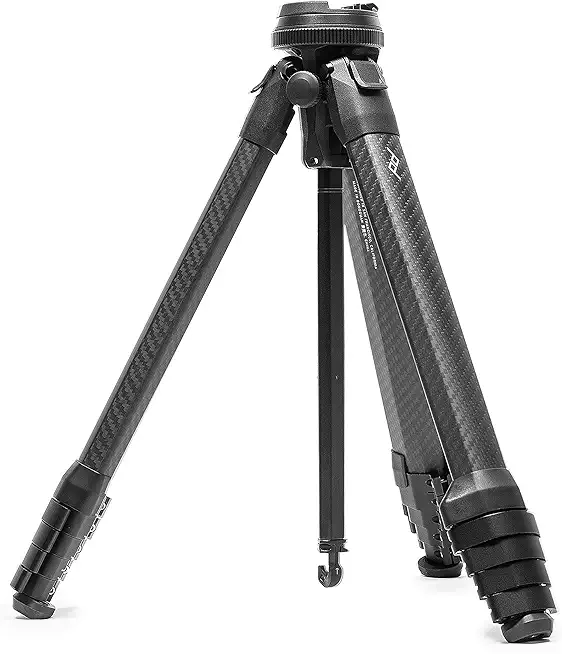
Peak Design Travel Tripod Carbon Fiber
Ultra-compact, quick-deploy travel tripod delivering rock-solid stability, smooth panning, and premium carbon-fiber strength for photographers on the move.
Check PriceAs a photographer who shoots on the move, the Peak Design Travel Tripod (Carbon Fiber) is the kind of tool I reach for when weight and packability matter. Its compact size and lightweight design make it a favorite among travel photographers, hikers and backpackers who need a dependable platform without the bulk.
Setup and breakdown are quick, which matters when the light changes and you need to work fast. The design is intuitive and user-friendly, with thoughtful touches like a counterweight hook that help keep things steady when you need a little extra ballast.
Despite its travel-friendly footprint, it stays impressively stable even when fully extended and is rated to support full-frame Sony cameras with moderate lenses. That makes it a strong choice for landscapes, travel portraits and general outdoor work where portability is key.
Keep in mind the trade-offs: it can be less stable in windy conditions compared to bulkier models, and the maximum height may limit taller photographers or eye-level shooting. If you frequently use heavy telephoto glass or need the absolute tallest setup, you might prefer a larger tripod, but for most mirrorless shooters who prioritize weight savings and quick deployment, the Peak Design Travel Carbon is hard to beat.
- Extremely portable and lightweight
- Quick and easy setup/breakdown
- Stable when fully extended for moderate lenses
- Intuitive, user-friendly design (counterweight hook)
- Less stable in windy conditions
- Maximum height can be limiting
3. Ulanzi Falcam TreeRoot Lite
FALCAM TreeRoot Lite F38 Carbon Fiber Travel Tripod with Ball Head C141K-301
Featherweight travel companion with secure ball-head control, rapid setup, and resilient carbon construction for stable shots anywhere.
Check PriceThe Ulanzi Falcam TreeRoot Lite is an unusually flexible tripod that easily adapts to creative setups — it transforms into different configurations such as a monopod or a low-angle rig. That versatility makes it a favourite when I need to change shooting styles quickly without hauling extra gear. It’s designed for fast-paced shooting environments, so setup and breakdown are genuinely quick and unobtrusive.
Stability is surprisingly good when the legs are fully extended; the TreeRoot Lite supports full-frame Sony cameras with moderate lenses without noticeable wobble in most conditions. That said, it’s not built for heavy telephoto glass or extreme wind — it performs best with mirrorless bodies and standard-to-short telephoto lenses. If your kit is light-to-moderate, this tripod will feel rock-solid for landscapes, street work, and run-and-gun video.
I also appreciate the practical touches in the design, like a hidden Allen key for on-the-fly adjustments and minor repairs in the field. Those small details show the tripod was thought out for real-world use, not just spec sheets. The overall package leans toward portability and creative flexibility rather than brute-force rigidity.
If you prioritise a travel-friendly, multipurpose support that can quickly become a monopod or sit low for ground-level shots, the Ulanzi Falcam TreeRoot Lite is a smart pick. If you need a tripod to withstand heavy lenses or sustained windy conditions, you may want to consider a heavier, bulkier alternative.
- Highly versatile for creative shooting configurations.
- Quick and easy setup and breakdown.
- Stable enough for various shooting scenarios.
- Practical design details (hidden Allen key).
- Can be less stable in windy conditions compared to bulkier models.
- Maximum height may be a limitation for taller photographers or eye-level shooting.
4. Manfrotto Befree Advanced Aluminium
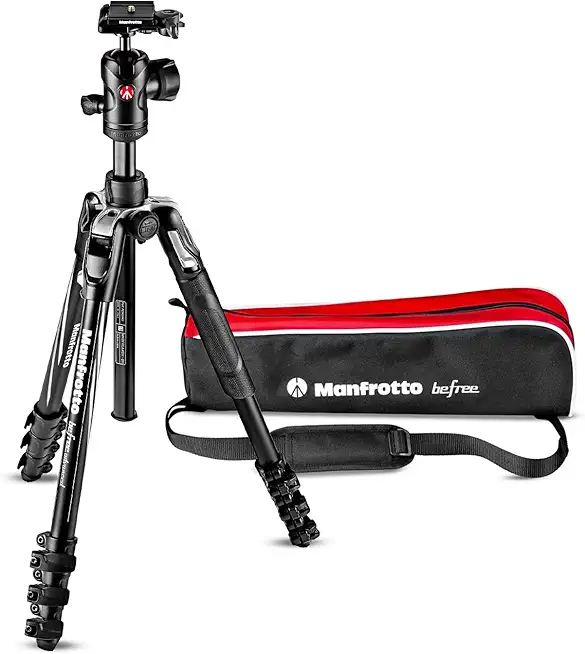
Manfrotto Befree Advanced Aluminum Travel Tripod with Ball Head
Durable aluminum travel system offering smooth ball-head operation, compact folding, and dependable performance for travel and everyday photography.
Check PriceAs a working photographer I reach for the Manfrotto Befree Advanced Aluminium when I need a dependable, grab-and-go tripod that won’t let me down on the road. It’s a reliable and portable choice for everyday shooting, travel and general photography, with a solid feel that inspires confidence when I’m away from the studio.
Setup is straightforward and fast, which matters when light is changing or I’ve only got a few minutes to frame a shot. The Befree feels stable and is easy to use, so I can lock in a composition and focus on the shot rather than fighting the gear.
It’s built to handle full-frame Sony cameras with moderate lenses comfortably, so it’s a great match for mirrorless bodies and standard zooms or primes. The build quality is noticeably solid and durable, so after months of travel it still performs without fuss.
That said, it’s not perfect for every situation. In very windy conditions you’ll notice it doesn’t match the damping and rigidity of carbon-fiber travel tripods, so I avoid pushing it in exposed, gusty locations. Also, the maximum height may be a limitation if you routinely need eye-level shots and you’re taller than average.
- Reliable and portable — ideal for everyday shooting and travel.
- Stable and straightforward to set up and use.
- Supports full-frame Sony cameras with moderate lenses.
- Durable materials and build quality.
- Less stable in windy conditions compared to carbon fiber models.
- Maximum height may be a limitation for taller users.
5. 3 Legged Thing Winston 2.0

3 Legged Thing Winston 2.0 Carbon Fibre Tripod System
Versatile, modular support with exceptional load capacity, quick adjustments, and premium carbon construction for studio and field use.
Check PriceWhen I need rock-solid support for a heavy Sony setup, the 3 Legged Thing Winston 2.0 is the tripod I reach for. It delivers exceptional rigidity and stability, even at maximum extension, so long exposures and critical-detail work stay perfectly sharp.
The Winston 2.0 marries heavy-duty strength with travel-minded design. That smart blend means you get a tripod that can handle full-frame Sony cameras with large lenses without noticeable wobble, yet still folds up reasonably well for transport.
Build quality feels premium through and through. The materials and fit are outstanding, so you can trust it on long shoots and in demanding field conditions.
Because it supports heavy gear so confidently, this tripod is particularly well suited to landscape, studio and wildlife photographers who prioritize stability over ultralight portability. If you routinely use big lenses or need absolute steadiness at tall heights, it’s a very good match.
Do note the trade-offs. The Winston 2.0 is heavier than most travel tripods, so it’s not the best choice for long hikes where pack weight matters. Also, setup and adjustment can be a bit complex until you learn its controls, so expect a short learning curve.
Overall, if you want professional-grade stability and premium build and can live with some extra weight and a few fiddly controls, the 3 Legged Thing Winston 2.0 is a strong, dependable option for serious Sony users.
- Exceptional rigidity and stability
- Smart heavy-duty + travel design
- Supports heavy gear reliably
- Premium build quality
- Heavier than most travel tripods
- Setup and adjustment can be complex
Choosing the Right Sony Tripod Head
Start by thinking about how you shoot. If you grab your Sony for landscapes and travel, you want a head that’s quick, light and predictable; if you’re doing architecture or studio work, precision matters more than speed.
For most mirrorless Sony setups I reach for a good ball head. It’s compact, fast to reposition with a single knob and great for general photography. Make sure it’s Arca‑Swiss compatible — that quick‑release ecosystem saves time in the field and keeps plates interchangeable.
If you need absolute control on each axis, a pan‑and‑tilt (3‑way) head is worth its weight. The independent locks and handles let you fine‑tune composition for architecture and stitched panoramas without guesswork.
Gimbal heads are fantastic, but only for a specific job: heavy telephoto lenses used for wildlife or sports. For most Sony mirrorless users, standard ball heads or compact fluid heads are a better balance of weight and functionality.
If you shoot video, choose a fluid head. The hydraulic dampening gives buttery pans and tilts that make footage look professional. They’re heavier, so weigh the trade‑off if you’re hiking to a location.
Geared heads live in the studio. When millimeter‑perfect framing matters — product, macro or architectural work — the fine, incremental controls pay off. Expect extra bulk and cost for that level of control.
Beyond type, check build quality: smooth locks, secure clamps and a reliable quick‑release plate make daily use painless. Look for a bubble level and panning base if you do landscapes or panoramas frequently.
Finally, match head capacity to your rig. Aim for a head rated 1.5–2× your camera plus lens weight so there’s no sag. Try a head on your own kit when you can — comfort and feel matter as much as specs.
Choosing a Travel-Friendly Tripod
When I travel with Sony mirrorless bodies, the tripod I pack is often the most important gear decision. The camera itself is light, so prioritize weight and folded length first: carbon fiber offers the best strength-to-weight ratio and helps damp vibrations, while aluminum will save money at the cost of extra heft. If you hike or fly frequently, choose a model that folds compactly and tucks comfortably into a backpack rather than one that simply looks small when extended.
Leg design matters as much as material. Multi-section legs make for a shorter folded length but can introduce a touch more flex; if you shoot landscapes on exposed cliffs, fewer sections and beefier legs feel steadier. Also consider leg locks: flip-locks are fast and glove-friendly, while twist-locks keep the profile slim. Pick the one you’ll actually use in the field.
Load capacity isn’t about the lightest possible number — it’s about margin. Aim for a tripod that safely supports at least 1.5 times your heaviest camera-plus-lens setup so it doesn’t struggle when you add a tele lens, gimbal head, or accessories. Pay attention to center-column features too; a reversible or offset column gives you low-angle and macro options without buying adapters.
Head compatibility often gets overlooked. Many travel tripods come with compact ball heads, which are great for speed, but if you prefer precise control or already own an Arca‑Swiss plate, make sure the tripod allows a head swap. Little extras like a bubble level, neoprene leg sleeves and a padded case make setup faster and more comfortable on long shoots.
Finally, think about your shooting priorities. If you need absolute rigidity for heavy glass, accept a bit more weight. If mobility and quick setup are key, prioritize compact carbon designs and reliable leg locks. In practice, a travel tripod is a compromise—pick the one that matches where and how you actually shoot.
What People Ask Most
What is the best tripod for Sony mirrorless cameras?
There is no single best tripod for every shooter; the right choice depends on your shooting style, gear weight and portability needs. Aim for a balance of stability, compatible head options and a folded size that suits how you travel or work.
Which tripod is best for the Sony a7 III?
Choose a tripod based on how you use the camera: compact and lightweight tripods suit travel and hiking, while stiffer, heavier tripods are better for long telephoto lenses or studio work. Ensure the tripod can safely support the combined weight of the camera and lenses you typically use.
How do I choose the right tripod for my Sony camera?
Consider the combined weight of your camera and lenses, desired maximum height and folded length, material and leg-lock type, and head compatibility. Balance portability with the level of stability you need and look for useful features like a reversible center column or bubble level.
What tripod head is recommended for Sony cameras?
Ball heads are versatile and quick for general use, while pan-and-tilt heads provide precise axis control for architectural or landscape work. For specialized needs, fluid heads suit video, geared heads offer fine adjustments, and gimbal heads are useful for heavy telephoto lenses.
Can I use any tripod with a Sony camera?
Most tripods will work if they have a standard mounting screw and can safely support your camera and lens weight. Always confirm the tripod’s load capacity and ensure your quick-release system or plate is compatible with your camera setup.
Is a carbon fiber tripod better for Sony mirrorless cameras?
Carbon fiber typically offers a superior strength-to-weight profile and better vibration damping, making it a strong choice for those who need portability without sacrificing stability. Aluminum tripods are often more affordable but generally heavier.
Conclusion for Best Tripods for Sony Cameras
To recap, if maximum stability and support for heavier Sony setups is your priority the Vanguard VEO 3+ and 3 Legged Thing Winston 2.0 stand out, while the Peak Design Travel and Ulanzi Falcam TreeRoot Lite excel for travel and versatile configurations, and the Manfrotto Befree Advanced is a dependable everyday choice.
Choose a tripod that suits your camera and lens weight, your preferred shooting style, and how much portability you actually need in the field.
Remember there’s always a trade-off between rigidity and packability, so balance load capacity, ease of setup and the features you’ll use most during shoots.
If you want to keep improving your technique and gear decisions, spend a few minutes browsing more articles on the site to sharpen your skills and confidence behind the camera.
Have questions or experience to share about any of these tripods? Leave a comment below and we usually reply within a few hours.



0 Comments