
What really defines the best video recorder for YouTube in 2026? Is it cinematic image quality, rock-solid audio capture, or the freedom to record long takes without worrying about overheating or file limits? We compared five top contenders in the current market to find the recorders that actually matter for creators at every level.
Image fidelity and flexible frame rates give you breathing room for cropping and color grading, and they help preserve detail in highlights and shadows. Audio options and clean capture are equally crucial—poor sound sinks a great image every time, and a simple audio workflow can save hours in post. Stabilization, continuous recording limits, and vlogging-friendly ergonomics complete the checklist because practical handling decides whether gear gets used, while battery life and connectivity affect how quickly you can publish.
Whether you’re launching a channel, upgrading production value, or chasing polished field footage, different strengths will matter depending on your workflow and content style. This introduction maps the core priorities so you can decide whether you need portability, studio-style features, or an all-day reliable workhorse that won’t slow your output.
We balance technical capability with real-world usability, testing how each recorder performs during actual shoots rather than just on paper, and focusing on how gear behaves under tight deadlines. Read on to discover which of these five recorders fits your style and helps your videos look and sound their best, while also making your production process faster and less stressful.

Panasonic LUMIX GH7 DC-GH7BODY Mirrorless Micro Four Thirds Camera body only

Panasonic LUMIX G100 DC-G100DKK Micro Four Thirds Mirrorless Camera with 12-32mm lens
1. Panasonic LUMIX GH7 Highlights
Panasonic LUMIX GH7 DC-GH7BODY Mirrorless Micro Four Thirds Camera body only
Pro-grade hybrid body delivering high-resolution stills and cinematic video with advanced stabilization and fast autofocus for demanding creators.
Check PriceAs a professional photographer who shoots long-form interviews and technical demos, the Panasonic LUMIX GH7 feels built for serious YouTube work. Its Micro Four Thirds sensor and support for internal ProRes and RAW give you a flexible, high-quality image pipeline for grading and finishing.
Where the GH7 really stands out is video: uncropped 4K at 120 fps and up to 5.8K recording let you capture clean slow motion and future-proofed detail. Dual card slots with CFexpress support keep heavy codecs and long takes manageable, and the built-in active cooling fan means you won’t be cut off by thermal shutdowns during marathon shoots.
For solo creators the fully articulated touchscreen with tally lights is a practical, time-saving feature that makes framing and monitoring effortless. Audio options are also pro-level — you can use a 32-bit float workflow via an XLR adapter for clean, forgiving recordings without clipping.
Autofocus on the GH7 is phase-detection based and reliable for most run-and-gun scenarios, though in very fast subject transitions you may prefer to pull focus manually. Be aware the camera is a bit larger and heavier than compact vloggers, so handheld gimbal work will feel more demanding over long days.
- Uncropped 4K at 120 fps
- Active cooling fan — unlimited recording
- Fully articulated touchscreen with tally lights
- 32-bit float audio via XLR
- Autofocus slower in fast transitions
- Larger and heavier for handheld use
2. Sony ZV-E10 II Highlights

Sony Alpha ZV-E10 II APS-C Mirrorless Camera with lens
Compact vlog-ready camera with superb autofocus, crisp video, and versatile lens options for creators who demand portability and performance.
Check PriceThe Sony ZV-E10 II is an excellent option if you want pro-level color and reliable autofocus without a hefty price tag. Its APS-C 24 MP sensor delivers pleasing depth and low‑light performance for a compact vlog body, while 4K up to 60 fps gives you flexible frame-rate options for smooth motion or slow‑motion clips.
What really sets it apart for creators is the 10‑bit 4:2:2 internal Log recording. That means you can push color and exposure in post with real latitude—great if you grade your footage or want a more cinematic look from a small rig. For solo shooters the real‑time face and eye tracking autofocus is a game changer; it keeps you sharp while you move and talk to camera.
Ergonomically it’s built for vlogging: a comfortable body and a flip screen make self-framing intuitive, and having both headphone and mic jacks lets you monitor and capture solid audio without adapters. Practically speaking it rarely overheats in normal sessions, so you can record longer takes than you might expect from a compact mirrorless.
Be realistic about stabilization: the ZV‑E10 II has no in‑body image stabilization (IBIS), so handheld footage will show shake unless you use a stabilized lens or gimbal. Also, fast pans can expose the sensor readout’s minor rolling shutter/wobble, so plan camera moves or use slower, smoother pans for best results.
Bottom line: if you’re a beginner to intermediate YouTuber who prioritizes color grading, dependable autofocus, and good audio options in a compact package, the ZV‑E10 II is a smart, versatile choice. Just budget for stabilization if you shoot a lot handheld action.
- APS-C 24 MP sensor
- 4K up to 60 fps
- 10-bit 4:2:2 Log internal recording
- Real-time face/eye autofocus
- No IBIS — needs stabilized lens/gimbal
- Minor rolling shutter/wobble on rapid pans
3. Sony ZV-E10 Original Model

Sony Alpha ZV-E10 APS-C Mirrorless Vlog Camera Kit
All-in-one creator kit featuring easy-to-use controls, clear audio capture, and stabilized video for effortless social content production.
Check PriceThe Sony ZV-E10 (original model) is a compact, APS-C–sensored camera that hits the sweet spot for beginners and casual YouTubers who prioritize simplicity and portability. It records 4K and pairs that resolution with Sony’s reliable autofocus, including smooth focus transitions and face tracking that keep a solo creator looking sharp without constant fiddling.
One feature that genuinely stands out for product reviewers is the built-in “Product Showcase” mode — it instantly shifts focus from your face to an object you hold up, which saves time in both shooting and editing. There’s also a mic jack for an external microphone, so audio quality is easy to upgrade beyond the built-in mics.
On the flip side, the ZV-E10 doesn’t offer internal Log recording, which limits how far you can push color grading compared with cameras that record 10‑bit Log. It also lacks in-body image stabilization (IBIS), so handheld footage benefits from a stabilized lens, gimbal, or solid technique to avoid visible shake.
Practically speaking, this camera is an excellent tool for travel vlogs, sit-down tutorials, and product demos where light is decent and you want a lightweight setup. If you need heavy grading, prolonged low-light work, or rock-steady handheld action without extra gear, you might find its limits; otherwise it’s a highly usable, pocketable platform that gets creators shooting quickly.
- Easy-to-use interface for new YouTubers
- Strong autofocus and dedicated product showcase feature
- Lightweight and highly portable
- Mic jack improves audio over built-in mics
- No internal Log recording
- No in-body stabilization—may need extra gear for smooth handheld shots
4. Sony FDR-AX43 Compact Camcorder

Sony FDR-AX43 4K Handycam Camcorder
Pocketable 4K camcorder with gimbal-like stabilization, long battery life, and intuitive controls for smooth, professional-looking footage.
Check PriceAs a photographer who shoots events and travel videos, the Sony FDR-AX43 is a deceptively capable compact camcorder. It uses an Exmor R CMOS 1/2.5″ sensor and shoots 4K, which gives crisp, punchy footage in daylight and makes it easy to deliver sharp YouTube uploads without a lot of post work.
The standout feature is the 20x optical zoom paired with Balanced Optical SteadyShot (B.O.SS) stabilization, so you can handhold long reaches and still get usable, steady footage without a gimbal. That combination makes it excellent for run-and-gun event coverage where you need reach and stability together.
Audio-wise it’s practical: a built-in mic for quick captures, plus a mic input and headphone jack when you need proper monitoring and external mics. Wi‑Fi and NFC make transferring clips to a phone fast so you can upload or rough-cut on the road, which is a big workflow win for solo creators.
There are trade-offs to be honest — the small 1/2.5″ sensor shows more grain in low light, so it shines best in daytime or well-lit interiors. The menu feels a bit dated and some users miss a viewfinder for long-zoom framing, so if you often shoot in bright sun or need critical long-zoom composition you’ll notice those limits.
- Strong 20x optical zoom with clear daytime video
- Excellent built-in stabilization for smooth handheld shooting
- Wireless connectivity speeds up workflow
- Mic input and headphone jack for audio control
- Video quality degrades notably in low light
- No built-in viewfinder—framing harder in bright outdoor conditions
5. Panasonic Lumix G100 Highlights
Panasonic LUMIX G100 DC-G100DKK Micro Four Thirds Mirrorless Camera with 12-32mm lens
Lightweight travel kit offering clear audio, sharp imagery, and a versatile zoom for everyday shooting and on-the-go storytelling.
Check PriceThe Panasonic Lumix G100 is built specifically for vloggers who want a compact, easy-to-use camera with strong on-board audio. It uses a 20.3MP Four Thirds sensor and offers 4K recording with V-Log L for color grading flexibility.
What sets it apart is the Nokia OZO Audio system: three internal microphones plus spatial audio tracking that intelligently selects the sound direction to keep voices clear in noisy environments. That spatial audio, combined with a dedicated mic port and flip touchscreen, makes solo shooting and framing straightforward.
In-body image stabilization helps keep handheld footage usable without always needing a gimbal, and the light, vlog-oriented design makes it comfortable for run-and-gun recording. For creators who value sound and portability over cinematic low-light performance, the G100 is a very practical choice.
There are a couple of real-world trade-offs to note. 4K recording is limited to 10 minutes of continuous capture, so long interviews or events will require careful planning or lower-resolution recording options.
Also, the Four Thirds sensor plus stabilization results in a heavier crop factor that limits wide-angle framing compared with larger APS-C sensors, and image quality can show more noise at higher ISOs. If most of your work is talking-head vlogs, street content, or travel clips where audio and compactness matter, this camera will serve you well.
- Innovative Nokia OZO spatial audio
- Compact, lightweight with flip touchscreen
- In-body image stabilization for steadier handheld footage
- V-Log L for color grading
- 4K limited to 10-minute continuous recording
- Noticeable crop factor with stabilization limits wide angles
Tips for High-Quality YouTube Recording
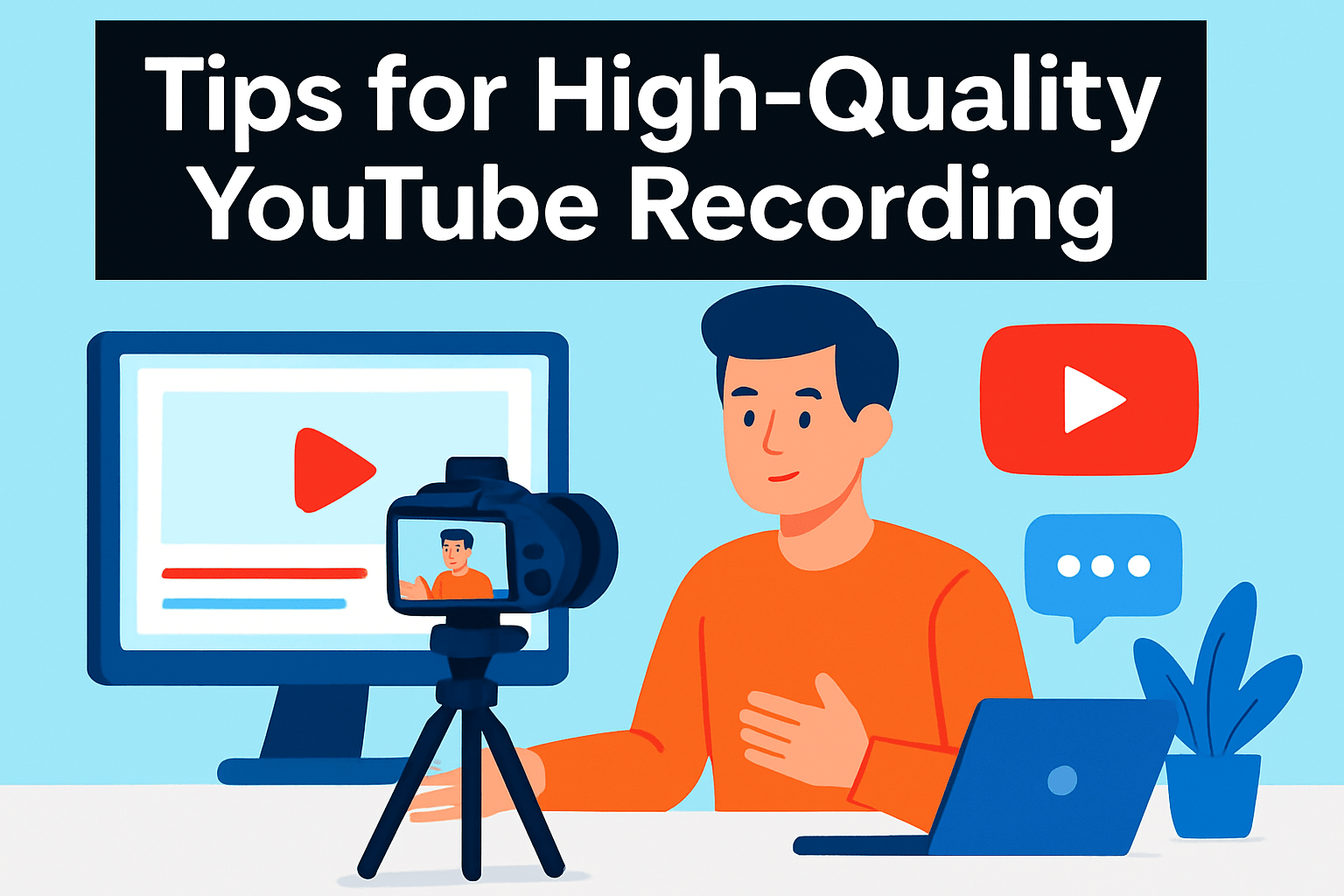
Great video starts with great sound. Use an external mic whenever you can and position it close to the speaker; lavaliers are invisible and directional mics cut room noise. If your room rings, toss blankets or cushions on reflective surfaces—the difference in edit is night and day.
Light like you mean it. Soft, even light at eye level or slightly above flatters faces and keeps viewers focused on you. Avoid strong backlight unless you want a silhouette; a small fill or reflector will rescue shadows without overcomplicating your setup.
Frame deliberately. Place your eyes near the upper third of the frame, leave sensible headroom, and think about where graphics or captions will sit. A little extra space for natural movement makes edits cleaner and helps you avoid awkward cropping later.
Stability matters more than you think. Use a tripod for talking-heads and consider gimbals for moving shots; if your recorder or lens lacks stabilization, compensate with slower pans and steadier feet. Even subtle shake distracts from your message.
Shoot more than you need. Give yourself clean seconds of pre-roll and post-roll for each take, and capture varied b-roll—establishing shots, close details, and reaction frames—to stitch scenes together smoothly. Those extra clips are the editor’s best friend when pacing and cover shots are needed.
Plan and pace your delivery. An outline keeps you on topic and saves time in the edit, but leave room for natural moments—viewers connect with authenticity. Pause briefly between lines so you have clean edit points and fewer jump cuts to fix later.
Control the environment. Close doors, silence phones, and clear distracting background objects before you hit record. A quiet, uncluttered frame communicates professionalism and lets your content do the talking.
Key Features for a Video Recorder
Think of a video recorder the same way you treat lenses: pick the right tool for the job, not the fanciest one. First priority for most YouTubers should be clean, flexible audio—look for a camera with a mic jack at minimum and XLR options if you plan to use lavs or a shotgun in louder environments. Good onboard preamps and a headphone output for realtime monitoring will save you hours in post.
Next, consider resolution, frame rates and codecs. 4K gives you room to reframe and future-proofs your footage, while 10‑bit codecs, ProRes or RAW are worth it if you plan to color-grade. Also think about higher frame rates (60/120 fps) for smooth slow-motion; they’re invaluable for action shots or stylistic cutaways.
Stabilization matters more than people expect. In-body stabilization keeps handheld work usable without a gimbal, but lens stabilization or a solid gimbal can still be the better choice for fast-moving shoots. If you shoot long handheld sequences, test the combo of IBIS and lens OSS so you don’t wrestle with wobble in editing.
Workflow features—unlimited recording, dual card slots, USB/HDMI clean outputs and a reliable cooling design—are the unsung heroes for streaming or long-form content. If you livestream or record long tutorials, make sure the camera won’t shut down mid-take and that it can feed clean video over USB/HDMI to your computer.
Ergonomics and framing aids make solo production less painful. A fully articulating flip screen, clear tally lights, simple physical controls for exposure and audio levels, and fast autofocus will keep shoots efficient. Portability and battery life are the final balancing act: a compact body with short battery life might be great for travel vlogs, but studio creators benefit more from larger bodies with swappable batteries and card redundancy.
Match these features to your content: prioritize audio and stabilization for talking-heads, codecs and cooling for cinematic or long-form work, and screens plus size for on-the-go vlogging. That approach will get you far more usable footage than chasing specs alone.
What People Ask Most
What is the best video recorder for YouTube?
There is no single best recorder for everyone; the right choice depends on your priorities like audio quality, stabilization, continuous recording, and portability. Pick the model that matches your typical shooting scenarios and workflow.
Which camera is best for recording YouTube videos?
Choose a camera that suits your content style, whether that is handheld vlogging, long-form studio work, or travel and event coverage. Consider ergonomics, audio options, and whether you need long continuous recording or strong stabilization.
What is the best screen recorder for YouTube videos?
Look for a reliable screen-capture tool that records system and microphone audio, offers easy export options, and runs smoothly on your computer. Built-in basic editing features and low system overhead make workflow faster and simpler.
What features should I look for in a YouTube video recorder?
Prioritize external audio inputs, good stabilization or compatibility with stabilizers, easy connectivity for livestreaming or transfers, and a flip-out screen for self-recording. User-friendly controls and solid file-format support also speed up editing and uploads.
How do I record high-quality video for YouTube?
Start by securing clear audio with an external microphone and controlling room acoustics, then use soft, even lighting and steady framing to keep viewers engaged. Plan your shots, record extra takes and b-roll, and leave space at clip starts and ends for easier editing.
What resolution and frame rate are best for YouTube recording?
Higher resolution gives more flexibility for cropping and future-proofing, while higher frame rates help with smooth motion and slow-motion effects. Choose settings that balance image quality with manageable file sizes and your editing workflow.
Can I use my smartphone as a YouTube video recorder?
Yes, modern smartphones can produce excellent results if you manage audio, stabilization, and lighting carefully. Use a tripod or gimbal, add an external microphone when possible, and shoot with clean framing for the best outcome.
Conclusion for Best YouTube Recorders
In short, the five options here map to clear use cases: a pro-oriented body for long-form shoots, versatile APS-C choices for vloggers, a compact camcorder that prioritizes zoom and steady handheld footage, and a lightweight vlogger-focused model with built-in audio features.
Pick the recorder that aligns with your priorities—whether that’s audio fidelity, stabilization, continuous recording time, or simple portability—and let your shooting style guide the decision.
Remember to weigh ergonomics, your typical workflow, and the accessories you’ll actually use as much as specs when choosing gear.
If you want to improve your skills and make smarter gear choices, explore more articles on the site for practical tips, workflows, and real-world advice.
Have questions or want to share your experience with any of these recorders? Leave a comment below — we usually reply within a few hours.


0 Comments