
Which Nikon keeps shooting when the sun dips and ambient light vanishes? Low-light shooting separates great gear from mediocre gear, and it exposes where skill meets equipment. From lamplit portraits to starry landscapes, the right tool changes everything.
This guide puts five Nikon bodies through real-world low-light scenarios to find which perform best when the lights go down. We evaluate practical shooting situations rather than burying you in lab numbers. You’ll also get travel and vlogging tips and a concise FAQ to help you apply the results.
Expect clear, hands-on assessments of strengths and trade-offs instead of a dry spec sheet. We look at noise handling, autofocus reliability in dim scenes, and how well systems stabilize handheld shots when light gets scarce. Each camera is paired with realistic use cases so you know what it will actually do in the field.
Whether you shoot weddings at dusk, wildlife in fading light, travel after dark, or handheld video, we frame findings in everyday workflows. You’ll also find practical advice on equipment and techniques and stabilization strategies to help squeeze better images from tough light.
If you’re picking a Nikon for low-light work, this guide will help you match priorities and shoot with confidence after dark. Turn down the lights and let’s see which bodies keep the night in focus.
1. Nikon D850 For Low Light

Nikon D850 Body
High-resolution full-frame DSLR delivering exceptional dynamic range, outstanding detail, and reliable performance for professional stills and studio work.
Check PriceThe Nikon D850 remains a go-to body when you need resolution and low-light performance in one package. Its 45.7MP full-frame sensor paired with the EXPEED 5 processor delivers unbelievable detail retention, even at very high ISOs (ISO 32,254 to 51,200), so you can crop aggressively or print large without losing clarity.
In practical shooting the D850 is impressive: autofocus will reliably acquire focus down to -4 EV, which means fast, confident focusing for wildlife, events, and night landscapes. If you rely on Live View AF, be aware it can be slow in dim scenes due to contrast-detection limits, so prefer the optical viewfinder or pre-focus techniques when time is critical.
For long exposures and astrophotography the D850 is excellent — it shows clean long-exposure performance with relatively low noise, and small touches like illuminated buttons make shooting in the dark far less fiddly. The body is built like a tank, so it stands up to rough field use and extended shoots.
That said, the D850 is a DSLR and is bulkier and heavier than mirrorless alternatives, which matters if you hike or travel light. Overall, this camera is best for professionals and serious enthusiasts who prioritize resolution and dependable low-light AF over the smaller size and instant Live View speed of some newer systems.
- 45.7MP full-frame sensor with EXPEED 5
- Superb detail at very high ISO (ISO 32,254 to 51,200)
- AF to -4 EV for near-dark focusing
- Excellent long-exposure noise control; illuminated buttons
- Live View AF slow/unreliable in low light
- Bulkier and heavier than mirrorless counterparts
2. Nikon Z6 III For Low Light

Nikon Z6 III Mirrorless Camera
Versatile hybrid mirrorless for low-light shooters, offering fast autofocus, smooth 4K video, and robust ergonomics for creators and enthusiasts.
Check PriceThe Nikon Z6 III is a tool I reach for when light is scarce but I still need responsiveness. Its 24.5MP partially stacked CMOS sensor and EXPEED 6 processor give a great balance of resolution and speed, so files are clean and snappy even when pushing exposure.
Autofocus performance is a standout. Rated to focus down to −10 EV (lens-dependent), the Z6 III locks onto eyes and moving subjects in very dark scenes, and its praised 3D tracking keeps subjects usable across frames.
Stabilization is a game-changer for handheld low-light work. The 8-stop in-body image stabilization lets me use much slower shutter speeds without a tripod, which expands creative options for available-light portraits and street scenes.
The camera also shines as a hybrid shooter. A bright OLED EVF and fully articulating touchscreen make composition flexible in cramped or awkward conditions, and the body’s fast, responsive performance pairs nicely with strong video capability when you need both stills and footage.
There are trade-offs to consider. It’s slightly heavier than earlier models, so expect a bit more weight on long walks. Also, the Z-mount lens ecosystem is still growing, so you may need to plan lens choices carefully if you rely on niche optics.
- AF down to −10 EV with eye/subject detection
- 8-stop IBIS for sharp handheld shots
- Bright OLED EVF and fully articulating touchscreen
- Fast, responsive performance with good video capability
- Slightly heavier than earlier models
- Z-mount lens selection still growing
3. Nikon D780 For Low Light
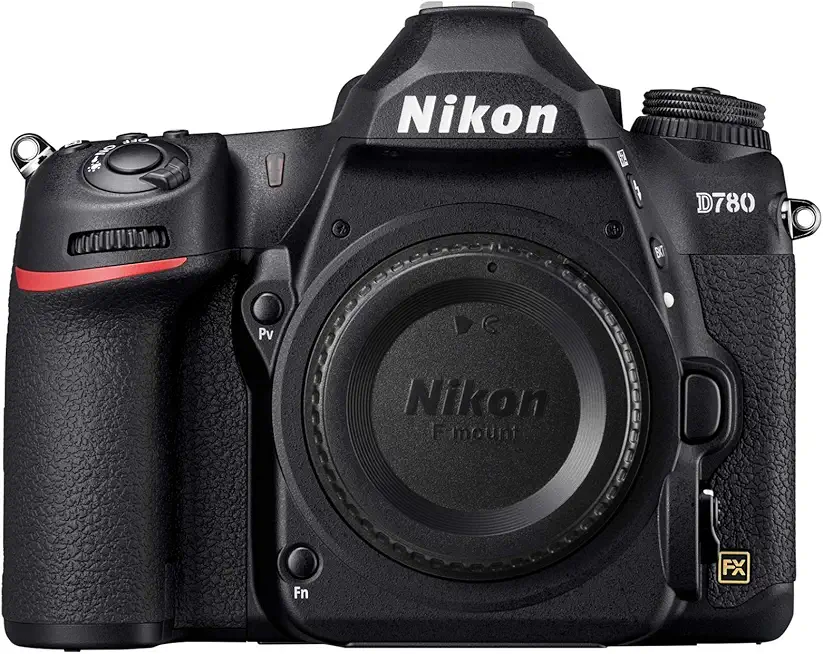
Nikon D780 Body
Hybrid full-frame DSLR combining class-leading low-light sensitivity, fast live-view performance, and dependable build for demanding photo and video work.
Check PriceThe Nikon D780 is a practical workhorse for low-light shooters who still prefer DSLR ergonomics. It pairs a 24.5MP full-frame sensor with the EXPEED 6 processor, which gives you clean results as you push ISO — expandable to 51,200 — without wildly noisy files.
Autofocus is dependable in dim scenes thanks to a 51-point AF system and a bright optical viewfinder that keeps you connected to the action. The camera also offers a 3.2-inch tilting touchscreen and a 7 fps burst mode for when moments happen fast in low-light environments.
In the field I appreciate how the D780’s OVF feedback and robust build help during long night shoots or events where battery life and handling matter. The body feels familiar and balanced, which reduces fatigue during handheld work under mixed or challenging lighting.
There are trade-offs to consider. The D780 is bulkier and heavier than mirrorless counterparts, so if you prioritize minimal weight you may notice the difference on long treks. Also, it lacks in-body image stabilization, so for very slow shutter handheld work you’ll need VR lenses or a solid support.
Overall, the D780 is a great choice for photographers who want reliable low-light AF, solid noise control up to high ISO, and the tactile benefits of a DSLR OVF. It’s especially suited to shooters who value ergonomics and predictable performance over the latest mirrorless features.
- Clean noise control up to ISO 51,200
- Reliable 51-point AF in dim scenes
- Robust build with bright OVF and 3.2″ tilting touchscreen
- DSLR ergonomics for long shoots
- Bulkier and heavier than mirrorless
- No in-body image stabilization (needs VR lenses)
4. Nikon D7500 For Low Light

Nikon D7500 Body
High-speed crop-sensor DSLR with responsive autofocus, robust burst shooting, and durable design for wildlife, sports, and travel photographers.
Check PriceNikon D7500 For Low Light is an APS-C (crop) DSLR with a 20.9MP sensor and EXPEED 5 processor that punches above its class in dim conditions. As a working photographer I appreciate that the lower megapixel count helps manage noise, so files stay usable even when I push exposure and ISO.
The autofocus is fast and reliable for an APS-C DSLR, which makes the D7500 a solid choice for dim indoor events, travel, and on-the-move shooting. Its handling and rugged build mean you can trust it on longer assignments without feeling fragile in your bag.
Image quality holds up well to moderate high ISOs compared to other crop sensors, so you get usable results without instantly resorting to heavy noise reduction. The tilting touchscreen speeds composition for awkward angles and helps when shooting in low light where quick framing matters.
That said, there are limits you should acknowledge before buying. Noise increases noticeably above ISO 6400 versus full-frame cameras, so if you routinely need very clean ultra-high-ISO files, this might feel restrictive. The APS-C sensor also naturally limits ultimate image quality and depth-of-field control in very dim situations compared to larger sensors.
In short, the D7500 is an excellent mid-range tool for enthusiasts and semi-pros who want fast AF, solid noise control for its class, robust handling, and strong battery life without the cost and size of full-frame bodies. It’s practical, dependable, and very usable in real-world low-light assignments where portability and responsiveness matter.
- Fast, accurate AF in low light
- Compact, rugged body with tilting touchscreen
- Good noise control up to moderate high ISOs
- Strong battery life for long shoots
- Noise rises noticeably above ISO 6400 vs full-frame
- APS-C limits ultimate image quality and DoF control
5. Nikon Z5 For Low Light
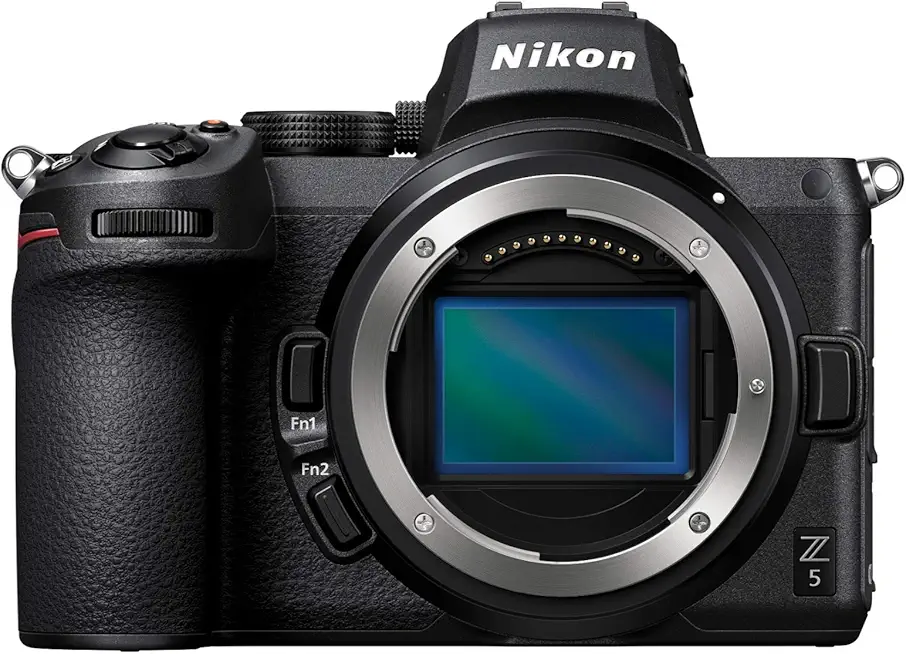
Nikon Z5 Mirrorless Camera
Accessible full-frame mirrorless delivering crisp image quality, in-body stabilization, and intuitive handling for enthusiasts upgrading their kit.
Check PriceThe Nikon Z5 packs a 24.3MP full-frame sensor driven by the EXPEED 6 processor, making it a sensible entry into full‑frame low‑light work. Its image quality leans toward clean files and good dynamic range, which helps when you need to rescue shadows in post.
What really matters for handheld night shooting is the 5‑axis in‑body image stabilization (IBIS). Paired with noise that’s well controlled up to ~ISO 6400, the Z5 lets you push shutter speeds slower without sacrificing too much detail, so you can shoot available light interiors and urban night scenes more confidently.
Autofocus is competent for low‑light use, offering eye detection and respectable subject tracking that will keep portraits and casual event work sharp in dim conditions. The camera’s solid build, usable EVF, and a simpler interface make it approachable for enthusiasts stepping up to full frame.
If you’re a hobbyist or enthusiast who values stabilization, a friendly control layout, and good high‑ISO behavior without the cost and complexity of pro bodies, the Z5 is a strong contender. Keep in mind its limitations: AF can struggle in the very darkest situations, and the camera’s limited burst speed and slower processor aren’t ideal for fast action in low light.
- 24.3MP full-frame sensor
- 5-axis IBIS for handheld low-light shots
- Noise well controlled up to ~ISO 6400
- Eye detection and respectable subject tracking
- AF can lag in very dark scenes
- Limited burst speed and slower processor
Low-Light Travel Photography Tips
When you travel light and night falls, the gear choices you made at home matter. Start with a fast lens — something in the f/1.4–f/2.8 range will let you shoot with lower ISO and retain cleaner tones. Pair that lens with a camera that has stabilization, or plan to use VR lenses or IBIS to squeeze extra stops of handholdable shutter speed.
I prefer to shoot RAW on every trip. RAW files give you the headroom to recover shadows, fix white balance, and apply more effective noise reduction later. Also, learn to trust the histogram rather than the LCD preview; the histogram tells the real story about clipped highlights or crushed blacks in low light.
Use manual exposure when the light is changing or mixed. Lock your aperture for depth-of-field, then dial shutter speed and ISO to taste. If you need motion frozen, keep shutter speed fast; if you want atmosphere or light trails, slow it down and embrace a tripod or secure brace.
Stability beats a lower ISO every time. Carry a small travel tripod or use environmental supports—walls, railings, or your backpack. When you don’t have a tripod, use IBIS or VR to allow slower shutter speeds, and adopt breathing and bracing techniques to reduce camera shake.
Autofocus can struggle in near-darkness. Switch to single-point AF for precise focusing, or hand-focus if the system hunts. Use exposure compensation in scenes with bright artificial lights so the camera doesn’t underexpose the subject. For video or vlogging add a small LED to lift faces while keeping the scene mood intact.
Finally, pack smart: prioritize one fast prime and one stabilized zoom. That combo covers most travel low-light scenarios without weighing you down. Practice these techniques before your trip so they become second nature when the light is fleeting.
Low-Light Vlogging Tips
If you vlog in dim rooms or at night, think like a cinematographer: let light lead your decisions. Use a fast prime (f/1.4–f/2.8) to gather more photons, but don’t chase the shallowest depth of field if you move around a lot—stopping to f/2–f/2.8 keeps your face more reliably in focus while still letting in plenty of light.
Stabilization matters as much as ISO. Cameras with IBIS or pairing a Z-series body with a VR lens will let you handhold at much slower shutter speeds, but for walking shots a gimbal still gives the smoothest motion. If you can, combine IBIS with gentle electronic stabilization in post rather than relying on aggressive in-camera crop modes that rob field of view.
Control exposure manually. Lock your shutter to roughly double your frame rate (1/50s at 24fps, 1/60s at 30fps) to keep motion looking natural, then open aperture and raise ISO only as needed within your camera’s clean range. Auto-ISO will chase brightness shifts and ruin consistency; test settings under the lighting you’ll actually use and stick to them.
Use continuous AF with face/eye tracking if your camera handles video tracking well—this saves you from constant refocusing. If AF stumbles in very low light, move a small, dimmable LED behind the camera as a fill; a soft, low-power panel stabilizes focus and exposure without flattening your look.
White balance and audio complete the picture. Set a manual white balance or use a fixed kelvin setting to avoid color shifts when lights change, and keep a quiet electronic shutter or camera sound suppression on to prevent mechanical clicks from being picked up by your mic.
Finally, light small, practical improvements: a dimmable key light angled at 45 degrees, a tiny bounce card, and a reflector can transform noisy, flat low-light footage into professional-looking video without forcing you to crank ISO through the roof.
What People Ask Most
Which Nikon camera is best for low-light photography?
There is no single best camera; the right choice depends on whether you prioritize resolution, autofocus sensitivity, in-body stabilization, or portability. Match those priorities to a model and the lenses you plan to use for the best real-world results.
Is the Nikon D850 good in low light?
Yes, the D850 is well regarded for low-light work thanks to strong detail retention and low noise at higher sensitivities. It also offers reliable autofocus performance in very dim conditions for handheld and tripod-based shooting.
Is the Nikon Z6 II good for low-light performance?
Z6-series bodies are generally strong in low-light situations because of sensitive autofocus systems and the benefits of the Z mount, including stabilization on Z-series models. Performance can vary between specific versions and depends on the lenses you use, so consider the exact model and glass when evaluating low-light capability.
Are Nikon mirrorless cameras better than DSLRs for low-light shooting?
Mirrorless models often provide advantages such as in-body stabilization and very sensitive autofocus systems, which help in low light. DSLRs can still excel with the right sensor and lenses, so the best platform depends on your shooting style and feature needs.
Which Nikon lenses are best for low-light shooting?
Fast-aperture primes and zooms are the most useful in dim conditions, with lenses in the f/1.4–f/2.8 range commonly recommended. Lenses with vibration reduction (VR) and high-quality optics will also help maximize low-light performance.
How do I choose a Nikon camera for low-light photography?
Consider autofocus sensitivity, whether you need in-body stabilization, sensor size, and the lens ecosystem you plan to use. Also weigh ergonomics, weight, and budget to ensure the system fits your shooting habits and workflow.
What settings and techniques improve Nikon camera performance in low light?
Use fast lenses, stable support like a tripod or good bracing, and manual exposure control to avoid unwanted shifts. Shoot RAW, take advantage of stabilization (IBIS or VR), and choose appropriate focus modes or manual focus when autofocus struggles.
Conclusion For Best Nikon For Low Light
This guide distills hands-on testing of five Nikon bodies plus travel and vlogging tips so you can choose gear that actually performs in dim conditions. It focuses on real-world strengths, practical trade-offs, and which shooters each camera suits best.
Match your priorities to the right body: the D850 for resolution and dependable low-light AF, the Z6 III for AF plus IBIS and hybrid photo/video use, the D780 for classic DSLR reliability and OVF preference, the D7500 as a budget APS-C performer, and the Z5 as an accessible full-frame with stabilization.
Remember to pair any camera choice with the right stabilization and shooting workflow—testing lenses, IBIS/VR, tripods, and exposure techniques will reveal the best real-world low-light results. Shooting RAW and practicing manual controls also pays dividends when light is limited.
If you want to keep improving your low-light photography and video skills, explore more articles on the site to deepen technique and gear knowledge at your own pace.
Have questions or experiences to share? Leave a comment below and we usually reply within a few hours.


0 Comments