

Which camera will let you quietly capture a bride’s whispered vow, the groom’s catching tear, and the kinetic rush of the first dance with cinematic clarity, rich color, and rock‑solid focus?
Picking the right body and lenses is about more than resolution; it’s about autofocus reliability, low‑light performance, stabilization, and battery endurance across a long, unpredictable day.
This guide distills hands‑on comparisons of five top cameras for wedding videography, pairs them with budget‑friendly alternatives, and includes clear subject‑tracking tips and straightforward FAQs to answer common gear dilemmas.
We evaluate how each system performs in real scenarios — dim chapels, candlelit receptions, crowded dance floors, and the marathon of back‑to‑back events — so you can match equipment to your shooting style.
You’ll get practical pros and cons that matter on the job: what holds focus during lengthy vows, which setups yield usable handheld footage, and where tradeoffs like size or heat matter most.
Our aim is to help you choose the right tool whether you’re a solo run‑and‑gun operator, a hybrid photographer who doubles as videographer, or a cinematographer prioritizing image latitude and color control.
If you’re building a reliable wedding kit or upgrading for cleaner low‑light capture, smoother subject tracking, and more forgiving footage in post, this guide will cut through the noise.
Keep reading to make confident, practical camera choices that let you focus on storytelling rather than worrying whether your gear will survive the aisle, the vows, or the last dance.
1. Canon EOS R5 II

Canon EOS R5 Mark II Body
Flagship mirrorless offering ultra-high resolution, lightning-fast autofocus, and advanced video features for professional photographers and hybrid shooters.
Check PriceThe Canon EOS R5 II is a 45MP full-frame hybrid built for shooters who want top-tier video and stills from one body. It delivers detailed 8K footage and 4K up to 120fps for smooth slow‑motion, while maintaining a high-resolution sensor for large prints or tight crops.
Autofocus is a standout — advanced eye and subject tracking keeps moving couples sharp even in dim church light or low‑lit receptions. The in‑body image stabilization (IBIS) pairs with its AF to give very usable handheld results during run‑and‑gun moments.
Practical features matter at weddings, and the R5 II has them: an RF lens mount for a versatile ecosystem and dual card slots for immediate backup and data security. Those two features alone make it reliable for long days where losing footage is not an option.
For hybrid pros who want cinematic deliverables, the 8K and 4K120fps capabilities open creative options — slow motion, reframing in post, and ultra‑detailed highlights. Be realistic about workflow though: 8K files eat space and demand fast cards and a heavy editing pipeline.
Two operational caveats to plan for are heat and power. The R5 II can run into potential overheating during extended 8K recording, and battery life shortens under heavy video use, so schedule breaks and bring extra batteries and cards.
All told, if you’re a professional hybrid wedding shooter who values the absolute best image quality, tracking and stabilization, and you’re prepared to manage heat and battery logistics, the Canon EOS R5 II is a very strong choice.
- Exceptional autofocus for moving subjects
- Stellar video quality to 8K and 4K120fps
- Effective in‑body image stabilization (IBIS)
- Versatile RF lens ecosystem
- Potential overheating during extended 8K recording
- Shorter battery life under heavy video use
2. Sony A7S III

Sony Alpha 7S III
Exceptional low-light performance, cinematic 4K video, and robust stabilization tailored for filmmakers and night-time shooters.
Check PriceThe Sony A7S III is the camera I reach for when lighting is my enemy — it’s a best-in-class low-light hybrid that delivers clean, noise-free footage in dim venues. It records 4K up to 120fps in 10-bit 4:2:2, which gives you both silky slow motion and ample grading latitude without fighting noise.
In practice that means you can shoot late-night receptions or candlelit ceremonies and still pull usable, cinematic footage straight out of camera. Its real-time eye autofocus keeps couples sharp during fast, emotional moments, and the strong IBIS smooths handheld movement so footage looks polished even without a gimbal.
For full-day wedding runs the A7S III is sensible and dependable — the fan-cooled body lets you record for extended stretches without overheating, and the lightweight, durable build makes it ideal for run-and-gun handheld work. That combination of endurance and portability lets you work close and move fast during unpredictable wedding days.
If your priority is low-light reliability and long continuous recording with excellent AF and stabilization, the A7S III is hard to beat. It’s especially well suited to videographers who shoot a lot of dim ceremonies, long receptions, or documentary-style coverage and need a camera that simply keeps working without constant babysitting.
- Outstanding low-light performance
- Fan-cooled design supports long shoots
- Excellent autofocus and eye tracking
- Strong image stabilization
- No electronic viewfinder (EVF) on the FX3 variant — some videographers miss it for precise framing
- Minor crop issues at 4K/60fps on some Sony models; less pronounced on the A7S III
3. Panasonic Lumix S5 II

Panasonic LUMIX S5II DC-S5M2 Body
Compact full-frame hybrid with pro-level video tools, accurate color science, and versatile autofocus for content creators.
Check PriceAs a working wedding videographer, the Panasonic Lumix S5 II stands out as a compact, video‑centric hybrid that punches well above its size. It records 6K and 4K60p with 10‑bit color, and pairs phase‑detection autofocus with advanced in‑body image stabilization — a combo that makes handheld ceremony and reception coverage much less stressful.
One of the real wins on a long wedding day is its unlimited recording times and dual card slots, which remove the clock anxiety and give you built‑in redundancy for critical moments. That reliability means I can focus on framing vows and first dances without constantly swapping cards or watching timers.
In practice the S5 II feels built for run‑and‑gun work: the body is compact and durable, and the stabilization is genuinely effective for handheld sequences and moving shots. Its phase‑detection AF is reliable enough to follow couples around a dim church or a bustling reception, producing footage I’m confident delivering to clients.
There are tradeoffs to be aware of. Battery life can be limited during heavy 6K/4K recording, so you’ll want spares or a power plan for long days. Also, at 4K/60p the 1.5x crop can bite into your wide‑angle coverage, which means paying extra attention to framing on tight ceremony spaces.
If you want a versatile, compact camera that gives great stabilization and high‑quality video files — and you’re willing to manage batteries and framing workarounds — the S5 II is a very attractive option for wedding videography. It balances professional specs with a form factor that’s easy to work with all day.
- Reliable phase-detection autofocus
- Outstanding in-body image stabilization
- High-quality 6K/4K 10-bit video
- Durable, compact design
- Limited battery life during intensive 6K/4K recording
- 1.5x crop at 4K/60fps limits wide-angle framing
4. Blackmagic Pocket Cinema Camera 6K Pro

Blackmagic Pocket Cinema Camera 6K Pro
Cinema-grade 6K raw recording, built-in ND filters, and high-dynamic imaging for independent filmmakers demanding cinematic results.
Check PriceThe Blackmagic Pocket Cinema Camera 6K Pro is a Super 35 cinema tool built around cinematic image quality rather than run-and-gun versatility. With 13 stops of dynamic range and Blackmagic’s strong color science, it gives wedding videographers the latitude to craft filmic tones and recover highlights and shadows in post.
Its integrated ND filters and high-resolution 6K RAW recording mean you can control exposure on bright outdoor portraits and still capture footage that holds up to heavy color grading. The large 5″ HDR touchscreen and micro XLR inputs make on-set monitoring and pro audio integration straightforward during vows, toasts, and speeches.
In practice I reach for the 6K Pro for controlled moments—ceremony coverage, speeches, cinematic couple portraits—where I can set up, control lighting, and use a tripod or gimbal. It rewards that workflow: the files are flexible and gorgeous, and the touchscreen/HDR preview helps nail exposure and framing in the moment.
That said, this camera isn’t designed for handheld, continuous autofocus-driven coverage. There’s no continuous autofocus or in-body image stabilization, so handheld shooting is challenging and you’ll need external stabilization like a gimbal or sturdy tripod for reliable results.
If you prioritize cinematic image quality and extensive post-production control and you’re prepared to stabilize your shots, the Blackmagic Pocket Cinema Camera 6K Pro is an excellent tool for wedding videography. If you need a camera to chase action handheld all day with reliable AF and IBIS, this one will feel limiting.
- 13 stops dynamic range
- Integrated ND filters
- Micro XLR inputs
- 6K RAW recording with strong color science
- No continuous autofocus or IBIS
- Requires external stabilization for handheld
5. Sony A7 IV
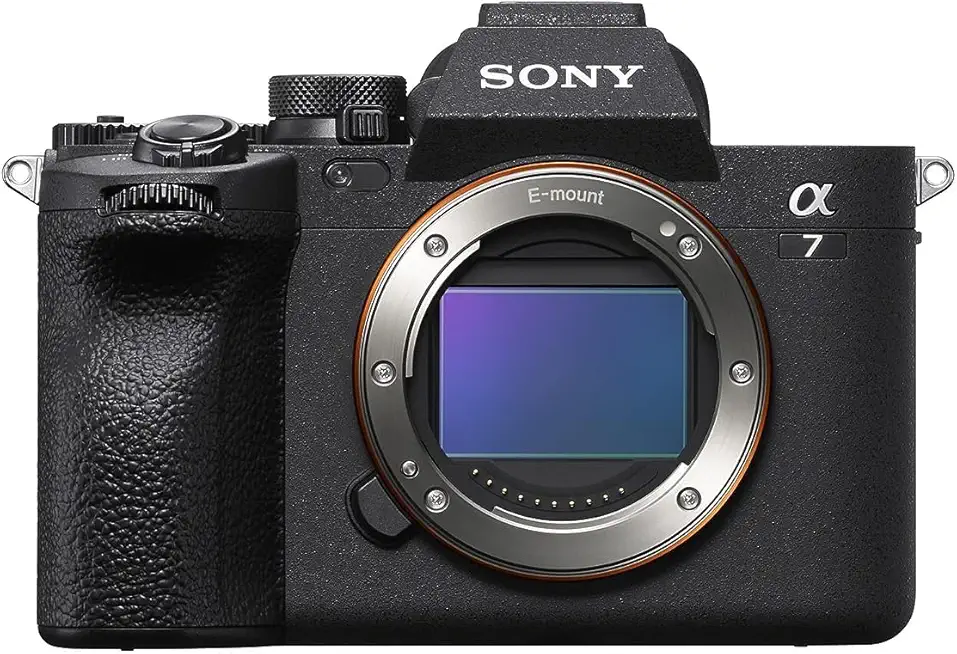
Sony Alpha 7 IV
Versatile all-round mirrorless with high-res stills, smooth 4K video, fast autofocus, and intuitive controls for enthusiasts and pros.
Check PriceThe Sony A7 IV is an excellent all-around choice for hybrid wedding shooters, pairing a 33MP sensor for detailed stills with 4K video up to 60fps in 10-bit 4:2:2 for solid color grading flexibility. Its reliable real-time eye tracking makes staying locked on the couple during moving moments much less stressful.
For handheld work the camera shines thanks to an effective 5.5-stop IBIS that noticeably smooths footage when you can’t rig a gimbal. That stabilization combined with the sensor and codec options gives you a very usable in-camera look straight out of the ceremony and into the reception.
Operationally it’s built for wedding days: dual card slots give you immediate backup or overflow, and the body offers good battery life that’s practical for full-day shoots. Those two features reduce the small annoyances that often cost time and risk during a busy schedule.
There are a couple of technical trade-offs to keep in mind. At 4K/60fps the camera applies a 1.5x crop which limits wide-angle framing options, so you’ll need to plan compositions accordingly. You may also see rolling shutter artifacts during very rapid pans, which is worth remembering for energetic dance-floor coverage.
Overall, the A7 IV is a strong, versatile tool if you want one camera to handle both photos and high-quality video for weddings. It’s aimed at hybrid wedding videographers who value stills and video parity and want reliable autofocus, stabilization, and day-long usability.
- 33MP sensor + 4K up to 60fps 10-bit 4:2:2
- Reliable real-time eye tracking
- Effective 5.5-stop IBIS
- Dual card slots and good battery life
- 1.5x crop at 4K/60fps
- Rolling shutter artifacts on rapid pans
Budget-Friendly Cameras for Wedding Videographers
Budget cameras don’t have to mean “second-rate” wedding footage. With the right approach they’re perfect for second shooters, b-roll rigs, or even full-day coverage if you plan around their limits. Models like the Canon EOS Rebel T7i and Nikon D5600 give reliable 1080p video, flip-out screens and solid autofocus—great for ceremony coverage and reception detail work where subtlety matters more than maximum resolution.
If you need 4K on a shoestring, the Panasonic Lumix G7 and Fujifilm X-T200 are excellent choices. The G7’s Micro Four Thirds sensor brings a compact package, but remember the 2x crop—use wider lenses to keep ceremony shots from feeling tight. The X-T200’s vari-angle screen is a real time-saver for low or awkward angles during dances and speeches.
The Sony A6000 punches above its price with fast AF and a compact body that’s easy to hide. It’s a favorite for run-and-gun shooting and discrete second-camera setups. For shooters who want robust video codecs without a pro price, consider the used Panasonic GH5. It still holds up with internal 10-bit 4:2:2 recording, 4K/60p, and rock-solid IBIS—ideal if you plan to color-grade heavily or shoot slow motion.
Whatever camera you pick, prioritize glass, audio and stabilization over chasing megapixels. Fast primes (f/1.8 or faster) rescue low-light scenes on smaller sensors. A small gimbal or stabilized lens will smooth handheld shots when body IBIS is absent. For sound, budget bodies usually lack XLRs, so plan an external recorder or dedicated shotgun mic.
Finally, be practical on the day: carry extra batteries and cards, preset picture profiles for quick color, and test low-light autofocus before the ceremony. With thoughtful lens choices and workflow tweaks, these affordable bodies will deliver wedding footage that looks and feels professional.
Subject Tracking in Wedding Photography
Good subject tracking starts before the shot. I set my camera to continuous AF (AF‑C) and enable eye/face detection for the couple so the camera does the heavy lifting while I concentrate on composition and timing. Back‑button focus is a game changer — it lets me lock tracking when I need to hold focus on one person, then instantly drop back into continuous mode for moving moments.
Pick an AF area that fits the scene. For close-up vows I’ll use a single point or small zone to keep the eyes sharp. For dancing or walking down the aisle I switch to a wider tracking area so the focus follows the pair across the frame. Most modern bodies from the list handle this well, but in dim churches I’ll lean on a low‑light champ like the A7S III or a hybrid like the R5 II to keep the AF snappy.
Don’t rely on autofocus alone. Anticipation matters. I pre‑focus on the spot where the couple will stand, or use a slightly farther focal point during the bouquet toss to capture where the action will land. When shooting run‑and‑gun I often use continuous burst to ensure I catch the decisive frame in a sequence.
Stabilization helps tracking look professional. IBIS and stabilized lenses smooth out tiny moves so the focus system has an easier job and footage remains usable handheld or on a gimbal. If the camera lacks IBIS, plan more static shots or add a gimbal for movement-heavy moments.
Lastly, tweak your tracking sensitivity and eye AF settings before the event. Softer sensitivity prevents the camera from hopping between subjects in crowded frames. Practice these settings during the rehearsal or first dances; tweaked controls save you time in editing and deliver reliably sharp memories when it matters most.
What People Ask Most
What is the best camera for wedding videography?
There is no single best camera; the right choice depends on your priorities such as low-light handling, autofocus reliability, stabilization, and ergonomics. Match the camera to the shooting style and workflow you use most often.
Do I need a full-frame camera for wedding videography?
No, full-frame cameras offer certain advantages in low light and depth of field, but smaller formats can be lighter and more budget-friendly while still delivering excellent results. Choose based on your needs, lens options, and overall system weight.
Are mirrorless cameras good for wedding videography?
Yes, mirrorless cameras are well suited to wedding work thanks to their compact size, advanced autofocus systems, and strong live-view video features. Their lighter setups also help during long shoots and fast-moving coverage.
Which camera features are most important for wedding videography?
Reliable autofocus, strong low-light performance, effective stabilization, and dependable battery life are among the most important features. Also consider audio inputs, dual recording or backup options, and comfortable ergonomics for long days.
What camera settings should I use for wedding videography?
Use settings that prioritize consistent exposure and dependable focus, and choose image quality and codec options that fit your editing workflow. Test and lock in white balance and exposure before key moments, and monitor settings during the event.
Which cameras perform best in low light for wedding videography?
Cameras with larger sensors and good high-ISO performance typically handle dim venues better, and pairing them with fast lenses improves results. Stabilization and sensible exposure practices also greatly affect low-light usability.
What lenses are best for wedding videography?
A mix of versatile zooms for coverage and fast primes for low-light portraits and cinematic looks is a common and effective strategy. Prioritize lenses with reliable autofocus, useful focal lengths for your shooting style, and consistent optical performance.
Conclusion for Wedding Videography Cameras
Ultimately, the best choice comes down to your priorities: whether you need top-tier resolution and hybrid flexibility, exceptional low-light performance, compact 6K video power, cinematic Super 35 quality, or an all-in-one hybrid for mixed photo and video days.
This guide was designed to highlight real-world strengths and trade-offs—autofocus and subject tracking, stabilization, recording endurance, and ergonomics—so you can match a camera to the way you shoot weddings rather than chase specs alone.
Next steps are simple: consider which features matter most on a typical wedding day, try bodies in hand or rent before committing, and plan your kit around those practical needs to avoid surprises during ceremonies and receptions.
If you want to keep sharpening your craft, explore more articles on the site for technique tips, workflow ideas, and real-world setups to improve your shooting and editing skills.
Please leave a comment with your questions or experiences — we usually reply within a few hours and are happy to help you narrow down the right setup.


0 Comments