
Ever chased a sunset only to realize your lighting gear slowed you down?
Portable lights are the small but mighty answer to that problem. They let photographers shape mood and exposure without lugging a full kit.
On location they rescue backlit portraits, tame harsh highlights, and add pleasing catchlights. In the studio they provide quick fill or a focused accent. And for video they offer continuous, adjustable sources that play well with skin tones.
Choices include ring lights for close-ups, cold-shoe on-camera units for run-and-gun, handheld LED panels for flexible fill, high-output panels for main lighting, and portable flashes for burst power. Each type answers different creative needs and shooting styles. Understanding those categories saves time and weight on shoots.
Some lights are tiny and USB-powered for selfie rigs and vlogs. Others are battery-powered or mains-capable to serve as a primary source on location. You’ll want to match runtime, output, and modifier compatibility to your workflow.
Trade-offs matter: more power often means more weight and shorter runtimes. Continuous lights help video but can tax batteries; flashes save energy but don’t work for motion capture. This guide breaks down those choices so you can pick the right portable light for portraits, events, travel, or product work with fewer compromises.
1. NEEWER BR60 Bi-Color Mini Ring Light

Neewer BR60 5
Compact clip-on circular illumination for close-up video and selfies; adjustable brightness, stable mini tripod, USB-powered for desk setups.
Check PriceThe NEEWER BR60 Bi-Color Mini Ring Light is a small, travel-friendly option that punches above its size for close-up work. It packs 60 LEDs and delivers up to 450 lux at 0.5 m, which is plenty for headshots, selfies, live streams, and video calls where you need clean, flattering illumination.
What I like as a photographer is the control: five lighting modes (warm, mixed, cool white) and 10-level dimming let you fine-tune color and intensity for natural skin tones without fiddly gels. The bi-color range and smooth dimming make it easy to match ambient light or create a soft fill on the face.
Mounting is dead simple — it includes a clip for laptop, desktop, or phone mounting so you can position the light quickly for vlogging or remote conferencing. It’s USB powered/charged and very lightweight at 131 g with the clip, so it slips into a bag and runs off a power bank or laptop for on-the-go shoots.
Be aware of the trade-offs: this is designed for close distances and tight framing, not as a key light for groups or wide scenes. Also, because it relies on USB power, extended outdoor shoots without access to a power source will be limiting.
- Compact, lightweight (131 g) — easy to carry
- Up to 450 lux at 0.5 m — good close-up output
- Five modes + 10-level dimming — flexible color/brightness control
- USB-powered — convenient recharging and continuous use
- Not effective for wide-area lighting
- Relies on USB power — limited for long outdoor sessions
2. NEEWER NL-36AI Bi-Color Cold Shoe Portable Light
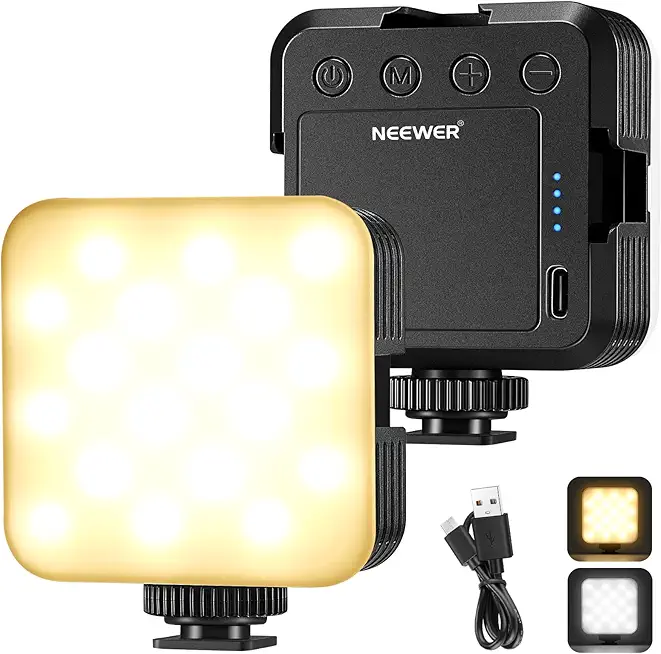
Neewer NL-36AI Bi-Color LED Video Panel Light
Slim bi-color panel delivering adjustable color temperature and flicker-free output; high CRI for accurate skin tones and versatile mounting options.
Check PriceThe NEEWER NL-36AI is a cold-shoe bi-color on-camera light built for travel—36 LEDs, 6W power and a peak output of about 800 lux at 0.5 m, yet it only weighs 80 g. That combination makes it one of those lights you barely notice on a mirrorless rig or smartphone cage, but that reliably lifts faces as fill or a key for run-and-gun work.
It has a built-in 2000 mAh battery that the manufacturer rates at roughly 3 hours of continuous use, and it charges via USB Type‑C. There are 8 scene modes and straightforward brightness and color‑temperature adjustment, so you can dial in a warmer kick or cooler fill without fuss.
In real shoots I’d recommend it for travel photographers and videographers who prioritize ultra‑lightweight gear and fast setups. It complements small setups nicely—on‑camera for interviews, vlogging, quick portraits, or as a portable accent on location—because the control is intuitive and the USB‑C charging and durable build mean fewer surprises outdoors.
Be realistic about its limits: the NL‑36AI is not meant to replace a high‑output panel for daylight key lighting or to cover large groups. Its smaller panel results in a narrower spread and less punch in bright conditions, but for close‑to‑subject work, pocket‑sized setups, and video fill it’s a very practical choice that keeps your kit light and flexible.
- Very lightweight — 80 g
- Adjustable brightness and bi‑color control
- ~3 hours continuous battery (2000 mAh)
- USB‑C charging
- Limited power for bright daylight or large areas
- Narrower light spread due to smaller panel
3. GVM SD80D Portable LED Video Light

GVM SD80D 80W LED Video Light Kit with Softbox, Bowens Mount & Tripod
Powerful 80W output with softbox for soft, cinematic lighting; Bowens-compatible, tripod included, ideal for studio and on-location shoots.
Check PriceThe GVM SD80D Portable LED Video Light is a workhorse I reach for when I need reliable continuous illumination. It packs an 80W constant bi-color LED into a thoughtfully engineered housing, so you get strong, consistent output and excellent color rendering for both photo and video.
What makes it particularly useful on shoots is the Bowens mount compatibility — you can fit almost any softbox, grid, or beauty dish you already own, which instantly elevates its creative flexibility. App control and professional-grade features mean solo operators can tweak color and intensity quickly without climbing over the set.
In practice the SD80D serves well as a primary light source in studio and semi-mobile scenarios. It’s robust enough to light portraits and interviews with precision, and its build quality feels solid on location. That said, the size and weight lean toward planned setups rather than pocketable run-and-gun work.
If you’re a photographer or videographer who values modifier compatibility and dependable output, this is mostly a win — especially for those who already own Bowens-mount modifiers or want a single light that handles key-light duties. If you need the lightest possible kit or are just starting out, consider whether the power and feature set are more than you require.
- 80W constant bi-color output
- Bowens mount — wide modifier compatibility
- Professional features and solid build
- App control for on-the-fly adjustments
- Bulkier/heavier — not ideal for run-and-gun
- May be overkill for beginners or casual shooters
4. COLBOR W60 Handheld LED Light

COLBOR W60 60W Bi-Color Pocket LED Video Light
Pocket-sized bi-color lamp delivering punchy 60W illumination, adjustable white balance and USB-C power for vloggers and mobile creators.
Check PriceThe COLBOR W60 is a flat-panel handheld LED that packs surprising punch for its size — it weighs 345 g and delivers 4770 lux at 1 m (5600K). That level of output makes it a genuinely useful key or fill light for on-location portrait and product work where you need consistent daylight-balanced power.
Power flexibility is a real strength: you can run it from a DC adapter, COLBOR’s battery grip, or PD Type-C fast charging. In practice that means you can shoot tethered with mains power, swap in a battery grip for mobile days, or top up quickly via USB‑C between setups.
The smart cooling system keeps the panel quiet and cool under use, which photographers and videographers will appreciate. Quiet operation makes it easy to use as a continuous source for interviews, short films, and client-facing shoots without fan noise becoming a nuisance.
The W60 produces a wide, even spread that works well with reflectors and modifiers, so you can soften or shape that daylight-balanced output for flattering portraits or detailed product shots. Its accessory support lets you mount softboxes, grids, or snoots to tailor the beam for creative control.
As a working tool it sits in the hybrid zone — portable enough to carry on location but powerful enough to serve as a primary continuous light in many setups. If you want a compact panel with professional illumination and flexible power options, the COLBOR W60 is mostly a smart buy; just be aware it’s larger than ultra-compact pocket lights and runtime at full blast depends on your battery grip.
- Bright: 4770 lux at 1 m (5600K)
- Relatively lightweight: 345 g
- PD Type-C fast charging + DC and battery-grip options
- Quiet operation from smart cooling
- Not pocket-sized; larger than ultra-compact models
- Battery life limited at maximum power (depends on battery grip)
5. Godox AD100PRO Portable Flash

Godox AD100Pro Pocket Flash with Built-in 2.4G X System
Compact high-speed flash with reliable wireless control, fast recycle, and consistent color for on-camera and off-camera lighting setups.
Check PriceThe Godox AD100PRO is a compact, battery-powered flash that punches well above its size. It delivers 100 Ws of output in a truly portable package, so you get studio-like power without a stand full of gear.
Its rechargeable battery yields up to 360 full-power flashes per charge, which is plenty for a day of portraits or many wedding moments. Recycling is quick at 1.5 s, so you won’t miss consecutive moments during fast-paced work.
TTL and High-Speed Sync compatibility make exposure changes fast and reliable when you’re moving between indoor and outdoor scenes. Wireless control and TTL simplify multi-light setups and let you concentrate on composition instead of manual adjustments.
The magnetic modifier mount system is a small but smart addition. It makes swapping small softboxes, grids, or other modifiers rapid and tool-free, giving you creative shaping options similar to larger flash systems.
In short, the AD100PRO is ideal if you want a light, portable flash that still covers wedding, portrait, and event needs. Keep in mind heavy flash usage will reduce battery longevity, and it’s a flash unit — not a continuous light source for video.
- 100 Ws power in a compact body
- Up to 360 full-power flashes per charge
- 1.5 s recycling for fast shooting
- TTL and HSS with wireless control; magnetic mounts
- Battery drains faster with heavy use
- Not a continuous light — only for flash
Battery-Powered and USB-Powered Options
Choosing between battery-powered and USB-powered lights is basically picking your compromise between raw output and pure portability. As someone who shoots both weddings and solo videos, I match the light to the job rather than the other way around. Understanding the trade-offs saves you gear stress on-location.
Battery-powered units give you freedom from mains power and cables. They typically use rechargeable lithium packs or pro mounts like V-mounts and often support hot‑swapping so a shoot can keep rolling. For work where a light must act as a key source—outdoor portraits, events, or documentary runs—battery power is the reliable choice; portable flashes like the Godox AD100PRO are a great example of battery flash that delivers serious punch and fast recycle times.
USB-powered lights win on weight and simplicity. Many tiny panels and ring lights weigh under 150 g and will run from a power bank or laptop for hours, making them perfect for vlogging, product shots, or on‑camera fill. Think of lights like the NEEWER BR60 or the ultra-light NL-36AI: they’re easy to pack, quick to mount, and convenient for mobile setups.
Power vs runtime is the core trade-off. High-output COB LEDs or pro battery lights will give you studio-level brightness but can drain packs in 30–60 minutes at full blast. Small USB panels rarely match that output, but they’ll keep running for much longer when paired with a good power bank.
Also consider battery ecosystems. V-mount and NP-F systems are common for larger panels; they’re heavier but swappable and durable. USB‑C devices are universal and simple to top up, but they won’t replace a V-mount rig when you need serious light.
Practical habits matter more than specs. Always bring spare batteries or a couple of high-capacity power banks. Look for USB‑C PD support and remote or app control if you work alone—hybrid models like the COLBOR W60 show how useful dual power options can be.
My rule of thumb: pick battery-powered high-output gear when you need a dependable key light and choose USB panels for run‑and‑gun, streaming, or secondary fill. If you swing between both styles, go hybrid and keep spares—reliability is the photographer’s best light.
Lighting Accessories and Modifiers
Modifiers are the reason a portable light stops being just “bright” and starts looking intentional. They let you soften, shape, direct, and color light so skin tones and mood read correctly on camera.
A small, collapsible softbox is my go-to for flattering portraits and product shots; it wraps light and tames hard shadows. Many pack flat and set up in under a minute, giving studio-quality falloff without hauling bulky gear, so pick a smaller size for tight locations.
Umbrellas are the fastest way to get broad, even coverage for groups and events. Shoot-through versions are lighter, while reflective umbrellas give more punch, but both trade control for speed.
When you want contrast and sculpted highlights, reach for a beauty dish. It produces a punchy, editorial look that works great for headshots and fashion, but it won’t flatten texture like a big softbox.
Grids and snoots let you sculpt tight beams for dramatic accents and subject separation. They also cut usable output, so plan for more power or to move closer to your subject.
For run-and-gun work, simple on-camera diffusers and magnetic clip-on modifiers are lifesavers. They add instant polish with almost no setup time and weigh next to nothing in your bag.
Color gels are the quickest creative lever—mood, practical color correction, or mixed-light separation are all possible in-camera. Just bracket white balance and test, because gels change perceived exposure and color balance.
Mount compatibility matters: Bowens, Godox, or proprietary mounts determine what modifiers you can use. Many newer portable LEDs support Bowens adapters, which instantly expand your options for softboxes, grids, and beauty dishes.
My practical kit fits in a small bag: a medium collapsible softbox or umbrella, a small grid, a handful of gels, and a 5-in-1 reflector. Test each modifier with your specific light before a job and pack sandbags or clips for windy locations; with those basics you can turn any portable light into a creative tool.
What People Ask Most
What is the best portable LED light for photography?
There isn’t a single best option; the right choice depends on your needs for output, size, and power source. Match the light’s portability and runtime to the types of shoots you do most often.
Which portable lights do professional photographers use?
Professionals often use a mix of compact on-camera lights for mobility and higher-output battery-powered panels or flashes for primary lighting. They choose tools that fit the shoot workflow and modifier compatibility they require.
How do I choose a portable light for photography?
Consider factors like brightness needs, battery or USB power, mounting options, and how you plan to shape the light with modifiers. Prioritize the features that align with your common shooting scenarios and workflow.
Are portable LED panels good for portrait photography?
Yes, portable LED panels can produce flattering portrait light when paired with softening modifiers. Their continuous output also makes it easier to see and adjust lighting during shoots.
Can portable lights replace studio strobes?
Portable lights can handle many situations and offer mobility that strobes do not, but studio strobes may still be preferable for high-power or specialized lighting effects. Choose based on the power and control your projects demand.
What features should I look for in a portable photography light?
Look for adjustable brightness and color control, reliable power options, and compatibility with mounts and modifiers you plan to use. Ease of transport and simple controls are also important for location work.
How do I set up portable lights for on-location shoots?
Plan your lighting scheme ahead, test positions and power before the session, and bring spare batteries or power banks. Use sturdy stands or clamps and secure modifiers against wind or movement for consistent results.
Conclusion for Best Portable Light for Photography
Choosing portable lights comes down to balancing power versus portability and deciding whether continuous light or flash best suits your workflow.
Match your light choice to the type of shoot, expected runtime, and which modifiers you can realistically use to achieve the look you want.
Modifiers dramatically change the quality of light, so plan the softboxes, grids, or diffusers you’ll pair with a fixture rather than relying on raw output alone.
For location work, prioritize battery and charging options plus quick-mount accessories so you can adapt fast and avoid downtime.
Run short tests before important shoots to learn how each light and modifier interacts with your camera, subject, and environment.
If you want to keep improving your lighting and gear decisions, read more articles on our site to build skills and confidence over time.
Have questions or tips from your own shoots? Leave a comment below — we usually reply within a few hours and enjoy helping photographers refine their setups.


0 Comments