
Want to turn ordinary snapshots into professional-looking images with light that sculpts mood and depth?
This guide to the best flash for camera breaks down what matters so you can pick with confidence.
You’ll get clear, practical guidance—not a pile of specs and buzzwords.
We focus on the decisions that affect your pictures more than your gear sheet.
I’ll show how different flash approaches change portraits, events, and fast-action shooting.
You’ll learn which trade-offs matter for portability, output, and creative control.
This is about making skin tones look natural and preserving ambient mood, not just blasting light.
It’s also about choosing tools that fit your pace and your budget.
Every recommendation stems from hands-on testing and feedback from working photographers.
Real-world reliability and ease of use often trump headline specs.
Read on to find the best flash for your camera and the kind of light you want to make.
Short, honest advice will get you shooting with confidence in any situation.
You’ll find clear buying guidance for different budgets and systems.
We compare ease of use, durability, and how each option performs under pressure.
By the end you’ll know how to light with confidence and which features are actually worth your money.
Let’s cut through the noise and pick a flash that helps you make better images faster.
1. Godox V860III-S for Sony

GODOX V860III-S Speedlight for Sony
High-performance on-camera flash with fast recycling, rechargeable battery, and TTL support for reliable, professional lighting in any shooting situation.
Check PriceAs a working photographer I appreciate a flash that balances power, speed and portability — the Godox V860III-S does that well for Sony shooters. It offers TTL and manual modes with a 76Ws output and a 20–200mm zoom head, so you get usable reach and flexible coverage for portraits and event work.
The built-in Li-ion battery is a standout: expect roughly 480 full-power flashes per charge and recycle times around 1.5 seconds. That combination keeps you shooting through long receptions or portrait sessions without constantly swapping cells or carrying spares.
Wireless control via Godox’s 2.4GHz system makes off-camera setups simple and reliable for creative lighting. The swivel/tilt head pairs nicely with bounce techniques, so you can soften light quickly for flattering portraits or ambient-balanced event shots.
There are a couple of real-world caveats to consider. Some Sony users report hot shoe compatibility issues, so test the unit on your camera before relying on it for critical jobs. Also, in fast burst shooting the flash can miss frames occasionally, which may be a concern for high-speed action work.
Overall, the V860III-S is well suited to enthusiast and pro Sony photographers who want solid power, good battery life, and wireless flexibility without hauling a strobe. If you prioritize reliable TTL, off-camera control and long battery life, this is a strong, cost-effective option — just confirm hot shoe behavior on your specific camera.
- Fast recycle (~1.5s) and ~480 full-power flashes/charge
- Powerful 76Ws output with 20–200mm zoom head
- 2.4GHz wireless for off-camera use
- Rechargeable Li-ion battery reduces running costs
- Hot shoe connection issues on some Sony models
- May miss frames in burst shooting
2. Sony HVL-F60RM2 Flash

Sony GN60 Wireless External Flash
Compact wireless flash delivering powerful guide number output, versatile tilt/swivel head, and consistent illumination for portraits and events.
Check PriceThe Sony HVL-F60RM2 is a professional-grade on-camera flash built for serious Sony shooters. It brings advanced TTL and HSS capabilities in a weather-sealed package, so you get reliable performance whether you’re in studio or out in the elements.
In practice the unit delivers exceptional power and consistently natural-looking skin tones, which matters a lot for client work and portraits. HSS combined with a quick recycle helps freeze fast subjects and keeps you shooting through decisive moments.
Wireless control is well implemented, allowing remote adjustments and seamless integration with Sony camera systems. The robust, weather-resistant build means you can confidently use it outdoors without worrying about light mist or sudden conditions changing a shoot.
The trade-offs are straightforward. It is heavier and larger than many competing speedlights, so it’s less ideal for long handheld sessions or travel-only kits. Also, battery life can drain quickly under intensive use, so bring spare batteries or a backup solution for all-day shoots.
Bottom line: if you’re a professional who needs a powerful, dependable flash that handles TTL/HSS well and survives outdoors, the HVL-F60RM2 is a strong choice. If you prioritize ultra-portability or extremely long battery endurance, consider pairing it with extra power options or a lighter backup flash.
- Excellent TTL and HSS performance
- Exceptional power; natural skin tones
- Strong weather resistance and durable build
- Good wireless connectivity with Sony cameras
- Heavier and bulkier, reduces portability
- Battery life drains quickly under intensive use
3. Godox AD200Pro Flash
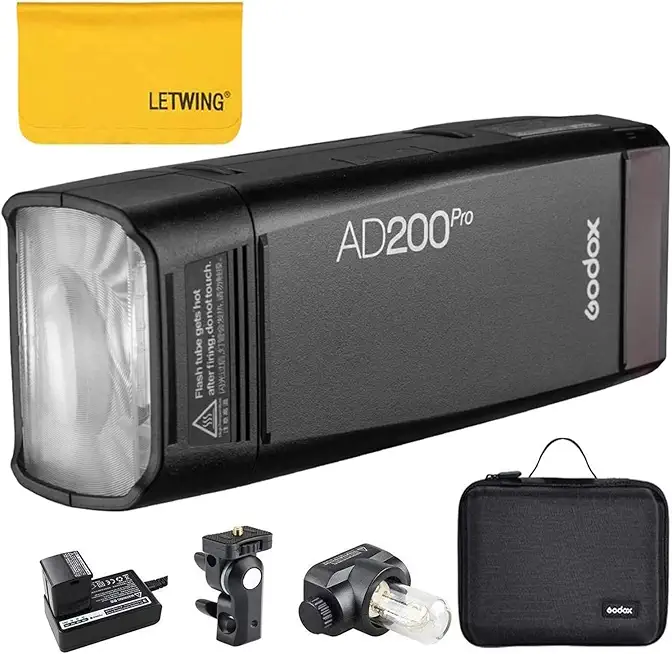
GODOX AD200Pro Pocket Flash (Bare Bulb & Speedlite Head)
Portable multi-head strobe combining bare bulb and speedlight options, studio-quality power, and fast recycle for location shoots.
Check PriceThe Godox AD200Pro is a compact, off-camera flash head that punches well above its size. It ships with removable fresnel and bare-bulb heads, giving you both focused and open light options, and it’s TTL-compatible across brands so you can work with a range of camera systems.
In practice it feels more powerful than many on-camera speedlights while remaining portable enough for run-and-gun assignments. The color-stable output is repeatedly praised by users, which makes getting natural skin tones much less fiddly in mixed-light situations.
If you shoot events or weddings, its recycling performance stands out — it’s about ~15% faster than the previous model — and the battery life is robust enough to carry you through long receptions. That combination of quick recycle and endurance makes it reliable when you need consistent pops for dozens or hundreds of frames.
There are limits to be aware of. This unit must be used off-camera — there’s no on-camera mounting option — so it’s not a direct replacement for a hot-shoe flash if you need a camera-mounted solution. Also, users note that rapid HSS bursts can push the unit toward overheating, so manage duty cycles during heavy continuous high-speed work.
Overall, the AD200Pro is a strong choice for wedding, event, and portrait photographers who want a portable, powerful, TTL-capable off-camera flash with flexible lighting styles. If you require on-camera convenience or sustained HSS bursts without thermal concerns, you may need to complement it with a different tool.
- Color-stable mode for reliable skin tones
- Multiple heads for flexible lighting styles
- Quick recycle (~15% faster than predecessor) and long battery life
- More portable than studio strobes
- No on-camera mounting option
- Risk of overheating with rapid HSS use
4. Neewer TT560 Speedlite Flash

NEEWER TT560 Speedlite for Canon/Nikon/Sony/Panasonic/Olympus/Pentax
Budget-friendly manual speedlight offering adjustable power levels, bounce/swivel functionality, and reliable performance for beginners and hobbyists.
Check PriceThe Neewer TT560 is a no-frills, affordable speedlite that plays to one core strength: manual control. It’s compatible with Canon, Nikon, and Sony hot shoes, so you can pick it up and use it across systems without fuss.
For field use it’s impressively lightweight and very portable, making it easy to slip into a kit bag for events or quick portraits. The unit offers a flash duration of 1/300s–1/20000s and a recycle time of roughly 0.1–5s depending on batteries, which is more than adequate for casual work and learning manual flash techniques.
Because it’s manual-only, you get consistent creative control when setting your power and exposure, which is exactly what you want when mastering flash. The trade-off is that it lacks TTL and higher-end features, so it’s not the right choice if you need automatic exposure or fast, repeatable bursts during action shoots.
In real-world use the TT560 punches above its price with solid output and a durable feel for the cost. Do expect some inconsistency in flash duration and slower recycle compared with advanced models, but for beginners or budget-conscious photographers who want to learn off-camera lighting and manual flash basics, it’s a very sensible purchase.
- Cost-effective and widely compatible
- Simple manual controls — great for learning
- Lightweight and easy to carry
- Durable build for the price
- No TTL automation
- Slower recycle and less consistent output
5. Profoto A1 Flash

Profoto A1 Soft Bounce
Round head flash modifier producing soft, natural light with quick attach system, ideal for flattering portraits and on-location work.
Check PriceThe Profoto A1 is a premium, on-camera flash built around a round head that delivers natural, flattering light. It offers TTL and a quick 1.2s recycle time, plus a built-in modeling light and magnetic modifiers for fast, creative shaping.
That round/oval head is the reason many portrait photographers reach for the A1 — it avoids the rectangular artifacts you get from traditional speedlites and produces a softer, more pleasing wrap on faces. The modeling light is genuinely useful for pre-visualizing catchlights and shadow placement before you fire a test frame.
In practical use the A1 is lightweight and easy to carry through long shoots, and the TTL system switches smoothly to manual when you want full control. The magnetic modifiers make changing diffusion or grids quick and reliable, which speeds workflow on location and in studio setups where time is short.
There are a couple of caveats: off-camera use requires a Profoto Air Remote, which adds to the total cost, and the unit sits at a higher price point — though many users justify that with Profoto’s build quality and strong resale value. If you’re a professional prioritizing superior light quality, portability, and fast, consistent performance for portraits and studio work, the A1 is a strong, often worth-it choice.
- Flattering light spread from round head
- 1.2s recycle time
- Portable and lightweight design
- Integrated modeling light
- High cost limits accessibility
- Requires Profoto Air Remote for off-camera triggering (adds expense)
Choosing the Right Flash for Your Needs
Choosing the right flash starts with being honest about how and where you shoot. If you run around covering events you need fast recycle, good battery life and reliable TTL. If you shoot portraits or studio work, light quality and the ability to shape it matter far more than raw guide numbers.
Practically speaking, flashes fall into three camps: built-in pop-ups, on-camera dedicated units, and off-camera speedlights or strobes. Pop-ups are handy for fill but give hard, flat light. On-camera flashes add power, zoom and tilt for bounce, plus TTL for quick exposure. Off-camera gear gives the most creative control and the best light quality when paired with modifiers.
For on-camera use, prioritize a head that tilts and swivels so you can bounce off ceilings and walls. TTL is a lifesaver in fast-moving situations, but learn how to dial exposure compensation—TTL can under- or over-react in contrasty scenes.
If shaping light is your goal, plan to go off-camera. A speedlight or a compact pack-and-head strobe lets you place the light to separate subject from background, create rim light, or use larger modifiers that produce flattering skin tones.
Regarding modes, use TTL for run-and-gun and manual for consistent multi-flash setups. High-speed sync is invaluable when you want wide apertures outdoors, but remember it eats power and can heat the unit in long bursts.
Watch the specs that actually affect shooting: guide number for reach, head zoom and swivel for bounce options, recycle time and battery type (Li-ion beats AAs for sustained use), and your camera’s sync speed—typically 1/200–1/250s unless you use HSS.
Finally, think about modifiers. A larger, closer source softens shadows; diffusion panels, bounce cards or small softboxes transform harsh on-camera light. Magnetic or clip-on diffusers and gels are simple ways to refine color and mood on the fly.
Match your choice to how you work, not just what looks powerful on paper. When in doubt, rent a model for a weekend shoot and see how it feels in your hands and your light.
Benefits of Off-Camera Flash
Off-camera flash is the single most effective upgrade to lift your images from flat snapshots into three-dimensional portraits. Moving the light off the lens axis gives you real control over direction, shadow and shape in a way an on-camera unit never can.
That directional control lets you sculpt faces into classic portrait styles like Rembrandt, loop and butterfly. Small changes in angle and height will create a triangle of light, a soft nose shadow, or that flattering butterfly catchlight above the nose.
Using larger modifiers off-camera—softboxes, umbrellas or grids—instantly softens the light and tames harsh highlights. Bigger and closer sources wrap the light for gentler falloff, while grids let you narrow the beam when you want precision.
Off-camera flash also lets you separate subject exposure from the background, which is powerful creatively. Expose the subject with flash while using ambient light to set mood, or underexpose the ambient to isolate the subject completely.
Another immediate benefit is avoiding the flat, frontal look and red-eye common to on-camera units. Placing the main light to the side or slightly above reveals texture, sculpts cheekbones and creates natural, attractive catchlights in the eyes.
Working with multiple off-camera lights multiplies your control. A key light sculpts the face, a rim or hair light separates the subject from the background, and a low-power fill softens shadows without flattening the image.
Off-camera setups are extremely flexible on location. You can reposition a single unit between poses, change angles mid-scene to match the mood, or shift the size and distance of the source for dramatic creative effects.
Start simple: use one off-camera flash and move it around until the light reads right. Once you understand how direction, size and distance affect the look, off-camera flash becomes the go-to tool for more dimensional, professional images.
What People Ask Most
What is the best flash for portrait photography?
The best flash depends on the look you want and your shooting style. Choose a unit that produces flattering light, offers control between TTL and manual, and works with common modifiers for softer, more natural results.
How do I choose the best external flash for my camera?
Look for compatibility with your camera, support for the flash modes you use, and features that match your workflow such as swivel/tilt heads and battery type. Consider portability versus power and whether you need wireless control for off-camera setups.
What is the difference between a speedlight and a studio flash?
Speedlights are compact, battery-powered units designed for on- and off-camera mobility, while studio flashes are typically larger, designed for controlled studio use with consistent output and accessory options. Your choice should reflect where and how you shoot most often.
Do I need an external flash or will the built-in flash suffice?
Built-in flashes can work for casual fill or emergencies but are limited in power and directionality. An external flash gives more control, better quality light, and the ability to use modifiers for professional-looking results.
What does TTL mean in camera flashes and is it better than manual?
TTL is an automatic metering system that adjusts flash output for changing scenes and can speed up workflow in dynamic situations. Manual control offers consistent, repeatable results and is preferred when you need precise lighting control.
How do I match a flash to my camera brand and model?
Check hot shoe and TTL protocol compatibility for your camera and choose flashes that explicitly list support for your system. When using off-camera setups, verify trigger compatibility or opt for universal wireless systems that work with your gear.
How important are guide number and recycle time when choosing a flash?
Guide number indicates a flash’s relative power and helps you estimate effective lighting range while recycle time affects how quickly the flash is ready between shots. Consider which factor aligns with your shooting needs, such as distance or burst shooting speed.
Conclusion for Best Camera Flash
Choosing the right flash comes down to matching gear to your shooting style: consider whether you need portability or studio power, TTL convenience or manual control, and the advantages that off‑camera setups and modifiers bring to shaping light.
Keep practical priorities in mind—recycle time and battery type, reliable wireless triggering, and the ability to bounce or soften light—and test options in real shoots so you can feel how each unit performs for your subjects and workflows.
If you want to improve your lighting and gear choices, explore more of our site for technique pieces, comparisons, and real‑world tips that will speed up your learning curve and help you get consistent results.
Please leave a comment with your questions or experiences below; we usually reply within a few hours and are happy to help you pick or use the right flash for your shooting needs.


0 Comments