
Ever tried to follow a fast-moving songbird at dawn and then scan a sky full of faint stars at night with the same pair of binoculars? It sounds romantic, but the optics and handling demands are surprisingly different. Finding the right balance takes a little homework, some field testing, and an honest sense of what you’ll carry.
In this ultimate guide I compare five top contenders that aim to do both jobs well. You’ll find real-world impressions, user feedback, and practical recommendations to help pick the best binoculars for bird watching and stargazing. Think of it as a photographer’s field-tested take on optics for dawn and dusk outings.
Expect trade-offs: higher reach often brings image shake, while larger lenses gather dim light but add bulk. Weight and ergonomics matter on long hikes, and sometimes a tripod is the only way to steady powerful glass for night use. Knowing which compromises you can live with makes the choice a lot easier.
Throughout the review I highlight how handling, coatings, weather sealing, and focus feel influence real-world performance. I’ll show where each pair shines and where it falls short so you can match features to your routine. Ready to find binoculars that balance birding agility with stargazing punch?
1. Celestron SkyMaster 20×80 Review
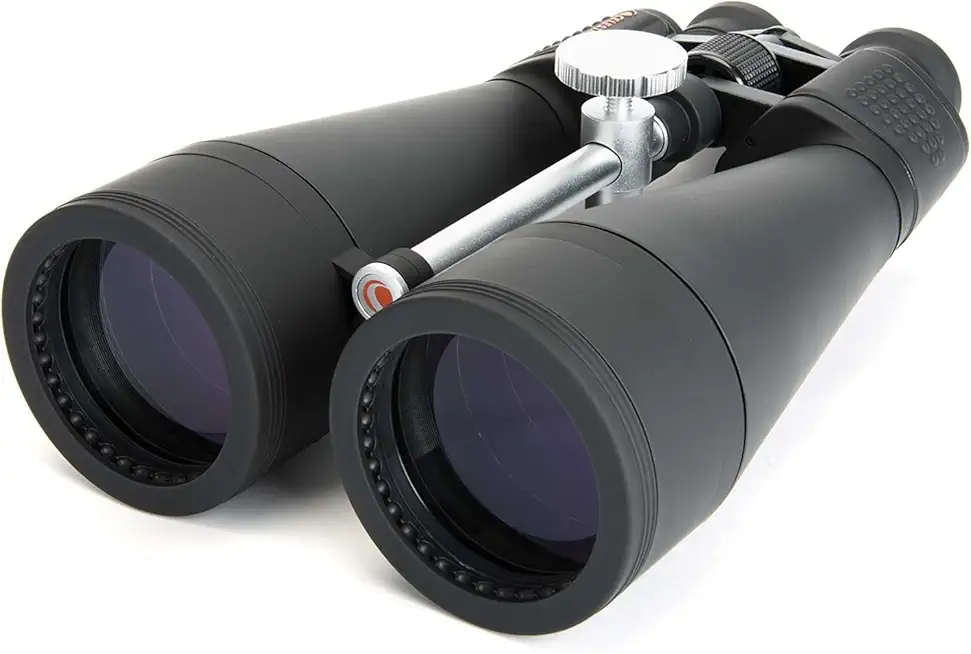
Celestron SkyMaster 20x80 Binoculars with Tripod Adapter & Case
High-power magnification and large objective lenses deliver brilliant deep-sky views; tripod-ready with protective carry case for stable, extended observing.
Check PriceThe Celestron SkyMaster 20×80 is a serious tool for anyone who wants telescope-like views without hauling a scope. Its 20x magnification and 80mm objectives deliver bright, detailed views of deep-sky objects — think the Pleiades — that will impress night-sky enthusiasts and astrophotographers scouting targets.
As a photographer who shoots at night, I appreciate the generous 18mm eye relief that makes extended observing comfortable, especially with glasses. The optical design is multi-coated (not fully multi-coated), so contrast is good but it won’t match premium fully multi-coated optics in the faintest light.
Don’t plan to handhold this pair for long sessions. At 20x the slightest movement produces shake, so a tripod mount is recommended and, conveniently, included for stable viewing and longer observing runs.
Focusing is generally precise and capable of fine adjustments, which is important when teasing out star clusters or small lunar features. That said, some users report a stiff focus wheel and stiff hinges in cold conditions, so expect to break them in or warm them up before use.
If you want a powerful, relatively affordable way to approach deep-sky observing without a full telescope, the SkyMaster 20×80 is mostly excellent — provided you accept a narrower field of view and the need for a tripod. It’s less beginner-friendly for casual birding because of the high magnification and tighter field, but it shines when your priority is serious stargazing.
- Telescope-like deep-sky views
- Comfortable eye relief (18mm) for eyeglass wearers
- Smooth focusing mechanism for precise adjustments
- Tripod mount included for stable viewing
- Narrow field of view; high magnification not beginner-friendly
- Focus wheel/hinges can feel stiff in cold conditions
2. Celestron SkyMaster 15×70 Review

Celestron SkyMaster 15x70 Binoculars with Tripod Adapter & Case
Bright optics and robust glass gather ample light for celestial and long-distance terrestrial viewing; includes tripod adapter and rugged storage case.
Check PriceAs a photographer who spends nights under the sky as often as mornings in the field, the Celestron SkyMaster 15×70 strikes a practical balance between magnification and light gathering. Its 15x magnification paired with 70mm objectives delivers bright, clear views of the Moon, planets, and many deep-sky objects, making it a very approachable entry point for stargazers.
The binoculars are lightweight enough for short handheld use, which is handy for quick wildlife looks or scanning a starry horizon. For serious observing sessions you’ll want a tripod — the included tripod adapter makes mounting straightforward and vastly improves stability for prolonged viewing.
Build quality feels solid and the optics are multi-coated, so contrast and brightness are good for both birding and astronomy. Expect slightly soft edges in the field of view and a finish that can feel a bit plasticky compared with higher-end models; these are trade-offs for the excellent value the SkyMaster provides.
In short, if you want a versatile, powerful pair of binoculars that won’t break the bank, this model is a strong contender. It’s especially well suited to people who value bright, high-magnification views and don’t mind using a tripod for the best results.
- 15x magnification with 70mm objective for bright views
- Includes tripod adapter for easy mounting
- Lightweight enough for short handheld use
- Great value for stargazing and birding versatility
- Image shake when handheld at 15x — tripod advised
- Slightly soft edges in the field of view
3. Celestron Nature DX 12×56 Review

Celestron Nature DX 12x56 Binoculars
Powerful magnification and large objective lenses deliver exceptional low-light wildlife views; durable, weather-resistant design ideal for hiking and birdwatching.
Check PriceThe Celestron Nature DX 12×56 is a workhorse for anyone who wants one pair to do both birding and casual stargazing. The 12x magnification with 56mm objectives delivers bright, punchy views that hold up in low light around dawn and dusk.
As a photographer I appreciate its sharpness and faithful color rendering; details pop and contrast stays natural even when the light is fading. The durable, waterproof housing means you can keep them on hand during damp morning watches or unexpected weather on a night outing.
Eye relief is comfortable, making these binoculars usable with eyeglasses without a lot of fiddling. They’re also relatively lightweight and easy to sling on a strap for hikes, so they won’t be a burden on long field days.
The one mechanical caveat is the focus wheel. Several users report it can feel stiff, particularly in very cold conditions, which can slow quick focus changes when tracking fast birds. You may also notice a touch of softness at the extreme edges of the field, so for the most critical wide-field work you might look for something with a wider, flatter field.
Overall, if you want a rugged, bright, travel-friendly pair that excels in low light and handles both birds and star fields well, the Nature DX 12×56 is a strong, practical choice. It balances optical performance and outdoor durability in a package that suits active observers.
- Bright optics and powerful 12x magnification
- Sharp, clear images with good low‑light color fidelity
- Waterproof, durable construction
- Comfortable eye relief; relatively lightweight to carry
- Focus wheel can be stiff in cold weather
- Slight softness at the edges of the field of view
4. Nikon Monarch HG 10×42 Review

Nikon Monarch HG 10x42 Binoculars
Premium optics provide edge-to-edge clarity, crisp color, and comfortable handling for demanding birders and outdoor enthusiasts.
Check PriceAs a photographer who spends daylight hours in bird blinds and late nights under the Milky Way, the Nikon Monarch HG 10×42 stands out for its image quality. The views are exceptionally sharp with natural color fidelity, so field identification and night-sky contrast both feel very true to life.
The build is designed for real outdoor use: waterproof and fogproof seals mean you won’t lose a session to unexpected humidity or a drizzle. The binoculars also sit very comfortably in the hands — the ergonomic grip reduces fatigue during long birding walks or extended star sessions.
One practical advantage for birders is the close-focus capability; a minimum focusing distance of 2.5 meters lets you lock onto nearby subjects without hunting for focus. For astronomers, the 10x magnification and clean optics render crisp views of the moon and bright star fields with excellent color rendition.
There are trade-offs to consider. Some users find these binoculars relatively heavy, so if you’re doing long hikes or prioritize ultralight travel gear, they may feel burdensome. Also, the focus wheel can stiffen in cold weather, which is worth remembering if you regularly observe in freezing conditions.
- Outstanding sharpness and natural color fidelity
- Waterproof and fogproof for all-weather use
- Ergonomic, comfortable grip for long sessions
- Close focus: 2.5 meters for nearby subjects
- Relatively heavy for long sessions or travel
- Focus wheel can feel stiff in cold weather
5. Vortex Crossfire HD 10×50 Review

Vortex Optics Crossfire HD 10x42 Binoculars
Affordable high-clarity glass with sharp resolution, rugged waterproof construction, and smooth focus for reliable performance in diverse outdoor conditions.
Check PriceThe Vortex Crossfire HD 10×50 is a workhorse for photographers who split time between dawn birding and night sky sessions. Its 10x magnification and 50mm objectives strike a sensible balance between reach and light gathering, so you get brighter views when the light fades without an overly tight field.
In the field the optics deliver sharp, clear images with surprisingly good color fidelity in low light. The wide field of view makes it easy to pick up fast-moving birds and sweep star fields without constant re-acquisition.
Hands-on, the binoculars feel solid. The build quality is robust and the grip is comfortable, which helps during long observation sessions when your neck and hands start to tire.
There are trade-offs to keep in mind. They can feel bulky for travel and long hikes, so they’re better suited to car-based trips or when you don’t need to pack ultralight. The optics are multi-coated but not fully multi-coated, and some users note slight softness at the edges; the focus wheel can also stiffen in cold weather, so plan accordingly in winter.
All told, the Crossfire HD 10×50 is a very practical, photographer-friendly choice if you prioritize low-light performance, a wide field, and rugged ergonomics over compactness. It’s mostly a keeper for anyone wanting a versatile binocular that performs well at both birding dawns and stargazing nights.
- Great low-light performance
- Balanced 10x/50mm magnification
- Wide field of view
- Solid build with comfortable grip
- Bulky for travel
- Slight edge softness; multi-coated (not fully)
Choosing the Right Binoculars
Choosing binoculars is about compromise: magnification, aperture, weight, and how you’ll use them. As a photographer who spends dawns in marshes and nights under dark skies, I look for a practical balance rather than specs on paper.
For birdwatching I favor 8×42 or 10×42 because they bring subjects close while staying bright and steady in hand. A wide field of view—about 300 feet at 1000 yards—helps you track quick birds, and a smooth, fast focus is essential. Try scanning with them on a brisk walk to see how they handle quick panning.
For stargazing you want more light to pull out faint clusters and nebulae. Aim for 10x or higher with objective lenses of 50mm or larger. Remember that anything above roughly 12x will usually need a tripod to avoid constant image shake.
Think about exit pupil and field of view together. Exit pupil (objective diameter divided by magnification) of roughly 4–5mm keeps views bright at dawn and dusk. For star fields, a moderately wide angular field of around six degrees makes scanning and framing constellations easier.
Optical coatings and prism type make a real difference in the field. Fully multi‑coated lenses and phase‑corrected prisms deliver better contrast, truer colors, and less flare—qualities that matter whether you’re studying plumage or nebulae.
Weight, ergonomics, and eye relief determine whether you’ll actually carry them on long walks. Mid‑size bins strike a good balance for most photographers; look for comfortable grips, adjustable eye cups, and at least 15–18mm eye relief if you wear glasses. Always handle a pair before buying to check balance and how the focus wheel feels in your hand.
Weatherproofing is non‑negotiable for outdoor use. Waterproof and fog‑proof construction protects optics from dew and sudden showers, and a tripod adapter makes long astronomy sessions far more enjoyable.
In the end, match your choice to how you spend most of your time in the field. If you split time between birding and stargazing, a 10×50-style pair is a sensible compromise; if nights dominate, step up to larger, tripod‑ready 15×70 or 20×80 models. Choose what you’ll use most—comfort and regular use beat perfect specs on paper every time.
Maintenance and Care Tips
Good optics start with simple care. As a photographer I treat binoculars like camera lenses — clean, protected, and ready.
Begin cleaning by blowing loose dust away with a bulb blower or soft lens brush. Hold the binoculars upside down so particles fall out instead of scratching the glass.
Never rub when grit is present; that invites scratches. For smudges, use a few drops of dedicated lens cleaner on a microfiber cloth or a lens pen.
Avoid household cleaners, paper towels, or tissues — they strip coatings and leave fibers. And resist the urge to clean too often; over-cleaning wears protective coatings.
When not in use keep eyepiece caps on and stow binoculars in a padded case. Carry them on a sturdy strap to prevent bumps and accidental drops while hiking.
Never leave bins baking in a car or sitting in direct sun; heat can delaminate coatings and ruin seals. Cool, dry storage preserves optics and lubricants far longer.
Give the mechanical parts a quick check now and then. Inspect hinges and mount screws and snug them carefully, but don’t over-tighten, and examine tripod threads and adapter fittings to avoid wobble during night sessions.
If your pair is waterproof, check the O-rings and seals periodically and keep compartments dry. Applying a light silicone grease to external O-rings can help, but internal seal work is best left to pros.
Check alignment by viewing a distant telephone pole or roofline for ghosting or double images. Small Porro-prism misalignments can sometimes be corrected at home, but serious collimation requires a technician.
Cold weather can stiffen focus wheels and hinges; warm your hands or tuck the bins in an inner jacket pocket to keep mechanics pliant. Regularly operating the focus, eyecups and hinges prevents stiffness from developing.
After a damp session, let binoculars air-dry fully before storing to avoid mildew. A silica gel packet in the case helps soak up stray moisture.
Carry a small field kit — blower, microfiber cloth, lens pen, and a soft case — and make quick checks part of your routine. With just a little care your binoculars will reward you with crisp birding and starry views for years.
What People Ask Most
What magnification and objective lens size are best for bird watching and stargazing?
For bird watching, moderate magnification with a balance of brightness and portability works best, and for stargazing higher magnification and larger objective lenses help gather more light. Match the combination to how you plan to use them and whether you will use a tripod for steady views.
Are 8×42 binoculars good for both bird watching and stargazing?
Yes, that configuration is a popular compromise because it offers a stable handheld view and good brightness for birding while still being useful for casual stargazing. For serious deep-sky observing you may prefer larger objectives or higher magnification with tripod support.
What features should I look for in binoculars for bird watching and stargazing?
Look for good optical quality, quality lens coatings, comfortable eye relief, durable waterproof construction, and tripod compatibility if you expect to use high magnification. Ergonomics and weight are also important for long field sessions.
How important is exit pupil and low-light performance for binoculars used for bird watching and stargazing?
Exit pupil and low-light performance are important for dawn, dusk, and night use because they affect how bright and detailed objects appear. Prioritize optics and coatings that maintain brightness in low-light conditions for the best results.
Can binoculars replace a telescope for stargazing?
Binoculars are excellent for wide-field views of the moon, star clusters, and bright deep-sky objects and are more portable and easy to use than many telescopes. However, they do not fully replace a telescope when very high magnification or fine planetary detail is the main goal.
Should I choose roof prism or Porro prism binoculars for bird watching and stargazing?
Both prism types can work well; roof prisms tend to be more compact and rugged while Porro prisms often provide good value and a wide perceived depth. Focus on overall optical quality, coatings, and build rather than prism type alone.
Do I need image stabilization or a tripod for binoculars used for bird watching and stargazing?
A tripod or image stabilization becomes more important as magnification increases because hand shake affects image stability. For lower magnifications and quick birding, handheld use is often fine, but a tripod is recommended for prolonged or high-magnification astronomy sessions.
Conclusion for Bird Watching and Stargazing Binoculars
Choosing binoculars comes down to balancing magnification, aperture, weight and whether you’ll use a tripod, with coatings and weatherproofing shaping everyday performance.
Match features to your primary use: favor portability and a wider field for active birding, and larger objectives or higher magnification (with tripod support) for richer night-sky views.
Regular care—cleaning lenses gently, protecting seals, and exercising hinges and focus knobs—keeps optics performing well season after season.
If you want to deepen your skills and decision-making, read more of the practical guides and reviews on our site to refine your choices and field technique.
Have questions or experiences to share about your binoculars? Leave a comment below and we usually reply within a few hours.


0 Comments