
Which lens will make a tear on the bride’s cheek look cinematic without stealing the moment?
This guide walks you through the five best lenses for wedding photography and when to use them.
We also explain prime versus zoom choices and include a practical FAQ to simplify buying decisions.
Weddings present wildly different lighting and space challenges.
The right glass depends on the moment and the budget.
We’ll weigh portability, low-light ability, and image character so your kit backs your storytelling.
Think of this as a practical, magazine-style roadmap.
Each of the five picks is examined for when it shines and what it looks like on camera.
We outline the key trade-offs so you can choose with clarity under pressure.
Whether you shoot full-time or as a devoted hobbyist, this guide helps you invest wisely.
We focus on making images that make couples feel seen and build photobooks they’ll cherish.
Let’s dig in and build a lens lineup that fits your style and your next wedding.
We’ll talk about practical trade-offs like weight, focus accuracy, and how much bokeh you actually need for your signature look.
You’ll get tips for building a balanced kit that reduces lens swaps and keeps you shooting through long days.
Ready to choose lenses that help you create emotional, timeless wedding images?
1. Canon RF 50mm f/1.2L USM
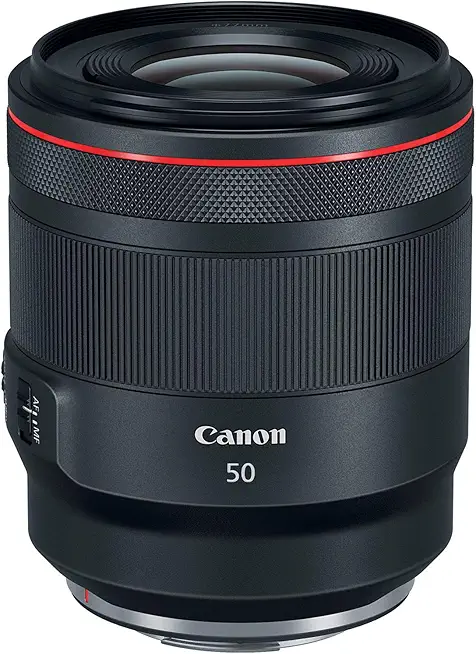
Canon RF 50mm f/1.2L USM
Ultra-fast standard prime delivering creamy bokeh and exceptional low-light performance for portrait and street photographers.
Check PriceThe Canon RF 50mm f/1.2L USM is frequently cited as the ultimate low-light lens for wedding photography, and for good reason. I reach for it in dim ceremonies and reception halls where every available stop of light matters; its exceptional low-light performance gives clean images even at high ISO.
Wide open its extremely shallow depth of field isolates the subject beautifully, producing dreamy, romantic portraits with stunning background blur (bokeh). The lens’ natural perspective and minimal distortion make it a favorite for bridal portraits and intimate couple moments — you get flattering, true-to-life results without fussing over perspective correction.
In practice the Canon RF 50mm f/1.2L USM is impressively sharp across the frame, even wide open, which means you can rely on edge-to-edge detail when you need it. Autofocus is fast and reliable, holding up well in challenging lighting and with moving subjects, so you can concentrate on timing and expression rather than missed focus.
That said, the lens demands respect. The extremely shallow DOF can make focusing tricky, especially for beginners or during fast-paced moments, so I recommend precise focus technique and taking a few extra frames when the aperture is wide open. Also be aware it’s heavy and can be tiring to carry during long wedding days, particularly when paired with larger camera bodies.
- Exceptional low-light performance — clean at high ISO
- Stunning bokeh for romantic portraits
- Consistently praised sharpness, even wide open
- Robust build quality for long wedding days
- Heavy and tiring to carry
- Extremely shallow DOF makes focusing tricky
2. Sony FE 85mm f/1.4 GM

Sony FE 85mm f/1.4 GM
Professional short-telephoto lens with stunning sharpness and buttery background separation, ideal for flattering portraits and tight headshots.
Check PriceThe Sony FE 85mm f/1.4 GM is a go-to portrait lens for wedding photographers who want emotion and separation in every frame. It’s widely regarded for capturing intimate exchanges and those quiet, cinematic moments that make album pages come alive.
Optically this lens delivers exceptional sharpness and detail even wide open, which means you can rely on it for tack-sharp eyes and texture at f/1.4. The creamy, smooth bokeh softens backgrounds beautifully and helps isolate couples and subjects in a way that feels romantic rather than clinical.
In practice I use it to shoot candid moments from a respectful distance — first looks, whispered vows, and private exchanges — because it lets you stay unobtrusive while still getting close-feeling portraits. Autofocus is fast and accurate, suitable for still and moving subjects, and performs reliably in low light, so you won’t miss those fleeting expressions during dim ceremonies or receptions.
The build is reassuringly solid, with excellent build quality and weather-resistant design that stands up to long wedding days and unpredictable venues. Be aware it’s relatively heavy to carry all day, and the shallow DOF at f/1.4 can make critical focus more demanding, especially for photographers still mastering fast-paced wedding scenarios.
Overall, if you prioritize beautiful subject separation, rock-solid image quality, and discreet candid shooting, this lens is an excellent investment — provided you’re comfortable managing its weight and the precision focusing f/1.4 requires.
- Exceptional sharpness and detail, even wide open
- Smooth, natural bokeh that enhances portraits
- Fast, reliable autofocus even in low light
- Excellent build quality with weather-resistant design
- Relatively heavy to carry all day
- Shallow DOF can make focusing challenging for beginners
3. Tamron 35-150mm f/2-2.8

Tamron 35-150mm f/2-2.8 Di III VXD for Sony E-mount
Versatile fast-range zoom spanning wide to tele with exceptional sharpness and fast aperture for travel, events, and run-and-gun shooting.
Check PriceAs a working wedding photographer I often reach for the Tamron 35-150mm f/2‑2.8 because its f/2–2.8 aperture and wide focal range let you move from scenic wide-angle frames to intimate telephoto portraits without changing glass. That kind of flexibility keeps you present for moments instead of fiddling with lens swaps during vows or first dances.
Optically it produces good bokeh and solid subject separation, especially as you push toward the longer end, which helps the couple pop from busy backgrounds. I regularly use it for scenic venue shots, group portraits and candid moments where one versatile lens simplifies coverage. For many photographers it works brilliantly as a single-lens solution or a reliable backup when packing light is essential.
One of the nicest practical touches is how compact and lightweight it is compared with peers in the same class; you’ll notice the difference after ten hours on your feet. The weather-resistant design also gives confidence on unpredictable days and outdoor ceremonies.
That said, there are real trade-offs you need to accept. Users report inconsistent focus accuracy and a higher rate of out-of-focus results versus some other optics, which can be costly during decisive moments. It can also be slow to focus in low light, so it’s not the ideal choice if you need absolutely instant AF in dim receptions.
In short, this Tamron is a strong, practical option for shooters who want one go-to zoom that covers most wedding scenarios and delivers pleasing background separation at the tele end. Just be mindful of its autofocus limits and plan your shooting style around them.
- Versatile focal range — no lens changes
- Good bokeh and subject separation at tele
- Compact and lightweight for long days
- Weather-resistant design
- Inconsistent focus accuracy
- Slow to focus in low light
4. Nikon Z 85mm f/1.2 S

Nikon NIKKOR Z 85mm f/1.2 S
Ultra-premium portrait optic delivering unmatched resolution and dreamy bokeh, engineered for high-resolution mirrorless bodies and creative shallow-depth imagery.
Check PriceThe Nikon Z 85mm f/1.2 S is a dream for portrait-driven wedding photographers who prioritize image quality. It’s highly regarded for exceptional sharpness and detail, which makes intimate moments and emotional portraits look surprisingly vivid.
What really sells this glass is the natural, creamy bokeh that enhances romantic wedding images. Backgrounds melt away, letting faces and expressions take center stage without distraction.
It’s also a practical choice for discreet shooting. Photographers often use it to capture candid moments from a distance—first looks and private exchanges—without intruding on the scene.
Autofocus is fast and accurate, even in low light, so you can rely on it for both still and moving subjects during dim ceremonies or reception lighting. The lens also offers excellent build quality with weather-resistant design, which gives confidence during long, unpredictable wedding days.
This lens does demand respect. It’s relatively heavy and can be tiring to carry all day, and the very shallow depth of field at f/1.2 requires precise focusing—something that can be tricky in fast-paced situations. If you’re an experienced shooter who values sharpness, creamy bokeh, and reliable AF in low light, this lens is mostly a win. If you’re newer to fast primes or need ultra-light gear, be mindful of the trade-offs.
- Exceptional sharpness and detail, even wide open.
- Smooth, natural bokeh that enhances portraits.
- Fast, reliable autofocus in low light.
- Excellent build quality with weather-resistant design.
- Relatively heavy and can be tiring to carry all day.
- Shallow DOF can make focusing challenging, especially for beginners.
5. Sigma 50mm f/1.4 DG HSM Art

Sigma 50mm f/1.4 DG HSM Art for Canon
High-performance standard prime offering razor-sharp detail, smooth bokeh, and robust build for demanding photographers and creative low-light work.
Check PriceThe Sigma 50mm f/1.4 DG HSM Art is a workhorse I reach for when I want razor‑sharp wedding portraits with beautiful subject separation. It’s highly regarded for excellent sharpness and produces stunning images with a natural perspective and minimal distortion.
In practice it excels for bridal portraits and intimate couple moments because the background separation and bokeh help isolate your subjects and create that dreamy, romantic look. It’s also discreet enough for candid moments like first looks or private exchanges, so you can stay close without intruding.
Autofocus on this lens is fast and reliable, even in low light, which is critical during dim ceremonies and reception dances. That reliability lets you focus more on timing and emotion and less on missed shots when the light drops.
The build quality is solid, designed to withstand long wedding days and plenty of handling. Be aware, though, that it’s relatively heavy and can be tiring to carry for an entire day of non‑stop shooting.
Another practical consideration is the lens’s very shallow depth of field when used wide open; it yields beautiful results but demands precise focusing in fast‑paced situations. If you’re comfortable with careful focus technique, this lens will elevate your portrait work and low‑light performance.
- Excellent sharpness and detail, even wide open
- Beautiful background separation and bokeh
- Fast, reliable autofocus in low light
- Robust build quality for long wedding days
- Relatively heavy and tiring to carry
- Shallow DOF makes focusing challenging in fast situations
When To Use Lenses On Wedding Day
Lenses dictate how you tell a wedding’s story. Early in the day I favor wide-angle primes — 24mm or 35mm at f/1.4–f/1.8 — for prep and venue shots because they include context, handle low light, and let you stay close without crowding the moment.
Use a 24mm in cramped hotel rooms and a 35mm when you want environmental storytelling. Wide primes also excel on dance floors and during candid coverage where movement and space matter. Their large apertures keep the mood without resorting to flash.
A 24–70mm f/2.8 is the true workhorse for most weddings. It covers group portraits, quick candids and wider scene-setting without swapping glass, and it’s the best single-lens compromise if you have to travel light. Rely on it when the light is decent and the pace is fast.
For portraits and intimate exchanges reach for medium telephoto primes — 50mm and 85mm at f/1.2–f/1.8. These lenses give you creamy bokeh and flattering compression, perfect for bridal portraits and first looks. They also perform very well in dim ceremonies without blowing out highlights.
Keep a 70–200mm f/2.8 handy for discreet coverage. From a distance it compresses backgrounds and captures genuine emotion without interrupting vows or speeches. It’s also a great way to isolate details and create clean family portraits from the back of the room.
Pack a macro like a 100mm f/2.8 for rings, bouquet close‑ups and paper textures. Those tiny images add narrative weight and are often the couple’s favorites. Shoot rings on a clean surface near a window or with a small reflector to get sparkle and detail.
Think in blocks: wide-angle for prep and venue, standard zoom for general coverage, medium teles for portraits and ceremony, telephoto for unobtrusive candids, and macro for details. If you can, run two bodies with different lenses to avoid swaps; if not, plan your changes around clear transitions so you’re ready when the moment arrives.
Benefits Of Prime Lenses For Wedding Portraits
If I had to name one change that lifts wedding portraits immediately, it’s shooting primes. They simply render faces and emotions with more clarity and soul than most zooms. That extra sharpness and that creamy background separation give portraits a timeless, intimate feel.
Technically, primes achieve that because they use fewer optical elements and wider maximum apertures. That translates to cleaner contrast, less distortion and better low‑light performance—so you can keep ISO down and skin tones natural even during dim ceremonies. The large apertures also let you sculpt a very selective plane of focus, which is magic for isolating a bride’s expression or a groom’s quiet moment.
Beyond image quality, primes change how you work. A fixed focal length forces you to move, think and compose deliberately. Step closer with a 35mm to include context, use a 50mm for a natural look, or pull back with an 85mm to compress features and create flattering distance—each choice affects mood, and primes make that an intentional decision.
Practical tips make primes even more useful. When shooting very shallow apertures, focus the nearest eye and use single‑point AF or eye‑AF to avoid missed shots. For two people, stop down to f/2–f/2.8 or simply step back to widen the depth of field. And because primes are usually lighter and less intrusive, you’ll move faster and keep couples comfortable throughout the day.
They’re not magic—primes demand practice and an understanding of distance and depth of field—but once you get comfortable, they become your go‑to for portraits. Pack two fast primes that complement each other and let the lenses dictate creative choices instead of letting the camera dictate them. You’ll end up with cleaner, more emotional images that read beautifully across screens and prints.
What People Ask Most
What lenses do wedding photographers use?
Wedding photographers use a mix of primes and zooms to cover different moments. Choices typically include wide-angle, standard, medium-telephoto, and telephoto lenses to handle everything from group shots to intimate portraits.
Which lens is best for wedding photography?
There is no single best lens; the right choice depends on the shooting scenario and personal style. Many photographers prioritize lenses that perform well in low light and produce pleasing background separation.
Is a 50mm lens good for wedding photography?
Yes, a 50mm is widely used for wedding work because it offers a natural perspective suitable for portraits and candid moments. It balances subject isolation and environmental context well.
Is an 85mm lens good for wedding photography?
Yes, an 85mm is favored for portraits and intimate moments because it compresses features attractively and keeps distance from subjects. It helps produce smooth background separation for flattering images.
Should I use prime or zoom lenses for wedding photography?
Both have advantages: primes often offer wider apertures and sharper images, while zooms provide flexibility to change framing quickly. Many photographers use a combination to cover all situations.
What focal length is best for wedding photography?
There is no single best focal length; effective coverage comes from using a range from wide to telephoto depending on the scene. Match focal length to the space and the type of shot you need.
Do I need a wide-angle lens for wedding photography?
A wide-angle lens is very helpful for capturing venue context, group shots, and tight indoor scenes. It allows you to include environment and storytelling elements that medium and telephoto lenses might miss.
Conclusion For Best Lenses For Wedding Photography
Choosing wedding lenses is ultimately about balancing strengths and trade-offs: fast wide-aperture primes give dreamy bokeh and strong low-light performance but can be heavy, costly, and demanding to focus, while zooms provide coverage and convenience at the expense of the widest apertures and, occasionally, consistent focus in challenging light.
Medium-telephoto options offer flattering compression and unobtrusive candid work, versatile zooms cover wide to telephoto needs for run-and-gun days, and dedicated short-focus lenses handle the small details that tell the full wedding story.
Match your kit to the venue, your shooting style, and your budget—aim for a reliable primary portrait option, a flexible coverage lens, and a dedicated detail solution when possible.
Practice with the combinations you own and prioritize lenses you can focus and move with confidently during a long wedding day, since consistent results beat theoretically perfect gear you rarely use well.
If you want to sharpen your choices and technique, read more articles on our site to build both knowledge and confidence behind the camera.
Have a specific setup or scenario in mind? Leave a comment below—we usually reply within a few hours and are happy to help tailor recommendations.



0 Comments