

How many game‑winning frames have you lost because your lens couldn’t follow the action? In sports photography the difference between a keeper and a throwaway often comes down to equipment that can track, focus, and isolate a subject at speed.
This article compares five Sony lenses built to lift your keeper rate across courts, fields, and arenas. We cut through specs‑speak with real‑world testing so you can make a practical pick for your shooting style.
Our evaluation centers on autofocus speed and accuracy. We also look at focal length versatility, aperture performance, image stabilization, and weight and handling to judge real shooting trade‑offs.
You’ll find hands‑on impressions from sideline and indoor shoots, plus notes on mobility and endurance during marathon sessions. We translate technical strengths into clear benefits like higher keeper rates, fewer missed plays, and less fatigue on long assignments.
Whether you shoot high‑school gyms, club matches, or wide‑open pro fields, this guide narrows choices to what actually matters on the sideline. Ready to get the shot? Read on and discover which Sony lens types pair best with your camera, sport, and budget.
This primer is for shooters of all levels, from weekend parents to pro staffers. We’ll help you match lens performance to the game you shoot and the gear you already own.
1. Sony FE 70-200mm f/2.8 G Master
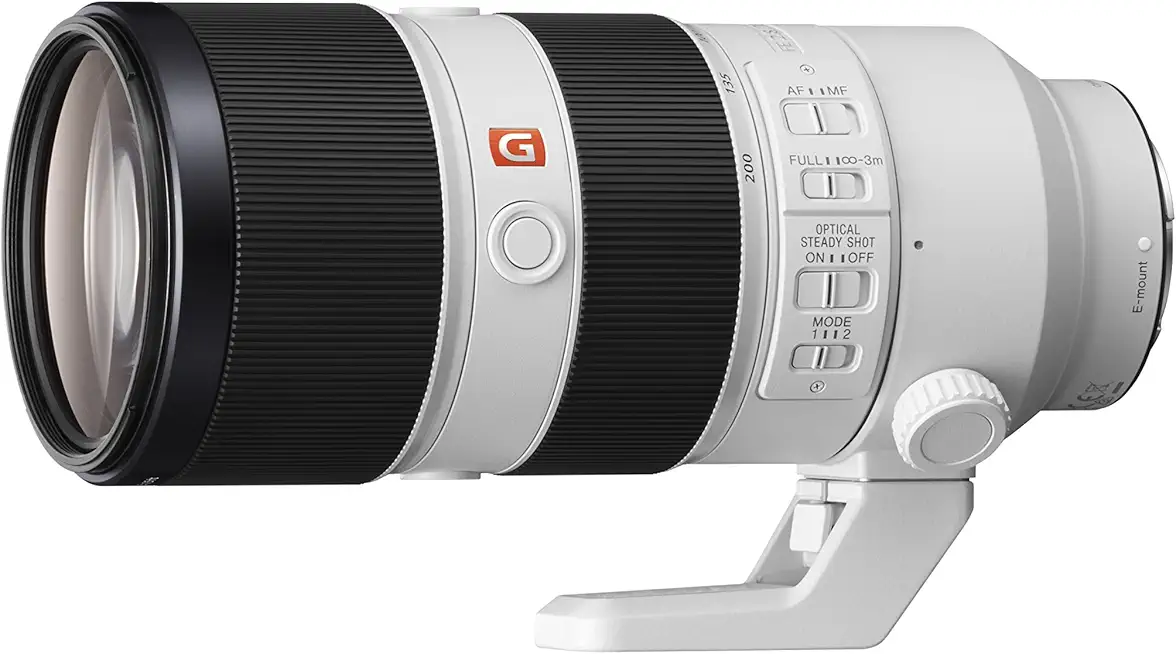
Sony FE 70-200mm f/2.8 GM OSS
Professional constant f/2.8 telezoom delivering exceptional sharpness, fast autofocus, and reliable stabilization for sports, portraits, and low-light shooting.
Check PriceThe Sony FE 70-200mm f/2.8 G Master is the workhorse telephoto zoom I reach for when I need consistency and speed. It’s a versatile 70–200mm zoom with a constant f/2.8 aperture that delivers both subject isolation and reliable low-light performance.
In the field it’s praised for sharpness and color fidelity, and that matches my experience — images are consistently sharp across the frame. The fast, precise autofocus locks onto peak-action moments so you get the decisive frame more often than not.
The focal range is ideal for mid-distance outdoor action and tighter indoor court sports, so you can cover a variety of assignments without swapping lenses constantly. That constant f/2.8 gives you the shallow depth of field and faster shutter speeds needed in dim venues or under variable lighting.
Handling feels professional: the G Master construction is robust and weather-sealed, so you don’t worry about dust or light rain during long shoots. Be aware it’s heavier and larger than some alternatives, so expect more fatigue on marathon shoots or when you’re carrying it all day.
Bottom line — if you’re a photographer who wants a reliable, all‑round sports zoom that prioritizes sharpness, AF performance, and low‑light capability, this lens is a strong choice. If you need something ultra-light for casual use, the size and weight may give you pause.
- Consistently sharp across the frame
- Fast, accurate autofocus
- Constant f/2.8 for low-light and depth control
- Robust build and weather sealing
- Heavier than some alternatives
- Size may be prohibitive for casual users
2. Sony FE 100-400mm f/4.5-5.6 OSS G Master

Sony FE 100-400mm f/4.5-5.6 GM OSS
Versatile super-tele zoom providing long-range reach, crisp optics, smooth autofocus and effective stabilization for wildlife, aviation, and action photography.
Check PriceThe Sony FE 100-400mm f/4.5-5.6 OSS G Master is a sports-ready telezoom that stretches to 400mm while keeping the whole package surprisingly mobile. It carries Optical SteadyShot (OSS) to help with shake at long focal lengths and is tuned to balance image quality with portability. For field sports where distance matters, that combination is a real advantage.
In practice this lens is sharp across the zoom range and delivers reliable autofocus for unpredictable subjects, which is exactly what you need when action moves toward or away from you. The f/4.5-5.6 aperture is sufficient for daytime outdoor use, so on bright afternoons you’ll bank crisp, well-resolved frames. The OSS comes into play when you want to avoid raising ISO or when panning with slower shutter speeds.
Handling is solid — the construction feels durable and it’s weather-sealed, so I’ve been comfortable using it in variable outdoor conditions. Autofocus tracking is smooth and confident, letting you lock on and keep follow-through without constant hunting. That makes it versatile for mixed shooting where you might need both wider context and tight crops without swapping lenses.
If you’re a shooter who needs extended reach without carrying several heavy primes, this lens is aimed at you. It’s ideal for photographers working sideline or field sports who value reach and reliability over extreme low-light performance. Just be aware the relatively slow aperture will limit indoor or late-evening use, and the lens is on the heavier and bulkier side compared to more compact telephoto options.
- Sharp, consistent image quality
- Smooth, reliable autofocus tracking
- Effective Optical SteadyShot (OSS)
- Well-built and weather-sealed
- Slow aperture limits low-light/indoor use
- Heavier and bulkier
3. Sony FE 200-600mm f/5.6-6.3 G OSS

Sony FE 200-600mm f/5.6-6.3 G OSS SEL200600G
Extreme telephoto range with rugged build, reliable stabilization and responsive autofocus for distant subjects like birds, wildlife, and outdoor sports.
Check PriceThe Sony FE 200-600mm f/5.6-6.3 G OSS is a true super-telephoto zoom that gives you 200–600mm reach with built-in OSS, and it’s surprisingly manageable for a 600mm-capable lens. In the field it feels more compact than you expect, which matters when you’re carrying gear all day.
Optically it’s highly regarded for retaining sharpness even at the max 600mm end, and it uses internal focusing so the barrel doesn’t extend as you zoom. That stability in construction also helps with balance on monopods or when handholding for shorter bursts.
Stopped to f/6.3 the lens delivers very good sharpness and strong background separation, so subjects stand out even at long distances. Autofocus is fast and accurate at those long ranges, which is exactly what you want when tracking action on a field or from the sidelines.
For handling, this lens is a strong compromise between reach and portability — compact/relatively lightweight for a 600mm zoom and built with weather sealing. The built-in OSS further reduces camera shake, letting you use slightly slower shutters when the action allows.
If you shoot large venues, sidelines, or any situation where reach is the priority but you don’t want the bulk of primes, this lens is a practical, mostly forgiving option. Just remember the trade-off: that narrow max aperture means you’ll need higher ISO in low light, and AF can be challenged in extreme low-light or ultra-fast action compared with faster primes.
- Impressive long-range sharpness
- Fast, accurate AF at distance
- Compact/relatively lightweight for 600mm
- Built-in OSS and weather sealing
- Narrow max aperture (f/5.6-6.3) needs higher ISO in low light
- AF may struggle in extreme low light or very fast action vs faster primes
4. Sony FE 24-70mm f/2.8 G Master

Sony FE 24-70mm f/2.8 GM SEL2470GM
Signature standard zoom offering premium sharpness, fast aperture, fluid autofocus and versatile focal range for weddings, portraits, and landscapes.
Check PriceThe Sony FE 24-70mm f/2.8 G Master is a standard zoom built around a constant f/2.8 aperture, and it truly shines in close-quarters and indoor sports situations. As a go-to for gymnasiums and tight courts, it gives you the flexibility to move from wide context shots to tighter action without swapping glass. The constant aperture also keeps exposure consistent as you zoom.
In real-world use it’s sharp and locks focus quickly in indoor lighting, which is exactly what you need when moments happen fast. The f/2.8 aperture helps maintain fast shutter speeds under gym lighting so you can freeze motion more reliably. The versatile zoom range reduces the need to change lenses mid-event, meaning fewer missed frames and less distraction.
This lens fits photographers who shoot indoor or close-range sports and need wide-to-tele flexibility in one package. It’s also aimed at users who require a wide aperture for low-light venues and want consistent performance across the zoom. If you value image quality and speed in confined spaces, it’s a highly practical choice.
Build and handling are professional-grade—expect excellent image quality and a robust, weather-sealed body that stands up to regular use. That rugged construction does add weight, so it can feel heavy over long shoots. The trade-off is durability and confidence in challenging environments.
Overall, the 24–70mm f/2.8 G Master is mostly a very good lens for indoor and close-range sports photographers who need sharp images, fast AF, and the flexibility to cover a range of shots without changing lenses. Just be mindful of its limited reach if you regularly need long telephoto framing from the sidelines.
- Constant f/2.8 for low-light
- Excellent image quality and sharpness
- Fast, precise autofocus
- Robust, weather-sealed body
- Limited reach compared to telephoto lenses
- Can be heavy over long shoots
5. Sony FE 70-200mm f/4 G OSS

Sony FE 70-200mm f/4 Macro G OSS II
Compact telephoto with true macro capability, consistent sharpness, close-focusing performance and built-in stabilization for detailed portraits and nature shots.
Check PriceThe Sony FE 70-200mm f/4 G OSS is a compact, lighter 70–200mm telephoto zoom built for shooters who value mobility. It pairs a useful tele range with Optical SteadyShot to keep handheld work surprisingly practical.
In the field the reduced weight makes a real difference. You can follow play for longer without busting your shoulders or needing a monopod.
Autofocus is fast and reliable, so you’ll capture decisive moments in bright outdoor settings with confidence. OSS further helps when you want to dial shutter speeds down a touch for smoother panning or tighter framing.
Image quality is strong for the class, delivering sharp images with good contrast and pleasing color rendition. That combination makes it a solid choice when you need a balance of image quality, AF speed, and portability.
Where it shines is daytime outdoor sports and situations where you’re moving a lot—sideline shooters, travel teams, or anyone switching between shooting handheld and using a light support. Keep in mind the f/4 maximum aperture means it’s not ideal for dim gyms or dusk games, and you won’t get the same subject isolation as lenses with wider apertures.
In short, if you prioritize mobility and dependable AF/stabilization for bright conditions, this lens is an excellent, practical tool. If you routinely shoot low-light indoor sports or crave the creamiest background separation, be prepared to compromise or bring faster glass.
- Lightweight and portable
- Sharp images with good contrast/color
- Fast, accurate autofocus
- Effective OSS for handheld work
- Narrow f/4 limits low-light performance
- Less subject separation/bokeh than faster lenses
Autofocus Speed and Accuracy

Fast, reliable autofocus is the single biggest difference between a hit-or-miss frame and a keeper when you’re shooting sport. Speed alone isn’t enough — the system also has to be accurate and predictable so you can trust it in chaotic moments.
Sony’s higher-end lenses, especially the G Master line, are tuned for that balance. Direct Drive Supersonic Wave Motors (DDSSM) deliver quick, quiet focus shifts that cut down on hunting. Linear Response Manual Focus gives a natural feel when you need to make fast hand corrections between shots.
Lens tech only goes so far; the body matters too. Pair a fast glass with a camera that can process AF and burst frames—models like the A9, A7 IV and A6700, which sustain roughly 10–11 fps—so tracking stays locked while you fire. In some setups that pairing even enables high-speed AF at very small apertures (a noted example is reported compatibility at f/22 with long primes on A9 firmware).
Modern subject and eye-tracking AI will raise your keeper rate more than any single lens spec. For players, eye-tracking is a game-changer, while balls or pucks often need a wider zone or object-tracking mode so the algorithm has room to follow unpredictable motion.
Keep in mind that light and aperture are part of the AF equation. A long zoom that tops out at f/6.3 will struggle in dim gyms compared with a 70–200mm f/2.8 or a fast prime, so favor wider apertures or raise ISO instead of slowing the shutter. Optical stabilization helps steady the frame, but it won’t freeze motion — prioritize shutter speed for sharp action.
Practical workflow tweaks make a big difference: use AF-C, back-button AF, and choose a focus-area mode that fits the sport. Use a focus limiter or pre-focus lanes when motion is predictable, because anticipation still wins where raw AF speed reaches its limits. Test your lens/body combo at practice so you know which settings actually catch the decisive moments.
How Focal Length Affects Sports Shots
Focal length shapes your shot more than any other lens spec and sets your working distance. It decides whether you capture wide context or drive in for dramatic close-ups and expressions. Think about where you can stand, the sport’s scale, and the story you want to tell before you pick glass.
The 24–70mm range is perfect for indoor or close-quarters sports because it keeps you mobile. It lets you include the court, coaches, and crowd to build context around the key action. At f/2.8 you’ll often be able to hold usable shutter speeds under typical gym lighting.
The 70–200mm f/2.8 is the most versatile lens for many sports shooters on the sideline. From head-to-toe action to tight face shots, it balances reach with a fast aperture to freeze motion. I reach for it when I need reliable isolation and flexibility without constantly changing glass.
For field sports, 100–400mm or 200–600mm allow tight frames from the stands or far sidelines. Long glass compresses perspective, which helps isolate players and makes backgrounds appear cleaner and closer. The downside is amplified shake and the need for faster shutter speeds, OSS, monopods, or higher ISO.
Super-telephoto primes like 400mm f/2.8 or 600mm f/4 give the best separation and low-light ability. They deliver incredibly shallow depth of field and crisp subject rendering at extreme distances. Expect significant weight, high cost, and less forgiveness when composing fast-moving subjects.
Remember that longer focal lengths narrow effective depth of field, so focus precision and AF tracking matter. For creative motion, use a mid-tele zoom and slower shutter speeds to pan and blur busy backgrounds. Modern high-resolution Sony bodies let you crop into frames, but it’s still smarter to get framing with glass when possible.
Match your focal length to your shooting position and the sport’s scale and you’ll solve most problems. If you can carry two setups, pair a 70–200mm f/2.8 with either a 24–70mm for indoor work or a 100–400mm for outdoor fields. That pairing gives flexibility across venues and keeps you ready to tell the story, not just reach for it.
What People Ask Most
What are the best Sony lenses for sports photography?
The best choice depends on the sport, shooting distance, and lighting conditions. Choose lenses that balance reach, aperture, and reliable autofocus to match your typical shooting scenarios.
Which Sony telephoto zoom is best for shooting sports?
The ideal telephoto zoom depends on how much reach you need and the venues you shoot. Look for options that deliver consistent autofocus, good image quality, and effective stabilization for handheld work.
Is a telephoto prime or a zoom better for Sony sports photography?
Primes often provide wider apertures and can perform better in low light, while zooms offer framing flexibility without lens changes. Decide based on whether low-light capability or versatility during events is more important for your work.
What focal lengths are ideal for sports photography with Sony cameras?
Shorter focal lengths suit close or indoor action, while mid to long telephoto ranges are better for field sports and distant subjects. Pick focal lengths that let you frame the action from your usual shooting positions.
Which Sony lens offers the fastest autofocus for sports and action?
Higher-end professional lenses are typically designed for quicker and more reliable autofocus tracking. Pairing such lenses with a capable camera body improves the chance of keeping fast-moving subjects in focus.
What Sony lenses perform best for indoor or low-light sports events?
Lenses with wider maximum apertures generally perform better indoors because they allow faster shutter speeds and better subject separation. Also prioritize strong autofocus and a robust build for fast-paced environments.
Can I use APS-C Sony lenses for sports photography on full-frame bodies?
APS-C lenses can be mounted on full-frame Sony bodies, but they may affect framing and image coverage. Verify compatibility and be aware of any trade-offs in framing or resolution before shooting important events.
Conclusion for Sony Sports Lenses
Choosing the right lens category for sports ultimately comes down to matching focal reach, aperture and handling to your venue and shooting style.
This comparison highlighted how the trade-offs between reach, wide aperture and weight affect real-world results, making it easier to prioritize what matters for your events.
Short wide-to-standard zooms work best for close or indoor action, fast mid-telephotos cover most all-around needs in variable light, long telephoto zooms deliver sideline and stadium reach, and lighter tele options favor mobility during extended shoots.
Autofocus speed, tracking reliability and stabilization often have a bigger impact on keeper rates than small optical differences, so choose lenses that pair well with your camera and the motion you expect to capture.
If you want to sharpen your skills and make more confident gear choices, read more of our practical guides and roundups on the site to build technique and strategy for the sports you shoot.
Have a question or a shooting scenario to discuss? Leave a comment below and we usually reply within a few hours.



0 Comments