
Which single lens can handle sweeping coastal vistas, neon-lit alleys, and the tiny, perfect details of a market stall without slowing you down? If you shoot with a Nikon Z camera, choosing the best Nikon lenses for travel photography often feels like a balancing act between weight, reach, and image quality.
This guide pares the choices down to five practical Nikon Z lenses that cover the kinds of scenes most travelers shoot. For each lens you’ll get concise pros, clear cons, and the ideal use cases so you can match gear to itinerary instead of guessing at the airport.
On the road, the math is simple: lighter gear means more shooting, but optics and handling still matter. We focus on real-world performance — how lenses behave in changing light, how autofocus handles candid moments, and whether a lens is comfortable to carry all day.
Rather than diving into lab numbers, this piece highlights what photographers actually notice when lenses are put to work on trips. Expect plainspoken observations about durability, ergonomics, and everyday image quality so you can pick a setup that fits your travel style.
Whether you favor a single versatile zoom or a minimalist prime duo, this guide clarifies the trade-offs so packing is a decision, not a compromise. Read on and you’ll know which Nikon Z lenses earn a spot in your carry-on for the next adventure.
1. Nikon Z 24-200mm f/4-6.3 VR
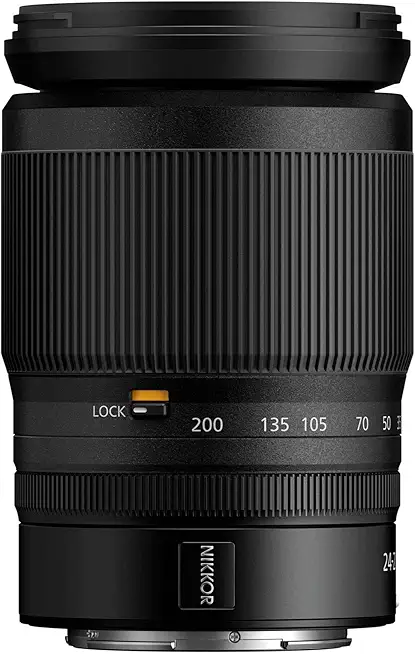
Nikon NIKKOR Z 24-200mm VR
All-in-one travel zoom offering exceptional reach, built-in stabilization, and sharp optics for landscapes, portraits, and distant subjects.
Check PriceThe Nikon Z 24–200mm f/4–6.3 VR is a true super-zoom for Nikon’s full-frame Z mirrorless system. It covers 24–200mm, so it handles everything from wide landscapes to distant details without changing lenses.
In real-world use it’s surprisingly sharp in the center and across most of the frame, a clear step up from many competing super-zooms. That makes it a reliable travel optic when you need good image quality without swapping glass constantly.
Autofocus is fast and accurate, and in everyday shooting it even outperforms some older DSLR lenses I’ve used. The AF behavior is solid for both stills and casual video work, so you won’t miss many decisive moments.
Where this lens really shines for travel is size and weight: it’s compact and lightweight for the range it offers, and the handling and ergonomics feel solid in the hand. There are no reported travel-use issues, so it packs and performs well on hikes and city days alike.
If you prioritize convenience and flexibility over squeezing out the last bit of image quality, this is an excellent one-lens solution. Hikers and urban explorers who want to travel light will find it particularly useful.
Keep in mind the trade-offs: the variable aperture of f/4–6.3 limits low-light capability, so you’ll struggle more indoors or at dusk compared with faster glass. Also, the bokeh isn’t as creamy as what you get from fast primes, which limits portrait potential compared to dedicated portrait lenses.
- 24–200mm unmatched versatility
- Excellent center sharpness
- Fast, reliable autofocus
- Lightweight and easy to pack
- Variable f/4–6.3 limits low-light
- Less creamy bokeh for portraits
2. Nikon Z 24-70mm f/4 S

Nikon NIKKOR Z 24-70mm f/4 S
Compact constant-aperture standard zoom delivering consistent performance, crisp detail, and smooth bokeh for everyday and professional shooting.
Check PriceThe Nikon Z 24-70mm f/4 S is a compact, high-quality standard zoom that punches well above its “kit” lens reputation. Its 24–70mm range covers the essentials for landscapes, street and portraits without adding bulk to your travel bag.
Sharpness is where this lens really shines; users regard it among the sharpest standard zooms and it can out-resolve some pro DSLR glass. That clarity makes it an excellent all-purpose walkaround for photographers who want clean files without hauling primes.
Handling is very travel-friendly — the lens is lightweight with a retractable barrel for better packability. It also carries S-line dust and moisture sealing, so it stands up to unpredictable conditions on the road.
For steady hand-held shooting the lens helps a lot: it has reliable built-in VR and benefits from in-body stabilization in Z bodies. Autofocus is smooth and quiet, which is useful for both candid stills and run-and-gun video work.
If you shoot a lot in low light or want very shallow depth of field, note the trade-off: it’s a fixed f/4 aperture lens, so it won’t blur backgrounds as strongly as faster zooms or primes. Also, the reach stops at 70mm, so you’ll miss tighter telephoto framing and there’s no macro capability.
- Outstanding sharpness and optical quality for a kit lens
- Compact and lightweight—easy to pack for travel
- S-line dust and moisture sealing
- Smooth autofocus for photo and video
- Fixed f/4 aperture limits low-light and shallow DOF
- Limited reach; no macro capability
3. Nikon Z 14-24mm f/2.8 S

Nikon NIKKOR Z 14-24mm f/2.8 S
Ultra-wide fast-aperture lens producing dramatic perspective, edge-to-edge sharpness, and low-light capability for landscapes and astrophotography.
Check PriceThis is a premium ultra-wide zoom designed for Nikon Z shooters who want the best optical performance in demanding situations. As a working photographer I rely on its “flawless” optics — corners stay sharp even at f/2.8, and there’s very little distortion, vignetting or chromatic aberration to fight in post.
It’s impressively resilient to flare and handles backlight and sunstars far better than its F‑mount predecessor, which makes it a go-to for sunrise/sunset landscapes and nightscapes with bright light sources. The lens accepts regular filters — a rare and practical feature at 14mm — so you can use grads and ND filters in the field without awkward holder rigs.
Build-wise the lens is semi-retractable and relatively lightweight for its class, with the S‑line weather sealing I trust on long trips and in iffy conditions. Those traits, combined with the ultra-wide coverage, make it ideal for landscapes, astrophotography and shooting tight interiors or architecture where you need extreme field of view without compromise.
It is a pro-level tool, so it doesn’t come cheap and it’s more lens than a casual shooter usually needs. If you prioritize edge-to-edge sharpness, excellent flare control and the ability to use standard filters at extreme wide angles, this lens will become a favorite in your travel kit.
- Class-leading sharpness even at f/2.8
- Excellent flare resistance for challenging light
- Accepts standard filters (rare at 14mm)
- Robust, weather-sealed S-line construction
- Large 112mm filter thread — expensive accessories
- Heavy compared to primes/slower zooms
4. Nikon Z MC 105mm f/2.8 S Macro

Nikon NIKKOR Z MC 105mm f/2.8 VR S
Short-telephoto macro with true 1:1 magnification, precise close-up performance, fast aperture, and image stabilization for stunning detail.
Check PriceThe Nikon Z MC 105mm f/2.8 S Macro is a dedicated macro that doubles as an excellent short telephoto for portraits and detailed work. As a traveling photographer I keep this lens when I want true close-up capability without dragging a separate macro kit.
Macro performance is the headline: unmatched sharpness, contrast and bokeh for close-up work, and it even surpasses Nikon F‑mount macro lenses in real-world use. Optical corrections are excellent too — minimal vignetting, distortion and chromatic aberration even wide open — so you get clean, usable files straight from the camera.
Handling and build feel serious and dependable. The lens is solid and weather-sealed, and the smooth focus ring makes precise manual focus comfortable for focus-stacked florals, food or product shots.
It’s also a very capable portrait lens. The rendering is flattering and the bokeh is creamy, so you can switch from tight macro frames to subject isolation without fuss. For travel that mixes food, flora and portraits, this lens covers those needs beautifully.
There are trade-offs to consider. It’s heavier and bulkier than non-macro 105mm primes, so if you prioritize minimal weight it may feel like overkill on long hikes. Also, there’s no teleconverter compatibility, which limits reach for distant wildlife or sports shooting.
If your travel photography includes a lot of detail work — food, flowers, textures — and you want portrait capability with superb optics, the Z MC 105mm f/2.8 S is a strong, mostly straightforward choice.
- Exceptional sharpness and contrast
- Beautiful, smooth bokeh
- Robust, weather-sealed build
- Very versatile for detail shots and portraits
- No teleconverter compatibility
- Heavier and bulkier than non-macro 105mm primes
5. Nikon Z 24-120mm f/4 S

Nikon NIKKOR Z 24-120mm f/4 S
Versatile walkaround zoom with constant aperture, reliable autofocus, and high-resolution optics for travel, events, and everyday photography.
Check PriceAs a travel lens, the Nikon Z 24-120mm f/4 S is a remarkably useful all-rounder. It covers a broad focal range that easily handles wide landscapes, street scenes and short-telephoto portraits without swapping glass.
Optically it’s strong — excellent sharpness across most of the frame with only minor softness at the extreme ends of the zoom. That means reliably crisp files for prints and cropping, while still giving you flexibility on the go.
Build and handling are professional-grade. The S-line construction is robust and weather-sealed, so you can keep shooting in damp or dusty environments without worry. Autofocus is fast, silent and dependable, which is great for both stills and run-and-gun video.
The constant f/4 aperture is a practical compromise: it’s better in low light than many variable-aperture super-zooms and keeps exposure consistent through the range. The trade-offs are size and speed — it’s a bit larger and heavier than the smallest travel zooms, and f/4 won’t rival f/2.8 glass for subject isolation in dim light.
- Broad, flexible focal range for landscapes to short telephoto
- Constant f/4 aperture for consistent exposure and better low-light than variable zooms
- Robust, weather-sealed S-line construction
- Fast, quiet AF suitable for stills and video
- Slightly larger and heavier than the most compact travel zooms
- f/4 max aperture limits low-light and shallow-depth-of-field options
Focal Lengths for Travel Photography
When I plan a travel shoot, I think in focal lengths first, not brand names or models. Wide, normal and telephoto choices determine the images I can make and how much kit I carry. Let your itinerary and shooting style steer those decisions—focus on what you’ll actually shoot.
For landscapes, architecture and tight interiors, 24–35mm is indispensable. I use 24mm for drama and wide vistas, and 28–35mm when I want less distortion. They help exaggerate foregrounds for depth or capture cramped rooms where stepping back isn’t possible.
The 35–50mm standard range mirrors how we see the world and suits street work and environmental portraits. 35mm gives context and story; 50mm tightens composition and aids subject isolation and low-light shooting. If you travel light, a 35mm prime often covers most candid and everyday shooting.
Tele lenses in the 70–135mm band deliver compression, background separation and reveal distant details. An 85mm or 105mm prime flatters portraits, while a 70–200mm zoom spans environmental portraits to distant wildlife. Remember tele adds weight and slows framing in crowds, so balance reach with mobility.
Primes deliver speed, lighter weight and beautiful bokeh; zooms give you coverage and reduce lens changes. For many trips a single, versatile zoom—something in the 24–70mm or 24–105mm family—or a compact super-zoom will handle roughly ninety percent of situations. Alternatively, two small primes like 35mm and 85mm offer excellent image quality while keeping your bag slim.
My practical rule is to prioritize the focal lengths you actually use and resist packing every lens you own. Keep one lens on the camera and choose the combo that matches your travel style: wide for landscapes, standard for city life, tele for portraits and wildlife. That approach keeps you shooting more and carrying less—always the best recipe for memorable travel images.
How to Choose a Travel Lens
Choosing the right travel lens starts with thinking about what you’ll actually shoot. Landscapes, street candids and distant wildlife all demand different focal ranges.
If you want to travel light, a single versatile zoom that spans wide to short telephoto—24–70, 24–105 or 24–200—will handle most scenes. A 24–120 gives extra reach without too much bulk; a 24–200 covers everything but trades off aperture and bokeh.
Size and weight matter on long days—pick compact glass if you’ll be hiking or city-wandering. Primes save grams and often give wider apertures, while modern mirrorless zooms balance size with flexibility.
Aperture matters more than the marketing sheet; f/1.8–f/2.8 primes and f/2.8 zooms shine in dim interiors and night scenes and give better subject separation. Constant f/4 zooms are a useful compromise; variable-aperture super-zooms are lighter but struggle indoors after sunset.
Weather sealing and a sturdy build are underrated—dust or rain can end a shoot quickly far from a camera shop. If you plan to shoot in exposed or unpredictable environments, favor lenses with reliable sealing.
Fast, quiet autofocus makes the difference for candid moments and moving subjects. At the same time, a smooth manual-focus ring is invaluable for macro, landscapes and deliberate work.
Optical quality matters, but don’t let chasing perfect sharpness cost you the trip. Primes usually give the best bokeh and low-light performance, while many modern zooms are impressively sharp across the frame.
A practical kit for most trips is a capable zoom plus a single fast prime—think 24–70 or 24–120 paired with a 35mm or 50mm f/1.8. If weight is paramount, go all-in with an all‑in‑one 24–200; if landscapes or astrophotography are the focus, prioritize a fast ultra-wide instead.
Pick lenses that cover the focal lengths you’ll actually use and prioritize size, usable aperture and weather resistance over headline specs. In most cases a thoughtful two-lens setup or one capable zoom will keep you shooting more and lugging less.
What People Ask Most
What are the best Nikon lenses for travel photography?
The best lenses balance focal coverage, size, and image quality to match your shooting style. Many travelers prefer a versatile zoom paired with a compact prime to cover most situations.
Which Nikon zoom lens is best for travel photography?
Choose a zoom that covers the focal lengths you use most while staying compact and lightweight. A standard walkaround zoom or a broader-range travel zoom are common choices depending on how much reach you need.
What is the best lightweight Nikon lens for travel?
Lightweight options include compact primes and smaller zooms that reduce pack weight and fatigue on long days. Prioritize lenses that give you the focal lengths you use without unnecessary bulk.
What focal length Nikon lens is best for travel and landscape photography?
Wide to standard focal lengths are most useful for landscapes and cityscapes, with wider views capturing expansive scenes and standard views offering more context. Choose the range that matches the scenes you shoot most often.
Is a prime or zoom Nikon lens better for travel photography?
Primes tend to be lighter and can offer better low-light performance and subject isolation, while zooms provide flexibility and reduce the need to change lenses. Your choice should reflect whether portability or versatility is more important for your trips.
What are the best Nikon lenses for travel portraits and street photography?
Standard and short telephoto focal lengths work well for flattering portraits, while slightly wider and standard lenses are ideal for candid street work and environmental portraits. Pick lenses that let you frame naturally and move freely in crowded spaces.
Do I need a full-frame Nikon lens for travel photography or will DX lenses suffice?
Both full-frame and DX lenses can be excellent for travel depending on priorities like field of view, cost, and weight. DX lenses can be lighter and more affordable, while full-frame options often offer wider perspectives and better control in challenging light.
Conclusion for Nikon Travel Lenses
Ultimately, the best travel lens is the one that matches your shooting style, weight tolerance and the kinds of images you want to come home with.
Many photographers choose either a single all-purpose zoom to cover most scenarios or a compact zoom paired with a fast prime for low-light and creative control.
Mirrorless systems often offer smaller, lighter lens options than older DSLR glass, but keep weather sealing and aperture trade-offs in mind when balancing performance and portability.
Prioritize the focal lengths you’ll actually use, avoid overpacking, and remember that a well-chosen two-lens kit will handle the vast majority of travel situations.
If you want to sharpen your gear choices and shooting approach, read more articles on the site to build skills and confidence at your own pace.
Have questions or tips from your own trips? Leave a comment below and we’ll usually reply within a few hours.



0 Comments