
Which telephoto lens will make your Sony A7 IV sing when subjects are distant and the action refuses to wait? This guide compares five top telephoto lenses for the Sony A7 IV and recommends the best options by use case.
Whether you chase birds at dawn, cover a weekend soccer match, craft intimate portraits, or run event coverage, the right long lens changes everything. This roundup was written with A7 IV owners in mind, from ambitious enthusiasts to working pros.
We evaluated each candidate for real‑world performance, handling, autofocus consistency, and stabilization so the choices make sense on the job. We also weighed practical trade‑offs like size, weight, and value so you can match glass to your workflow.
Expect clear, use‑case‑driven recommendations instead of a one‑size‑fits‑all winner. Each pick balances reach and speed against portability and budget so you know the real trade‑offs before you buy.
Whether you prize handheld agility or crave extreme reach and subject isolation, we’ll steer you toward lenses that fit your shooting priorities. Keep reading to find the telephoto that will transform your next A7 IV outing.
We’ll highlight which lenses shine in low light, which favor portability, and which deliver maximum reach without compromise. Our goal is to save you time and help you pick the right telephoto for the way you shoot.
1. Sony FE 70-200mm f/2.8 GM OSS II
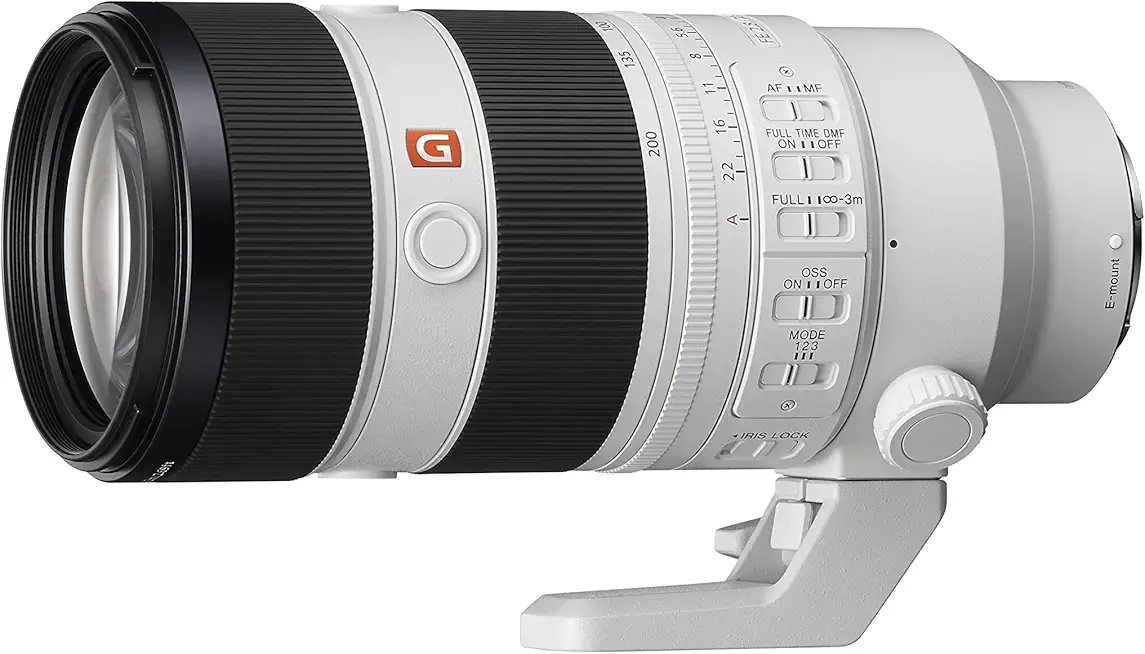
Sony FE 70-200mm F2.8 GM OSS II (SEL70200GM2)
Pro-grade short-telephoto zoom with constant f/2.8, lightning-fast autofocus and superior stabilization for portraits, events, and sports.
Check PriceThe Sony FE 70-200mm f/2.8 GM OSS II is widely regarded as the top telephoto zoom for Sony full-frame bodies like the A7 IV. It delivers exceptional sharpness and contrast across all focal lengths, so your images look clean and detailed from edge to edge.
Autofocus is fast and accurate, and it can track fast-moving subjects reliably, which makes this lens a real workhorse for sports, wildlife, and portraiture. The constant f/2.8 aperture helps in low light and gives you consistent subject isolation throughout the zoom range.
Optical SteadyShot (OSS) makes handheld shooting far more practical, and the II version is lighter and more compact than its predecessor. Handling and balance on the A7 IV are noticeably improved, which matters during long shoots and quick reframing.
This lens is built to professional standards — weather-sealed and robust — so it holds up in the field. It’s aimed at professionals and serious enthusiasts who need premium performance and versatile telephoto capability. Keep in mind it’s still relatively large and heavy for extended handheld use, and it comes at a premium price, so factor that into your decision.
- Outstanding edge-to-edge sharpness and high contrast
- Reliable, fast autofocus and subject tracking
- Effective OSS for handheld shots
- Weather-sealed, robust build
- Still relatively large and heavy for extended handheld use
- Expensive for budget-conscious buyers
2. Sony FE 300mm f/2.8 GM OSS

Sony FE 300mm F2.8 GM OSS
Ultra-telephoto prime delivering exceptional sharpness, creamy bokeh, and blazing speed for sports, action, and low-light wildlife.
Check PriceThe Sony FE 300mm f/2.8 GM OSS is a premium 300mm prime built for sports and wildlife shooters who need a fast aperture and top-tier image quality. In the field it delivers incredible sharpness even wide open at f/2.8 and produces outstanding bokeh that makes subjects pop against creamy backgrounds.
One of the surprises with this lens is how portable it feels for a 300mm f/2.8 — it’s surprisingly lightweight for its class, which makes long days of handheld work far more manageable. That portability, combined with excellent optics, means you can move quickly and stay nimble when framing fast-moving subjects.
Autofocus is fast and silent, well suited to fast-paced action and even indoor or low-light sports where you need reliable subject acquisition. For shooters on the A7 IV who want peak sharpness, reliable AF, and beautiful subject separation, this lens exceeds expectations in image quality and portability for its class.
Who should buy it? If you’re a pro or serious enthusiast prioritizing low-light performance, shallow depth of field, and dependable AF for birds, athletes, or close-in wildlife, this lens is mostly a no-brainer. If you’re budget-conscious or want tactile aperture control, be aware of the compromises below.
- Exceptional sharpness and contrast
- Fast, precise autofocus for challenging subjects
- Relatively lightweight for handheld use
- Beautiful background blur due to fast aperture
- No aperture ring; some users miss tactile control
- High price point limits accessibility for amateurs
3. Tamron 70-180mm f/2.8 Di III VXD

Tamron 70-180mm F2.8 Di III VC VXD G2 for Sony E-mount
Compact short-telezoom with constant f/2.8, built-in stabilization and ultra-fast focus—ideal lightweight travel lens for portraits and events.
Check PriceThe Tamron 70-180mm f/2.8 Di III VXD is a surprisingly compact, third‑party telephoto zoom that gives you a constant f/2.8 aperture in a much lighter, smaller package. If you shoot long handheld sessions, its portability immediately changes how often you reach for a fast telephoto.
Autofocus is driven by VXD linear motors, which deliver very fast and accurate focusing for stills. The AF is also smooth and silent, making this lens friendly for run‑and‑gun video and hybrid shooters who need quiet focus pulls.
Optically it punches above its price. Sharpness and overall image quality line up with what many photographers expect from top-tier native lenses, with good contrast and pleasing rendering for portraits and event work. Stopped down, the lens performs even better across the frame.
Where it’s a little limited is up close. The minimum focus distance constrains macro-style shooting and tight closeups, so don’t expect true close‑up capability. Some users have also reported a touch of corner softness when shooting wide open, but that largely disappears as you stop down.
In short, this Tamron is ideal if you want an f/2.8 telephoto zoom that won’t weigh you down, and you value fast AF and good optics for portraits, events, and hybrid photo/video work. If you need extreme close‑focus or perfect corner sharpness wide open, think about how you shoot before committing.
- Lightweight and compact for long handheld sessions
- Fast, reliable autofocus driven by VXD linear motors
- High optical quality with good sharpness and contrast
- More affordable than many native f/2.8 telephoto options
- Limited close‑focus distance (less macro versatility)
- Slight corner softness wide open for some users
4. Sony FE 100-400mm f/4.5-5.6 GM OSS

Sony FE 100-400mm F4.5-5.6 GM OSS
Versatile long-range zoom offering superb resolution, weather-sealed construction and dependable stabilization for wildlife and action shooters.
Check PriceThis Sony FE 100-400mm f/4.5-5.6 GM OSS is a premium super-telephoto zoom built for reaching distant subjects without carrying giant primes. It’s designed with wildlife and sports shooters in mind who need long reach plus reliable performance in the field.
Optically it’s excellent — exceptional sharpness and contrast across the zoom range. In practice that means images stay crisp even at the longest focal lengths, with minimal chromatic aberration to worry about in high-contrast scenes.
Autofocus is fast, accurate and suited to unpredictable subjects. The AF is also quiet, which helps when you’re working around skittish animals or in low-noise environments.
Stabilization is another strong point: the lens’ OSS is effective enough to make handheld shooting usable at long focal lengths. Ergonomics and weather sealing round out the package, so this lens feels solid and dependable on location and in adverse conditions.
Realistically, this lens is a great fit if you prioritize reach and image quality without moving up to heavier, bulkier primes. If you often shoot in dim indoor arenas or need consistently wide apertures for subject separation, the variable f/4.5–5.6 aperture is a limitation to consider. Also, it’s larger than many mid-range zooms, so factor that into travel and handheld comfort.
- Excellent image quality even at maximum zoom
- Minimal chromatic aberration
- Fast, silent autofocus for unpredictable subjects
- Strong image stabilization reducing hand-shake blur
- Variable aperture (f/4.5–5.6) limits low-light performance
- Larger than typical mid-range zooms; less portable for some
5. Sony FE 400mm f/2.8 GM OSS

Sony FE 400mm F2.8 GM OSS
Fast super-tele prime delivering unmatched subject isolation, extreme sharpness and robust stabilization for pro sports and wildlife photography.
Check PriceThe Sony FE 400mm f/2.8 GM OSS is an elite prime built squarely for professional wildlife and sports photography, offering the kind of reach and image quality that separates pro work from hobbyist results. Its f/2.8 aperture delivers astonishing sharpness, contrast, and subject isolation with a very shallow depth of field that makes subjects pop off the frame.
Autofocus performance is a standout — extremely fast AF that tracks the fastest moving subjects with confidence, which is crucial when shooting birds in flight or sideline action. Integrated OSS is highly effective at long reach, and combined with the lens’ engineering it has notable handheld usability for its class despite being a serious telephoto.
In practice that means you can grab decisive moments with more keeper-rate on the A7 IV’s high-resolution sensor, especially if you pair fast shutter speeds and the camera’s tracking features. Build quality is robust and weather-sealed, so it holds up in rough field conditions where pro shooters spend long days chasing subjects.
The trade-offs are straightforward: this is a professional tool. The very high cost limits accessibility, and size and weight often require physical effort and sometimes monopod/tripod use for extended sessions — but if your work depends on maximum reach, top-tier optics, and fast AF, this lens is one of the best investments you can make.
- Outstanding optics and sharpness at f/2.8
- Extremely fast, accurate AF for action
- Effective OSS enables more handheld shooting
- Solid, weather-sealed construction
- Very high cost
- Size and weight often need monopod/tripod
Lens Compatibility for Sony A7 IV
The A7 IV uses Sony’s E‑mount, so full‑frame FE lenses are the natural fit. FE glass mounts natively and retains full electronic communication for autofocus, aperture control and lens stabilization. That native link is why most photographers prefer FE lenses on this body.
A‑mount lenses are not directly compatible. You can use adapters such as the LA‑EA3 to get A‑mount glass working with phase‑detection AF. Still, adapters are a compromise — native FE lenses usually give faster, more precise AF and fuller feature support, including OSS and focus‑breathing compensation.
The camera will accept APS‑C E‑mount lenses by switching to crop mode. That gives extra reach but reduces resolution and field of view. With the A7 IV’s 33MP sensor the loss in pixels is noticeable, so weigh the trade‑off between reach and final image detail.
On the optical side, many modern E‑mount telephotos resolve nicely on the 33MP sensor. In practice the sweet spot for critical sharpness is often around f/5.6–f/8. Stop down into that range when you need maximum resolution, and open up when you need shallow depth or faster shutter speeds.
Finally, don’t forget stabilization. The A7 IV’s 5‑axis IBIS (around 5.5 stops) complements lenses without OSS and stacks with lenses that do have OSS for even better handheld performance. For long telephoto work I rely on that pairing — it often turns marginal handheld shots into usable frames.
Telephoto Performance Tips for A7 IV
Shooting telephoto with the A7 IV is as much about technique as gear. Use a high-quality FE telephoto and the camera’s Fast Hybrid AF with subject-recognition to make tracking fast movers simple and repeatable.
Stack stabilization: 5-axis IBIS plus a lens with OSS will save shots, but don’t rely on it alone. Use the inverse-focal-length rule (about 1/400s for a 400mm equivalent) as a starting point, and bump shutter speed for birds or sports. When panning, switch the lens to its panning stabilization mode and practice smooth follow-throughs.
Tune aperture for resolution. On the 33MP sensor you’ll often get the best sharpness around f/5.6–f/8; open up for subject separation or low light, and stop down a third or two to improve corner acuity on softer zooms.
For autofocus run AF-C with tracking and enable eye/animal/bird detection when needed. Back-button focus frees you to recompose, and short 10‑fps bursts combined with practiced panning will lift your keeper rate dramatically.
Teleconverters extend reach but cost stops and can slow AF — verify lens/camera firmware compatibility before relying on them in the field. Remember that every stop lost reduces AF sensitivity and low-light headroom, so plan exposure and ISO accordingly. Use auto-ISO with a shutter-priority or manual-shutter strategy to protect minimum shutter speed, and keep ISO as low as your noise tolerance allows.
Finally, work smarter: monopods or bracing save your arms during long sessions, and pre-focus on expected perches or goal lines to cut reaction time. Support the camera by placing your left hand under the lens and tucking your elbows to your ribs for steadier pans. Small habits — checking focus quickly in-camera and reviewing AF settings between sequences — pay dividends more than chasing marginal lens gains.
What People Ask Most
What is the best telephoto lens for the Sony A7 IV?
There is no single best lens; the right choice depends on your priorities such as reach, aperture, weight, and budget. Select a lens that matches your primary shooting style and handling preferences for the best results.
Which telephoto lens is best for wildlife photography on the Sony A7 IV?
For wildlife, prioritize long reach, reliable autofocus, and good stabilization to keep distant subjects sharp. Choose a lens that balances reach with portability so you can work in the field comfortably.
What telephoto lens is best for sports photography with the Sony A7 IV?
Sports work benefits from fast, accurate autofocus and a focal range that lets you capture action from varying distances. Opt for a lens that allows quick framing and delivers consistent focus tracking.
Is the Sony FE 70-200mm f/2.8 a good lens for the A7 IV?
Yes, it is a strong choice for many shooters due to its image quality, autofocus performance, and low-light capability. Be aware it is a larger, premium option that may be heavier and more expensive than alternatives.
Are third-party telephoto lenses like Sigma and Tamron compatible with the Sony A7 IV?
Many third-party manufacturers produce native E-mount telephoto lenses that work with the A7 IV and support electronic features like autofocus and aperture control. Compatibility and autofocus behavior can vary, so verify model support and firmware before buying.
What is the best telephoto zoom lens for the Sony A7 IV?
The best telephoto zoom balances focal range, image quality, autofocus performance, and handling for your intended use. Choose a zoom that gives you the reach and speed you need while fitting your shooting style and budget.
Can you use full-frame telephoto lenses on the Sony A7 IV?
Yes, full-frame FE lenses designed for the Sony E-mount are fully compatible and provide native electronic communication with the camera. Non-E-mount lenses require an adapter and may not offer the same level of autofocus or feature support.
Conclusion for Sony A7 IV Telephoto Lenses
Choosing a telephoto for the A7 IV comes down to familiar trade-offs: ultimate sharpness, fastest AF, and strong stabilization usually mean larger, pricier glass, while lighter, more affordable options favor portability and hybrid shooting.
Think in use-case terms—prioritize fast apertures and aggressive AF for indoor sports and shallow-background portraits, extra reach for distant wildlife, and compact, steady designs for long handheld event days.
Before you buy, try lenses on your body to judge handling, balance, AF tracking, and how stabilization feels in real shooting scenarios rather than relying solely on specs or reviews.
Check mount and teleconverter compatibility, confirm AF and stabilization behavior with your camera, and test across apertures and shutter speeds that match your typical shooting conditions.
If you want to sharpen technique and make the most of whichever telephoto you choose, explore more how-to and gear guidance on our site to build confidence and speed in the field.
Have questions about a specific setup or experience to share? Leave a comment below and we usually reply within a few hours to help you decide or troubleshoot.


0 Comments