
Want to know if an ultra‑wide zoom can actually change the way you shoot landscapes, interiors, and night skies?
The OM System M.Zuiko Digital ED 7-14mm f/2.8 Pro Micro Four Thirds is pitched as a pro-grade, ultra‑wide solution with a constant f/2.8 for OM SYSTEM/Olympus Micro Four Thirds bodies.
It’s aimed at landscape, architecture, real‑estate, travel and astro shooters who need low‑light reach, weather confidence and quiet AF; I’ve taken it into rain, long nights and tight interiors to see how it performs.
In this review I’ll walk through build, handling, optical behavior, autofocus, corner performance, pros and cons, and real‑world tradeoffs — make sure to read the entire review as I break it down, keep reading.

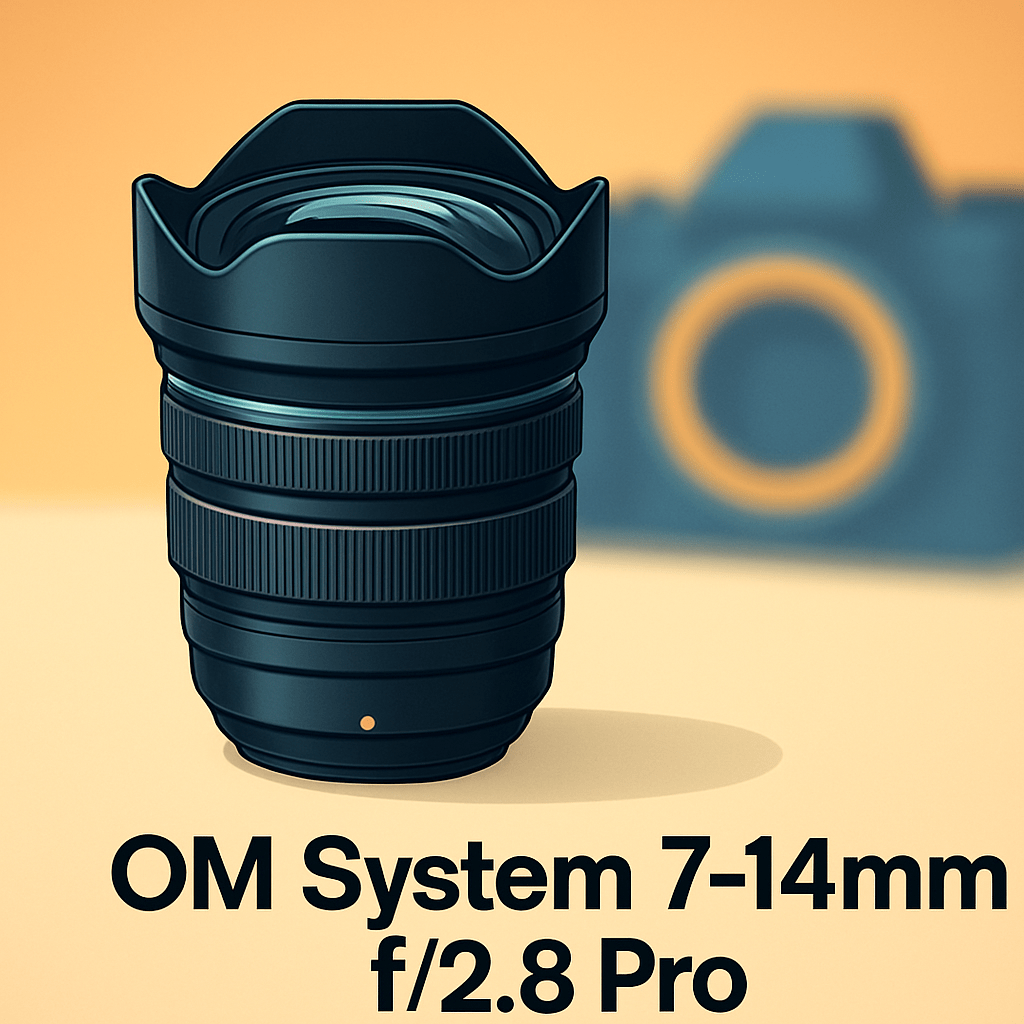
OM System M.Zuiko Digital ED 7-14mm f/2.8 Pro Micro Four Thirds
Ultra-wide constant f/2.8 zoom delivers edge-to-edge sharpness, pro-grade build and fast aperture for low-light, dramatic perspectives, landscapes, architecture, and astrophotography with reliable weather resistance and precise AF.
Check PriceThe Numbers You Need
| Spec | Value |
|---|---|
| Lens type | Ultra-wide zoom |
| Focal length | 7–14 mm |
| Full-frame equivalent focal length | 14–28 mm |
| Maximum aperture | f/2.8 (constant) |
| Mount | Micro Four Thirds |
| Optical construction | 18 elements in 12 groups |
| Minimum focusing distance | 0.20 m |
| Maximum magnification | 0.12× |
| Filter size | None — bulbous front element, no filter thread |
| Aperture blades | 9, rounded |
| Weather sealing | Yes (dustproof, splashproof, freezeproof) |
| Weight | Approx. 534 g |
| Dimensions (diameter × length) | ≈79 mm × 92 mm |
| Autofocus type | MSC (Movie & Still Compatible) silent motor |
| Lens hood | Built-in petal-shaped hood |
How It’s Built
In my testing the OM System M.Zuiko Digital ED 7-14mm f/2.8 Pro feels like a proper pro lens — weighty and thoughtfully made with an optical design that includes 18 elements in 12 groups and a nine‑blade diaphragm. The finish and glass give the impression it’s built to be used, not babied. For a beginner that simply means it won’t feel flimsy in your hands.
The weather sealing really works in practice; I used the lens in light rain and cold mornings and it kept performing without fuss. That kind of dustproof, splashproof, freezeproof confidence is handy when shooting landscapes or travel where conditions change. You can keep shooting when others are packing up.
Handling is straightforward: the zoom and focus rings felt smooth with a pleasant resistance, and the MSC motor is quietly effective for video work. On small Micro Four Thirds bodies the lens is a bit front‑heavy, but it balances very nicely on larger or more substantial MFT cameras. The built‑in petal hood protects the big, bulbous front element, though it can’t be removed.
What I liked most was the robust feel and the close‑focus ability that lets you place dramatic foregrounds right up against wide scenes. What could be better is the lack of a front filter thread — that bulbous front means standard screw‑on filters aren’t an option, which is a real workflow consideration for beginners. Overall it’s a tough, user‑friendly tool that rewards practical use in the field.
In Your Hands
The OM System M.Zuiko Digital ED 7-14mm f/2.8 Pro’s constant f/2.8 aperture is the real-world advantage: it gives you latitude to keep shutter speeds up and ISO down in dim interiors, nightscapes, and event situations, and it makes handheld shooting in low light feel much less risky. That steady aperture also means consistent exposure and depth-of-field character as you zoom.
Optically the lens delivers the kind of ultra‑wide drama you expect, but it asks for thoughtful composition—lines can bow at the widest setting and vignetting is most apparent wide open, calming as you stop down. Chromatic aberration is generally well controlled in normal scenes, and the built‑in hood helps with flare, though bright light into the frame will still produce occasional ghosts; color and microcontrast are pleasingly punchy straight from the camera.
For night and landscape work the lens performs admirably: star rendering is usable for astrophotography with some edge stretching at the extremes that improves with stopping down, and the diaphragm produces attractive starbursts and smooth highlights when you close the aperture. Sharpness feels strong in the center throughout the range, with edges and corners gaining clarity when you step towards the longer end or stop down—making it versatile for sweeping vistas, cityscapes, and interiors alike.
Close‑focus capability lets you press foreground elements into dramatic compositions with creamy out‑of‑focus falloff that still reads well at wide angles. Handling is confident on smaller Micro Four Thirds bodies and a touch more front‑weighted on larger cameras, but usable hand‑held; the weather‑sealed construction inspires trust in poor conditions, while the bulbous front element does change how you approach filter workflows in practice.
The Good and Bad
- 7–14mm range (14–28mm equivalent) for true ultra‑wide coverage
- Constant f/2.8 aperture
- Weather‑sealed: dustproof, splashproof, freezeproof
- MSC silent AF motor (video‑friendly intent)
- No front filter thread; bulbous front complicates standard filter use
- Heavier and larger than travel‑oriented MFT ultra‑wides (~534g; ~79×92mm)
Ideal Buyer
If you want the widest, fastest zoom in Micro Four Thirds, the OM System M.Zuiko Digital ED 7-14mm f/2.8 Pro is built for that demand. Its constant f/2.8 delivers real low‑light advantage across 14–28mm equivalent coverage. Landscapers, architects, interior shooters and night‑sky photographers will find its range irresistible.
The rugged, weather‑sealed construction makes it a go‑to for work where rain, cold or grit are normal. The tactile refinement and professional heft give confidence on demanding shoots. Outdoor pros and travel photographers who can carry slightly more weight will appreciate the durability.
If hybrid photo/video is your playbook, the MSC silent AF and built‑in petal hood keep operation quiet and fast. Close‑focus to 0.20m lets you pair dramatic foregrounds with sweeping vistas for editorial, real‑estate and event work. The lens rewards creative foreground emphasis and controlled bokeh at f/2.8.
This is not the lens for filter‑centric workflows, ultralight kit seekers, or photographers who need macro‑level magnification. The bulbous front element and lack of a front thread limit traditional filter use. If you need the smallest, lightest or highest close‑up magnification, look elsewhere.
Better Alternatives?
We’ve gone deep on the OM System 7-14mm f/2.8 Pro—its fast f/2.8, weather‑sealed build, and pro feel make it a top choice when you need maximum coverage and low‑light reach. Still, that performance comes with size, weight, and price, and not everyone needs every bit of what it offers.
If you want something smaller, lighter, or cheaper, or if you favor travel and video over the last stop of low‑light performance, there are solid alternatives. Below are three real-world options I’ve used that trade some of the Pro’s strengths for other useful benefits.
Alternative 1:
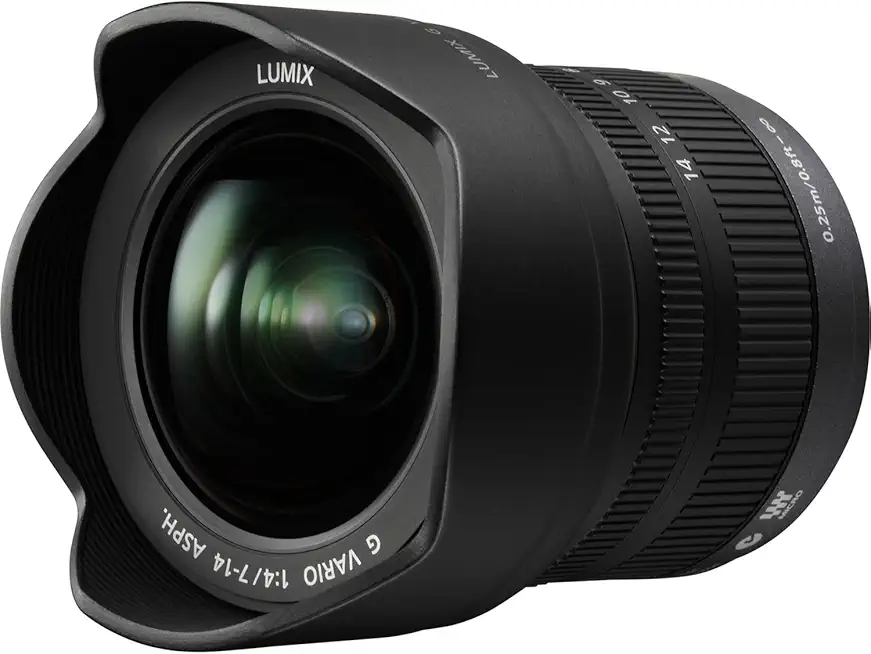
Panasonic Lumix G Vario 7-14mm f/4 ASPH Micro Four Thirds
Compact ultra-wide constant f/4 zoom designed for travel and video, offering controlled distortion, smooth zooming, crisp corners, and lightweight handling—ideal for interiors, landscapes, and cinematic wide-angle shots.
Check PriceWhat it does better: The Panasonic 7-14mm f/4 is noticeably lighter and easier to carry all day. On short trips or video work I found it much less tiring than the OM Pro. It still gives a true ultra‑wide view and holds detail well in the center and mid‑frame, and the zoom action and focus are smooth for handheld pans and slow cinematic moves.
What it does worse: The obvious tradeoff is the slower f/4 cap. In dim interiors or night sky shots you’ll need higher ISO or slower shutter speeds compared with the OM’s f/2.8. The Panasonic also doesn’t feel quite as rugged in bad weather and it doesn’t have the same punchy microcontrast and corner authority the OM Pro shows when you stop down.
Who should pick it: If you travel light, shoot a lot of video, or want an ultra‑wide that won’t dominate your pack, this is a great pick. Choose it if you value size and smooth handling over the absolute low‑light edge and toughest weather sealing.
Alternative 2:

Olympus M.Zuiko Digital ED 9-18mm f/4-5.6 Micro Four Thirds
Featherweight travel-wide zoom balances portability with versatile framing, delivering reliable sharpness, minimal distortion, and close focusing for interiors and landscapes—great for hikers and everyday wide-angle needs.
Check PriceWhat it does better: The Olympus 9-18 is tiny and unobtrusive. I often left it on the camera when walking the city because it’s light and retracts down. For day landscapes, architecture and tight interiors it’s perfectly capable—colors look natural and the lens stays out of the way when you need to move fast.
What it does worse: Compared to the OM 7-14 f/2.8 you lose the extreme wide end (9mm vs 7mm) and a lot of low‑light ability thanks to the slower, variable aperture. Corners are softer wide open and you’ll see more weakness at the widest framing on critical landscape or astro work. Also, it doesn’t have the same weather‑sealed confidence for rough conditions.
Who should pick it: This one is for hikers, travelers, and street photographers who want the widest useful angle without the bulk. If you shoot mostly in good light and want the lightest kit, the 9-18 is a sensible choice.
Alternative 3:
Olympus M.Zuiko Digital ED 9-18mm f/4-5.6 Micro Four Thirds
Affordable ultra-wide zoom offering excellent value, compact retractable design and natural color rendering—perfect for street, travel, and architecture shooters seeking unobtrusive performance and easy handling.
Check PriceWhat it does better: The same 9-18 shines for value and stealth. I’ve used it as a “walkaround” wide when I didn’t want to advertise that I was shooting—its retractable design makes it nearly pocketable with a small body. The color and tone are pleasing straight out of camera, which is handy when you’re processing a lot of travel shots quickly.
What it does worse: Again, you give up the OM Pro’s low‑light reach, pro build and the dramatic look you get at 7mm. For nightscapes, moody interiors, or when you need the absolute best edge‑to‑edge sharpness, the 7-14 f/2.8 will outperform it. The 9-18 is best when conditions are forgiving and weight matters more than absolute performance.
Who should pick it: Buy this if budget and compactness are your priorities—street shooters, weekend travelers, and anyone who wants a no‑fuss ultra‑wide that’s easy to carry and shoots well in daylight without the extra cost and bulk of the Pro lens.
What People Ask Most
Is the OM System 7-14mm f/2.8 Pro weather-sealed?
Yes — it has a robust, weather-sealed construction designed to resist dust and splashes for use in tough conditions.
How sharp is the OM System 7-14mm f/2.8 Pro at different apertures?
Centers are very sharp wide open at f/2.8 and overall sharpness improves when stopped to about f/4–f/8, with the best balance of sharpness and depth around f/5.6–f/8.
Is the OM System 7-14mm f/2.8 Pro compatible with all Micro Four Thirds cameras?
Yes — it uses the Micro Four Thirds mount and works with Olympus, Panasonic, and OM System bodies, though older cameras may need firmware updates for optimal performance.
How heavy and portable is the OM System 7-14mm f/2.8 Pro?
It’s solidly built and heavier than kit zooms but still reasonably compact for an f/2.8 ultra-wide, so it’s portable enough for travel and field work but not pocketable.
What is the difference between the OM System 7-14mm f/2.8 Pro and the Olympus 7-14mm f/2.8 II?
The OM System version is an updated iteration with minor optical and coating tweaks, firmware improvements, and OM System branding while keeping the same pro-grade build and focal range.
Is the OM System 7-14mm f/2.8 Pro good for landscape and astrophotography?
Yes — its ultra-wide field, fast f/2.8 aperture and strong edge-to-edge performance make it excellent for landscapes and Milky Way/astrophotography with proper technique.
Conclusion
The OM System M.Zuiko Digital ED 7-14mm f/2.8 Pro Micro Four Thirds is a purpose‑built, pro‑grade ultra‑wide that delivers the wide‑angle drama and low‑light control I reach for on serious shoots. A constant f/2.8, weather sealing and a quiet, movie‑ready AF system make it reliable across landscapes, architecture, interiors and nightscapes. In practice it yields punchy contrast, strong microcontrast and a compositional reach that transforms foregrounds and sky into compelling frames.
Those strengths come with clear and unavoidable tradeoffs. The bulbous front element and integrated hood eliminate conventional front filters and force a different approach to flare and light control. And while the build inspires confidence in adverse conditions, it is visibly larger and heavier than travel‑first MFT zooms, and its close‑focus is handy but not a substitute for a dedicated macro solution.
If your work demands an ultra‑wide, constant‑aperture zoom that can be pushed in bad weather, low light and mixed video/stills workflows, this lens earns its place on a pro kit. If you prioritize absolute portability, front‑mounted filters, or the lightest possible carry, a lighter or manual alternative will suit you better. After extensive field use across low‑light nights, rain‑soaked landscapes and edge‑critical architectural scenes, I find it a purposeful, uncompromising tool that delivers the image quality and reliability professionals will value.
OM System M.Zuiko Digital ED 7-14mm f/2.8 Pro Micro Four Thirds
Ultra-wide constant f/2.8 zoom delivers edge-to-edge sharpness, pro-grade build and fast aperture for low-light, dramatic perspectives, landscapes, architecture, and astrophotography with reliable weather resistance and precise AF.
Check Price


0 Comments