

Which Canon lens will let you freeze a split-second tackle, isolate players against a noisy crowd, and still produce usable images under stadium lights?
This guide compares five Canon lenses for football photography and offers practical buying guidance for 2026, focused on what works on the sideline, in the stands, and across big stadiums.
We cut through marketing copy to highlight real-world performance: how lenses track sprinting athletes, handle low light, and frame action from different field positions. Expect concise pros and cons based on everyday shooting—not lab numbers—so you know what to bring to game day.
Coverage centers on the trade-offs that actually matter: telephoto reach versus portability, constant aperture versus variable glass, autofocus speed, and image stabilization for handheld panning. Handling, durability, and price are also weighed so you can match a lens to your shooting style and budget.
Whether you’re a sideline pro, a parent in the stands, or a freelance shooter covering high-school or college ball, this guide helps narrow the field to lenses that deliver results. You don’t need to buy top-of-the-line glass to get pro-looking images, but you do need to understand the trade-offs—keep reading to find the best Canon lenses for football photography for your position, lighting needs, and wallet.
1. Canon RF 70-200mm f/2.8L IS USM
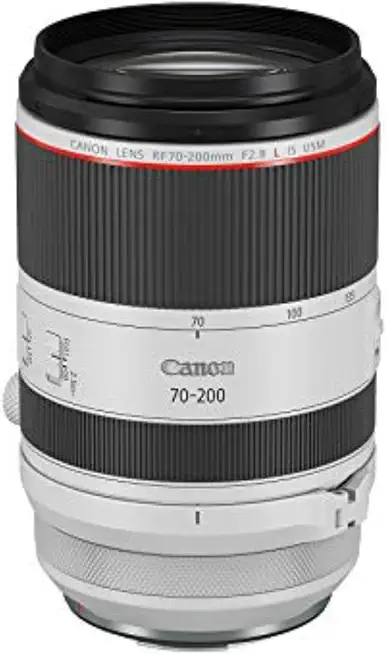
Canon RF 70-200mm f/2.8L IS USM
Versatile short-telephoto with bright f/2.8 aperture and advanced image stabilization for sharp portraits, events, and action in low light
Check PriceThis Canon RF 70-200mm f/2.8L IS USM is a staple sports zoom that handles wide field shots and close action with equal confidence. Its constant f/2.8 aperture performs very well in low light, making it useful for evening matches and indoor arenas.
Autofocus is fast and accurate, which is exactly what you need to track players darting around the pitch. Image quality and sharpness are excellent across the entire zoom range, so you won’t be surprised by soft edges when you reframe quickly.
You get good background separation to isolate players from busy stadium scenes, which helps your subjects pop at f/2.8. The lens is robust and weather-sealed, yet described as light enough to carry during long events, so it balances durability with practical field use.
As a working photographer you’ll find it a top choice for professional and advanced-amateur use. It really shines when you can get reasonably close to the action from the sideline or near the field, where its versatile focal length lets you switch between wider context shots and tighter player moments without changing glass.
- Excellent AF speed and accuracy.
- Constant f/2.8 for low-light and subject isolation.
- Versatile focal length for wide and tight framing.
- Robust, weather-sealed build.
- Can be fatiguing after extended shooting.
- Limited reach beyond 200mm without teleconverters.
2. Canon RF 100-300mm f/2.8L IS USM

Canon RF 100-300mm f/2.8L IS USM
Professional telephoto zoom offering constant f/2.8 brightness, fast autofocus, and stabilization for sports, wildlife, and high-speed action
Check PriceThe Canon RF 100-300mm f/2.8L IS USM is a purpose-built sports zoom that extends reach to 300mm while keeping a fast f/2.8 aperture, making it ideal for grabbing decisive plays deeper in the field. As a working pro, I appreciate how that constant f/2.8 lets you maintain fast shutter speeds and excellent subject separation even as distance increases.
Image quality is clearly a highlight — users praise its top-tier sharpness and contrast across the range, which means tight crops still retain detail when you need to isolate a player or a critical moment. Autofocus is fast and reliable, so tracking erratic movement during a scramble or broken play feels natural and dependable.
This lens is best for semi-pro and professional shooters who regularly face mid- to long-range action and can’t always get close to the sideline. It’s designed to capture critical moments with strong background blur, helping your subject pop in busy stadium environments.
Do keep in mind the trade-offs: it’s larger and heavier than shorter 70–200 options, and it comes with a higher price tag—so it’s more specialized gear rather than an all-around walkaround lens. If you need that extra reach plus pro-level optics and you shoot many games at a distance, this lens is mostly a very good fit.
- Longer telephoto reach with fast f/2.8
- Excellent sharpness and contrast
- Strong subject isolation and background blur
- Reliable autofocus tracking
- Larger and heavier than 70-200mm options
- Higher cost and more specialized
3. Canon RF 100-400mm f/5.6-8 IS USM

Canon RF 100-400mm f/5.6-8 IS USM
Lightweight, long-reach zoom delivering flexible framing and reliable stabilization for travel, birding, and distant subjects
Check PriceThis RF 100-400mm f/5.6-8 IS USM is the lens I reach for when I need long reach without hauling a pro rig. It gives you a full 400mm at the far end, so you can freeze plays from the stands or tight sidelines during daytime matches. The trade-off is its variable, slower aperture (f/5.6–8), which means it performs best in bright, outdoor conditions.
What makes it a real keeper for amateurs and enthusiasts is how light and portable it is. I’ve shot full afternoon games handheld with this lens and felt far less fatigued than with heavier primes. The Nano USM autofocus is impressively quiet and fast for this class, so tracking running players is surprisingly reliable.
Image stabilization helps a lot when you’re panning or shooting handheld from bleachers. In good light the IS lets you use slower shutter speeds for smoother panning while still keeping subjects sharp. Just don’t expect pro-level edge-to-edge sharpness; this lens won’t match L-series optics in ultimate resolution.
Bottom line: if you want telephoto reach on a budget and value portability, this RF 100–400 is a pragmatic choice. It’s ideal for weekend shooters, parents photographing their kids, or hobbyists covering local matches. Avoid relying on it for low-light evening games or when you need the absolute best sharpness for cropping.
- Lightweight and easy to handle
- Extended 400mm reach
- Good AF performance and image stabilization
- Affordable compared to pro-grade lenses
- Variable aperture limits low-light and evening use
- Sharpness doesn’t match pro L-series optics
4. Canon EF 400mm f/2.8L IS III USM

Canon EF 400mm f/2.8L IS III USM
Ultra-fast prime with exceptional sharpness and durable pro construction, ideal for sports, wildlife, and action at long range
Check PriceThis 400mm f/2.8 prime is a professional workhorse that I reach for when I need long reach and ultimate subject isolation. Its ultra-fast f/2.8 aperture lets you separate players from busy backgrounds and keeps shutter speeds high in lower light.
In the field it delivers exceptional sharpness and very consistent autofocus, which makes tracking fast-moving players much less stressful. The lens produces strong subject-background separation and performs reliably in evening or under stadium lights.
Build quality is clearly aimed at pros — rugged, weather-ready construction means you can shoot in rain, wind, or dust without second-guessing your gear. It’s a common choice among stadium photographers who are often shooting from long distances and need dependable results.
If you’re a serious enthusiast or working pro who values top-tier image quality, AF performance, and low-light capability, this lens is an excellent investment. If you mainly shoot from close sidelines, travel light, or are budget-conscious, this might be more lens than you need.
Bottom line: it’s mostly a very good product for football photography when you require reach, isolation, and rock-solid performance, but be prepared for the practical trade-offs of size and cost.
- Superior image quality and ultra-fast f/2.8
- Excellent AF speed and tracking
- Built for tough, weather-ready conditions
- Produces strong background blur to isolate athletes
- Heavy and less portable for casual use
- High cost limits to professionals and serious enthusiasts
5. Canon EF 70-200mm f/2.8L IS III USM

Canon EF 70-200mm f/2.8L IS III USM
Classic professional short-telephoto zoom delivering consistent f/2.8 performance, image stabilization, and reliable autofocus for portraits and events
Check PriceThis 70–200mm f/2.8L IS III is a true sideline workhorse for DSLR shooters, built to balance focal length, speed, and stabilization for sports use. It gives you a practical zoom range for most on-field action while keeping a fast, constant f/2.8 to handle evening games and dim stadium light.
In the field the autofocus is fast and reliable, which matters when players change direction in a heartbeat. Photographers praise its versatile zoom and strong optics, so you get sharp frames across the range and consistent performance under pressure.
The lens performs well in varied weather and low-light situations thanks to its constant f/2.8 aperture and image stabilization that aids handheld shooting. It’s smaller and lighter than the long primes many pros hump around, so it’s easier to carry for a full game while still feeling robust and weather-sealed.
If you need extra reach, this model works well with extenders to gain additional focal length without sacrificing too much performance. That flexibility makes it a go-to for sideline photographers who can’t always get right up to the action but still want pro-level image quality.
Overall, it’s a mostly forgiving, durable lens that suits advanced amateurs and professionals who value speed, low-light ability, and reliable IS. Keep in mind the fixed 200mm top end can feel limiting for very distant plays, and it’s heavier than smaller zooms if you’re handholding all day.
- Constant f/2.8 for low-light performance
- Fast, accurate autofocus
- Image stabilization aids handheld shooting
- Durable and weather-sealed
- Focal length may be limiting without extenders
- Heavier than smaller zooms; can cause fatigue
Essential Features for Sports Lenses

Choosing a sports lens comes down to freezing action, isolating subjects, and getting close from wherever you stand. Those priorities shape choices on aperture, reach, autofocus, and build.
A fast constant aperture like f/2.8 lets you use the shutter speeds needed to freeze tackles without huge ISO. It also creates shallow depth of field that isolates players from busy backgrounds.
The focal length you need depends on where you shoot. A 70–200 is versatile on the sideline, while stands demand 300–400mm or more to get tight frames without excessive cropping. Teleconverters can add reach but cost light and sometimes slow AF, so use them only when necessary.
Fast, reliable autofocus is non-negotiable — USM or Nano USM with good tracking will follow sudden direction changes. Full-time manual override helps when you must tweak focus quickly.
Image stabilization helps handholding and smooth panning, which matters if you avoid a monopod. I often pair IS with a monopod for smooth pans. Remember IS steadies the camera, but a fast aperture and high shutter speed freeze motion.
Games get messy — mud, rain, and dust are common. Weather sealing and a tough build give reliable performance when conditions turn bad.
Quality glass and coatings — UD/fluorite elements or Air Sphere coatings — yield better contrast and less flare under stadium lights. Sharper optics also let you crop more aggressively without losing detail. Good glass pays off when printing or selling images.
Zooms let you reframe fast when play moves; that flexibility is huge on the sidelines. Primes trade that flexibility for ultimate sharpness, reach, or wider apertures, so pick what matches your role and budget.
Balance reach, aperture, autofocus, IS, durability and weight for your typical positions and lighting. If you must pick one lens, prioritize reliable AF and the reach or aperture you need most.
Monopod Versus Tripod for Sports Photography
On the sideline the practical question is mobility versus absolute stability. I almost always reach for a monopod first when the action is moving fast.
A monopod gives stability without pinning you to one spot. It’s light, quick to set up and easy to reposition between plays.
It steadies heavy zooms enough to reduce camera shake while still allowing smooth panning to follow players. That freedom makes it ideal when you need to switch framing quickly.
Monopods are also discreet in crowded sidelines and easier to carry during long events. You’ll rarely get in the way of officials or other photographers.
The downside is fatigue — supporting a monopod for hours gets tiring. Use rests, quick breaks or a harness if you’re shooting an entire game.
Tripods give unmatched stability for fixed positions like press boxes, long exposures or stable video work. They free your hands so you can monitor two cameras or tweak composition without holding gear.
But tripods are heavier and slow to set up, which makes them impractical for constant sideline movement. They don’t let you track a run down the field easily.
Use a monopod when you’re moving along the sidelines and chasing action. Use a tripod when you have a fixed vantage point and need absolute steadiness, like shooting from stands or a platform.
Many pros carry both and swap based on position and lens choice. For instance, a 70–200 is perfectly workable on a monopod, while a big 400mm prime often benefits from a tripod and gimbal at distance.
Also remember image stabilization still helps even when using support. Combining IS with a monopod often lets you shoot at slower shutter speeds without blur.
In short, make the monopod your everyday tool for football and keep a tripod for specific static tasks. Practice with both so you know which to grab when the whistle blows.
What People Ask Most
What Canon lens is best for football photography?
There’s no single best lens; the right choice depends on how close you can get to the action, low-light needs, and your budget. Versatile zooms like a 70–200 are popular for sideline work, while longer telephotos or primes suit distant or stadium shooting.
Which Canon focal length is ideal for shooting football games?
Ideal focal length depends on your shooting position and desired framing. Mid-telephoto zooms cover most sideline needs, while longer focal lengths are useful when you must shoot from the stands or press box.
Is the Canon 70-200mm f/2.8 good for football photography?
Yes, it’s a go-to option because it balances reach, low-light capability, and subject separation for many sideline situations. Its versatility makes it useful for both wide and tighter action shots.
Do you need a 300mm or 400mm lens for football photography?
A 300mm or 400mm lens is helpful when you can’t get close to the field and need extra reach to frame players tightly. If you can work courtside, these longer lenses are less essential and trade off portability and cost.
What aperture is best for Canon lenses when shooting football?
A faster aperture is beneficial for freezing action in lower light and for isolating subjects from the background. Keep in mind faster lenses are typically heavier and more expensive, so balance aperture needs with practicality.
Can you shoot football with a Canon 70-300mm lens?
Yes, a 70–300 zoom can be a practical, lightweight choice for well-lit outdoor games and for enthusiasts on a budget. It offers useful reach and portability, though it may be limited in low-light conditions compared with faster options.
Do I need image stabilization on a Canon lens for football photography?
Image stabilization is helpful for handheld shooting and smoothing panning motion, especially with longer lenses. It’s less critical if you use a monopod, tripod, or rely on fast shutter speeds to freeze action.
Conclusion for Canon Football Lenses
In short, choose gear that matches the reach you need, the low‑light performance you expect, and the autofocus, stabilization, durability, weight and budget constraints you can comfortably manage.
Think practically about where you shoot most often — sideline work favors portability and faster apertures, while stands and distant positions push you toward longer reach and stronger stabilization.
Also factor in handling and support: a monopod can save your arms during long matches, while a tripod is useful for fixed positions or elevated platforms.
If you want to sharpen your shooting and gear decisions, explore more articles on the site to build skills, workflow tips, and confidence for game day.
Have a question or need personalized advice? Leave a comment below and we’ll usually reply within a few hours.


0 Comments