

What if the secret to a cinematic, professional-looking livestream isn’t your camera body but the lens you plug into it? A simple glass swap can transform sharpness, background separation, and low-light performance.
Canon offers lenses across mounts and price bands, so picking the right one can be overwhelming. This article focuses on lenses chosen for autofocus reliability, image stabilization, focal-length versatility, and low-light performance.
In a live stream, fast and quiet autofocus keeps you sharp without distracting audio hiccups. Image stabilization and the right focal length help maintain steady framing and flattering perspectives whether you sit close to your desk or step back for a wider view.
We also consider how a lens handles real-world streaming needs like cramped rooms, limited lighting, and long sessions. Build quality, focusing motors, and the ability to create pleasing background blur all matter when your face is the main attraction.
Throughout this guide you’ll find practical recommendations matched to common setups and budgets. Expect clear advice to help you choose a Canon lens that elevates your stream with minimal fuss.
Whether you’re building a compact desktop rig or a dedicated streaming studio, the right lens makes a noticeable difference. We’ll walk through choices that prioritize clean focus, stable images, and flattering optics so you spend less time tweaking and more time creating. Read on to find the Canon glass that will upgrade your streams.
1. Canon RF 24-105mm f/4L IS USM

Canon RF 24-105mm f/4L IS USM
Versatile professional zoom with constant aperture, premium optics, steadying image stabilization and rapid autofocus for sharp, reliable results in varied shooting conditions.
Check PriceThe Canon RF 24-105mm f/4L IS USM is a reliable all-rounder for streamers who need versatility without swapping glass mid-session. Its 24–105mm zoom range covers everything from environmental wide shots to tight head-and-shoulders framing, making it easy to adapt when you change camera position or room layout.
Autofocus is a standout: Dual Pixel autofocus delivers smooth, reliable subject tracking, and touch-to-focus on the LCD keeps focus changes quick and intuitive during a live stream. The quiet USM motor means focus adjustments won’t call attention to themselves or ruin your audio, which is crucial when you’re capturing live commentary.
Image stabilization is effective and helps reduce handheld jitter, so you can get steadier footage if you occasionally move the camera or rely on less-than-solid supports. The f/4 maximum aperture isn’t as bright as faster primes, but the built-in IS and consistent performance across the zoom help maintain usable low-light results for most home streaming environments.
Build and handling are professional: the lens feels robust and is designed to hold up through long streaming sessions. That solidity gives confidence for repeated use, though it does add a bit of heft compared with smaller prime lenses.
If you want a single lens that simplifies setup and reliably locks focus without noisy hunting, this RF 24-105mm is a very practical choice. Just be aware that if you stream in very low light and crave extreme background blur, a faster prime will outperform it.
- Smooth, silent autofocus
- Versatile 24–105mm zoom range
- Solid image stabilization reduces handheld jitter
- Well-built for long streaming sessions
- f/4 max aperture limits low-light performance
- Slightly heavier and bulkier than primes
2. Canon EF 50mm f/1.8 II Nifty Fifty
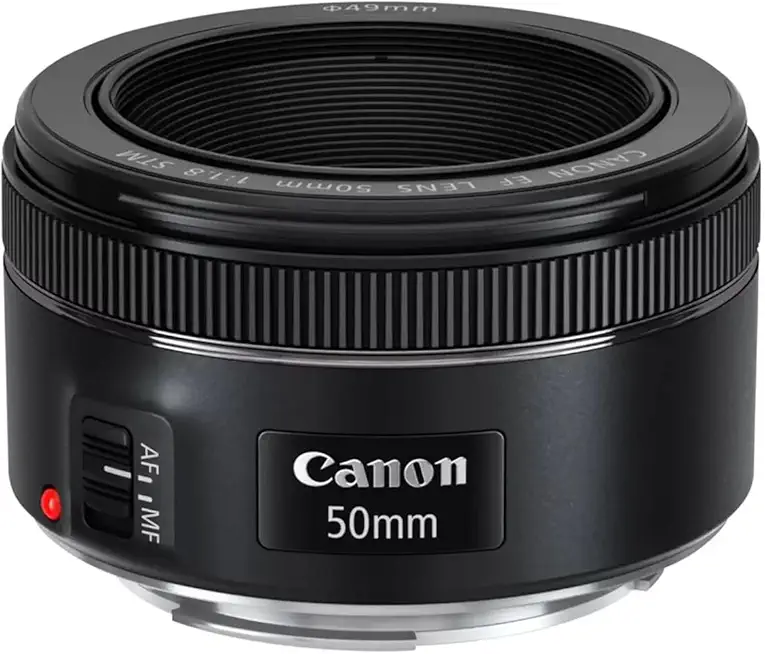
Canon EF 50mm f/1.8 STM
Affordable standard prime with bright aperture for low-light, smooth silent autofocus, and pleasing background blur for portraits and everyday shooting.
Check PriceI reach for the Canon EF 50mm f/1.8 II — the classic “Nifty Fifty” — when I want big-picture impact without breaking the bank. Its fast f/1.8 aperture gives you excellent low-light performance and a cinematic shallow depth of field that really flatters a streamer’s face. For head-and-shoulders framing, that wide aperture makes lighting less of a struggle and helps separate you from distracting backgrounds.
The lens produces strong background blur (beautiful bokeh) that isolates the subject and feels very professional on camera. That subject separation makes your viewers focus on you, not the clutter behind you. For tight streaming spaces, the compact, lightweight form factor is a real advantage — it won’t dominate a small desk setup.
There are trade-offs to be realistic about: the EF 50mm f/1.8 II has no image stabilization, so handheld streaming can show small shakes and is best avoided. I usually mount it on a tripod or use a steady camera platform for long sessions; the lens excels in stationary setups where stabilization isn’t required. It was designed for simplicity and optical punch, not in-body motion correction.
Autofocus on this version is less advanced than newer STM/USM options, and it can be a bit noisy and less smooth during focus pulls. That said, it’s perfectly adequate when you’re using live-view AF on many bodies, especially if you don’t move around a lot. Another practical perk: it works with DSLRs natively and can be adapted to mirrorless bodies, so it’s versatile across systems.
For streamers on a budget who prioritize low-light performance and background separation over handheld stabilization and whisper-quiet AF, the Nifty Fifty remains a go-to choice. It’s mostly a great bargain for getting a professional look in a simple, compact package.
- Bright f/1.8 aperture — great low light
- Strong background blur / cinematic bokeh
- Lightweight and compact for tight spaces
- Works with DSLRs and mirrorless via adapters
- No image stabilization — not ideal handheld
- Autofocus can be noisy and less smooth
3. Canon RF 85mm f/2 Macro IS STM
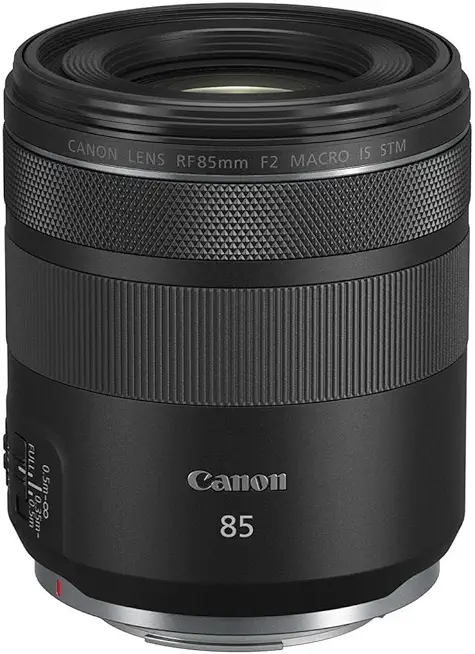
Canon RF 85mm f/2 Macro IS STM
Portrait-optimized short telephoto offering close-focusing macro capability, natural compression, stabilization, and quiet focusing for detailed, flattering close-ups.
Check PriceThe Canon RF 85mm f/2 Macro IS STM is a lens I often recommend for streamers who want a polished, portrait-style look without getting too close to the camera. The 85mm focal length gives flattering, tight framing and a comfortable working distance for head-and-shoulders shots.
Optically it’s strong — the lens delivers high sharpness and very smooth bokeh, so faces and skin tones separate beautifully from the background. The 0.5× macro magnification also opens creative options: you can cut to product close-ups or detailed overlays without swapping glass.
From a practical streaming standpoint, the built-in image stabilization and STM motor make a real difference. IS helps keep handheld or desk-mounted setups steady, and the very quiet autofocus is kind to live audio, reducing distracting focus sounds during broadcasts.
This is mostly a win for solo creators focused on portraits, interviews, or creative product demos. The trade-offs are the limited focal flexibility — it’s a single-purpose prime, so you’ll miss the range of a zoom — and it’s a bit longer than some standard primes, so you’ll need a little extra desk or mounting space. If your priority is flattering compression, sharp detail, and quiet operation, this lens is an excellent choice.
- Excellent optical quality with sharpness and smooth bokeh.
- Effective IS for handheld streaming.
- Very quiet autofocus suitable for live audio capture.
- Dual-purpose (portrait + macro) adds creative flexibility.
- Narrower focal range limits versatility vs zooms.
- Longer lens length requires more space than standard primes.
4. Canon RF 24-70mm f/2.8L IS USM

Canon RF 24-70mm f/2.8L IS USM
Professional-grade standard zoom with fast constant aperture, premium optics, image stabilization and responsive autofocus for wedding, studio, and event work.
Check PriceAs a working photographer I reach for lenses that balance image quality, flexibility, and reliability — the Canon RF 24-70mm f/2.8L IS USM delivers on all three. Its constant f/2.8 aperture gives you real low-light capability and the shallow depth of field that makes a live stream look cinematic without swapping glass.
The 24–70mm range is genuinely useful for streaming setups where you may need both wider context and tighter portrait framing. You can stay in one lens and recompose for head-and-shoulders or slightly wider shots quickly and quietly.
Image stabilization on this zoom is enhanced, which helps reduce small jitters when you’re not on a perfectly stable mount. That, combined with a quiet, precise USM autofocus, means the lens can maintain continuous focus during live video with minimal distraction to audio.
Optically it’s built to pro standards — sturdy L-series optics and build quality mean it stands up to heavy use and long streaming sessions. In practice that robustness feels reassuring when you’re streaming often or moving between setups.
If you have a dedicated desk or studio and take your streaming seriously, this lens is a strong choice. Keep in mind the trade-offs: it’s designed for creators who value performance over minimal size or budget.
- Constant f/2.8 — strong low-light performance
- Versatile 24–70mm zoom for varied framing
- Silent, fast USM autofocus that holds focus during live video
- Robust L-series build and pro-level optics
- Heavier and bulkier — less convenient for small desks
- Higher cost and size — better for serious creators/pros
5. Canon RF 50mm f/1.8 STM

Canon RF 50mm f/1.8 STM
Compact, lightweight standard prime delivering bright low-light performance, attractive background separation, and whisper-quiet autofocus for everyday and portrait use.
Check PriceThe Canon RF 50mm f/1.8 STM is the RF‑mount “Nifty Fifty”—compact, affordable, and bright at f/1.8. As a photographer, I reach for this lens when desk space is tight and I want a simple, reliable look without breaking the bank.
This lens is optimized for Canon mirrorless RF cameras, offering improved autofocus and image quality over the older EF version. That optimization translates to crisper results and smoother communication with modern bodies, which makes setup faster and less fiddly for live streams.
Its STM motor provides quiet, smooth autofocus, so focus adjustments won’t distract your audience or your audio. The combination of f/1.8 brightness and pleasing bokeh gives strong low‑light capability and subject isolation, ideal for head‑and‑shoulders framing that separates you from the background.
There are tradeoffs: expect some vignetting and distortion that need minor digital correction, and the build is more plastic, feeling less premium than L‑series glass. Even so, for streamers who want very good image quality in a small, affordable package, this RF 50mm is a genuinely useful choice—especially if you prioritize low‑light performance and quiet AF over pro‑grade build.
- Lightweight and compact
- Quiet STM autofocus
- Bright f/1.8 aperture for low light and pleasing bokeh
- Very good image quality for its size and price
- Some vignetting and distortion that need minor digital correction
- More plastic build, less premium feel than L-series lenses
Key Factors for Streaming Lenses
When you choose a streaming lens, match the glass to your space, subject distance and the look you want on screen. The focal length and features matter as much as optical quality. Think of the lens as a tool that sets framing, depth and motion.
Focal length determines how much of you and your background appear. For solo head-and-shoulders framing a mid-range zoom around 24–70mm is extremely versatile. Wider 14–35mm options fit multiple people or emphasize the room, while 70–135mm ranges give flattering compression and strong subject-background separation.
Aperture controls both exposure and depth-of-field. Fast apertures like f/1.4–f/2.8 help in low light and create creamy bokeh, but very narrow depth-of-field makes eye-level focus critical. Many streamers land in the sweet spot around f/1.8–f/4 to balance background separation with reliable focus.
Image stabilization is lifesaving when you’re handheld or your desk shakes from keyboard thumps. IS lets you use slower shutter speeds and keeps tiny jitters out of a live feed. On a solid tripod you can often disable stabilization to avoid micro-corrections.
Fast, accurate and quiet autofocus is more important than flashy specs. Motors such as USM or STM run silently and won’t contaminate your audio, and continuous AF prevents distracting focus hunting if you move. On mirrorless bodies native lenses often enable eye-detection and more responsive AF in low contrast light.
Compatibility and handling often decide whether a lens becomes part of your workflow. Native-mount optics communicate fully with the camera and unlock advanced AF features. Also favor lighter, well-balanced lenses—comfort matters when you stream long hours and a bulky lens quickly becomes a nuisance.
Practically speaking, pick the focal length that fits your space, choose an aperture you can reliably nail, and prioritize quiet, accurate AF—with IS if you won’t be tripod-bound. Those three choices will improve your on-camera image far more than chasing the latest spec sheet.
Why Autofocus Speed and Accuracy Matter
Autofocus isn’t just about a sharp frame — in a live stream it’s about steady, reliable performance under real conditions. Viewers notice when the focus slips or the camera hunts, and those little interruptions pull attention away from your content. Keeping your subject locked is as important as your composition or lighting.
Speed matters because a quick AF keeps you sharp when you move, lean, or reach for a prop. Accuracy matters because a fast-but-flaky system just trades speed for constant refocusing and soft faces. The best experience comes from a balance between the two.
Continuous AF (AF-C) is the practical choice for solo streamers who move even a little during shows. On Canon mirrorless bodies, native RF lenses unlock features like eye-detection and Dual Pixel tracking, which prioritize faces and eyes for far fewer false grabs. Dual Pixel also gives smooth, predictable transitions and handy touch-to-focus on the LCD.
Motor type matters for more than just performance stats. STM motors are whisper-quiet and glide smoothly, which helps preserve live audio. USM motors tend to be snappier and very precise, while still remaining largely unobtrusive.
Indoor streams often mean low light and low contrast, and weaker AF systems can struggle there. Brighter apertures help the AF system lock and keep things consistent, though very shallow depth of field demands careful placement. A lens that performs well in low-contrast scenes will save you constant mid-stream corrections.
Do a dry run in the same room and with the same lights you’ll use on air. Test continuous AF with face/eye detect engaged and watch for hunting on recorded clips. Use touch-to-focus as a quick reset if you need to re-center during a live take.
In practice I pick lenses that combine fast, accurate tracking with quiet operation rather than raw speed alone. That mix keeps the visual experience smooth and keeps viewers focused on what you’re saying, not on whether you’re in focus.
What People Ask Most
What Canon lens is best for streaming?
The best Canon lens depends on your setup and priorities. Versatile zooms work well for changing framing while primes offer stronger low-light performance and subject separation.
What focal length is best for streaming with a Canon camera?
A mid-range focal length that frames head-and-shoulders is commonly preferred. Wider focal lengths suit multiple subjects and backgrounds, while longer focal lengths provide flattering compression.
Is a 50mm lens good for streaming?
A 50mm prime is a solid choice for single-subject streaming in many setups. It provides pleasing background separation and generally performs well in lower-light conditions compared with slower lenses.
What aperture is best for streaming to get background blur?
Wider apertures create shallower depth of field and more background blur. Use the widest aperture your lens and lighting allow while keeping the subject comfortably in focus.
What Canon lens is best for streaming in low light?
Lenses with larger maximum apertures and reliable autofocus are preferable for low-light streaming. Bright primes and professional zooms designed for low-light shooting tend to deliver more consistent results.
Can I use Canon EF lenses for streaming on a Canon mirrorless camera?
EF lenses can be used on many Canon mirrorless bodies with an appropriate adapter that preserves electronic communication. Verify compatibility and feature support for your specific camera and lens combination before buying.
Which Canon lens is best for streaming and vlogging?
Choose a compact, lightweight lens with quiet autofocus suited to handheld or desk-based shooting. Versatile zooms or bright primes both work depending on how mobile you are and the look you want to achieve.
Conclusion for Best Canon Streaming Lenses
In short, the lenses covered here illustrate the tradeoffs between autofocus reliability, image stabilization, focal-length versatility, and low-light performance, so choose the option that best fits your streaming setup and creative priorities.
Think about how you shoot—steady vs. handheld, tight head-and-shoulders framing vs. wider backgrounds—and prioritize features like smooth, quiet AF, stabilization, and aperture accordingly.
Where possible, test lenses on your camera or borrow one for a session to confirm handling, autofocus behavior, and how the look integrates with your lighting and audio setup.
If you want to keep improving, explore more articles on the site to deepen your skills in lens choice, framing, and practical streaming techniques.
Have questions or want feedback on your setup? Leave a comment below and we usually reply within a few hours.




0 Comments