
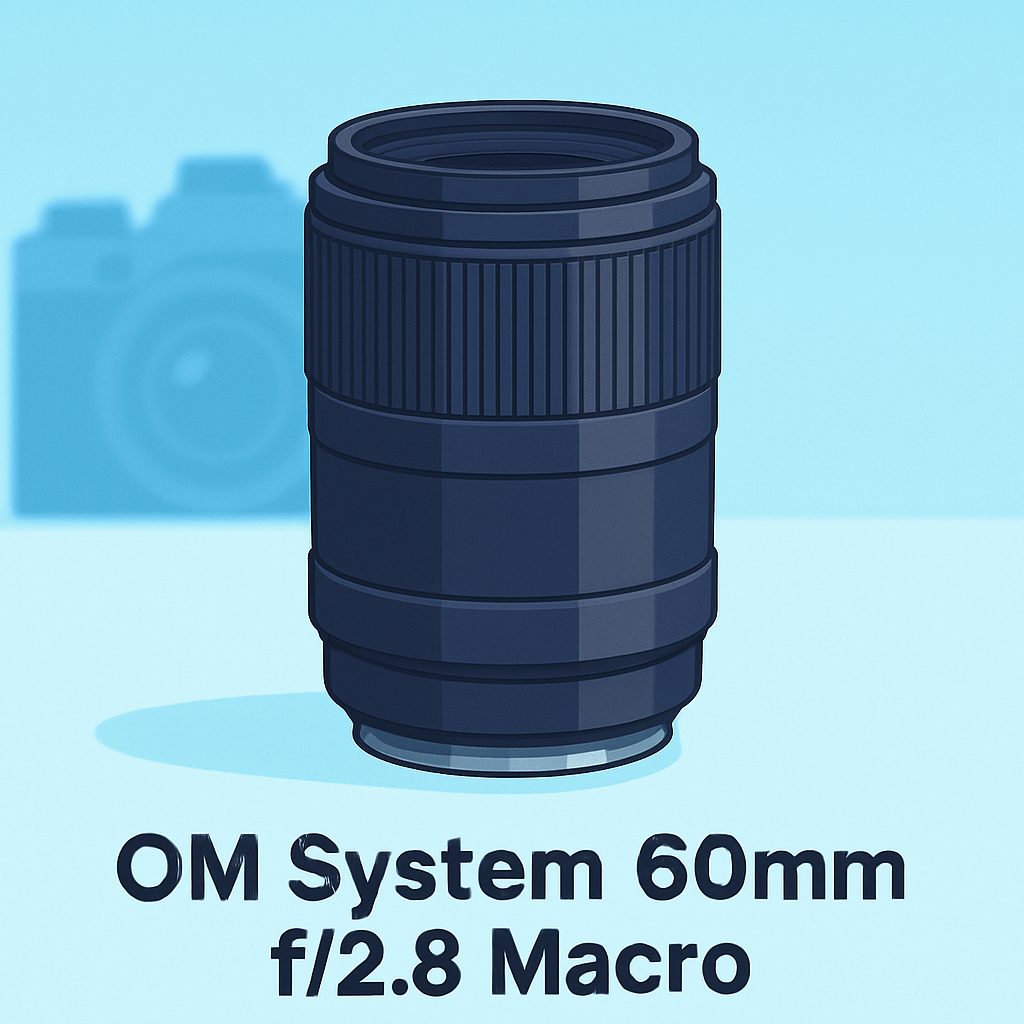
Want to capture tiny details that jump off the frame without hauling heavy glass? If you’re into tight product shots, plants, or tabletop work, that’s the promise most of us chase in a macro lens.
I field-tested the Micro Four Thirds 60mm F2.8 M.Zuiko Digital ED Macro across studio and outdoor shoots, and it felt built for real-world use. It’s compact, weather-sealed, offers true 1:1 macro reach, and keeps the front element steady for accessories.
If you value portability, precise handling, and rugged reliability for close-up work, this lens could be a strong match — just know handheld macro still needs technique. Make sure to read the entire review as I break down handling, focus behavior, and image character — keep reading.

Micro Four Thirds 60mm F2.8 M.Zuiko Digital ED Macro
Precision macro delivers 1:1 life-size reproduction, outstanding edge-to-edge sharpness and contrast, fast f/2.8 performance, whisper-quiet focusing, and a portable, balanced design for handheld use.
Check PriceThe Numbers You Need
| Spec | Value |
|---|---|
| Focal length | 60mm (120mm equiv.) |
| Maximum aperture | f/2.8 |
| Image stabilization | None (in-lens) |
| Magnification | 1:1 macro |
| Minimum focusing distance | 19cm (Olympus official documentation) |
| Filter thread | 46mm |
| Focus type | Internal (focus does not extend) |
| Autofocus | Yes |
| Manual focus | Yes |
| Lens construction | 10 groups, 13 elements |
| Weather sealing | Dustproof, splashproof, and freezeproof (down to -10°C) |
| Weight | 185g |
| Length | 82mm |
| Front element | Non-rotating, non-extending |
| Mount | Micro Four Thirds |
How It’s Built
In my testing the Micro Four Thirds 60mm F2.8 M.Zuiko Digital ED Macro feels like a real tool, not a toy. It’s compact and light, so it sits nicely on small bodies and never feels front-heavy. The weather sealing gives you confidence to shoot in damp mornings or dusty fields without panic.
I loved how the lens focuses internally and the front element stays put, which makes using polarizers, diffusers, and ring lights much less fiddly. The focus ring is smooth with a reassuringly precise throw, and the distance markings are clear enough for careful close-up work. That tactile feedback matters when you’re inching focus millimeter by millimeter — it makes manual adjustments feel deliberate instead of twitchy.
The one thing that could be better is the lack of in-lens stabilization. In my testing that meant relying on a steady hand, a tripod, or flash for the sharpest handheld close-ups. For beginners that’s actually useful to know up front — plan to support the camera or use light to freeze motion, and this lens will reward you with clean, reliable handling in the studio and out in the field.
In Your Hands
The Micro Four Thirds 60mm F2.8 M.Zuiko Digital ED Macro delivers true life‑size reproduction that turns tiny subjects into frame‑filling still lifes, ideal for product, texture and specimen work. Its close working distance makes lighting and composition more deliberate — you’ll often rely on small modifiers, controlled light, or support to get tack‑sharp results.
Its relatively tight field of view helps isolate details and compress backgrounds more like a longer lens, so backgrounds fall away cleanly even in tight setups. That narrower reach also translates to precise framing for tabletop and studio workflows, where subject placement matters.
Because there’s no in‑lens image stabilization, practical shooting favors tripods, steady supports, or short bursts of flash when working handheld; technique matters more than brute force. The lens’s internal focusing and non‑rotating front element make ring lights, polarizers and diffusers behave predictably, eliminating the need to recompose after changing accessories.
In real‑world use it shines on controlled shoots — product shots, botanical studies, coins and stamps, or textured abstracts — and rewards patience and methodical focusing. Live, skittish subjects require a gentle approach, diffused light, and often focus stacking or careful manual focus to nail depth of field.
The Good and Bad
- True 1:1 macro magnification
- Internal focusing; front element does not rotate or extend
- Lightweight and compact (185 g; 82 mm)
- Weather sealed: dustproof, splashproof, freezeproof to -10°C
- No in-lens image stabilization
- Minimum focusing distance of 19 cm – consider implications for lighting and access
Ideal Buyer
The Micro Four Thirds 60mm F2.8 M.Zuiko Digital ED Macro is for shooters who need a true 1:1 macro in a compact, weather‑sealed package. If you work tabletop, product, botanical or texture photography and value predictable handling and a 120mm‑equivalent reach, this lens fits the bill. Its light weight and rugged build make it easy to carry into field shoots without sacrificing build quality.
Studio and tabletop creators will appreciate the internal focusing and non‑rotating front for consistent use with ring lights, polarizers and small diffusers. The 19 cm minimum focus distance gives a comfortable working distance for controlled lighting and precise compositing. On stabilized Micro Four Thirds bodies it’s an excellent tool for single‑shot macro and focus‑stacking workflows.
This lens is less suited to shooters who rely on in‑lens optical stabilization for handheld extreme close‑ups or who need magnification beyond 1:1 without extension tools. Autofocus at very high magnifications can be deliberate rather than lightning fast, so fast‑moving subjects or snap handheld insect work may frustrate some users. Expect to use a tripod, flash, or strong IBIS for the sharpest results.
Buy the 60mm if you prioritize portability, weather sealing and a reliable 1:1 macro performance. Consider alternatives with OIS if handheld macro is your priority, or a 2:1 specialist if you need extreme magnification in the studio.
Better Alternatives?
We’ve gone over the OM System 60mm f/2.8 macro in detail — its 1:1 life‑size capability, compact weather‑sealed build, and the practical limits like no in‑lens stabilization and fairly close working distance. That lens is a solid, punchy little macro for studio, tabletop and field use, but it’s not the only way to get great close‑ups on a Micro Four Thirds body.
If you’re thinking about other options, the tradeoffs usually come down to working distance, stabilization, magnification, and how the lens handles outside the studio. Below I’ll point out three practical alternatives, what they do better or worse than the 60mm, and who I’d recommend each to based on real shooting experience.
Alternative 1:
Micro Four Thirds 60mm F2.8 M.Zuiko Digital ED Macro
Compact 1:1 macro optic produces crisp, true-to-life detail with creamy background separation. Durable build, responsive AF and a short working distance make it ideal for close-up, tabletop and field use.
Check PriceThis Olympus M.Zuiko 60mm is effectively the same lens as the OM System 60mm we just covered — same optics, same handling and the same weather sealing. In the field it feels identical: light in the hand, very sharp at close range, and easy to pair with a small flash or a ring light because the front doesn’t turn or extend.
Because it’s the same design, it shares the same limits: no optical stabilization in the lens, a fairly tight working distance at 1:1 for skittish subjects, and AF that’s accurate but can be slow or hunt at extreme close distances. If you liked the 60mm’s balance of reach and size, this one will behave the same.
Pick this version if you want the exact same shooting experience under the Olympus name — maybe you find a good deal used or prefer the older branding. It’s ideal for studio and tabletop shooters who have a camera with IBIS or who mainly shoot on a tripod and want a compact, weather‑sealed macro optic.
Alternative 2:
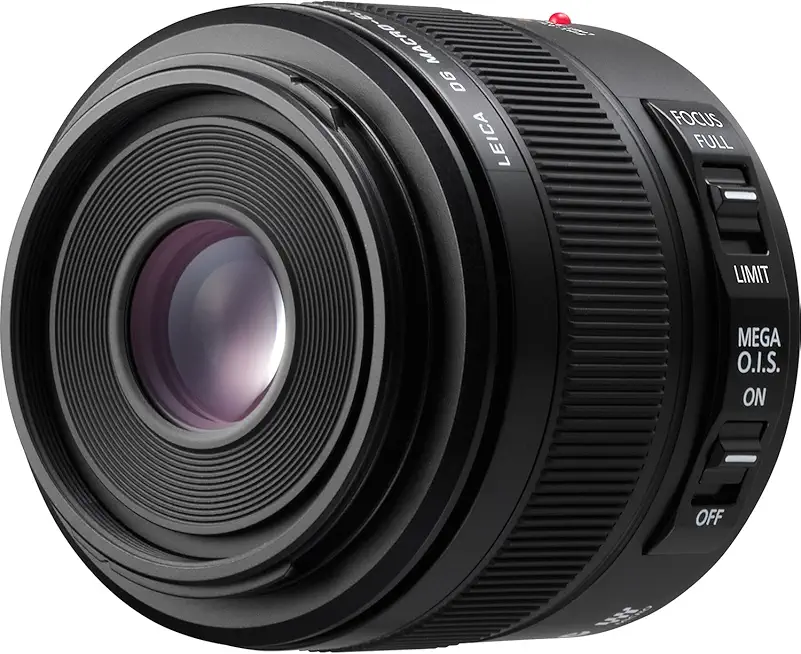
Micro Four Thirds 45mm F2.8 Leica DG Macro Elmarit
Compact short-tele macro renders exceptional micro-detail with high-end contrast and color. 1:1 magnification, smooth bokeh, tactile sharpness, reliable autofocus and robust construction suit both studio and nature photography.
Check PriceThe Leica‑branded 45mm is a different feel in real life. Its big selling point is having built‑in stabilization (on the Panasonic versions), which makes handheld macro shots easier when your camera body doesn’t have strong IBIS or when you’re not using flash. I’ve stopped down and shot handheld at close range with noticeably fewer motion blur issues than with an unstabilized 60mm.
Where it’s worse than the 60mm is working distance: at 1:1 the 45mm sits closer to the subject, so lighting tricky small things or approaching insects is harder. You also get a slightly different look — the Leica rendering is punchy with great micro contrast, which many product shooters love, but it won’t give you the same reach or subject isolation that the longer 60mm offers.
Choose the 45mm if you do a lot of handheld macro or need a lens that’s comfortable for quick, grab‑shot close ups. It’s a good pick for nature photographers who move around a lot, and for shooters who value stabilization and a Leica‑type contrasty look over a longer working distance.
Alternative 3:
Micro Four Thirds 45mm F2.8 Leica DG Macro Elmarit
Designed for lifelike texture capture and close-focus versatility, this compact optic offers precise manual control, fast focusing and pleasing out-of-focus rendering—perfect for product, portrait and macro storytelling.
Check PriceLooking at the 45mm as a more general‑purpose tool, it doubles nicely as a portrait and product lens. In practice I’ve used it for tight headshots and tabletop product shots where I wanted a natural look and shallow background. It focuses smoothly and the bokeh is pleasing at closer ranges, so it’s a nice one‑lens solution for mixed work.
Compared to the 60mm, the 45mm gives a bit less subject separation and less working distance, which can be a pain with live subjects. But you gain a versatile optic that’s compact and often faster to set up for scenes that mix portraits and macro details. If you prefer a lens that’s friendly to both portrait work and close‑ups, this fills that role better than the dedicated 60mm.
Buy this if you want a small, flexible lens that handles portraits, tabletop and macro storytelling without swapping glass. It’s for shooters who value rendering and ease of use across jobs more than the extra reach and slightly easier lighting the 60mm gives for strict macro work.
What People Ask Most
Is the OM System 60mm f/2.8 Macro a true 1:1 macro lens?
Yes — it offers true 1:1 magnification, letting you capture subjects at life-size on the sensor for serious close-up work.
Is the OM System 60mm f/2.8 Macro compatible with Olympus OM-D and other Micro Four Thirds cameras?
Yes — it uses the Micro Four Thirds mount and works on all MFT bodies, including Olympus OM-D and Panasonic cameras.
Does the OM System 60mm f/2.8 Macro have image stabilization?
The lens has no built-in optical stabilization, but it pairs perfectly with Olympus/OM System bodies that have in-body image stabilization (IBIS).
How sharp is the OM System 60mm f/2.8 Macro for macro and general photography?
Very sharp in the center for macro work and becomes even crisper when stopped down; performance for general use is excellent, especially between f/4 and f/8.
Is the OM System 60mm f/2.8 Macro good for portrait photography?
Yes — on MFT it’s roughly a 120mm equivalent, so it’s great for headshots and tight portraits, though background blur is milder than on full-frame telephotos.
How does the OM System 60mm f/2.8 Macro compare to the Panasonic Leica 45mm or the older Olympus 60mm?
Compared to the Panasonic 45mm it gives more working distance and a tighter field of view; optically it’s on par with the older Olympus 60mm (the OM-branded version is effectively the same proven design).
Conclusion
The Micro Four Thirds 60mm F2.8 M.Zuiko Digital ED Macro is a focused, purpose-built macro that balances portability with professional handling and delivers crisp micro-detail and a disciplined rendering that favors texture and contrast. Its true life-size magnification, internal focusing and non-rotating front element make close-up work predictable and accessory-friendly for lighting and polarizer use. Weather-resistant construction and a compact footprint mean you can take it into real-world shoots without fuss, and it feels solid in the hand.
That said, it isn’t a one-size-fits-all solution, and its design forces real-world tradeoffs that matter in the field. Without built-in lens stabilization and with the extremely shallow depth of field that macro demands, handheld shooting rewards solid technique, support, flash or focus stacking for critical results. Autofocus is competent but conservative at high magnifications, so plan to mix AF with manual control and focus-peaking for the best outcomes.
If you shoot tabletop, product, botanicals or controlled studio macro and prize portability and durability, this lens is an excellent, pragmatic choice. If easier handheld close-up work or greater-than-life magnification is your priority, consider alternatives with stabilization or longer reach. For most Micro Four Thirds shooters who intend deliberate, controlled macro work, this lens is a highly useful, well-balanced tool worth buying now.
Micro Four Thirds 60mm F2.8 M.Zuiko Digital ED Macro
Precision macro delivers 1:1 life-size reproduction, outstanding edge-to-edge sharpness and contrast, fast f/2.8 performance, whisper-quiet focusing, and a portable, balanced design for handheld use.
Check Price

0 Comments