
What is a monopod and could it be the simple tool that steadies long lenses and saves your arms?
This short guide explains what is a monopod, shows its main parts and types, and why material and load capacity matter.
You will learn real uses — sports, wildlife, events, travel, and video — plus quick setup steps and stance tips you can use right away.
We also compare monopods to tripods and include a buyers’ checklist, quick tips, and images to help you pick the right model for your kit.
What is a Monopod?
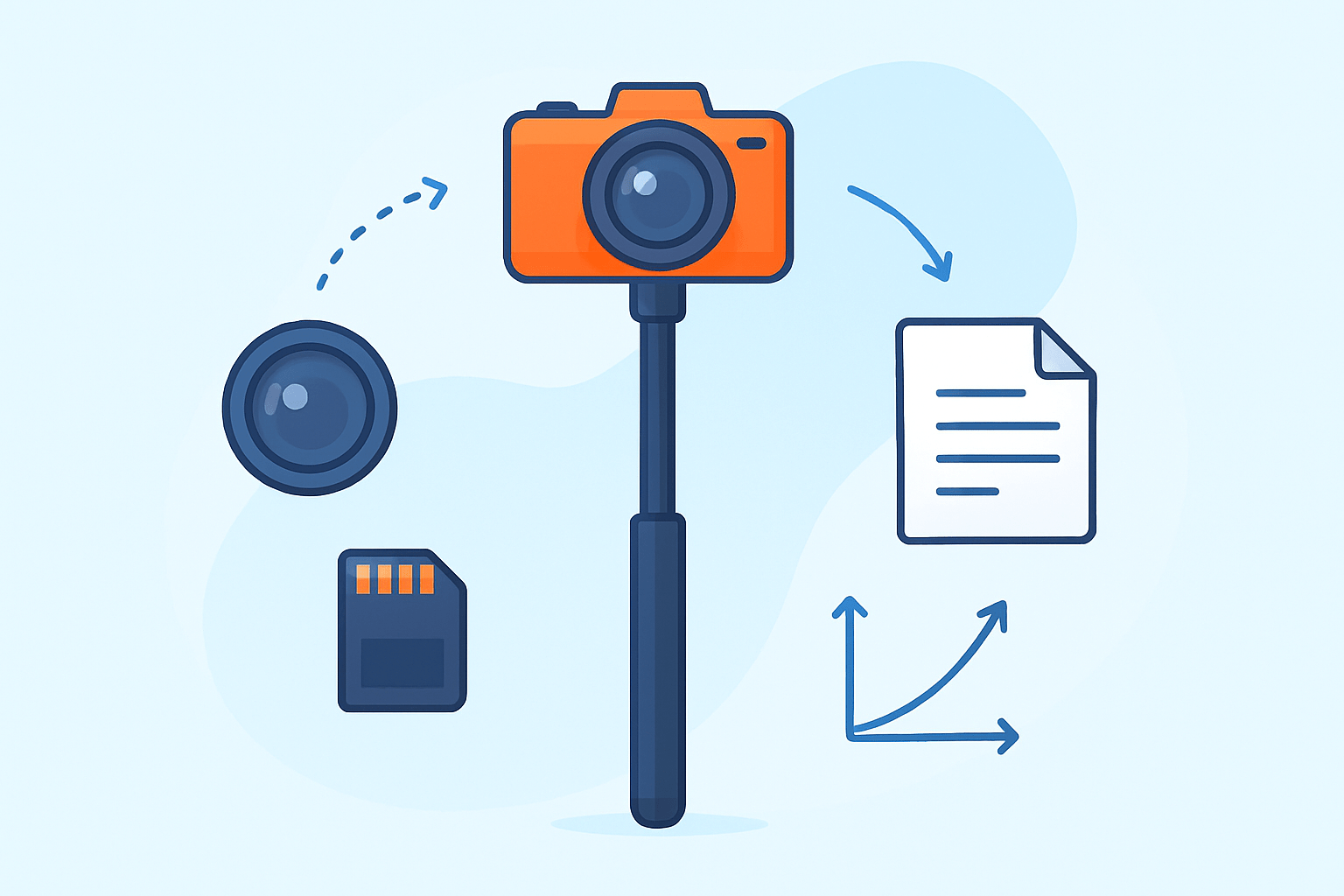
A monopod is a single-leg camera support that provides steadier shots than handholding while staying highly portable.
At its core, a monopod has telescoping leg sections that extend to height and collapse to pack. Those sections lock with either twist collars or flip latches to keep the leg rigid while you shoot.
The foot at the bottom is usually rubber for grip on floors, or a retractable spike for grass and dirt. At the top you may have a head or a simple quick-release plate, and many models add a padded grip, wrist strap, or even a small tripod-base adapter for extra steadiness.
There are variants for different jobs. Standard photography monopods are light and simple, while video monopods pair with fluid or gimbal heads for smooth motion, and travel versions fold short for backpacks. Some trekking poles convert to a camera support, and tabletop or mini monopods work for low angles and phones.
Materials matter too. Aluminum is affordable and tough but a bit heavier, while carbon fiber is lighter and damps vibration better at a higher price; both work well if the construction is solid.
Pay attention to load capacity, folded length, and max height. Match capacity to your camera and lens weight and choose a safety margin above that number so your rig stays stable as you pan or tilt. A labeled anatomy photo makes these parts easy to remember, and browsing a quick primer like monopod basics can help you put names to each piece as you compare models.
If you ever wondered what is a monopod in practice, think of it as a fast, one-point anchor that takes the weight off your arms and cuts shake without slowing you down. You get a steadier platform than pure handheld, yet you can move in a heartbeat.
What is a Monopod For?
A monopod is for stability, speed, and stamina. It lets you shoot at slower shutter speeds than handheld, reduces fatigue with heavy lenses, and sets up faster than a tripod when moments are fleeting.
It also shines where space is tight. In crowds and narrow aisles, a single leg is far less intrusive than three, and it draws less attention in quiet venues or on the street.
Photography gains appear first with telephoto lenses and in dim light. Many shooters find they can work roughly one to two stops slower than their usual handheld rule, though your results will vary by technique and lens stabilization, so test your own limits and review files at 100%.
Tracking moving subjects benefits too. Pair the monopod with a gimbal or a pan-capable head, and you can follow action smoothly while the stick carries the weight so your shoulders do not burn out.
For video, a monopod with a fluid head produces smooth pans and gentle tilts without the bulk of a full tripod. It is a great run-and-gun tool and a budget-friendly alternative to expensive gimbals for clips that do not demand full Steadicam-level isolation.
There are hard limits. A monopod does not lock your camera on all three axes, so it is not the right tool for unattended long exposures, stacked macro, architecture that needs precise alignment, or star trails. In those cases, use a tripod and take your time setting it up.
Practical perks pop up often. Some venues ban tripods but allow monopods, and certain trekking-pole designs double as a walking stick on hikes. That flexibility makes it an all-day companion for mixed shooting.
Monopod quick tips are simple and easy to copy. Use one when your focal length is long, your light is low, or your arms are tired; keep your stance wide and pull the leg slightly toward your body; start with shutter speed near the 1/focal-length rule and test how much you can slow; pick a head that suits your subject; pack a rubber foot and spike so you are ready for any surface.
If you want more context about timing and situations, this overview of when and why to add a monopod to your kit is a helpful companion. It also reinforces the idea that what is a monopod is best answered by how it solves real problems in the field.
Monopod Use Cases
Sports photography is where monopods earn instant respect. Use a gimbal or a pan-capable head so the lens can swing without fighting you, and stand with one foot forward for smooth panning.
As a starting point, try shutter speeds around 1/500 to 1/1000 for soccer or basketball, and 1/1000 to 1/2000 for faster field sports, then adjust for the speed of play and your lens stabilization. Practice panning by following a runner through the frame and firing a short burst as they cross your chosen background.
At a soccer match a 400mm plus a monopod and a gimbal head lets you track players for minutes without shoulder fatigue. You can keep your eye to the viewfinder, ride the play, and be ready for the goal without fighting the weight.
Wildlife and telephoto birding reward balance and patience. Mount the lens by its foot so the center of gravity sits over the monopod, extend the spike on soft ground, and keep your hand on the collar for quick height changes when a subject pops up on a new perch.
In a hide at dawn, a 500mm lens on a monopod lets you hold 1/250 with clean technique where 1/500 handheld was marginal. The support buys you precious light and less muscle shake as the morning wears on.
Events, weddings, and concerts need speed and a small footprint. You can slip down an aisle, plant the foot, and stabilize for speeches or slow dances without blocking guests, and you can fold it in seconds when the aisle must clear.
Travel and street work call for compact tools. A short-folding travel monopod tucks in a daypack, some trekking poles convert to a support at rest stops, and the single leg looks more like a walking aid than a “big shoot,” which keeps you discreet.
Video and documentary shooters lean on fluid heads or dedicated video monopods with small base feet. You get gentle, controlled tilts for interviews and stable, floaty pans for B-roll, while still moving fast in tight hallways where a tripod would snag on every corner.
On a documentary walk, a small video monopod lets you grab a clean establishing pan, then collapse and move with your subject in seconds. For many scenes, that speed beats the setup time of a tripod or shoulder rig.
Monopod Setup and Quick Adjustment
Start with a simple field checklist. Attach your quick-release plate to the camera or lens foot, set the monopod to roughly your shooting height, and lock each section from the thickest leg downward so the base stays strong.
Mount the camera and slide it on the clamp so the balance point sits over the center of the leg. Adopt a comfortable stance with feet a bit wider than shoulder width, and tilt the monopod slightly back toward your body to preload it for steadiness.
Set head friction for the shot. For panning, keep horizontal motion smooth and light, and for static portraits, add a bit more resistance so the camera does not drift as you fine-tune composition.
Use the classic 1/focal-length rule as your starting shutter speed, then test how slow you can go with support. Many shooters gain one to two stops, so a 200mm lens might work at 1/200 handheld and about 1/100 or 1/50 on a monopod with careful form; confirm by zooming into your files.
Reduce trigger shake by using a remote, a gentle press, or a short burst of three frames and keeping the best. Breathing helps too, so exhale slowly and squeeze during the pause, not during a gasp.
Pick the right head for your subject. A ball head is small and flexible for general use, a gimbal shines with big telephotos, and a fluid head is excellent for video pans and tilts; Arca-Swiss plates and L-plates keep mounting fast for both landscape and portrait orientation.
Know your locks and how to adjust them. Twist locks are slim and weather resistant but may be a touch slower with gloves, while flip locks are quick to read at a glance and easy to flick but need occasional tension tuning; tighten in small increments and never crush a leg section with excessive force.
Keep your kit safe with basic care. Rinse out sand or salt, dry the leg sections before closing, check screws and feet before big jobs, avoid slamming the foot on hard floors, and store it with sections closed so nothing bends in transit.
When shopping, compare load capacity to your full rig and add a safety margin. Look at folded length for your bag, max height for your eye level, section count for packing versus stiffness, material for weight and damping, lock type for your hands, and head compatibility for your plates; entry-level aluminum is great value, mid-tier carbon blends weight and strength, and pro builds focus on rigidity and long-term reliability.
Typical figures help you benchmark. Many aluminum models hold around 8 to 15 pounds and reach 60 to 65 inches, while carbon versions shave several ounces and feel stiffer; always verify the manufacturer’s specs and test with your actual kit.
As one sports shooter puts it, “The monopod is my extra leg—fast to place, faster to move.” A real-world example is a 300mm f/2.8 at 1/160 during evening light, which can be sharp on a monopod with good posture where 1/320 handheld was hit or miss.
A simple photo sequence can cement the process: a frame for attaching the plate, one for stance, and one showing a smooth pan across a lined background. A before-and-after crop of a low-light scene also shows how the support cleans up micro-blur.
What is the Difference Between Monopod and Tripod?
The difference comes down to stability versus mobility. A tripod locks the camera on three legs and wins for long exposures, precise composition, and any shot where the camera must stay absolutely still, while a monopod wins for speed, crowd navigation, and supporting heavy glass for long shooting bursts.
Setup time and permitted use differ too. A monopod lands in seconds and is often allowed where tripods are not, but it cannot hold your camera unattended; a tripod takes longer and demands space, yet it opens the door to techniques like multi-minute exposures, precise panoramas, and macro focus stacks.
If you need to chase action with a telephoto, pick a monopod. If you need full stability for night cityscapes, star work, architecture, or meticulous product shots, pick a tripod; many photographers carry both so they can switch without compromise.
There are hybrids if you want a middle ground. Small tripod bases for monopods add limited stand-up stability, beanbags work on car windows and fences, shoulder rigs spread the load, and powered gimbals isolate motion for video; if you are comparing options, browsing the current best monopods can show how designs blend portability and support today.
However you split the duties, understanding what is a monopod clarifies the choice. It is the tool for speed and stamina, and it pairs beautifully with a tripod when your shoot runs from fast action into precise, planned frames.
What People Ask Most
What is a monopod?
A monopod is a single-legged camera support that helps steady shots and reduce camera shake. It’s a lightweight alternative to a tripod for many shooting situations.
How is a monopod different from a tripod?
A monopod has one leg instead of three, so it trades some stability for much greater mobility and faster setup. It’s better for moving shots or tight spaces where a tripod is awkward.
When should I use a monopod?
Use a monopod for sports, wildlife, travel, or any time you need steadier handheld shots without the bulk of a tripod. It’s also helpful when you quickly need to raise your camera to eye level.
Can a monopod improve the sharpness of my photos?
Yes, a monopod can reduce camera shake and help capture sharper images, especially at telephoto focal lengths or in low light. It won’t be as steady as a tripod, but it still makes a noticeable difference.
Is a monopod easy to carry while traveling?
Most monopods are lightweight and fold down small, making them easy to carry in a backpack or attach to luggage. They’re a practical choice when you want support without extra bulk.
Can I use a monopod for video recording?
Yes, monopods work well for video by smoothing hand movement and allowing more controlled pans and tilts. Many videographers use them for run-and-gun shooting or events.
Are there common mistakes beginners make with a monopod?
A common mistake is relying on a monopod as if it were a tripod; you still need good posture and minimal movement for best results. Also, forgetting to secure the camera head can lead to wobble or accidents.
Final Thoughts on Monopods
If you were wondering whether a single leg—say model 270—could really change your shooting, the short answer is yes: a monopod gives steadier shots and far less strain while keeping you nimble. Rather than replacing a tripod, it trades multi-axis lock for speed, so you often get smoother telephoto tracking, quicker setups, and more freedom in crowds. We opened by asking if a monopod could bridge handheld and tripod work, and the article walked through the hows—anatomy, use cases, and setup—so you can see when it fits your kit.
Keep a realistic caveat in mind: it won’t hold your camera unattended for long exposures or give the absolute rigidity needed for studio precision. It’s best for sports, wildlife, events, travel, and run‑and‑gun video where mobility and telephoto support matter most. Try the tips here in the field and you’ll likely notice clearer frames, less fatigue, and new creative possibilities ahead.




0 Comments