

Ever missed the game‑winning catch because your lens couldn’t keep up? This guide presents the five best lenses for sports photography in 2026. Expect picks that balance speed, reach, and image quality.
We compare strengths, drawbacks, and best‑use scenarios for each choice. No marketing fluff—just practical comparisons. Whether you shoot the sideline or the outfield, you’ll see which tools fit.
Key factors include focal length, aperture, autofocus, stabilization, and build quality. These shape framing, low‑light performance, tracking, and durability. We’ll show how to prioritize them for different sports setups.
Distance to the action dictates your focal length needs. A wider aperture helps in dim arenas and freezes motion. Stabilization and handling matter for long days and fast pans.
Primes deliver maximum sharpness and wide apertures. Zooms offer framing flexibility when plays unfold quickly. This guide weighs those tradeoffs for common shooting scenarios.
Selections are based on field tests and pro feedback, not just specs. We note where each lens excels and where it compromises. Expect clear, system‑agnostic guidance you can act on.
If you shoot indoors, outdoors, near, or far, there’s a right tool. This guide helps match lens type to sport, distance, and light. Make smarter gear choices and spend your time shooting, not swapping glass.
Ready to upgrade your game‑day kit? Keep reading to find the lens that will capture the decisive moment. One well‑chosen lens can change your highlight reel.
1. Best All-Round Sports Lens

Canon EF 70-200mm f/2.8L IS III USM
Pro-grade telephoto zoom delivering fast aperture, sharp optics, and reliable image stabilization for sports and event photography.
Check PriceThe Canon EF 70-200mm f/2.8L IS III USM is a flagship telephoto zoom built for mid-telephoto sports work. It shines on Canon DSLR bodies where that 70–200mm range gives you the flexibility to shoot sidelines, close field action, and tighter portrait-style frames without changing lenses.
Autofocus is rapid and reliable, so tracking fast athletes becomes far less stressful. The constant f/2.8 aperture delivers subject isolation and strong low-light performance, letting you keep shutter speeds high and backgrounds creamy even under stadium lights.
Image stabilization is effective and genuinely useful for handholding at longer focal lengths or when panning. The lens feels solid in the hand — firm but smooth zoom and focus rings — and weather sealing means it will hold up in rainy or dusty conditions.
If you need more reach, the 70-200mm IS III handles teleconverters well with no significant loss of autofocus performance, which makes it a versatile option for shoots where you occasionally need extra reach. Overall, it’s a very usable, dependable workhorse for a wide variety of sports scenarios.
The trade-offs are practical: it’s relatively heavy for long shoots and more expensive than some alternatives. If you prioritize speed, image quality, and reliability for sports, this lens is mostly a safe bet.
- Fast, accurate AF
- Constant f/2.8
- Robust build & weather sealing
- Excellent image stabilization
- Relatively heavy
- More expensive than some competitors
2. Best Super-Telephoto Zoom for Mirrorless

150-600mm f/5-6.3 DG DN for Sony E
Ultra-tele zoom offering massive reach, crisp detail, and lightweight handling ideal for wildlife and distant action.
Check PriceAs someone who shoots sideline football and distant baseball plays, the Sigma 150-600mm f/5-6.3 DG DN OS Sports quickly became my go-to when I need reach without breaking the bank. It’s a super-telephoto zoom built for Sony E and Leica L mirrorless mounts, updated from the DSLR version with exceptional optics and proper weather sealing.
Across the zoom range it delivers excellent sharpness with minimal corner softness, and the images show strong contrast and color — which matters when you’re pulling tight crops from the far end of the field. Autofocus is fast and dependable when paired with optimized camera settings, though you’ll want to tune your camera’s AF behavior for best results in continuous tracking.
Yes, it’s large and heavy, but Sigma’s balance engineering makes it feel well balanced on a monopod or even handheld for shorter bursts; the built-in optical stabilization is effective for handheld work at extreme focal lengths. I also appreciate the zoom torque adjustment and the well-designed zoom and focus rings — you can personalize the feel to your shooting style, which is a small luxury on such a long zoom.
For wildlife and sports shooters who need extreme reach without spending pro-prime money, this lens is a compelling choice: “consumer price” with pro-level image quality and weather sealing that holds up in real conditions. Just be realistic about low-light limits — the f/5-6.3 aperture won’t compete with constant-aperture f/2.8 primes in dim stadiums.
- Outstanding zoom range (150–600mm)
- Sharp images with good contrast and color
- Solid weather sealing
- Well-designed zoom/focus rings with torque option
- Large and heavy
- f/5-6.3 aperture limits low-light performance
3. Best Sony Super-Telephoto Prime

Sony SEL400F28GM 400mm f/2.8
Lightning-fast prime with exceptional clarity, responsive autofocus, and beautiful background separation for pro sports and wildlife shooters.
Check PriceThe Sony FE 400mm f/2.8 GM OSS is a premium super-telephoto prime built for Sony full-frame mirrorless bodies, and it’s exactly the kind of glass I reach for when I need reach, speed, and beautiful subject separation. It’s particularly well suited to fast, distant sports — soccer, football, baseball — where you need to isolate players and freeze motion from the sideline or stands.
Autofocus on this lens is ultra-fast thanks to Sony’s XD Linear motors, and in practice it delivers precise tracking of running athletes and errant balls. The constant f/2.8 aperture gives you reliable low-light performance and creamy subject isolation for images that pop off the frame.
Optical stabilization comes built in with multiple OSS modes, which makes handheld use far more practical than you might expect at 400mm, especially when panning. The lens is relatively heavy but well balanced on pro bodies, so it sits comfortably on a monopod or gimbal head for long shoots.
From a working photographer’s standpoint the lens delivers prime sharpness, outstanding bokeh, and minimal chromatic aberration — that combination produces extremely high image quality. It also offers excellent durability and weather sealing, so I don’t hesitate to use it outdoors in mixed conditions.
If you shoot pro or serious amateur sports and can handle the size and budget, this lens is mostly a no-brainer for distant action. Be aware it’s heavy and bulky, and as a prime its fixed focal length makes it less versatile than zooms for changing framing on the fly.
- Exceptionally fast and accurate AF
- Consistent f/2.8
- Effective multi-mode stabilization
- Outstanding optics and build
- Heavy and bulky
- High cost and less versatile due to fixed focal length
4. Best Nikon Z-Series Sports Lens

Nikon NIKKOR Z 70-200mm f/2.8 S
Advanced telephoto zoom blending outstanding sharpness, fast low-light performance, and smooth stabilization for portraits, events, and action.
Check PriceThe Nikon Z 70-200mm f/2.8 VR S is a fast telephoto zoom built for Nikon Z mirrorless bodies, and it feels like a purpose-built sports lens. Its constant f/2.8 aperture lets you keep shutter speeds high and isolate subjects, which is crucial when athletes are moving fast.
Autofocus is extremely fast and near-silent, so tracking quick runners or cyclists becomes much less stressful. That near-silent AF also helps in quieter venues where you don’t want lens noise to distract players or fans.
Image stabilization is strong — the powerful VR makes handheld shooting far more practical across the zoom range. That VR, combined with the lens’ lighter weight compared with older DSLR equivalents, gives you real portability for long games or tournaments.
Optical performance is impressive: sharpness holds up across the zoom range with minimal distortion and very little chromatic aberration. In practice this means cleaner crops and less time spent correcting files in post, which is a real advantage during tight turnaround assignments.
For most outdoor sports and many indoor situations this lens is an excellent, versatile choice. Be realistic about very dark indoor arenas though — the max aperture can be challenging in the lowest-light venues, and it’s priced higher than older DSLR zooms.
- fast, silent AF
- consistent f/2.8
- integrated VR
- lightweight with solid weather sealing
- max aperture can be challenging in very dark indoor arenas
- more expensive than older DSLR zooms
5. Well-Rounded Telephoto Zoom for Sports
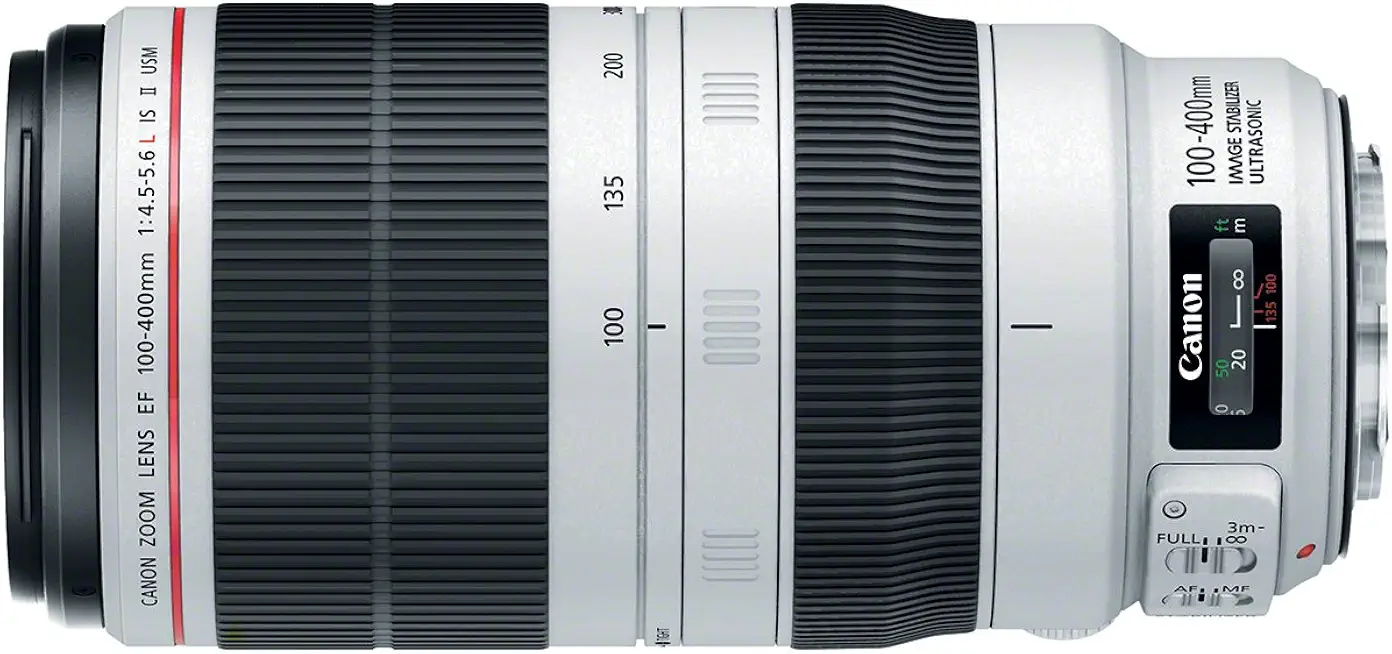
Canon EF 100-400mm f/4.5-5.6L IS II USM
Versatile super-telephoto zoom with precise autofocus, durable build, and steady stabilization for wildlife and travel photography.
Check PriceThe Canon EF 100-400mm f/4.5-5.6L IS II USM is a workhorse telephoto zoom that balances reach and handling for many sports situations. Its optics deliver excellent image quality and sharpness across the range, so you get usable, punchy files from 100mm all the way to 400mm.
Autofocus is one of its strong suits — fast and precise with minimal hunting — which makes it reliable on sidelines and for outfield action. The lens also has effective image stabilization, letting you handhold at longer focal lengths more often than you might expect.
Weather-sealed and built like a tank, this Canon stands up to rain, dust, and the knocks of event shooting. In the real world I often reach for it when I need a single lens that covers both closer sideline work and distant plays without changing glass.
There are trade-offs. The variable aperture of f/4.5-5.6 narrows to f/5.6 at 400mm, which limits low-light performance in dark stadiums or indoor venues. Because of its weight, many shooters pair it with a monopod for long shoots to stay comfortable and keep frames steady.
If you shoot mostly outdoor sports, or events with decent light, this lens is a very practical choice — sharp, reliable AF, and stabilized enough for handheld panning. If you regularly need the widest apertures for dim arenas, you’ll notice its limits quickly.
- Excellent image quality and sharpness
- Fast, precise AF
- Effective IS for steady handheld shots at 400mm
- Durable, weather-resistant build
- Aperture narrows to f/5.6 at long end — limits low-light
- Heavier than some zooms — often needs support
Choosing the Right Sports Focal Length
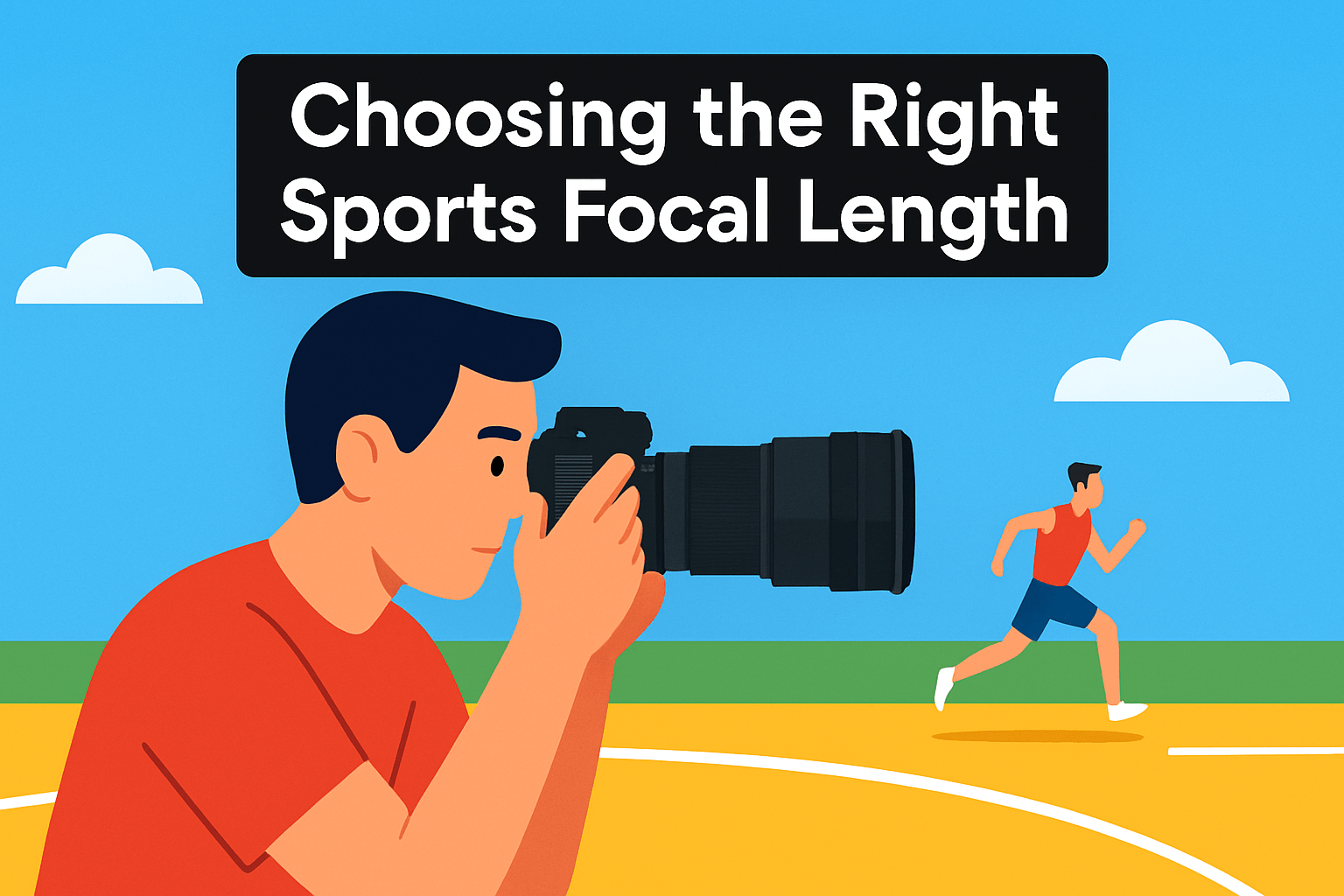
Focal length controls how much of the field you capture, how large subjects appear, and the sense of distance between you and the athlete. Picking the right focal length is often the single most important choice a sports shooter makes. Think first about where you can stand and how intimate you want the frame to feel.
For sideline work a 70-200mm is the most useful everyday lens. It lets you grab tight portraits, medium action, and quick reactions without stepping onto the field.
When you’re farther away, in the outfield, press box, or large stadium, aim for 300-600mm. Those extra millimetres let you squeeze dramatic, frame-filling shots without crowding players or officials.
As a rough guide, 50mm covers about 10 yards, 100mm about 19 yards, 200mm about 38 yards, and 300mm about 56 yards. Use these numbers to estimate what you’ll need from your shooting position.
Remember sensor size. Crop bodies narrow the field of view, so a 200mm on APS-C behaves like roughly 300mm on full frame. That can help with reach, but it also reduces framing flexibility.
Indoor and outdoor work demand different approaches. Indoors you’re often closer, so 85-135mm can work well, but you must compensate with faster apertures (f/2.8 or faster) and higher ISO. Outdoors you can prioritize reach and use 200-400mm or even 600mm for big-field sports.
Don’t forget context – wide angles under 35mm are great for stadium atmosphere, team celebrations, and establishing shots, but not for tight action. I usually keep a short wide zoom or prime handy to tell the whole story.
Match focal length to sport, location, and desired look. If unsure, rent lenses before buying. A 70-200 plus a super-telephoto covers most situations, and a monopod makes long lenses much easier to manage on long shoots.
Key Factors for Sports Lenses
Choosing a sports lens comes down to a few non-negotiables: focal length, aperture, autofocus, stabilization and build. Think less about specs on paper and more about the distance you’ll be shooting from and the conditions you’ll face.
Focal length dictates your framing. A 70–200mm covers sidelines and smaller fields; 300–600mm or a 400mm prime is what you reach for on large pitches or outfields, and remember that crop sensors buy you extra reach while narrowing the scene.
Aperture affects both light-gathering and subject separation. A constant f/2.8 gives you cleaner backgrounds and allows higher shutter speeds in dim gyms, while f/4 or variable-aperture zooms can be perfectly fine outdoors when light is abundant.
Autofocus is often the deciding factor in whether you get the shot. Fast, consistent tracking and reliable subject recognition matter more than a fraction of a stop; test your lens on your body, use continuous AF and back-button focus, and learn to pre-focus when action funnels through predictable zones.
Image stabilization helps hold shots steady and smooths panning, but it won’t freeze a fast-moving foot or ball — shutter speed will. Use stabilization for handheld long-reach work, but don’t let it tempt you into shooting with shutter speeds that are too slow for the action.
Build quality, weather sealing and ergonomics are practical concerns. A well-sealed lens survives rain, grit and sweat; weight affects how long you can shoot, so think about balance and whether a monopod or gimbal is part of your workflow.
Primes trade flexibility for speed and ultimate sharpness, while zooms give you framing freedom during unpredictable plays. Teleconverters can extend reach but will impact aperture and sometimes AF performance, so try combinations before committing.
Match your lens choice to sport, venue and shooting position rather than chasing the fanciest spec. If you can, rent a lens for a game day — you’ll learn more in an afternoon on the sidelines than from any spec sheet.
What People Ask Most
What focal length is best for sports photography?
It depends on the sport and how close you are to the action; telephoto options are essential for distant athletes while wider lenses work for environmental or sideline shots. Choose focal length based on shooting distance and the framing you want.
What aperture is best for sports lenses?
Wider apertures are preferable because they help isolate subjects and allow faster shutter speeds in lower light. Pick the fastest aperture you can reasonably afford and pair it with settings that freeze motion.
Are prime or zoom lenses better for sports photography?
Primes tend to offer wider apertures and excellent sharpness, while zooms provide framing flexibility and convenience. Your choice should match the shooting conditions and whether you prioritize reach or compositional versatility.
Is a 70-200mm lens good for sports?
Yes, that focal range is a versatile option for many sideline and closer action situations and is a common choice among sports shooters. It balances reach, handling, and image quality for a wide variety of events.
What lens do professional sports photographers use?
Professionals often use a mix of long telephoto primes for reach and speed alongside high-quality zooms for versatility. The exact selection depends on the sport, assignment, and shooting distance.
What lens is best for indoor sports?
Lenses with wide maximum apertures and fast, reliable autofocus perform best indoors to handle low light and rapid movement. Fast primes are frequently chosen, while bright zooms are useful when framing flexibility is important.
Do I need image stabilization for sports photography?
Image stabilization helps reduce handheld blur and can assist when panning or using longer focal lengths, but it does not replace proper technique and appropriate shutter speeds. It is a useful feature but not strictly mandatory for every situation.
Conclusion for Best Sports Lenses
These five lenses capture the range of solutions sports photographers need in 2026, from nimble telephoto zooms to heavy-duty super-telephoto primes, each offering a distinct balance of reach, speed, stabilization, and durability.
When choosing between them, focus first on focal length and aperture, then weigh autofocus performance, image stabilization, build quality, and the trade-offs of prime versus zoom.
Match your choice to the sport, shooting distance, indoor versus outdoor conditions, and your camera system—prioritizing reach for large fields, wide apertures for low light, and lighter options when mobility matters.
If you want to improve your shooting and gear decisions, read more articles on our site to sharpen technique, compare options, and refine your kit for the kinds of events you shoot.
Have questions or want personalized advice? Leave a comment below and we usually reply within a few hours.


0 Comments