
What single accessory could make your next shoot smoother and your best shots easier to capture? Sometimes the simplest tools deliver the biggest returns.
This guide breaks down five essential accessories every photographer should consider. They cover hands‑free carry, versatile support, comfortable straps, optical enhancement, and reliable power—each selected for practical field use. Whether you shoot landscapes, portraits, or street scenes, these additions focus on workflow, protection, and dependability.
For each item we offer real‑world use cases and user feedback to show how it performs outside the lab. You’ll also get honest pros and cons so you can weigh trade‑offs for your kit. Plus simple care tips to keep your gear working when it matters most.
This isn’t a catalog of the latest gadgets. It’s a practical playbook for picking the right additions that actually improve your shooting day.
Throughout the guide we emphasize real‑world reliability, portability, and straightforward maintenance. The goal is to help you pick accessories that suit your shooting rhythm, not clutter your bag.
Read on to find small upgrades that make a measurable difference to comfort, speed, and image quality. A few smart choices can boost your confidence and free you to focus on making better photographs.
1. Peak Design Capture Clip Review

Peak Design Capture Clip V3 with Plate
Securely carry your camera hands-free with a slim, quick-release mount that locks to straps or belts for fast access and stability.
Check PriceAs a working photographer I reach for the Peak Design Capture Clip on trips and street shoots where speed matters. It fastens to backpacks or belts and keeps the camera instantly accessible while hiking or moving through crowds — which means fewer missed moments and a lot less fumbling.
One real advantage is comfort: I noticed reduced neck and shoulder strain compared with a traditional strap, especially on long days. The Capture’s minimalist design means it’s not in the way, and you can attach or detach your camera in seconds when you need to switch from carry to shoot.
In the field the clip feels rock solid — accidental drops are rarely reported — and it’s compact and lightweight so it adds minimal bulk to your kit. It’s also compatible with most camera bodies and lens combinations and is simple enough to operate even with gloves on, which is handy in colder conditions.
There are a couple of practical caveats to keep in mind. It can be fiddly to attach the first few times until you get the technique down, and it’s not suitable for very heavy camera setups such as large DSLRs with big lenses. If you shoot mirrorless or run lighter bodies and moderate lenses, this is nearly perfect.
If your shooting style prioritises speed, low profile carry, and reducing shoulder fatigue, the Capture Clip is a strong, reliable option. Test it with your exact camera and rig before relying on it for heavy setups, but for travel and street work it’s become one of my go-to accessories.
- Extremely secure attachment; accidental drops rarely reported
- Easy to attach/detach, even with gloves
- Compatible with most camera bodies and lens combinations
- Compact and lightweight; minimal bulk
- Can be fiddly to attach the first few times
- Not suitable for very heavy camera setups (large DSLRs with big lenses)
2. MeFoto Roadtrip Pro 6-in-1 Travel Tripod Review

Benro MeFOTO Roadtrip PRO Travel Tripod with Ballhead and Monopod, Carbon Fiber
Lightweight carbon fiber tripod converts to a monopod, offering sturdy support and smooth panning for travel photographers.
Check PriceAs a travel photographer I reach for the MeFoto Roadtrip Pro 6-in-1 Travel Tripod when I need something that won’t weigh me down but still gives me stability. It’s popular among travel shooters because of its compact size and genuine versatility — the 6-in-1 design converts between tripod, monopod, selfie stick, mini tripod and more, so it adapts to whatever I’m shooting that day.
In the field it proves stable for lightweight mirrorless and compact cameras, even in breezy conditions, which makes it ideal for landscapes, cityscapes, and quick portraits on the road. Setup is quick and intuitive, and it fits in most camera bags so you really can keep it with you on hikes and urban walks.
Because it’s extremely portable and lightweight I’ll often use it when I want a low-profile kit or when airline carry limits are tight. The multi-configuration options also mean I rarely need a separate monopod or selfie stick — it pulls double duty cleanly.
That said, this isn’t the tripod for heavy DSLRs or big telephoto lenses; if you shoot with chunky pro bodies you’ll want a sturdier support. It can also wobble on uneven ground or in very strong winds, so I brace it or add weight where possible for long exposures or when taller setups are required.
Overall, if you shoot mirrorless or compact systems and travel a lot, the Roadtrip Pro is a smart, flexible choice that saves space without sacrificing too much stability. It’s a particularly good match for vloggers, travel bloggers, and landscape shooters who prioritize portability and quick setup.
- Extremely portable and lightweight
- Versatile multi-configuration use
- Stable for lightweight setups
- Easy to set up and adjust in the field
- Not suitable for heavy DSLRs or large lenses
- Can wobble in strong winds or on uneven surfaces
3. 1910 Fotografi HCB Strap Review

SMALLRIG Universal Leather Camera Neck Shoulder Strap, Adjustable
Comfortable, adjustable leather strap with durable hardware to carry cameras securely during shoots and long walks.
Check PriceThe 1910 fotografi ‘HCB’ strap is one of those accessories that quietly makes long days bearable. It’s designed to distribute weight evenly across the shoulder, which I noticed instantly on multi-hour street shoots—less shoulder fatigue, fewer readjustments between frames.
Its minimalist aesthetic means it stays out of the way of your composition while still feeling secure on the shoulder. The strap is easy to adjust and stays put, so you won’t be fiddling with it between shots, which is ideal when working quickly in busy urban environments or traveling light.
Build quality is a standout: the construction feels durable and resists wear and tear, so it’s suited for regular use rather than occasional outings. Initially it can feel a bit stiff, but with daily use it softens and becomes more comfortable without losing support.
Keep in mind it’s tailored toward photographers who prefer a stripped-back carry solution—street and travel photographers will love it, but those wanting thick cushioning for very heavy camera setups might find it lacking. Overall, if comfort, durability, and a low-profile look are high on your list, the HCB strap is a very practical choice.
- Extremely comfortable for long-term use
- Durable construction; resists wear and tear
- Minimalist, unobtrusive design
- Easy to adjust and stays securely in place
- Can feel stiff when new; softens with use
- Not ideal for photographers preferring more padding
4. Hoya Ultra-Pro Circular Polariser Review

Hoya HD3 HRT Circular Polarizer 49mm
Enhances contrast and reduces reflections for richer skies and clearer glass shots; ideal for capturing vivid, glare-free outdoor images.
Check PriceAs a landscape photographer I reach for a circular polariser more often than not, and the Hoya Ultra-Pro is clearly aimed at that use. It’s widely used by landscape and outdoor photographers for handling skies and water, and you can see why—the effect on reflections and saturation is immediate.
Users report improved color saturation and reduced glare in bright conditions, which translates to richer skies and clearer water without heavy post-processing. That “noticeable improvement for skies and water” is exactly what I look for when shooting mid-day scenes or reflections on rivers and lakes.
Build quality matters in the field and this Hoya gets praise for its construction and scratch resistance. The filter feels durable and confidence-inspiring when you’re swapping filters on a windy ridge or sandy beach.
Practical handling is excellent: the ring is easy to rotate and adjust, even with gloves on, so you won’t miss shots fumbling with it. It also delivers consistent performance across lighting conditions, making it a reliable tool from bright sun to softer light.
There are a couple of caveats. It can cause vignetting on wide-angle lenses, so test it on your widest focal lengths before committing to a shoot. Also expect a slight loss of light; you may need to bump exposure in low-light situations or use a tripod.
Overall, if you shoot outdoors—especially landscapes, water scenes, or bright skies—the Hoya Ultra-Pro Circular Polariser is mostly a smart buy: durable, effective, and easy to use. If you primarily shoot ultra-wide or very low light handheld, weigh those drawbacks first.
- Noticeable improvement for skies and water
- Durable, scratch-resistant construction
- Easy to adjust/rotate in the field
- Consistent performance across lighting conditions
- Can cause vignetting on wide-angle lenses
- Slight loss of light; may require exposure adjustments in low light
5. Newell FDL USB-C Dual Battery Charger Review
No product provided to describe.
Check PriceAs a travel photographer I keep a Newell FDL USB-C Dual Battery Charger in my kit for days when outlets are scarce. It’s specifically built to keep multiple batteries charged on the go, which is a huge practical win when you’re shooting all day away from power.
The unit is compact and charges two batteries simultaneously, so you can top up a pair between shoots. It uses USB-C and works with various power sources, including power banks, making it very flexible for travel and location work.
Users report it’s reliable and easy to use, and I’ve found the same in practice — simple to pack and straightforward to operate between flights and long days in the field. Many photographers call it a travel lifesaver for exactly that reason: it keeps spares ready when outlets are limited.
There are trade-offs to consider. It can be slower than larger chargers, so if you need the absolute fastest turnaround you might prefer a desktop unit. Also, it’s not suitable for non-standard battery types, so check compatibility with your specific battery models before relying on it as your primary charger.
If you travel light, shoot long days, and value redundancy and portability, this charger is mostly a good fit. If you need rapid bulk charging or support for uncommon battery formats, consider a dedicated larger charger instead.
- Compact and lightweight; easy to carry
- Charges two batteries at once
- Reliable charging performance
- Compatible with power banks and varied power sources
- Can be slower than larger chargers
- Not suitable for non-standard battery types
How to Choose the Right Camera Bag
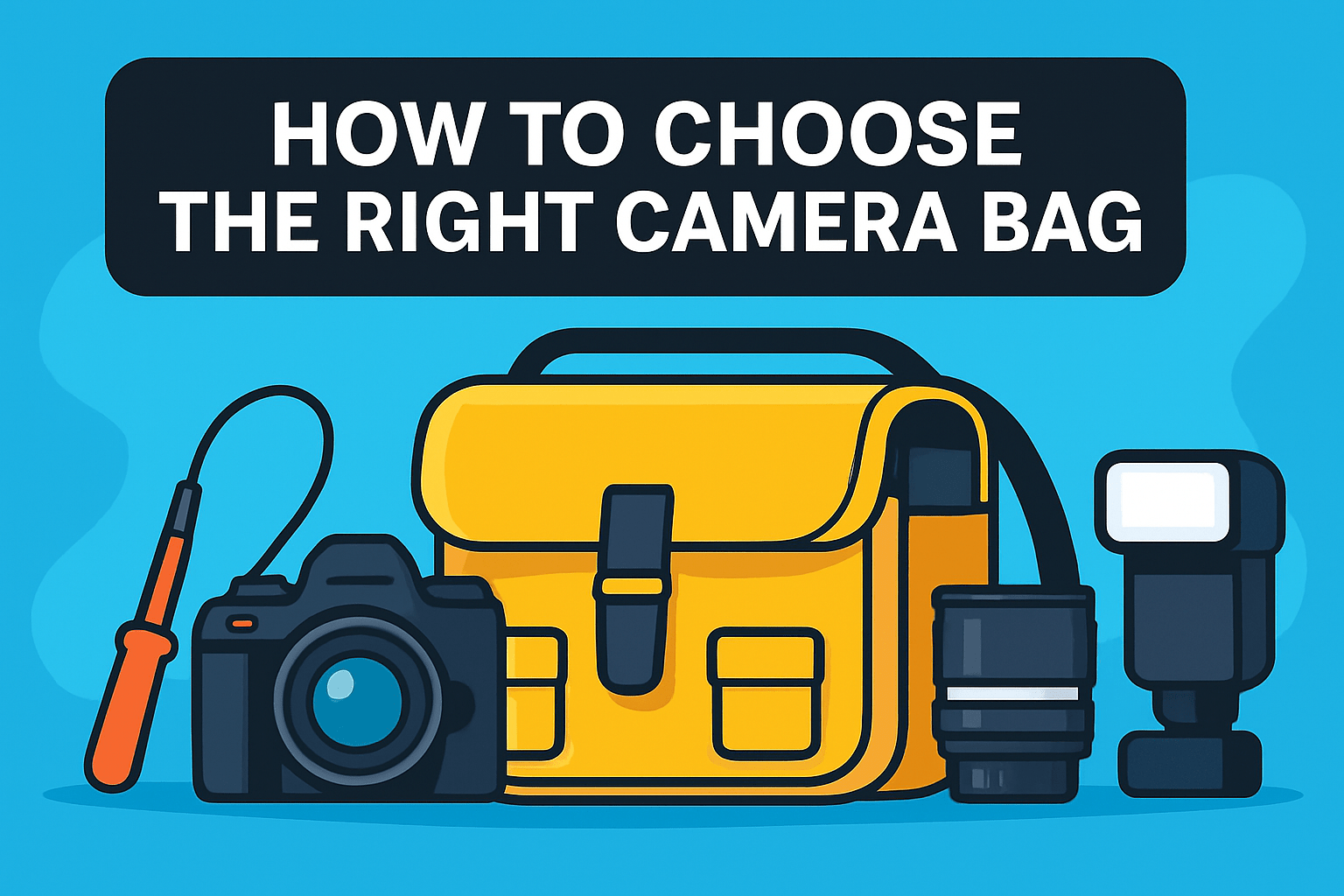
Choosing a camera bag is about more than looks. It needs to protect your gear, keep things organized, and make the camera easy to grab when a moment appears.
Start by taking inventory: camera bodies, lenses, flashes, chargers, filters, memory cards and any laptop or tablet you carry. Pick a bag slightly larger than your current kit to allow growth, but avoid an oversized pack that lets equipment shift or becomes a target for theft.
Think about style through the lens of how you shoot. Backpacks are best for heavy kits and hikes because they distribute weight evenly. Slings and shoulder bags give far quicker access for street work, while messenger bags or duffels work well for urban shoots and travel.
Comfort matters on long shoots. Look for padded straps, breathable back panels and a waist or sternum strap to stabilize loads. Test a bag with your kit loaded to see how it feels walking and bending.
Protection starts inside. Customizable padded dividers cradle lenses and bodies and stop them from knocking together. Choose weather-resistant materials and a built-in rain cover if you shoot outdoors often.
Organization saves time and stress. Side or rear quick-access points let you reach your camera without setting the bag down. Dedicated pockets for batteries, cards and cables keep you from fumbling, and check that there’s a secure laptop sleeve and tripod attachment if you need them.
If you switch between travel and work, modular inserts or packing cubes make the bag adaptable. They also make airport security and short trips easier because you can remove the camera section and travel light.
Before you buy, load the bag and take it for a walk. Comfort, protection and access should match your gear and shooting environment—pick the bag that helps you shoot more and worry less.
How to Clean Your Camera Gear
Keeping your kit clean isn’t glamorous, but it makes a huge difference to image quality and gear longevity. A quick wipe after a dusty hike and a more thorough clean before a big shoot will save you headaches and money down the road.
Keep a few simple tools on hand: a non-contact air blower, a lens-cleaning pen (brush plus non-liquid carbon pad), several microfiber cloths, a soft-bristled lens brush, and sensor cleaning swabs with appropriate solution for emergencies. Use the blower and brush for routine work and treat sensor swabs with real care.
Start every cleaning session with the air blower. Hold lenses and camera mount facing down so gravity helps remove loose particles, and never use canned compressed air — it can damage delicate surfaces and leave residue.
After the blower, sweep remaining dust away with the soft brush. For glass, wipe in gentle circular motions with a clean microfiber; if you must use solution, apply it to the cloth, not the glass, and use very little.
For stubborn fingerprints, the lens pen is your friend. Use the pen’s brush first, then the non-liquid pad to lift oils; avoid touching optics with your fingers at all times.
Wipe the body and LCD with a slightly damp microfiber cloth and keep moisture away from buttons and ports. It’s a good idea to remove the battery and memory card when doing a deeper clean to avoid accidental power-ups.
Only clean the sensor when dust shows up in your photos. Start with the blower; if spots persist, use sensor swabs and solution or send it to a pro. Sensor work is precise — when in doubt, pay for expert service.
Finally, launder or replace your microfibers regularly and store cleaning tools in a sealed pouch so they don’t recontaminate your kit. A small field kit with a blower and lens pen will keep your gear ready for the next shot.
What People Ask Most
What accessories do photographers need?
Essential extras include a secure carrying solution, a stable support, protection for lenses, and reliable power and storage backups. These items make shooting easier and help protect gear across different environments.
What are the must-have accessories for beginner photographers?
Beginners benefit from simple, versatile items that improve handling and reliability, such as a basic support, extra power, and a way to protect and organise gear. Start with easy-to-use pieces that let you focus on learning and shooting.
What accessories do professional photographers use?
Professionals often choose durable, well-made gear that supports efficiency and consistent results, including robust carrying options, dependable power solutions, and protective tools. Selections are guided by shooting style and the need for reliable performance in the field.
What camera accessories improve photography quality?
Accessories that stabilise the camera and control or shape light have the most influence on image quality, along with clean, well-maintained optics. Investing in good support and lens care helps produce clearer and more usable photos in practical situations.
What accessories help with low-light photography?
Items that improve steadiness and allow more light into the lens are most helpful in dim conditions, together with dependable power and fast storage. Using gear that enhances stability and exposure flexibility reduces blur and increases usable frames.
What are essential accessories for portrait photographers?
Portrait work benefits from tools that shape and control light, such as modifiers and reflectors, along with comfortable carrying solutions for extended sessions. Accessories that aid subject positioning and consistent lighting make shoots run smoother and produce better results.
What are the best accessories for travel photographers?
Travel photographers need compact, versatile gear that protects equipment and keeps it accessible, including lightweight supports, secure carrying options, and portable power and storage solutions. Durability and ease of use are important when moving between locations and environments.
Conclusion for the Best Accessories for Photographers
The five accessories covered here — a quick-attach clip, a compact travel tripod, a comfortable shoulder strap, a circular polariser, and a dual battery charger — together address accessibility, stability, comfort, image control, and reliable power on the road.
Choose each item to suit your camera size, shooting style, and how you carry gear, and pair those choices with the right camera bag for protection and organisation.
Regular care and simple cleaning routines will keep these tools performing well and extend their useful life in the field.
If you want to sharpen your practical skills and make better buying decisions, read more articles on our site for hands-on tips and real-world advice.
Have questions or want to share your own experiences with these accessories? Leave a comment and we usually reply within a few hours.


0 Comments