
Have you ever missed the single fraction of a second that separates a snapshot from a legendary image?
When you chase fast athletes or wary wildlife, timing, focus, and reach must be rock solid.
Choosing the right camera stacks the odds in your favor and helps you capture decisive moments repeatedly.
This quick guide narrows five top cameras that excel at sports and wildlife without drowning you in technical minutiae.
We evaluate real-world performance instead of marketing hyperbole, focusing on what matters in the field.
Whether you shoot stadium action at high ISO or dawn patrols in fog, you’ll find guidance here.
Our focus areas include autofocus accuracy and tracking, burst frame rates, video capability, portability, and lens choice.
These elements determine whether you capture a split-second play, a soaring bird, or a dramatic predator encounter with pin-sharp detail.
We also weigh ergonomics and lens ecosystems because the best camera is useless without lenses you can actually use in the field.
Throughout the guide you’ll read practical pros and cons, real-world use cases, and straightforward advice to match gear to goals.
We avoid deep dives into obscure specs and instead show how frame rate, AF behavior, and lens reach translate into usable results.
Read on and get the confidence to choose a camera system that keeps you on the action and in focus every time.
1. Canon EOS R5 Mark II For Wildlife

Canon EOS R5 Mark II Body
Flagship full-frame mirrorless with breakthrough autofocus, ultra-high-resolution imaging, and professional video capabilities for demanding photographers and filmmakers.
Check PriceThe Canon EOS R5 Mark II is a powerhouse for wildlife and action work, marrying Canon’s excellent autofocus with high-end photo and video specs. As a professional photographer I find it equally at home on long wildlife days and mixed pro photo/video assignments.
Its headline AF system, the Dual Pixel CMOS AF II, is phenomenal for tracking unpredictable subjects like birds and mammals. In the field that translates into more keepers from fast, erratic movements and fewer missed focus moments, which is exactly what you need for wildlife shooting.
For videographers the R5 Mark II is tempting — it offers 8K 60p capture and high-quality video options that let you crop or pull stills with confidence. The camera also delivers a fast electronic shutter and strong burst performance for action, though be aware there can be some minor overheating during prolonged video recording.
Handling is geared toward pros and enthusiastic amateurs: the body is versatile and easy to use, with settings that adapt to both stills and motion workflows. The trade-offs are real — the R5 Mark II is relatively large and heavy — so if you prioritize ultra-light travel setups you might want to consider that. For anyone prioritizing top-tier AF, high-resolution video, and a pro-friendly feature set, the R5 Mark II is a very compelling choice.
- Dual Pixel CMOS AF II — outstanding subject tracking
- 8K 60p video — top-tier video quality
- Fast electronic shutter / burst rate — great for action
- Versatile and easy to use for pros and enthusiasts
- Some minor overheating during prolonged video
- Relatively large and heavy
2. Nikon Z9 For Pro Sports

Nikon Z 9
Pro-grade mirrorless powerhouse delivering unmatched speed, autofocus precision, and robust durability for sports, wildlife, and studio professionals.
Check PriceThe Nikon Z9 is a camera built around speed and image quality, and it shows. As a pro I reach for it when I need relentless frame rates and rock‑solid video in demanding situations. It’s a top choice for professional wildlife and sports photographers who need to chase split‑second moments.
One of the headline features is its very high burst capability — up to 120fps — though that top rate is at a lower resolution. Video is equally strong, with 8K 60p recording and long recording times that let you capture extended action without constantly swapping cards or stopping. The body is pro‑grade, with excellent weather sealing and ergonomics that stand up to long days in the field.
Practical strengths for me are straightforward: the Z9’s speed and durable build mean fewer missed opportunities and less worry in harsh conditions. F‑mount lens compatibility via an adapter also gives flexibility when I need specific optics. The tradeoffs are real: the camera is bulky and heavy, and RAW capture is limited at the absolute highest speeds — RAW + JPEG only at 20fps — so if you demand full‑resolution RAW at ultra‑high burst rates you’ll face limits.
- 120fps burst (at lower resolution)
- 8K 60p video with long recording times
- Pro-grade body with excellent weather sealing
- F‑mount lens compatibility via adapter
- Bulky and heavy
- RAW limited at high speeds — RAW+JPEG only at 20fps
3. OM System OM-1 II For Wildlife

OM SYSTEM OM-1 Mark II Micro Four Thirds Camera
Compact, weather-sealed system camera offering advanced stabilization, fast processing, and stunning image quality for travel and action shooters.
Check PriceAs a wildlife shooter I often choose gear that lets me move fast and stay in the field all day. The OM System OM-1 II is built for that mindset — compact and feature-rich, it gives you high-end autofocus and ruggedness without the bulk of full-frame bodies. It’s an obvious pick when you want a smaller setup that still nails subject tracking.
The camera’s 1053-point AF grid with AI-assisted subject detection is the real strength here. In practice that means birds in flight and skittish mammals are easier to keep sharp, and the tracking feels reliable across erratic movement. If you value getting the keepers from a long day of shooting, the AF system alone makes the OM-1 II punch above its size.
Another big advantage is the excellent image stabilization for handheld shooting. You can get usable telephoto shots without always lugging a tripod, which speeds up approach and repositioning in rough terrain. The weather-resistant construction also lets you work in rain and dust with confidence — important when you don’t want to bail because of weather.
There are trade-offs to be aware of. The sensor is 20MP, so if you need massive crops or ultra-large prints you might feel constrained compared with higher‑resolution bodies. And video tops out at 4K 60p, so it won’t satisfy those chasing 8K workflows. Overall, though, the OM-1 II is an excellent choice for wildlife photographers who prioritize portability, rock-solid AF, stabilization, and durability in the field.
- Compact, lightweight design compared with full-frame cameras
- 1053-point AF with AI-assisted subject detection
- Excellent image stabilization for handheld shooting
- Weather-resistant construction
- 20MP sensor may limit heavy cropping
- Video tops out at 4K 60p
4. Sony Alpha 9 III For Sports

Sony Alpha 9 III
High-speed mirrorless engineered for relentless continuous shooting, silent operation, and pro-level autofocus to capture decisive moments.
Check PriceAs a pro who chases fast-moving subjects, the Sony Alpha 9 III is built around record-breaking burst speed and advanced autofocus, and it shows in every sequence. The headline feature is 120fps RAW capture, which lets you harvest split-second moments that would be impossible with ordinary frame rates.
What makes the A9 III especially useful in the field is the global shutter — it eliminates rolling shutter distortion so panning shots and high-speed laps stay straight and clean. That matters when subject geometry and timing are everything, like athletes crossing a finish line or birds flashing past at high speed.
The camera’s advanced animal and bird eye tracking gives you an edge with wildlife; it locks on tiny, fast-moving targets so you can concentrate on composition and timing. Pair that reliable subject detection with 4K/120p video capability and you also get excellent slow-motion options for analyzing movement or creating dramatic clips.
There are trade-offs to consider. The camera has no 8K video option, so if you need the absolute highest-res video it’s not the right pick. Also, the buffer fills quickly at the highest burst rates, so long sustained bursts will be limited compared with lower-frame capture modes.
In short, if your priority is distortion-free, ultra-high-speed capture for sports or quick wildlife encounters, the Sony Alpha 9 III is a compelling pro-level tool. If you need endless long bursts or 8K video, weigh those limits against its strengths before committing.
- 120fps RAW capture
- Global shutter eliminates rolling shutter distortion
- Advanced animal and bird eye tracking
- 4K/120p video capability
- No 8K video option
- Buffer fills quickly at the highest burst rates
5. Panasonic Lumix G9 II For Action

Panasonic LUMIX G9 II Body
Rugged, high-performance mirrorless with advanced stabilization, fast burst shooting, and impressive image clarity for outdoor and wildlife photography.
Check PriceThe Panasonic Lumix G9 II is a refreshingly light Micro Four Thirds option that balances portability with serious shooting chops for sports and wildlife. Its compact, ergonomic design makes it an easy companion on long hikes and fast-moving assignments where carrying less matters.
What stands out is the phase-detection AF with advanced subject recognition and tracking — it locks and holds on moving subjects reliably for a camera in this size class. That tracking, combined with a high-speed electronic shutter that can reach up to 75 fps, means you can capture rapid sequences without lugging a pro-sized body.
Video shooters will appreciate the 5.7K 60p recording for high-resolution clips, useful if you want detailed slow-motion or extra framing flexibility in post. For fieldwork and travel, that combination of stills speed and strong video capability makes the G9 II a very versatile hybrid tool.
There are compromises to be aware of: the real-world use notes it’s aimed at adventurous photographers who need portability and speed, not those who require the maximum lens ecosystem. In practice you’ll enjoy the weight savings and handling, but you may run into limitations if you depend on a wide selection of specialty full-frame glass.
Overall, if your priority is a lightweight, fast camera for handheld action and travel-friendly wildlife work, the Lumix G9 II is a compelling choice. It’s especially suited to shooters who favor mobility and reliable subject tracking over the broadest lens support or absolute pro-body features.
- Phase-detection AF with advanced subject recognition and tracking
- Compact, lightweight, ergonomic design
- High-speed shooting up to 75 fps (electronic shutter)
- 5.7K 60p video recording
- Slight viewfinder lag during high-speed shooting
- Lens support more limited compared with full-frame systems
Autofocus For Sports And Wildlife
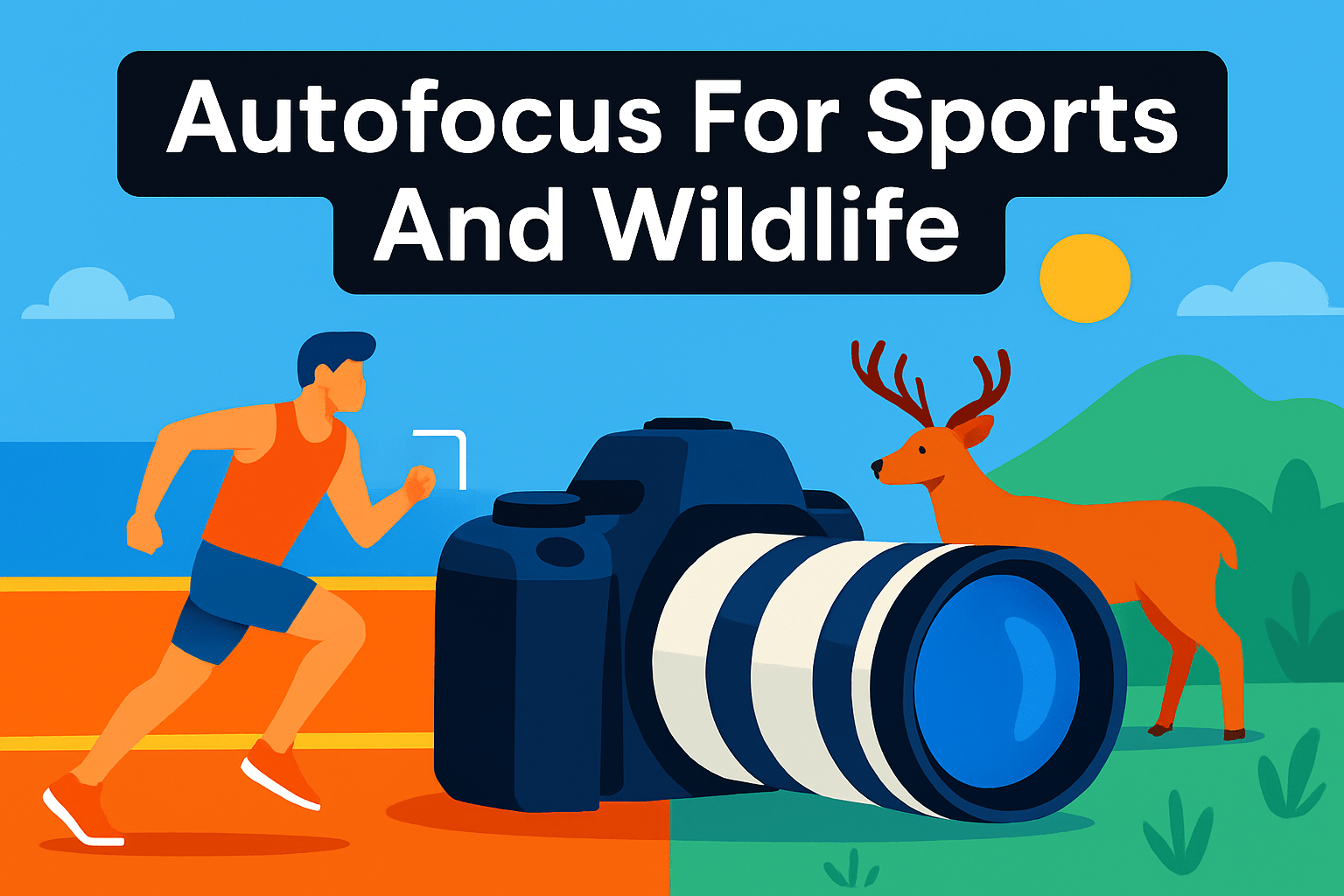
Autofocus is the backbone of successful sports and wildlife shooting — when the animal or athlete moves unexpectedly, you need the camera to find and hold focus without thinking. Modern systems that pair fast continuous AF with reliable subject and eye/animal detection cut your miss rate dramatically, so look for wide AF coverage and dense AF points that keep off-center subjects locked in.
Frame rate and AF tracking go hand in hand. Cameras that can sustain high burst speeds and offer blackout-free viewfinders or global shutter behavior make it far easier to capture decisive moments, but remember that extreme fps can fill buffers fast, so balance speed with sustained tracking performance.
Low-light performance is often underrated. Sensitive AF systems paired with fast lenses will keep you shooting at dawn and dusk when animals are most active, and built-in image stabilization on bodies or lenses helps maintain focus and sharpness handheld at long focal lengths.
Customization is where the pros separate from enthusiasts. Tweak tracking speed, sensitivity, and subject priority to match the scene — a bird in erratic flight needs different settings than a sprinter on the track. Use back-button focus and a flexible AF area to react quickly without changing your composition.
Finally, think of AF as a system: body, processor, and glass working together. A camera can have brilliant AF tech, but pairing it with the right telephoto, good stabilization, and comfortable ergonomics will make that autofocus practical in the field. Spend time testing your setup on real subjects and refine settings until the camera starts to feel like an extension of your eye.
Lenses For Sports And Wildlife
Lenses will make or break your wildlife and sports images more than the camera body. Pick the focal length that matches how close you can realistically get to a subject and build outward from there—reach, aperture and handling are the three practical constraints you’ll live with in the field.
For distant birds and shy mammals I reach for 400–600mm primes or 400–800mm+ setups; tight framing is everything there. For larger animals at moderate range and most field sports, 200–400mm gives flexibility without crippling weight. If you need one do-it-all optic, a 100–600mm or 200–600mm tele zoom provides framing versatility so you don’t miss the shot while swapping glass.
Primes like 400mm f/2.8 or 600mm f/4 deliver the best subject isolation and low‑light performance, but they commit you to a fixed reach and heavier support. Zooms trade a bit of ultimate sharpness for adaptability, and for many shooters that practicality wins on long days. In my kit a fast 400mm prime and a 100–400mm zoom cover most scenarios.
Don’t skimp on features: image stabilization (lens or in‑body) lets you handhold longer focal lengths, weather sealing keeps you shooting in mud and drizzle, and lighter constructions reduce fatigue on multi-hour stalks. Consider teleconverters to extend reach but be realistic about the loss of light and potential AF slowdowns. Also check that the lens’ AF system pairs well with your camera for reliable tracking.
Finally, balance reach against portability. Rent the big glass for dedicated stakes or plan on monopod/tripod support for heavy primes. If you travel light, a Micro Four Thirds body or a 100–400/200–600 zoom will give you extra “reach” without the weight. Test combinations before a trip and prioritize the lens that lets you shoot confidently and for longer stretches—consistency beats occasional epic frames.
What People Ask Most
What is the best camera for sports and wildlife photography?
There is no single best camera; the right choice depends on priorities like autofocus performance, frame rate, lens options, portability, and video capability. Pick a model that balances the features you need with your budget and shooting style.
Which cameras have the fastest autofocus for sports and wildlife?
High-end mirrorless models with advanced subject detection and dense AF coverage typically offer the fastest and most reliable autofocus. Look for systems with proven animal and eye-tracking performance for unpredictable subjects.
Is mirrorless or DSLR better for sports and wildlife photography?
Mirrorless cameras often offer advantages like faster continuous AF, higher burst rates, and modern subject-tracking features, while DSLRs can still excel with robust optics and optical viewfinders. Choose based on which advantages matter most to your shooting conditions and lens availability.
What key features should I look for in a camera for sports and wildlife?
Prioritize fast and reliable continuous autofocus, high burst capability, wide AF coverage, good low-light performance, weather sealing, and access to appropriate telephoto lenses. Ergonomics and battery life are also important for long field sessions.
Which lenses are best for sports and wildlife photography?
Telephoto zooms and primes are the go-to choices, with longer focal lengths for distant or shy animals and shorter telephotos for closer action. Image stabilization, weather sealing, and relatively fast apertures improve usability and results in varying conditions.
How important is high frame rate (fps) for sports and wildlife photography?
High frame rates are very helpful for capturing split-second action and increasing the chance of getting the perfect moment. They are especially useful for fast, unpredictable subjects where timing is critical.
What camera settings work best for shooting sports and wildlife?
Use continuous autofocus and burst mode, choose a shutter speed that freezes motion, and set an aperture that balances depth of field with available light. Adjust ISO as needed and customize AF tracking settings to match the subject behavior.
Conclusion For Sports And Wildlife Cameras
When choosing a sports or wildlife camera, prioritize the features that matter most to your shooting style—autofocus reliability, frame rate, focal reach, video capability, and portability/weather sealing.
Match those priorities to each model’s strengths: the Canon EOS R5 Mark II for AF and video versatility, the Nikon Z9 for speed and durability, the OM System OM‑1 II for compact ruggedness, the Sony Alpha 9 III for ultra-high-speed capture, and the Panasonic Lumix G9 II for lightweight portability.
Balancing these trade-offs will help you capture more decisive moments in the field while keeping your kit practical for the conditions you shoot.
If you want to sharpen your skills and make better gear choices, read more articles on our site to deepen your technique, strategy, and gear knowledge at your own pace.
Leave a comment below with your situation or questions — we usually reply within a few hours and are happy to help you refine your approach.



0 Comments