
Ever wondered which drone will capture cinematic sunrises from a ridge, silky surf follow-cams, and rooftop city timelapses while still fitting inside a carry-on without dragging down your kit?
This guide lines up five travel-friendly drones and distills practical, travel-tested buying tips into clear advice for vloggers who need reliable, packable aerial tools on the road.
Whether you favor ultra-light portability for long hikes, near-cinematic imaging for low-light landscapes, or hands-free autonomous tracking for solo adventures, each priority changes what “best” actually means.
We aim to speak to creators who want honest trade-offs—not marketing hype—so you can match a drone’s real-world behavior to your shooting style and travel habits.
Expect concise, field-focused insights that cut through spec sheets and highlight what truly improves footage and workflow while traveling light.
If you’re packing for a cross-country road trip, a multi-day backpacking route, or a city-hopping content sprint, this primer will narrow your options fast.
Flip through the picks and practical advice to find the aerial setup that keeps your storytelling nimble and your carry-on uncluttered.
1. DJI Air 3S For Travel Vlogging

DJI Air 3S RC-N3 Dual-Camera 1-inch CMOS 4K/60fps 45min
Capture cinematic 4K/60fps footage with dual sensors and long 45-minute flight time; intelligent controls for pro-grade aerial storytelling.
Check PriceThe DJI Air 3S is a travel vlogger’s workhorse when you want professional results without hauling a cinema rig. Its dual cameras — a 50MP wide and a 48MP telephoto — give you real creative freedom for sweeping landscapes and tight subject isolation, and the 4K/60fps capture plus 4K/120fps slow motion and 10‑bit D‑Log M let you grade footage aggressively for that cinematic look.
In the field it’s reassuringly stable; the Air 3S handles winds up to 12 m/s, so coastal cliffs or blustery city rooftops won’t ruin the shot as often as with lighter drones. The sensor performance is bright and vibrant with excellent low‑light behavior, so golden hour and blue hour footage come out usable more often than not.
Practical travel features matter: 42GB of internal storage means you can keep shooting even if you misplace an SD card, and the RC‑2 controller’s built‑in display makes framing and changing settings faster than fumbling with a phone. Battery life is also competitive, with the model noted for 45+ minutes in typical guidance — helpful when you want longer scouting and fewer battery swaps.
The trade‑off is weight and regulation. The Air 3S is slightly larger/heavier (over 249g), which gives the better stability and image quality but will trigger registration requirements in many countries and adds a bit more bulk to your kit. If you prioritize top‑tier image quality, reliable performance in wind, and onboard conveniences, this drone is an excellent travel companion as long as you accept the registration and size trade‑offs.
- 50MP wide + 48MP telephoto for flexible framing
- 4K/60fps, 4K/120fps slow motion, 10‑bit D‑Log M
- Stable in winds up to 12 m/s
- 42GB internal storage and RC‑2 built‑in display
- Over 249g — often requires registration
- Slightly bulkier than ultra‑portable drones
2. DJI Mini 5 Pro For Travel Vlogging

DJI Mini 5 Pro Fly More Combo DJI RC 2 1-inch CMOS 4K 3 batteries
Ultra-portable drone kit with 1-inch sensor, 4K imaging, extended battery bundle for all-day shooting and effortless travel.
Check PriceAs a travel photographer who shoots a lot of quick-location vlogs, the DJI Mini 5 Pro is the sort of tool I reach for when mobility matters most. It’s ultra-portable and foldable, and crucially weighs under 249g, which keeps it regulation-friendly on many trips.
Don’t let the small size fool you — it packs advanced sensors and social-media-friendly features that make field work faster. Image quality is decent for travel content, and the drone’s ability to shoot vertical video is a real time-saver when I’m creating clips for TikTok and Instagram.
Battery life is practical for travel days, with flight times around 31 minutes. That’s enough for multiple short flights or a focused golden-hour session when paired with good planning and an extra battery or two.
On the downside, the Mini 5 Pro has only moderate wind resistance. In blustery coastal or mountain conditions I find it less stable than heavier craft, so I avoid pushing it in high winds. It also doesn’t include some of the high-end cinematic features found on larger drones, so if you need cinema-level control or advanced multi-camera setups, this might feel limiting.
Bottom line: choose the Mini 5 Pro if you’re a minimalist travel vlogger who prioritizes portability, quick deployment, and social-native formats. It’s an excellent companion for street scenes, city rooftops, and fast-moving travel days where ease and compliance matter more than max cinematic flexibility.
- Ultra-lightweight and often registration-exempt
- Easy to carry and quick to deploy
- Vertical video capability for TikTok/Instagram
- Adequate battery life (around 31 minutes)
- Less stable in high winds than heavier models
- Lacks some high-end cinematic features
3. HoverAir X1 Pro For Travel Vlogging

HOVERAir X1 Pro 4K Foldable Drone
Compact foldable quadcopter delivering crisp 4K video, stable flight, and quick deployment for spontaneous aerial adventures.
Check PriceThe HoverAir X1 Pro is an ultra-portable selfie drone that shoots 4K and clocks in just under 250g, so it’s designed with travel vloggers in mind. As a working photographer, I appreciate how compact it is — it disappears into a daypack and is ready for quick launches between locations.
Its real strength is automated shooting. One-button subject tracking and hands-free filming make it perfect for solo creators who need steady, in-frame footage without a separate pilot or complicated controls.
In the field it delivers smooth aerial selfie footage and its propeller guards let you get closer to people and scenery with more confidence. The upgraded battery life and wind resistance over the previous model are noticeable, though the drone still offers only moderate endurance in breezy conditions.
For quick travel sequences, action clips, and POV-style segments, the X1 Pro is a practical tool. The 4K capture gives usable detail for social and long-form edits, and the low learning curve means you’ll spend more time composing shots and less time fumbling with settings.
It’s not without trade-offs: at 191.5g it’s heavier than some micro drones, though still under many regulatory limits, and the flight time is moderate compared with higher-end travel models. Still, for solo travelers who value portability, safety features, and fuss-free tracking, the HoverAir X1 Pro is a very appealing option.
- Extremely lightweight and portable
- Excellent automated subject tracking
- Built-in safety features (prop guards)
- Solid 4K video for its size
- Heavier (191.5g) than some micro drones
- Moderate flight time
4. Skydio 2+ For Travel Vlogging

DJI Mini 3 DJI RC 4K 3-axis gimbal 38min
Featherweight performer with 3-axis stabilization, smooth 4K footage, and up to 38 minutes of reliable flight time.
Check PriceSkydio 2+ is a travel-friendly choice when your priority is flying confidently in cluttered or unpredictable environments. Its 360-degree collision avoidance is genuinely best-in-class and works impressively well in forests and tight urban canyons, so you can concentrate on framing the shot rather than dodging branches. Autonomous tracking is effortless to activate and nails moving-subject footage, which makes it ideal for action sequences or solo vlogging where you don’t have a pilot helper.
The camera uses a 12.3MP sensor and records smooth 4K/60fps video — solid for travel storytelling but not as cinematic as larger-sensor options. In practice that means footage is clean and usable for Vlogs and adventure edits, though you shouldn’t expect the same shallow-depth or low-light magic from higher-end cinema-oriented rigs. For travel use, the Skydio’s autonomy outweighs the modest sensor size when your shoots demand reliability over pure image-spec bragging rights.
Battery and range are sensible for on-the-go creators: flight time sits at around ~27 minutes and the transmission range extends to about 6 km, so you’ll get through most day trips with a couple of batteries. The Skydio’s strength is operational peace of mind — it’s reliable in rugged or complex shooting conditions and removes a lot of pilot stress. Note that multiple control options (app, beacon, transmitter) give flexibility but can feel confusing at first.
- 360° obstacle avoidance — worry-free flying
- Easy autonomous tracking for moving subjects
- Reliable in rugged or complex conditions
- Decent flight time (~27 minutes) and ~6 km range
- 12.3MP camera less cinematic than larger-sensor drones
- Multiple control options can be confusing
5. DJI Flip For Travel Vlogging
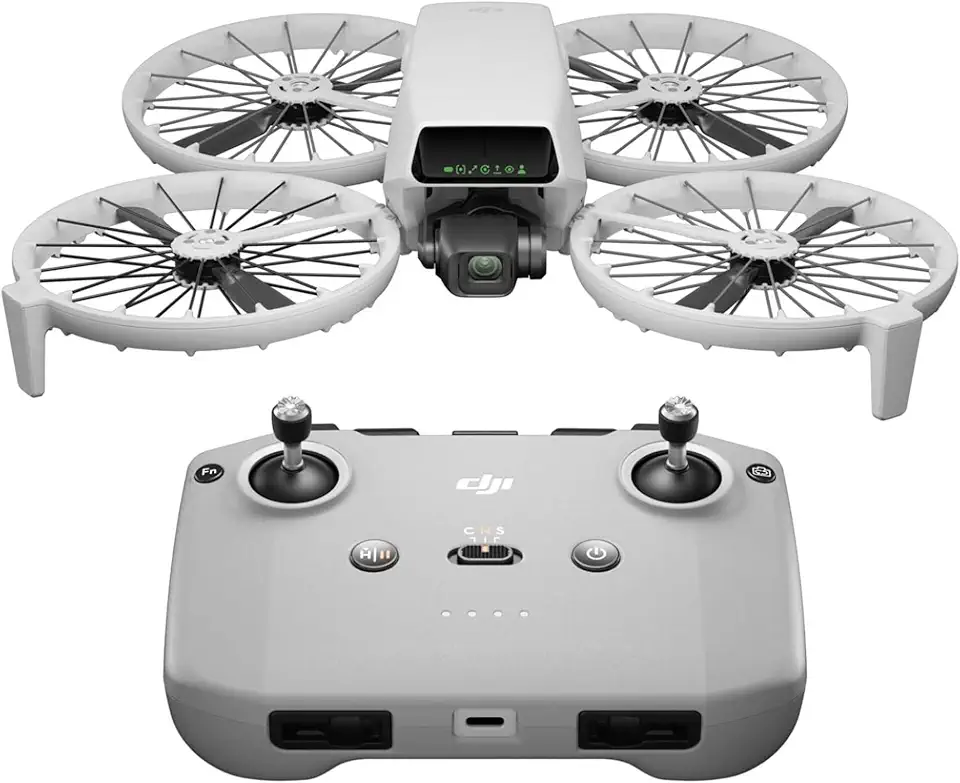
DJI Flip RC-N3 4K 3-axis gimbal under 249 g 31min
Lightweight sub-249g flyer offering stable 3-axis shots, crisp 4K recording, and agile handling for everyday capture.
Check PriceAs a travel photographer who shoots moving sequences and run-and-gun vlogs, the DJI Flip feels built for my kit bag. Its very small folded size and foldable design mean I actually reach for it on short trips, and the stabilized gimbal keeps handheld-style aerials smooth without fuss.
The Flip’s built-in touchscreen controller is a game-changer on long days of shooting — it preserves phone battery and removes the need to fish out a phone mount. You can also fly it via your phone when you want, or use the controller independently; those multiple control options make it flexible when conditions or crew change.
Battery life runs around 31 minutes, which in real-world travel use translates to a solid morning or afternoon of quick location grabs with a spare battery. Intelligent subject-tracking modes are reliable for capturing people and vehicles moving through landscapes, giving you cinematic-looking shots with minimal piloting skill.
Image quality sits above entry-level micro drones, so you get good-looking 4K-style footage for YouTube and social edits, but it isn’t aimed at high-end cinematic productions. If you prioritize portability, easy setup, and stabilized, watchable footage straight out of the camera, the Flip is mostly a win.
- Extremely compact and travel-friendly
- Built-in touchscreen controller (no phone required)
- Around 31 minutes flight time
- Stabilized gimbal with intelligent subject tracking
- Slightly pricier than ultra-basic drones
- Camera not as high-end as flagship models
Key Features For Travel Vlogging Drones
When I scout gear for travel vlogging I look first at the camera and sensor. A larger sensor—think 1‑inch or better—gives cleaner low‑light footage and more latitude in color grading. If you shoot sunsets or dim interiors, that sensor size matters more than megapixel count alone.
Stabilization is the next non‑negotiable. A rock‑solid mechanical gimbal keeps your footage cinematic during walking shots and in gusty conditions, while good electronic stabilization helps for quick handheld transitions. If you plan a lot of action or scooter rides, prioritize gimbal performance over novelty features.
Portability and how the drone folds into your bag are practical factors I never skimp on. Sub‑249g models dodge registration in many regions, but you sacrifice some stability and image quality. Decide whether you need pure portability or a slightly heavier craft that handles wind better.
Automation features save shoots when you’re solo. Reliable obstacle avoidance and subject tracking let you get moving shots without babysitting the sticks. For wilderness or busy cityscapes, best‑in‑class avoidance is worth the price for peace of mind.
Flight time and battery logistics shape what you can realistically capture in a day. Aim for at least 20–30 minutes per battery and bring spares stored at safe charge levels. Simple planning—preparing shot lists and swap windows—beats frantically hunting for an outlet mid‑sunset.
Camera flexibility expands your storytelling. Dual lenses or zoom let you switch from wide establishing shots to tight interview or detail frames without swapping rigs. Also consider vertical recording options if social platforms are part of your distribution plan.
Finally, don’t overlook control and transmission. A reliable long‑range link and an integrated controller screen make field work faster and less stressful. In short: prioritize image quality, stabilization, portability, and trustworthy autonomy in that order, then balance the trade‑offs with your travel style.
Maximize Flight Time And Battery Life
Battery life is the single biggest limiter on a travel shoot — no matter how great your camera, you can’t capture golden-hour light if the drone dies mid-shot. I plan around realistic flight times: the Mini 5 Pro and DJI Flip give roughly 31 minutes per battery, the Skydio 2+ about 27, and the DJI Air 3S can stretch into the 45‑minute range. Knowing those numbers helps you decide how many spares to carry.
Carry at least one or two fully charged spare batteries for a typical day of shooting. On tighter itineraries I bring two spares for the Mini or Flip and one extra for the Air 3S, because the heavier craft already gives more airtime. Keeping batteries in a protective case prevents damage while juggling gear on the road.
Pre-plan shots and flight paths so you fly deliberately. I storyboard quick sequences and park the drone where it can reach multiple angles without wasting battery on long repositioning flights. That practice alone often doubles the useful footage you get from a single battery.
Battery care is non-negotiable. Charge fully before travel, store cells in temperature-controlled conditions, and avoid leaving them at 100% or fully depleted for long periods. Keep firmware updated; manufacturers frequently release battery-management improvements that eke out extra minutes.
In the field, minimize payload and unnecessary attachments. Extra weight and strong winds drain batteries fast, so pick a sheltered launch spot when possible. Use power-saving flight modes for slow cinematic moves and regularly calibrate sensors and clean motors to reduce inefficiencies.
Ultimately, battery strategy is a mix of gear choices and habits. Match the drone to your shooting style, pack sensible spares, fly with intention, and maintain your batteries — you’ll get more useful footage and fewer rushed, stressed flights while traveling.
What People Ask Most
What is the best drone for travel vloggers?
The best drone depends on your priorities and how you balance portability, image quality, and autonomous features. Choose a model that fits travel regulations and the type of footage you plan to capture.
Which compact drones are ideal for travel vlogging?
Ultra-portable, foldable drones that are easy to carry and quick to deploy are ideal for travel vlogging. Look for models that still offer reliable image quality and simple controls for fast setup.
What drone features are essential for travel vloggers?
Essential features include stable gimbal or electronic stabilization, good camera performance for your target formats, and compact, travel-friendly design. Helpful extras are automated tracking and obstacle awareness for solo shooting.
Are foldable drones good for travel vlogging?
Yes, foldable drones save space and make packing and transport much easier. Many deliver strong stabilization and useful shooting modes despite their compact size.
Which drones offer the best stabilization for travel vlogging?
Drones with mechanical gimbals or effective electronic image stabilization provide the steadiest footage. Prioritize models known for stable performance in motion and in moderate wind conditions.
Do travel vloggers need a drone with obstacle avoidance?
Obstacle avoidance is very useful for safety and reduces the risk of crashes, especially in complex or crowded environments. It also makes autonomous tracking and hands-free filming more reliable.
What camera specifications should a travel vlogging drone have?
A larger sensor and flexible focal options improve image quality and low-light capability for varied shooting conditions. Also prioritize solid stabilization and video modes that match your intended delivery platforms.
Conclusion For Best Travel Vlogging Drones
We compared five travel-focused drones and practical buying tips to help vloggers balance portability, autonomy, stabilization, and image quality for real-world trips.
Ultimately, the best pick depends on your priorities—whether you need ultra-portability and regulation-friendly weight, cinematic camera performance, best-in-class obstacle avoidance, or long battery life for extended shoots.
Keep the fundamentals in mind when flying and packing: plan shots, carry spare power, and maintain your gear to get the most reliable footage on the road.
If you want to sharpen your shooting and gear decisions, explore more of our site for hands-on tips, workflow guidance, and real-world advice to improve your travel vlogging skills.
Have questions or want to share your experiences with these drones? Leave a comment below and we usually reply within a few hours.


0 Comments