
What flash keeps your Ricoh GR III pocketable while still giving you clean, usable light on a neon-lit street at midnight?
That balance between size and output is the toughest choice for GR III shooters who prize stealth and speed. Make the wrong call and you lose atmosphere; make the right one and low-light scenes come alive.
This guide compares five flash approaches for the Ricoh GR III, from TTL-equipped units that meter for you to ultra-mini manual lights that let you sculpt exposure by hand. It’s not a spec sheet or a shopping list; it’s a real-world comparison focused on how each approach behaves on the street, at a party, and inside dim venues.
Pocketability means quick shooting and a low profile, perfect for candid street work and travel. But smaller units sacrifice outright power and range, which matters for larger rooms and bounce techniques at events, while higher-output options give coverage and flexibility but demand more space and change the camera’s handling.
I’ll break down real-world strengths, handling quirks, and the kinds of scenes where each approach shines—without burying you in numbers. You’ll see when TTL convenience wins and when manual control offers creative advantages, so you can match a flash style to your GR III shooting habits and the places you like to shoot.
1. Pentax AF201FG Compact TTL Flash

Pentax AF201FG Flash
Compact, reliable on-camera light delivering balanced fill and versatile flash power for portraits, events, and creative lighting.
Check PriceThe Pentax AF201FG Compact TTL Flash is widely regarded as the official, recommended flash for the Ricoh GR III. It offers full TTL compatibility so it integrates seamlessly with the camera’s metering system.
Physically it’s very compact and lightweight, so it keeps the GR III pocketable and unobtrusive. That matters when you shoot street photography or need to move fast at events.
In practice the TTL metering works flawlessly with the GR III, which means you spend less time fiddling with settings and more time shooting. TTL gives consistent results in rapidly changing light, which is exactly what you want for candid shots and indoor gatherings.
Mounting and dismounting the AF201FG is easy and it doesn’t interfere with your grip or handling of the camera. The build feels reliable, and performance is consistent across a range of everyday situations.
The trade-off is power. The AF201FG has limited output compared with larger flash heads, so it won’t fill a big room or provide strong outdoor fill. Also, there’s no manual power control on the unit itself, so you must adjust output via the camera.
If your shooting style favors portability, quick response, and reliable TTL exposure for street and small-event work, this flash is a strong match. If you routinely need heavier output or manual on-flash control, you’ll feel its limits.
- TTL metering works flawlessly with the GR III
- Extremely compact and lightweight
- Reliable build quality and consistent performance
- Easy to mount/dismount — doesn’t interfere with handling
- Limited power output vs larger flashes
- No manual power adjustment on the flash itself
2. Godox IM20 Ultra-Compact Manual Flash

Godox iM20 Camera Flash
Ultra-light TTL flash for travel photographers, fast recycle, adjustable output, and whisper-quiet operation for natural-looking results.
Check PriceThe Godox IM20 Ultra-Compact Manual Flash is a tiny, pocketable unit that street and minimalist shooters love. It’s popular for its tiny size and manual control, so it won’t spoil the GR III’s stealthy form factor and is easy to carry all day.
What sets the IM20 apart is the ability to dial power directly on the flash. The controls are simple and intuitive, so you can set up quickly for candid shots, parties, or indoor gatherings without fuss. In real use it’s reliable for close-range and indoor shooting, giving pleasing results when you need a discreet burst of light.
There are trade-offs: it’s entirely manual, so there’s no TTL metering — you’ll need to adjust exposure on your camera. It’s also limited in range and power, so it isn’t the right choice for large rooms or outdoor fill and can be easy to overexpose if you’re not careful. Those limits aside, when you want a minimalist flash that keeps you mobile and in the moment, the IM20 delivers.
If you shoot a lot of street, candid, or small-group indoor work and prefer full control over automated corrections, this flash is mostly a win. Expect to take a couple of test frames to lock in power and avoid blown highlights, but once you get the hang of it the IM20 feels like a natural extension of a compact camera setup.
- Manual power adjustment enables precise control
- Extremely compact and lightweight
- Simple, intuitive controls and quick setup
- Reliable for close-range and indoor shooting
- No TTL metering; requires manual camera exposure adjustments
- Limited range and power; not suitable for large spaces or outdoor use
3. REFLEX Lab Mini Flash Minimalist Option

Godox iM30 Mini Flash
Pocketable high-speed flash with powerful burst, versatile mounting, and precise exposure control for on-the-go shooting.
Check PriceThe REFLEX Lab Mini Flash is built for photographers who want to keep their Ricoh GR III as pocketable as possible. It’s known as one of the smallest flashes and its minimalist, fully manual design preserves the camera’s ultra-compact form factor. If you shoot street, parties, or quick indoor snaps and hate lugging gear, this tiny unit was made with you in mind.
Because it’s fully manual you’ll set power and camera exposure yourself — the outline notes external manual flashes commonly offer stepped power (e.g., 1/1, 1/4), so expect to dial in output and balance aperture, shutter and ISO to taste. Built‑in USB‑C charging makes top-ups fast and convenient, and battery life is sufficient for casual use and spontaneous shoots. In short: small size and easy charging beat raw power for many candid situations.
There are trade-offs. The Mini has minimal grip and is easy to knock off the hot shoe, so handle it carefully or add a small hot‑shoe stabilizer if you plan on crowded environments. Also, it lacks TTL metering — you’ll need to take test shots and adjust manually, especially in mixed or rapidly changing light. Use slower shutter speeds to blend ambient light and moderate apertures (around f/5.6–f/8) for reliable depth of field with flash.
If you value absolute portability and spontaneous shooting over brute force or automation, the REFLEX Lab Mini is a great match. It’s mostly a good choice for street and candid photographers who accept manual control and the occasional handling fuss in exchange for a truly minimal setup.
- World’s smallest flash; ultra-portable
- Simple, intuitive manual controls
- USB-C charging; convenient and fast
- Great for candid, spontaneous shots
- No TTL metering; manual exposure needed
- Prone to being knocked off the hot shoe
4. Pentax AF540FGZ II High-Power TTL
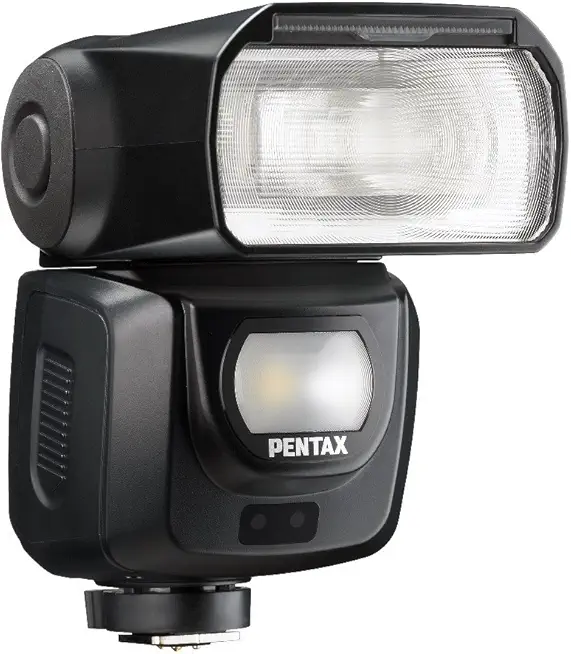
Pentax AF540FGZ II Flash
High-output professional strobe offering advanced TTL, wide zoom coverage, and rapid recycling for demanding studio and location work.
Check PriceThe Pentax AF540FGZ II is the beefier, event-oriented flash I reach for when the little on-camera strobe won’t cut it. It’s TTL‑compatible with the Ricoh GR III, so in fast-moving situations the camera and flash handle exposure changes for you and free you to concentrate on composition.
In practice that TTL integration works well—reliable metering and consistent performance mean fewer surprise exposures during receptions or indoor shoots. It’s noticeably more powerful than the smallest Pentax hot-shoe option, so it fills larger rooms and lights groups more effectively without pushing ISO into noisy territory.
Despite the extra punch, the AF540FGZ II remains compact enough to carry and mount without making the GR III feel awkward; it’s easy to attach and remove and doesn’t interfere with handling. The build feels solid and dependable, which matters when you’re on the move at events and don’t want to worry about equipment failures.
Two practical trade-offs to keep in mind: it’s slightly larger and heavier than the most pocketable flashes, so it’s less ideal if you’re trying to keep the GR III ultra‑compact. Also, there’s no manual power adjustment on the flash body itself—exposure tweaks are handled through the camera, so if you prefer on-flash manual control you’ll feel limited.
- TTL metering works well with the GR III
- Greater power than the AF201FG
- Reliable build quality and consistent performance
- Easy to mount/dismount; doesn’t interfere with handling
- Slightly larger and heavier than AF201FG
- No manual power adjustment on the flash itself; relies on camera settings
5. Pentax AF360FGZ II Balanced TTL Choice

Pentax AF360FGZ II Flash
Versatile mid-range unit delivering balanced output, wireless control, bounce capabilities, and consistent performance for weddings and portrait sessions.
Check PriceThe Pentax AF360FGZ II is a TTL-compatible flash that sits squarely between compact convenience and usable power. It’s designed as a balanced option, offering more punch than the smallest flashes while still being reasonably portable for on-the-go shooting.
In practice its moderate flash output covers most event and indoor situations without pushing you into bulkier lighting gear. That makes it a reliable choice for receptions, small halls, and indoor portrait work where you need consistent results but don’t want to carry a large strobe.
Physically it is slightly larger than the AF201FG and therefore a bit more noticeable when attached to your camera. Despite that, mounting and dismounting is straightforward and it doesn’t interfere with handling, so it won’t slow you down during a fast-paced shoot.
Where it really helps is in convenience: TTL metering works well with the GR III, so you get dependable exposures without constant manual tweaking. The unit also offers reliable build quality and consistent performance, which is exactly what you want when you’re covering events and can’t afford surprises.
There are a couple of trade-offs to be aware of. It has no manual power adjustment on the flash itself and relies on camera settings for output control, so it’s not ideal if you want quick on-flash power dialing. Also, because it’s slightly larger and heavier than the AF201FG, it’s less suited for ultra-compact, pocketable setups.
If your shooting style leans toward events, indoor work, or fast-paced assignments where TTL convenience and steady performance matter more than the smallest footprint, the AF360FGZ II is a very practical pick.
- TTL metering works well with the GR III
- Moderate power suitable for a variety of indoor/event situations
- Reliable build quality and consistent performance
- Easy to mount/dismount; doesn’t interfere with handling
- Slightly larger and heavier than the AF201FG
- No manual power adjustment on the flash itself; relies on camera settings
External Flash Compatibility for GR III
The GR III has a proper hot shoe, so you can attach external flashes just like a Pentax camera. In practice that means Pentax-branded TTL units such as the AF201FG, AF360FGZ II and AF540FGZ II will talk TTL to the camera and give predictable exposure without constant fiddling. Those flashes keep the portable GR III workflow intact, but remember many of them rely on the camera for power adjustments rather than offering full manual control on the head.
If you prefer ultra-compact or fully manual heads, small units like the Godox IM20 or the REFLEX Lab Mini are excellent for street work and candid moments. They sacrifice TTL convenience for direct on-unit control and pocketability, and that tradeoff is fine if you’re comfortable dialing aperture, ISO and shutter yourself. Watch their limited range—these tiny flashes are best for close subjects and interiors, not filling large rooms or outdoor scenes.
An interesting option to note is the Ricoh GF-2 (originally for the GR IV): with the firmware update that enables the GF-2 menu option it becomes fully usable on the GR III. The GF-2 brings a built-in Li‑ion battery with USB‑C charging, automatic discharge tied to focus, manual levels, some swivel and modest guide numbers (about GN 3 at ISO 100, GN 6 at ISO 400). It’s a neat middle ground if you want features without a big footprint.
Practical things I always tell clients: the GR III disables its built‑in flash when an external unit is mounted, so close that pop‑up when you’re carrying a head. Verify any flash’s compatibility with wide conversion lenses or other accessories before buying—some heads won’t play nicely with converters. Finally, always do a quick set of test shots and use a moderate aperture (around f/5.6–f/8) and slower shutter speeds to blend ambient and flash; it saves more retakes than any gear tweak.
Manual Flash Tips for GR III
When you switch to manual flash on the GR III, think of the flash as another exposure dial. The camera’s built‑in Manual Flash mode locks the flash output to whatever you set, and external tiny units give you similar fixed power choices (1/1, 1/4, etc.), so balance aperture, shutter and ISO deliberately rather than trusting the camera to decide for you.
Start by setting a baseline exposure for ambient light, then add flash to taste. Slower shutter speeds let you blend ambient and flash — useful for preserving background atmosphere — but use a tripod if you go slow to avoid camera shake. For most handheld work stick to moderate apertures (around f/5.6–f/8) for reliable depth of field and sharpness when the flash fires.
Keep in mind the GR III’s built‑in flash is useful from roughly 20 cm to 3 m (ISO ~125). Small pocket flashes are great close up, but they can easily overexpose subjects at short range; start at a low power and increase with test shots. Manual flashes also disable pre‑flash metering, so you won’t get the usual pre‑flash assist — focus and meter carefully before you shoot.
Use the flash test button or take quick test frames whenever possible. It’s the fastest way to dial power and avoid surprises during a moment you can’t recreate. If you frequently shoot with a flash, create a dedicated GR III user mode (JPEG, moderate ISO — around 3200 depending on light — and a narrower aperture) so you can jump into consistent settings instantly.
Finally, when you mount an external flash remember the built‑in unit disables automatically; close the built‑in when you’re not using it to avoid accidental firing or damage. Treat manual flash like any other tool: practice, expect to tweak on the fly, and you’ll quickly learn how far a little controlled light will take your GR III images.
What People Ask Most
Can you use an external flash with the Ricoh GR III?
Yes. The GR III supports external flashes through its hot shoe and will disable the built-in flash when an external unit is attached.
What flash units are compatible with the Ricoh GR III?
Pentax-compatible TTL flash units are supported and work well with the camera. Always check the specific flash model for compatibility and supported features before buying.
How do you mount or attach a flash to the Ricoh GR III?
Attach a flash by sliding it into the camera’s hot shoe and seating it until it locks or is secure. Use any locking mechanism provided by the flash to prevent accidental removal.
Does the Ricoh GR III have a built-in flash?
Yes, the GR III includes a built-in flash with multiple operating modes. The built-in unit is automatically disabled when an external flash is connected.
Can you use TTL flash with the Ricoh GR III?
Yes, TTL metering is available when using compatible Pentax TTL flashes, allowing the camera and flash to work together for automated exposure. This can simplify shooting in changing light conditions.
What is the best flash for street photography with the Ricoh GR III?
For street work, smaller, pocketable flashes are generally preferred to preserve the camera’s portability and discretion. Choose between a compact manual unit for minimalism or a small TTL unit if you want automatic exposure convenience.
How do you get balanced flash lighting with the Ricoh GR III?
Blend flash with ambient light by using slower shutter speeds and adjusting aperture and ISO to match the scene. Take test shots, tweak flash output or camera settings, and use moderate apertures for reasonable depth of field and subject sharpness.
Conclusion for Best GR III Flash
Choosing the right flash for the GR III is about balancing TTL convenience against the creative control of manual units, and weighing portability against raw output for the situations you shoot most.
For street and candid work, a tiny, manual flash keeps the camera pocketable and avoids drawing attention, while stronger TTL-capable units make event and larger-room work far easier.
Whichever direction you choose, spend time testing the flash, camera settings, and how flash blends with ambient light in real shooting conditions before any important shoot.
Small practice sessions will show you the limits of reach, how exposure and focus respond, and when to favor slower shutter speeds or different apertures to tastefully balance flash with ambient light.
If you want to sharpen these techniques and stay inspired, read more articles on the site to deepen your flash and lighting skills at your own pace.
Have questions or a setup to share? Leave a comment below — we usually reply within a few hours and are happy to help.


0 Comments