

Ever tried to choose a single camera that can handle sunrise vistas, bustling streets, and a shaky train ride all in the same trip? If so, you’re not alone; travel shooting forces compromises between weight, image quality, and reliability.
This guide compares five Fujifilm cameras tailored for travel, breaking down what each excels at and where it asks you to compromise. We focus on real-world travel needs to help you match kit to style and itinerary.
You’ll weigh portability against resolution, seek robust stabilization for handheld shots, and decide how much video capability you actually need. Weather resistance and proven image quality round out the shortlist of must-have traits for a dependable travel camera.
Whether you’re a minimalist who hates bulk, a hybrid shooter who splits time between photo and video, or an adventure traveler who needs weatherproof gear, this guide has a recommendation for you. Each camera is considered for real transport realities like carry-on limits, lens choices, and battery habits.
Expect practical comparisons, scenario-driven takeaways, and concise tips that make packing decisions quick and confident. We’ll help you prioritize features so you can spend less time tweaking settings and more time making memories.
Read on to find the Fujifilm option that matches your travel rhythm. Small choices in gear can transform a trip’s photo story; let’s find the best match.
1. Fujifilm X-E5 For Travel
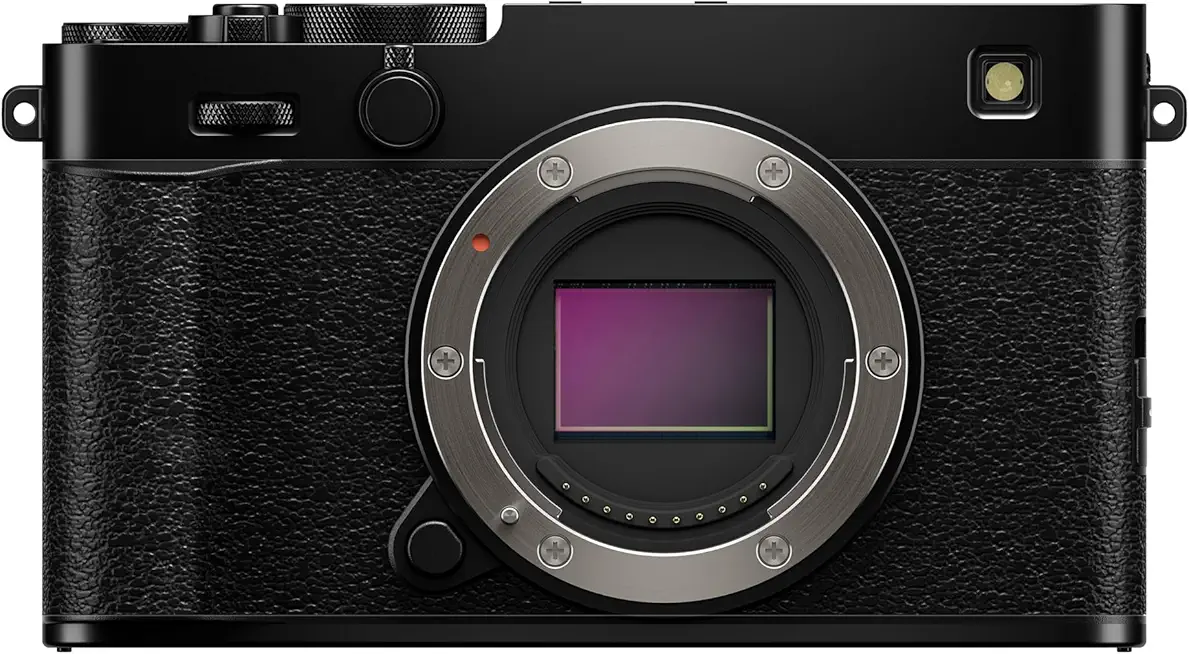
Fujifilm X-E5 Body
Compact, retro-styled mirrorless body delivering outstanding image quality, fast autofocus, and effortless portability for enthusiasts and travel photographers.
Check PriceThe Fujifilm X-E5 is a travel-ready camera that punches well above its weight. Its 40.2MP APS-C X-Trans sensor delivers seriously detailed files, which gives you plenty of room to crop or make large prints without losing resolution.
What I love for travel is the combination of a compact, lightweight body with interchangeable-lens versatility. The tactile analogue controls make changing exposure or ISO fast and intuitive when you’re racing golden hour light.
Stabilization is a standout — 7 stops of in-body image stabilization means handheld shooting in low light is practical without a tripod. Burst shooting up to 13fps is also handy for catching fleeting street moments or fast-moving subjects.
Video capabilities are robust: 6.2K 30p and 4K 60p give you plenty of latitude for high-resolution clips, while Full HD at 240p covers slow-motion needs. The 3in, 1.04m-dot tilting touchscreen is responsive for composition and quick menu work, though it only tilts up and down.
There are a couple of travel caveats to mind. The electronic viewfinder is serviceable but on the small side (2.36m-dot, 0.62x), so if you rely on a large, immersive EVF you might notice the difference. Also, there’s no weather-sealing, so pack protection or avoid harsh conditions if you plan to shoot in rain or dust.
- 40.2MP APS-C X-Trans sensor — excellent detail
- 7-stop in-body image stabilization
- Compact, lightweight body ideal for travel
- Peerless in-camera color processing & excellent RAW quality
- No weather-sealing
- Fairly small viewfinder (2.36m-dot, 0.62x)
2. Fujifilm X-T4 For Travel

Fujifilm X-T4 Body
Durable, high-performance body with in-body image stabilization, fast continuous shooting, and pro-level video tools for hybrid shooters.
Check PriceThe Fujifilm X-T4 is a travel-ready workhorse that balances stills and video exceptionally well. Its 26.1MP X-Trans sensor delivers rich files without the storage penalty of higher-megapixel bodies, so you can shoot more frames while traveling without constantly swapping cards.
For motion and decisive moments the X-T4 is excellent: up to 15fps with the mechanical shutter and 30fps electronically, paired with fast, accurate autofocus and strong subject tracking. That combination makes it easy to capture fleeting street moments, action, or kids at play while you’re on the move.
Stabilization is a big win for travel shooters — the in-body image stabilization (IBIS) meaningfully reduces camera shake for handheld low-light scenes and when using compact lenses. Paired with 4K at 60p video, the camera really shines as a hybrid tool if you want both excellent stills and smooth footage from a single body.
There are a few practical considerations for travelers: Fujifilm doesn’t include a charger in the box, so plan to bring a spare battery and a charging solution. Some users also report screen-hinge weakness, so I’d be cautious with how you stow and use the tilting screen during rough trips.
Overall, the X-T4 is mostly a strong choice for photographers who want one camera that can handle landscapes, portraits, street, and reliable video without carrying multiple bodies. If you prioritize stabilization, speed, and hybrid capabilities, it’s hard to beat at its weight and feature set — just bring extras for power and protect the screen hinge.
- Versatile across genres (landscape, portrait, travel)
- Fast autofocus and improved tracking
- IBIS reduces camera shake
- Strong hybrid (photo/video) capabilities — 4K60p
- No charger included
- Some users report screen-hinge weakness
3. Fujifilm X100VI For Travel

Fujifilm X100VI
Premium compact camera blending classic rangefinder aesthetics with a large sensor and fixed lens for ultimate street and everyday photography.
Check PriceThe Fujifilm X100VI is a travel-friendly compact built around a 40MP X-Trans sensor that delivers excellent detail and latitude for cropping. Its fixed 23mm f/2 lens keeps the body small and encourages a simplified, deliberate shooting style that I love on the street and when walking all day.
Don’t underestimate the usability packed into that small frame: tactile analogue controls make exposure tweaks instinctive and fast. In-body image stabilization helps keep handheld shots steady in mixed light, so you can move quickly without a tripod.
For video, the X100VI punches above its size with up to 6.2K 29p 10-bit recording — impressive for a compact camera and great for capturing travel moments with lots of detail. There’s also a built-in 4-stop ND filter, which is brilliant for controlling depth of field and shooting slower shutter speeds in bright conditions without extra kit.
Because the lens is fixed, the camera excels when you commit to a style of shooting — candid street, environmental portraits, and travel storytelling are where it shines. If you want an ultra-discreet camera that prioritizes image quality and handling over lens variety, this is a compelling choice.
That said, the fixed lens will feel limiting if you need reach or wide-angle flexibility, and while video specs are strong, the body isn’t ergonomically optimized for extended video shoots.
- Extremely compact and lightweight
- 40MP X-Trans sensor — high image quality
- In-body image stabilization for steady handheld shots
- Built-in 4-stop ND filter
- Fixed 23mm f/2 lens limits versatility
- Not ergonomically optimized for video shooting
4. Fujifilm X-T5 For Travel

Fujifilm X-T5 Body
High-resolution, lightweight body offering exceptional detail, advanced autofocus, and cinematic video capabilities for demanding photographers and filmmakers.
Check PriceAs a travel camera the Fujifilm X-T5 stands out for one simple reason: its 40MP APS-C sensor. That resolution gives you the freedom to crop tightly or print large without losing detail, which is a real advantage on trips where you can’t always get close to your subject.
It also packs in-body image stabilization (IBIS), which makes handheld shooting more reliable in low light and reduces the need for a tripod on the road. With IBIS you can hold slower shutter speeds and still get sharp images of landscapes, street scenes, and interiors.
Build-wise the X-T5 features enhanced weather-sealing, so you won’t hesitate to shoot in drizzle, dust, or windy conditions. That durability is comforting when you’re traveling light and can’t babysit the gear every minute.
Video capabilities are described as high-quality, so this camera serves hybrid shooters well. If you want to capture smooth travel clips as well as stills, the X-T5 handles both without feeling like a compromise.
Despite its flagship feature set the body is smaller and lighter, which helps when you’re carrying gear all day. That balance of high resolution, IBIS, weather protection, and manageable size makes it one of the more versatile travel choices for serious photographers.
Do note two practical caveats: it may be overkill for casual travelers who prefer ultra-light, simple setups. Also battery life isn’t as long as some alternatives, so bring spares for long shooting days.
- 40MP image quality
- In-body image stabilization (IBIS)
- Enhanced weather-sealing
- Versatile for photo and video
- May be overkill for casual travelers
- Battery life not as long
5. Fujifilm X-S20 For Travel
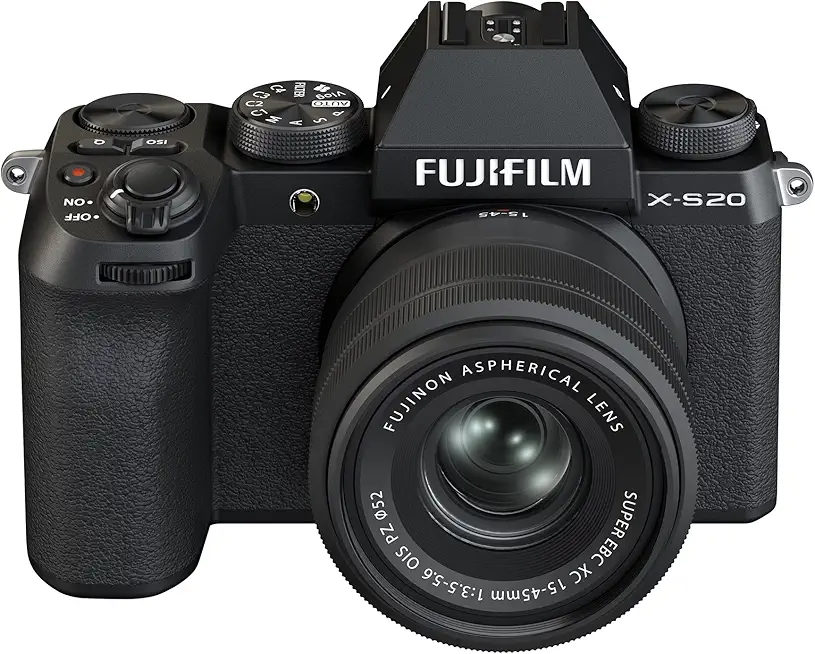
Fujifilm X-S20 with XC15-45mm Lens Kit
Versatile mirrorless kit ideal for creators: stabilized body, user-friendly zoom lens, clean 4K video, and powerful autofocus for vlogging and travel.
Check PriceThe Fujifilm X-S20 is a travel-ready camera tailored for content creators who need a solid hybrid for both stills and video. It delivers excellent video capabilities — the outline flags 6.2K recording and a vari-angle (articulating) screen — which makes it a natural choice for vlogging and travel storytelling.
Handling and ergonomics are called out as strong points, so you’ll find it comfortable to shoot handheld for long stretches. The X-S20 also benefits from improved subject-tracking for both stills and video, which is helpful when you’re moving through busy streets or tracking kids and pets on the move.
One practical advantage for travel is the compact design. It’s small enough to carry all day without fatigue, yet user-friendly enough for beginners and enthusiasts to pick up quickly. The camera’s combination of approachable controls and solid video features makes it a great all-in-one travel companion if you want to shoot polished clips and high-quality photos without lugging a big rig.
Two caveats to keep in mind: the outline doesn’t specify the sensor details, so if absolute resolution or specific low-light specs are your priority you may want to confirm those specs before buying. Also, while the X-S20 leans toward creators and travelers, it may lack some advanced features that working professionals expect from flagship bodies.
- Built for photo + video creators
- Improved subject-tracking for stills and video
- Compact design good for travel
- User-friendly for beginners and enthusiasts
- Less detailed info available vs other models
- May lack advanced features for professionals
Key Travel Camera Features

When I travel I think of the camera as a travel companion, not a toolkit. Pick the few features that solve real problems on the road and let go of the rest.
Portability is king. A light, compact body makes you shoot more, so cameras like the X100VI or smaller X-series bodies often win for everyday travel.
Resolution matters when you want to crop or print large images. A 40MP sensor gives extra headroom for detail, but remember higher megapixels can mean larger files and a bit more strain on battery and storage.
Weather-sealing and IBIS are the two features that save shoots. Weather protection lets you keep shooting in drizzle or dust, while in‑body stabilization makes handheld low‑light and long‑lens shots far more usable.
Lens choice shapes nearly every photo you make. A flexible travel zoom covers street, landscape and portraits with one lens, while a fast prime rewards you with better low‑light performance and sharper images for portraits and detail work.
Ergonomics and manual controls matter more than spec sheets. If you plan long days of shooting, test the grip and dials; tactile controls make exposure changes faster and keep you connected to the scene.
Autofocus speed and reliable subject tracking remove headaches, especially for moving subjects or run‑and‑gun travel vlogging. A bright EVF and a tilting or articulating screen help nail composition and make selfie or vlog setups much easier.
Finally, practical things matter: battery life, spare cards, and a simple workflow. Bring spares, choose a camera with good battery performance for long days, and use in‑camera film simulations when you want great JPEGs straight out of the camera.
Balance these features against weight and budget. The best travel camera is the one you actually carry and enjoy using every day.
Tips For Choosing A Fujifilm Travel Camera
Choosing a Fuji for travel means balancing wants against real-world use. Think less about specs on paper and more about the kinds of moments you want to capture: long days of walking, sudden weather changes, low-light street scenes, or vlog-style footage.
If your priority is lightness and discretion, favor the compact bodies. Cameras like the fixed‑lens street shooter give you maximum portability and a tactile shooting experience, but remember very small bodies can feel fatiguing on long walks and some viewfinders or tilt-only screens limit composition options.
For image quality and peace of mind in rough conditions, prioritize a weather‑sealed body with a high‑resolution sensor. A 40MP class camera delivers extra cropping latitude and fine detail for landscapes and prints, yet it can be heavier and consume more battery—so decide if that extra detail is worth the trade‑off for your trips.
Stabilization and video features matter if you shoot handheld or create short films. In‑body stabilization makes dawn and dusk shooting workable without a tripod, and a vari‑angle screen plus strong AF tracking will save you time if you vlog or shoot moving subjects.
Don’t underestimate lenses when planning a travel kit. A versatile mid‑range zoom covers the majority of travel situations, while a couple of fast primes will transform your low‑light and portrait work. If you want even more convenience, a fixed‑lens model with a built‑in ND filter or excellent lens can be a liberating one‑body solution.
Finally, treat ergonomics, battery life and workflow as deciding factors. Test the grip and dials in hand, check whether a charger is included, and plan for spare batteries and cards. Use Fuji’s film simulations to get shareable color straight out of camera and choose the body that matches how you like to shoot, not just what looks best on specs.
What People Ask Most
What is the best Fujifilm camera for travel?
There is no single best camera; the right choice depends on your priorities like portability, image quality, stabilization, and weather resistance. Consider which trade-offs matter most to you and pick a model that balances those needs.
Is the Fujifilm X100V good for travel photography?
Compact fixed-lens Fujifilm models are often excellent for travel because they are discreet and encourage simple, tactile shooting. The fixed lens limits versatility, so they suit photographers who prioritize portability and image quality over interchangeable-lens flexibility.
Which Fujifilm X-series camera is best for travel and street photography?
Choose a camera that combines a small footprint with good handling and reliable autofocus for candid moments. Many X-series bodies offer a balance of portability and image quality that works well for both travel and street shooting.
What Fujifilm camera is best for travel vlogging and video?
Look for models with strong video features and an articulating or vari-angle screen to make framing and vlogging easier. Good autofocus and handling also help when shooting handheld or on the move.
Which lightweight Fujifilm camera is best for travel?
Prioritize the lightest, most compact body that still feels comfortable to hold for extended use. Ergonomics and lens choices matter as much as weight when planning long days of shooting.
What Fujifilm camera is best for travel photography for beginners?
Beginners should look for user-friendly controls, reliable autofocus, and a compact form factor to make learning easier. A straightforward camera with good handling and helpful features will speed up the learning curve.
Is the Fujifilm X-T4 good for travel photography?
The X-T4 is a versatile option that performs well for both stills and video thanks to its strong autofocus and stabilization features. Consider its size and handling to ensure it fits your comfort and portability needs.
Conclusion For Best Fuji Camera For Travel
Choosing a travel Fujifilm ultimately comes down to balancing portability, image quality, stabilization, video capabilities and weather-sealing to suit your shooting style.
Smaller, lighter bodies favor discretion and ease of carry while more fully featured models offer higher resolution, stronger IBIS and better protection for demanding conditions.
Don’t overlook ergonomics, battery life and the lenses you plan to use, since comfort and focal-range flexibility shape real-world results as much as sensor specs.
Use the trade-offs outlined here to match a camera to your priorities rather than chasing a single “best” model.
If you want to sharpen your travel photography and gear decisions, read more on our site for practical tips and techniques to build confidence behind the camera.
Have a question or need tailored advice for an upcoming trip? Leave a comment below — we usually reply within a few hours.


0 Comments