
Can a thin ring of glass turn a good portrait into a head-turning work of art?
Welcome to a hands-on guide to the best lens filters for portraits, where subtle optics meet creative intent.
We examine five standout filters that help you sculpt light, tame skin texture, or add dreamy, in-camera effects.
These tools let you create softness, flare, streaks, or cinematic glow without relying on heavy post-production.
The selection balances experimental specialty filters with practical softening options used by wedding, beauty, and editorial shooters.
Whether you want sparkle and refraction or a gentle, film-like haze, the right filter changes both mood and workflow.
Across the guide you’ll find what each filter does in real shooting scenarios, what photographers praise, and the trade-offs to watch for.
You’ll also get user-focused tips on choosing the right filter for your lighting, lens, and client expectations.
Expect clear, usable advice to help you pick a first filter or add a creative tool to your kit.
Flip the page and let’s match the filter to your portrait style and lighting so you can shoot more decisive, flattering images in-camera.
I’ve tested these filters in studio and on location and include real-world examples and simple techniques you can use right away.
Whether you shoot brides, brands, or editorial portraits, you’ll learn which options deliver optical character versus subtle correction.
1. Prism FX Radiant Filter

Prism Lens FX Radiant FX Filter 82mm
Add shimmering color and subtle light distortion for striking, cinematic highlights with easy mounting for creative effects.
Check PriceThe Prism FX Radiant Filter is designed to create natural lens flares by scattering point light sources into multiple tiny flares, giving highlights a delicate, sparkly texture. It’s rotatable, so you can vary the direction and density of those tiny flares in-camera simply by twisting the filter rather than changing lights or angle dramatically.
This filter really shines with point lights — think fairy lights, city bokeh, or strong backlighting at dusk — where those micro-flares become visible and add a dreamy, imperfect sparkle. In flat or broad lighting the effect is limited, so it won’t do much when you don’t have defined light points to work with.
As a working photographer I reach for the Prism FX when I want an improvisational, slightly whimsical mood without introducing heavy color casts; the filter adds sparkle without major color shift. It’s perfect for portrait sessions where mood and atmosphere matter more than clinical sharpness — editorial, environmental, or evening portraits benefit most.
Keep in mind the practical limits: because it requires point light sources it’s not a universal tool, and it won’t flatter clients needing clean, headshot-style results. Use it intentionally — place or add small practical lights, flag other lights to avoid unwanted flare, and rotate the filter to sculpt the pattern until it complements the subject.
- Multiple detailed flares
- Rotatable for control
- Adds sparkle without major color shift
- Encourages creative improvisation
- Requires point light sources
- Not suited to clean/headshot styles
2. Tiffen Glimmer Glass Filter

Tiffen Glimmerglass 49mm Filter
Subtle sparkle and gentle diffusion for portraits or night scenes; protects optics while enhancing highlights.
Check PriceI regularly use the Tiffen Glimmer Glass Filter when I want a flattering, film-like finish without losing detail. It softens skin texture subtly while maintaining overall sharpness, and under daylight white balance it gives a delicate glow that reads as natural on skin.
The filter’s adjustable strength is the real selling point for portrait work. I can dial in just enough softness for bridal or beauty shoots without introducing the plastic look that heavy diffusion can cause, so you keep pores and eyelashes readable while smoothing skin.
Color fidelity and edge detail remain trustworthy — the Glimmer Glass maintains color accuracy and sharpness so you won’t be surprised in post. It’s also easy to use on standard lenses, which makes it a simple addition to a kit for on-location or studio jobs where speed matters.
Keep in mind the effect can be subtle; on certain clients or lighting setups you may want to push the strength or lean on gentle lighting to emphasize the glow. Also be aware it may slightly reduce contrast in some lighting, so expose and light with that in mind or add a contrast boost in post if needed.
- Adjustable strength
- Subtle skin smoothing without blurring details
- Maintains color accuracy and sharpness
- Easy to use on standard lenses
- Effect can be subtle
- May slightly reduce contrast in some lighting
3. Lensbaby OMNI Creative Filter System

Lensbaby Omni Ring Set Small
Compact accessory set enabling creative lens attachments and precise spacing to fine-tune bokeh and flare.
Check PriceThe Lensbaby OMNI Creative Filter System is a modular, prism-based setup that introduces light refractions, rainbows and distortions through interchangeable prism and crystal filters. It’s designed to create surreal, in-camera effects that look organic and immediate rather than layered in post.
A circular magnetic mount makes swapping elements quick and tactile during a shoot. That speed is a real advantage when you want to vary looks between frames without changing lenses or setups.
Compatibility is broad: the system works with many lens thread sizes, so you can use it across a kit without buying a different adapter for every lens. That flexibility makes it practical for shooters who use multiple focal lengths in a single session.
In practice you’ll get eye-catching flares, rainbow shards and subtle distortions that draw attention to eyes and highlights. These effects are especially effective for editorial or fine-art portraits where a dreamy or magical mood is the goal.
Be honest about the trade-offs: the OMNI rewards experimentation and a willingness to learn. It requires practice to master placement, angles and intensity so the effect complements the subject instead of overwhelming them.
If you enjoy in-camera creativity and want a fast, versatile way to add whimsical refractive effects, this system is a strong choice. If you shoot clean, clinical headshots for clients who want faithful reproductions, this is probably not the tool for you.
- interchangeable prism effects
- broad compatibility
- adds eye-catching flares/rainbows
- fast magnetic swaps
- learning curve
- not suitable for traditional clean portraiture
4. Spektrem Effects Light Speed Filter
Lightweight, durable accessory designed for flexible mounting and streamlined workflow in studio and on-location shoots.
Check PriceThe Spektrem Effects Light Speed Filter literally bends light to produce speed-like streaks and energetic flares that transform a portrait’s mood. It’s a creative tool that adds movement and punch, turning ordinary portraits into dramatic, energetic compositions favored by photographers who want bold, expressive images.
In practice the effect is immediate and eye-catching, giving highlights long, directional streaks that read like motion even in still frames. Users consistently praise its ability to deliver high-quality, repeatable creative results once you get the feel for angle and light placement.
From a workflow standpoint it’s relatively easy once familiar: experiment with the angle of the filter and the position of your key light to control the direction and intensity of the streaks. The filter naturally encourages artistic expression, so it works best when you’re aiming for editorial, fashion, or high-energy portraits rather than subtle, natural looks.
One practical caveat is the construction — the glass is fragile and needs careful handling. I recommend a dedicated protective casing and disciplined storage in your kit; drop it or toss it loose in a bag and you’ll pay for it.
If your clients want classic, unembellished headshots this isn’t the filter to reach for; but if you’re shooting for drama, motion, or stylized storytelling the Light Speed Filter is a powerful in-camera tool that cuts down on heavy post-production effects and gives images an unmistakable signature.
- unique light streaking
- consistently high-quality creative results
- encourages artistic expression
- relatively easy once familiar
- fragile and needs protective storage
- not for clients wanting natural looks
5. H&Y Revoring Black Mist Filter (Soft Focus)

H&Y EVO Series 95mm Black Mist 1/4 Filter with Magnetic Adapter Ring
Softens highlights and reduces contrast for dreamy, cinematic images; magnetic mount enables fast, secure filter swaps.
Check PriceThe H&Y Revoring Black Mist is an optical soft-focus filter that tames contrast and adds a gentle haze around highlights for a flattering, film-like look. I reach for it when I want portraits that feel nostalgic and less clinical straight out of camera.
Its spring-loaded adjustable thread is a practical touch — one filter can fit multiple lens sizes, so you don’t need a stack of different rings. That convenience matters on location when you’re moving between bodies or portrait primes.
This filter really shines in high-contrast scenes and outdoor/sunset portraits where highlights tend to clip or look harsh. The subtle haloing and reduced contrast it produces are hard to reproduce convincingly in post, so you get a genuine optical result in-camera.
Used wide open with short telephoto primes (think classic 50–85mm portrait focal lengths) it smooths skin and preserves depth of field while adding mood. Because the effect is visible while shooting, it helps you compose with the final aesthetic in mind rather than guessing and compensating later.
If you value an in-camera cinematic feel and faster retouching workflow, this filter is worth considering. Keep in mind its look is understated — not a dramatic smear — so it’s best for clients who want flattering, film-inspired portraits rather than perfectly clinical detail.
- soft glows and reduced contrast
- effect visible while shooting
- adjustable thread convenience
- genuine optical result
- effect sometimes seen as unnecessary with modern software
- slightly pricier than standard UV/clear filters
How to Choose Portrait Lens Filters
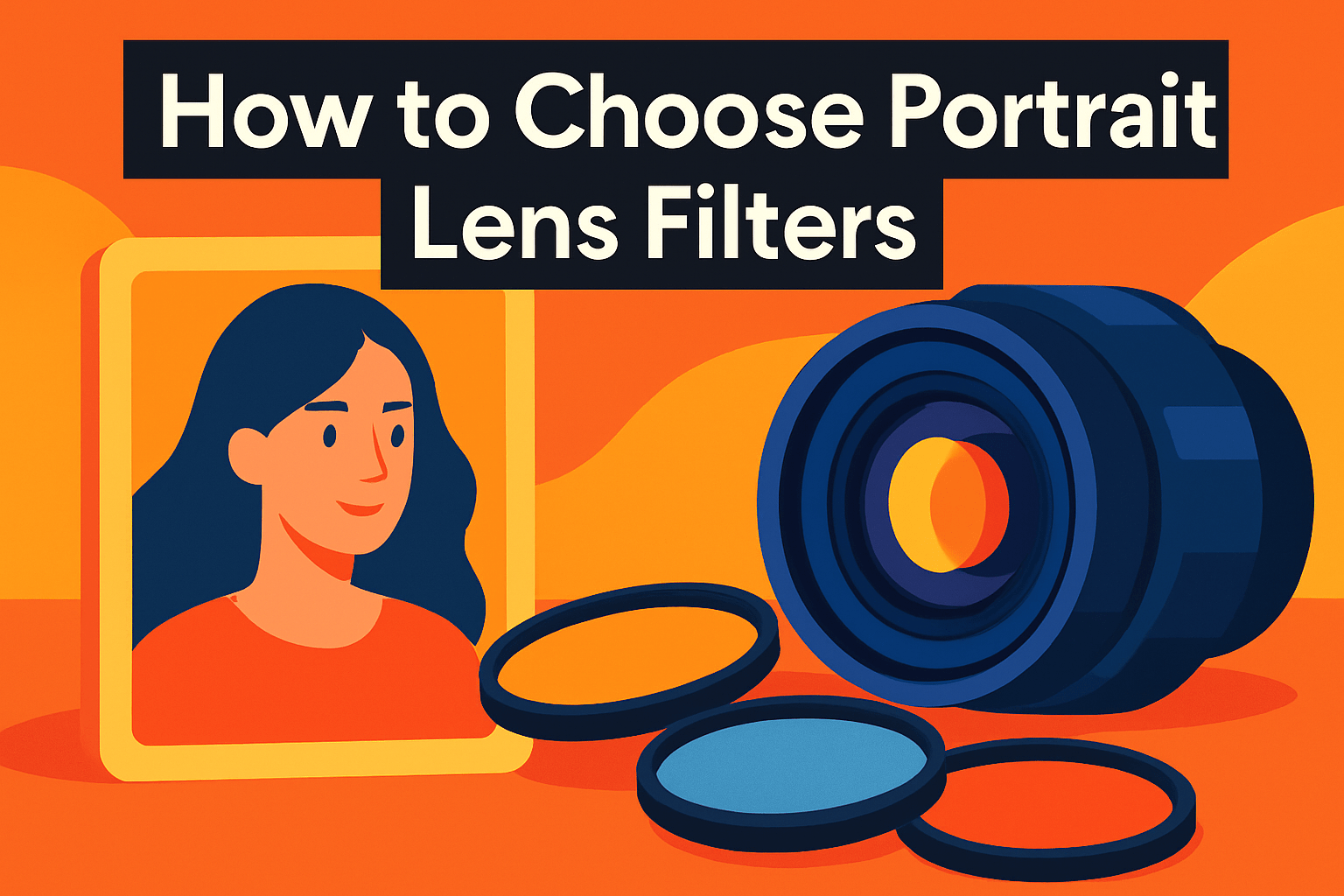
Choosing the right filter begins with the look you want and the light you’ll be working in. Clean and clinical, soft and flattering, or creative and dramatic—each demands different tools.
Outdoors, neutral density filters let you open the aperture for creamy bokeh without overexposing. ND2, ND4 and ND8 reduce light by one, two and three stops respectively, so you can keep a wide aperture even in bright sun.
A circular polarizer is a staple for outdoor portraits. Rotate it to tame glare on skin and backgrounds, reduce distracting reflections in eyes or windows, and boost color saturation and perceived contrast. On very wide lenses it can darken the sky unevenly, but for tight headshots that’s rarely an issue.
When flattering skin is the priority, reach for a mist or soft‑focus filter. These scatter highlights, lower harsh contrast and soften minor texture while preserving overall sharpness—handy for bridal and beauty work. Adjustable‑strength variants let you dial the effect so it never looks overdone.
If you shoot black‑and‑white, colored filters still matter. Yellow and orange options gently enhance skin tones and mid‑tone separation, while red filters produce bold, dramatic contrast for stylized portraits.
Prism, rainbow and streak filters are tools for mood and surprise rather than clinical accuracy. They work best with point lights or backlight and reward experimentation, so reserve them for concepts that benefit from flares, refractions or motion. Keep them out of traditional headshot sessions unless the client wants a visibly creative result.
Practically, use circular screw‑on filters that match your lens diameter to avoid vignetting or optical issues. I keep step‑up rings so a few quality filters fit multiple lenses, avoid stacking too many elements, and store fragile creative pieces in padded cases.
In the end pick filters based on the light, the skin rendering you want, and the mood you’re after, then test in‑camera until the balance feels right. Subtlety usually wins with clients, but don’t hesitate to pull a bold effect when the concept calls for it.
Using Black Mist Soft-Focus Filters
Black Mist soft-focus filters scatter light to produce a gentle glow and subtle haloing around highlights. The result is lower contrast, softened skin texture and a cinematic, film-like feel that flatters portraits without looking smeared. Because it’s an optical effect you see in-camera, it helps you judge the mood while you’re composing.
Fit the filter as a circular screw-on matched to your lens. I like the H&Y Revoring for its spring-loaded adjustable thread that makes switching sizes easy when I move between bodies or lenses. Screw it on for outdoor sessions, especially during golden hour or any time you have bright edges or backlight to bloom.
Shoot at wider apertures and pair the filter with classic portrait focal lengths—50–85mm works beautifully—so the soft glow sits over a shallow depth of field. Use natural or continuous light and keep a daylight white balance for pleasing skin tones. Because the effect is visible while shooting it often cuts down on heavy retouching later.
Black Mist really shines in high-contrast scenes: sunsets, rim-lit hair and scenes with specular highlights will show that delicate haloing most effectively. In flat, evenly lit conditions the filter can feel unnecessary, so save it for moments with highlights to react with. Subtlety is your friend—mild diffusion usually reads as more elegant on faces.
Finally, remember the trade-offs. The look is genuine and hard to reproduce exactly in post, which is why many of us keep a Black Mist in the kit despite it being pricier than a simple UV. Be clear with clients about the mood you’re creating; some want pristine sharpness, while others love the nostalgic softness this filter delivers.
What People Ask Most
What filter is best for portrait photography?
There is no single best filter; the right choice depends on your lighting and the look you want. Use soft-focus or mist filters for flattering skin and subtle glow, and choose creative prism or streak filters for stylized effects.
Do portrait photographers use UV filters?
Many photographers use UV or clear filters primarily for lens protection rather than image alteration. High-quality protective filters are unlikely to noticeably change the look of a portrait.
Are polarizing filters good for portraits?
Polarizers can be useful outdoors to reduce glare and enhance color saturation, which can improve background and skin appearance. They are less commonly used in controlled studio lighting where reflections are already managed.
What filter softens skin in portrait photos?
Soft-focus or mist filters are designed to soften skin by reducing contrast and adding a gentle haze around highlights. These optical filters create a flattering, film-like glow without heavy digital retouching.
Should I use a warming or cooling filter for skin tones?
Choose warming or cooling adjustments based on the subject’s skin tones and the mood you want to convey. Warmer tones often flatter skin, while cooler tones can create a more dramatic or stylized look.
Do lens filters affect image quality in portraits?
Certain filters intentionally alter image quality by softening, reducing contrast, or adding flares, while low-quality or unnecessary filters can introduce reflections or slight sharpness loss. Select purpose-built, good-quality filters and remove them when a neutral result is desired.
How do soft-focus filters work for portraits?
Soft-focus filters scatter light to produce a subtle halo and lower local contrast, which smooths skin texture and highlights. The effect is created optically in-camera and often reduces the need for extensive post-processing.
Conclusion on Best Portrait Lens Filters
These filters demonstrate how in-camera tools can balance bold, creative effects with subtle, flattering softening to shape mood, texture, and skin rendering in portraits.
When used thoughtfully they let you introduce sparkles, streaks, film-like glow or gentle haze while keeping control over exposure and color through your lighting and shooting choices.
Choosing the right option comes down to lighting conditions, the skin appearance you want, and the emotional tone of the portrait, so experiment with strengths and pairings to find what works for you.
Practice shooting with these effects in-camera rather than relying solely on post-processing, and let what you see through the lens guide composition and retouching needs.
If you want to deepen your skills, read more of the practical guides and tutorials on this site to explore techniques, comparisons, and creative workflows.
Share your results or questions in the comments below — we usually reply within a few hours and enjoy helping photographers refine their approach.




0 Comments