
Want your car photos to leap off the page with glossy paint and cinematic depth?
Picking the right Canon lens can feel overwhelming. This quick guide narrows the field to five lenses that car shooters reach for in studios, streets, and on track.
No marketing speak here — just real-world notes on how each option behaves when framing a car. We explain who benefits most from each choice, practical shooting tips, and clear pros and cons.
Lens choice changes everything: perspective, background compression, depth of field, and how paint and chrome render under different lights. You’ll learn which traits matter for interiors, wide environmental shots, intimate detail work, and low‑light or motion situations.
I’ll point out the trade‑offs you’ll live with — weight versus portability, specialist optics versus do‑it‑all versatility. By the end you’ll know what matters most and feel ready to rent or buy the right Canon lens for your camera system and creative vision.
1. Canon EF 24-70mm f/2.8L II USM
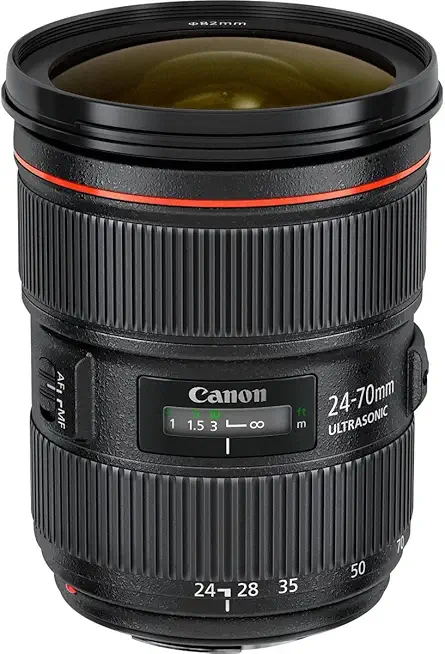
Canon EF 24-70mm f/2.8L II USM
Professional standard zoom delivering razor-sharp optics, fast constant aperture and reliable build for wedding, portrait and event photography.
Check PriceThe Canon EF 24-70mm f/2.8L II USM is the workhorse I reach for when a shoot needs flexibility. Its zoom range covers wide environmental shots, tight hero angles, interiors and detail work without swapping glass.
Optically it’s striking — exceptional sharpness across the frame that really resolves reflections and paint finishes. That clarity makes it easy to capture crisp body lines and textured surfaces even when the light is tricky.
The constant f/2.8 aperture is a real advantage for evening shows or dimly lit garages. It gives usable low‑light performance and helps separate subjects with pleasing bokeh, though the blur is less pronounced than you get with longer focal lengths.
Autofocus is fast and accurate, so tracking moving cars or changing scenes is straightforward. The build is solid and weather‑sealed, which makes it reliable in dynamic environments and on paid jobs where durability matters.
It’s clearly aimed at professionals and advanced hobbyists who need a do‑it‑all lens. Be mindful that it’s not feather‑light — the heft can wear you down on all‑day handheld gigs. Also, there’s no image stabilization, so you’ll want a tripod or higher shutter speeds in lower light.
- Flexible focal range for environmental and detail work
- Fast, accurate autofocus for moving subjects or changing scenes
- Robust, weather‑sealed construction
- Consistent, high‑quality images for paid work
- Heavy and bulky for all‑day handheld use
- No image stabilization
2. Canon EF 70-200mm f/2.8L IS III USM

Canon EF 70-200mm f/2.8L IS III USM
Telephoto powerhouse with image stabilization, fast aperture and outstanding sharpness for sports, wildlife and portrait shooting.
Check PriceIf you shoot cars from a distance or need tight detail shots, the Canon EF 70-200mm f/2.8L IS III USM is a workhorse that delivers the look most pros want. It gives strong telephoto flexibility for compressed perspectives and isolates subjects beautifully with a constant f/2.8 aperture.
Optically it’s very sharp in the center, and you’ll see edge and corner performance improve when stopping down to f/4–f/5.6. The lens also uses Air Sphere Coating to reduce ghosting and flare, so contrast holds up in tricky lighting.
The built‑in image stabilization is very effective for handheld and moving subjects, letting you use slower shutter speeds when necessary. Autofocus is fast and accurate with minimal hunting, which is a real advantage at events and motorsports where you don’t get second chances.
Build quality is rock solid — an all‑metal, weather‑sealed construction that can take a beating on location, though it does add weight. The 8‑blade diaphragm produces a creamy bokeh wide open, so backgrounds melt away and subject separation looks cinematic.
- Versatile zoom for detail and compressed perspectives
- Image stabilization enables slower shutter handheld
- Fast, reliable autofocus for motion
- Superb build quality and weather sealing
- Heavy and large
- Pricey
3. Canon RF 70-200mm f/2.8L IS USM
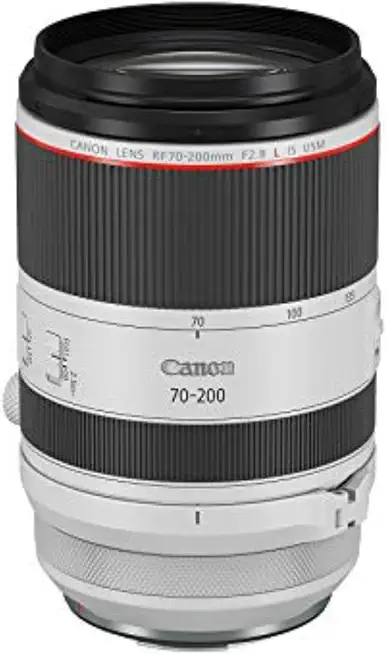
Canon RF 70-200mm f/2.8L IS USM
Mirrorless telephoto delivering superb sharpness, fast autofocus and stabilization—ideal for professionals needing reach and low-light performance.
Check PriceThis RF 70‑200mm f/2.8L IS USM is a telephoto workhorse built for Canon R‑series shooters who need reach without the bulk. Its collapsible, retractable design makes it noticeably more portable for events and travel, so you can carry pro telephoto capability all day.
Image quality is thoroughly pleasing — sharp and contrasty with a very attractive bokeh that helps isolate cars and details from distracting backgrounds. The lens is optimized for mirrorless performance, so corner‑to‑corner rendering feels modern and clean for editorial and client work.
Autofocus is ultra‑fast and whisper‑quiet thanks to RF mirrorless technology, which is a real advantage when shooting candid scenes, behind‑the‑scenes moments, or video. You get confidence tracking moving cars and capturing decisive moments without intrusive motor noise.
Built‑in image stabilization is effective and lets you shoot handheld at slower shutter speeds when needed, useful for on‑location shooting without a tripod. That IS, combined with the f/2.8 aperture, gives flexibility in low light and for achieving subject separation at longer focal lengths.
For R‑system photographers this lens strikes a strong balance between performance and portability. It’s aimed at serious enthusiasts and pros who want top telephoto optics on a mirrorless body, especially when background compression and isolation are priorities.
Be mindful that it comes at a premium price and omits a tripod collar, which some studio or panning shooters will miss. If you need the light, fast AF and stabilized reach, this is a very compelling RF tele zoom.
- Compact, collapsible design
- Silent, ultra‑fast AF
- Superb image quality and bokeh
- Effective image stabilization
- Higher cost
- No tripod collar
4. Canon EF 16-35mm f/2.8L III USM
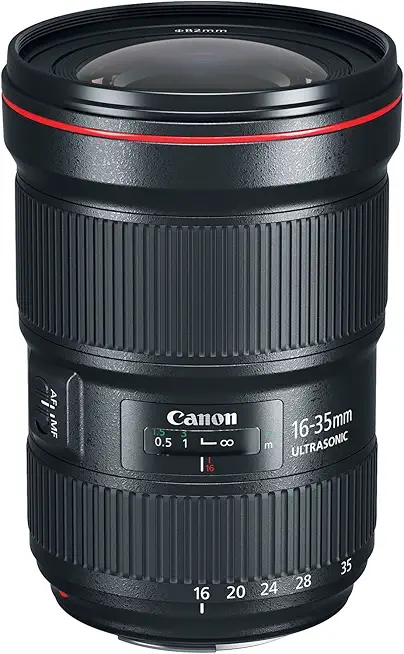
Canon EF 16-35mm f/2.8L III USM
Ultra-wide zoom offering edge-to-edge clarity, fast aperture and rugged weather-sealed construction for landscapes, architecture and creative perspectives.
Check PriceThis Canon EF 16-35mm f/2.8L III USM is a true ultra-wide that shines when you want dramatic, expansive environmental shots — think showrooms, garages, and urban contexts. It stays extremely sharp even at the edges and corners and is usable wide open, so you don’t have to stop down to get clean detail across the frame.
Minimal barrel distortion for a lens this wide is a standout trait. That means architectural lines and car proportions stay believable, which is critical when you’re placing a vehicle in a scene and want the surroundings to support the subject rather than warp it.
The constant f/2.8 aperture is genuinely useful for indoor and twilight shoots. It gives you extra stop headroom to keep shutter speeds practical in low light and lets you craft moods with selective separation without sacrificing edge-to-edge clarity.
Build quality is professional: robust and weather‑sealed, so you can comfortably take it on location and into dusty or damp environments without worrying. If your work emphasizes the car within its environment — interiors, architecture, or editorial scenes — this lens is designed for that job.
Be realistic about trade-offs. It’s not the tool for tight detail work or portrait-style headshots of drivers, and it’s on the heavier and pricier side. You may also notice some vignetting when shooting wide open, but for expansive framing and rock-solid sharpness across the frame, it’s one of the best ultra-wides you can rely on.
- Incredibly sharp and detailed across frame
- Minimal distortion for a super‑wide lens
- Fast aperture for low‑light and creative effects
- Durable professional construction
- Heavy and expensive
- Some vignetting when wide open
5. Canon RF 85mm f/1.2L USM

Canon RF 85mm f/1.2L USM
Premium portrait prime with ultra-fast aperture for creamy bokeh, exceptional subject isolation and cinematic background separation.
Check PriceThe Canon RF 85mm f/1.2L USM is a true prime built for ultra‑shallow depth of field, making it ideal for artistic close‑ups and portrait‑style car shots. Its f/1.2 aperture delivers extreme background blur and strong low‑light performance that helps you separate badges, grilles, and interior details from busy backgrounds.
In real shooting the lens delivers exceptional sharpness and a creamy bokeh that lifts subject detail into gallery‑grade images. Color rendition and contrast are strong, so paint finishes and metal textures render with pleasing life and depth.
Autofocus on mirrorless bodies is fast and accurate for most automotive work, although it’s not the absolute quickest choice for high‑speed action. For static cars, hero angles, and detail frames the AF is more than capable.
Build quality is professional and weather‑sealed, so you can use it outdoors in mixed conditions without worry. That rugged feel matches the premium optical performance and gives confidence on location shoots.
If your goal is artistic isolation, nighttime or twilight shooting, and creating magazine or gallery images, this lens is a superb choice. Be aware it’s a specialist: the fixed focal length limits versatility, so you’ll either commit to the 85mm look or bring additional glass.
In short, pick this RF 85mm f/1.2L if you prioritize dramatic compression, creamy backgrounds, and low‑light capability for polished detail and portrait work. If you need a do‑it‑all optic or travel‑light solution, consider whether the size and single focal length fit your workflow.
- Exceptional sharpness and creamy bokeh
- Superb low‑light capability
- Strong color rendition and contrast
- Robust professional build
- Fixed focal length limits versatility
- Large and heavy for a short tele
Avoid Wide-Angle Distortion in Car Photos
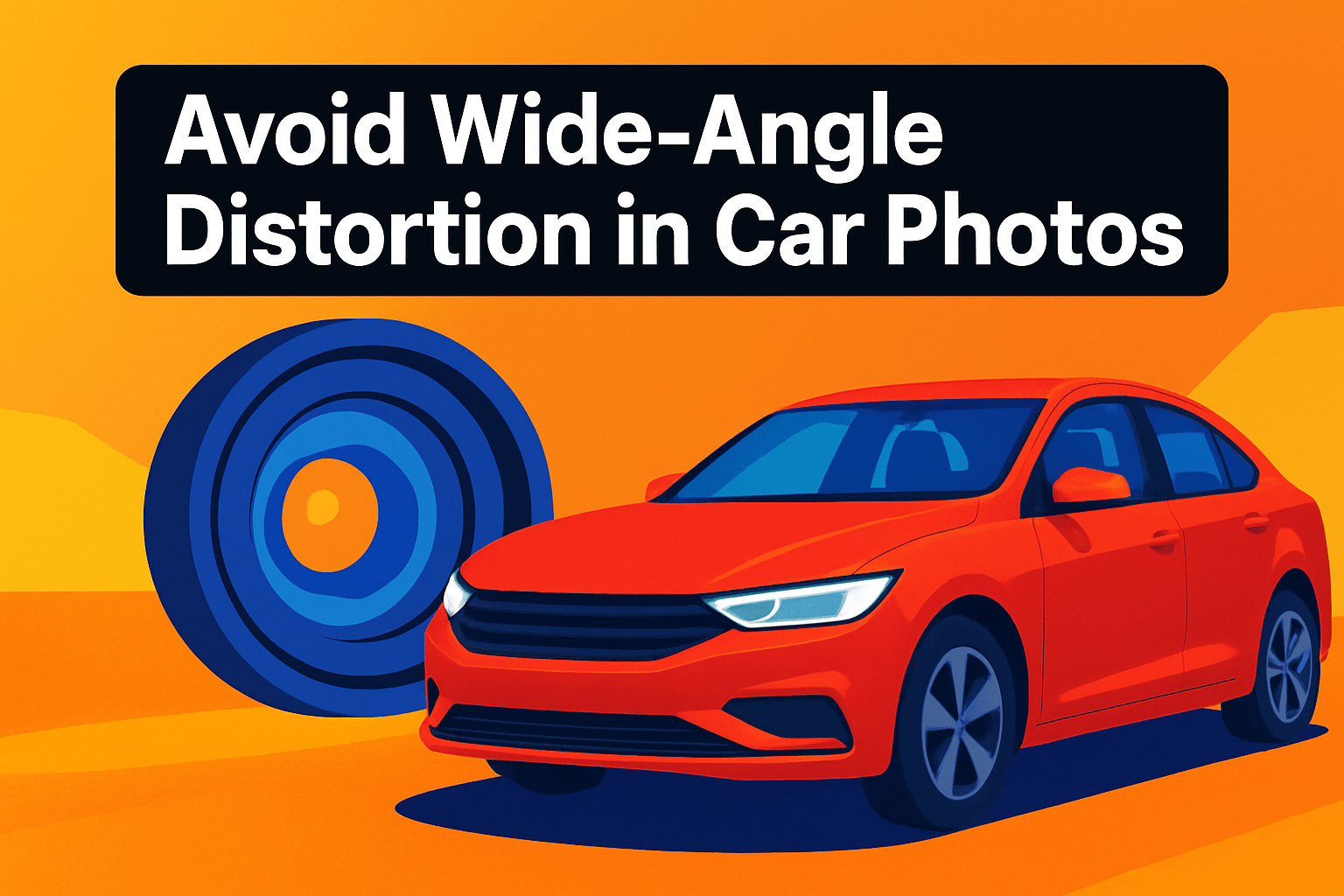
Wide-angle lenses are fantastic for drama, but they can easily wreck a car’s proportions when misused. Hoods stretch, wheels go oval and rooflines bow if you get too close or tilt the camera.
The usual suspects are proximity, camera angle and where you place key elements in the frame. Shooting very wide (especially under 24mm) from a short distance, tilting the body, or putting wheels at the edge will exaggerate distortion.
When you want honest full-car shots, back up and favor 24–35mm rather than the extreme end like 16mm. If you’re forced into 16mm in a tight garage, keep the car centered and expect the look to be more stylized than true-to-life.
Keep the camera level; that one habit saves a lot of post work. A tripod with a bubble or electronic level and the grid overlay in live view will help you keep verticals parallel and body lines straight.
Shoot from roughly hubcap (wheel-center) height to preserve natural proportions and a believable stance. Also avoid placing wheels or important panels right at the frame edge — those areas stretch the most.
Wide lenses include a lot of background, so simplify your surroundings to avoid distracting warped elements. Often a small lateral step fixes an awkward lamppost or building more effectively than cropping later.
Shoot RAW and apply lens profile corrections in Lightroom or Canon DPP to tame barrel distortion and restore lines. Manual vertical/scale tweaks work too, but getting the basics right in-camera saves time.
That said, ultra-wide is a creative tool for low, heroic angles and cramped interiors. Be deliberate: exaggerate stance for effect, center the car, then refine any distortion in post.
Finally, take a few test shots at different distances and focal lengths before committing. Your eye will tell you what looks natural — and more often than not a slightly longer focal length is the quickest cure for unwanted wide-angle warping.
Choose the Right Focal Length for Cars
Focal length is one of the quickest tools you have to change how a car reads in an image. It shapes perspective, distortion, and how much of the background is compressed.
Ultra‑wides (16–24mm or 16–35mm) create dramatic, immersive images and emphasize the environment. They’re great in tight showrooms or when you want a dynamic perspective, but expect exaggerated lines and some distortion; plan to correct it in post if you need accurate proportions.
The 24–70mm range is the sweet spot for most full‑car and environmental shots. It balances coverage and perspective with minimal stretching, which makes it easy to move between exteriors and interiors without changing lenses constantly.
For classic hero three‑quarter angles choose 35–50mm. That range preserves the car’s stance and delivers a natural, magazine‑style perspective that feels familiar to viewers.
Lenses around 50–100mm are ideal for tight details and interior work. They provide gentle compression and a pleasing shallow depth of field that isolates badges, grilles, and textures cleanly.
The 85–200mm band is all about compression and isolation. Use these focal lengths to flatten backgrounds, separate the car from its surroundings, and create that cinematic magazine look from a distance.
Match focal length to the story you want to tell. Wide for presence and context, mid‑range for authenticity and stance, long for drama and separation.
Experiment with multiple focal lengths on the same car to learn how mood changes. Shooting identical angles at different focal lengths is the fastest way to understand proportions, compression, and which look you prefer.
Think about your camera system when choosing glass. RF lenses bring advantages like sharpness, ultra‑fast AF and image stabilization that make many focal‑length choices more flexible on location.
Quick gear notes: an RF 24–70mm f/2.8 IS is the most versatile all‑rounder, an RF 50mm f/1.2 excels for detail and low‑light work, and an RF 70–200mm f/2.8 IS delivers reach and compression for editorial and distance shooting. Start with a solid mid‑range zoom and add wide or tele as your style demands.
What People Ask Most
What is the best Canon lens for car photography?
There is no single best lens; the right choice depends on your shooting style and priorities. A versatile standard zoom works well for most situations, while wide lenses emphasize environment and long lenses provide compression and isolation.
What focal length is best for car photography?
Focal length depends on the shot: wide for dramatic, environmental pictures, standard for natural full‑car views, and telephoto for compressed, detail‑focused images. Choose the range that matches the scene and the look you want to create.
Is a wide-angle lens good for car photography?
Wide‑angle lenses are great for tight spaces and dramatic low‑angle hero shots, but they can distort proportions if used too close. Keep the camera level and correct distortion in post when needed.
Should I use a prime or zoom lens for car photography?
Both have advantages: primes often offer wider apertures and rendering characteristics, while zooms provide flexibility to quickly reframe and adapt to different scenes. Pick based on whether versatility or a specific look is more important for your shoots.
What Canon lens is best for shooting car interiors?
A wide to standard lens that captures broad scenes without extreme distortion is ideal for interiors. Fast aperture helps in low light, and a compact design makes maneuvering inside a car easier.
What lens is best for photographing cars in motion or panning shots?
A telephoto or mid‑telephoto range is useful for isolating the car and achieving background compression during motion shots. Lenses with reliable autofocus and stabilization make handheld panning and tracking easier.
Is a tilt-shift lens useful for car photography?
Tilt‑shift lenses can be helpful for correcting perspective in interiors and architectural contexts or for precise control over plane of focus. They are a niche tool and not necessary for most dynamic or editorial car photography.
Conclusion for Best Canon Car Lenses
Choosing the right lens for car photography ultimately comes down to your shooting style, camera system, and whether you prize versatility, background compression, or an ultra‑artistic look.
Real‑world experience shows the lenses that hold up are those that deliver consistent sharpness, solid build quality, and reliable autofocus, while the obvious trade‑offs are weight, size, and how specialized a tool you need.
Think in terms of the scenes you shoot most often and pick gear that supports that work — then practice framing and focal‑length choices until they become instinctive.
If you want to sharpen your technique and lens choices, keep exploring the site for more practical tips and photo guides to help you improve with each shoot.
Have questions or want to share your own results? Leave a comment below and we usually reply within a few hours.



0 Comments