
Want to wring every pixel out of your Sony A7R V? This guide recommends five lenses that will help you exploit its massive resolution and get consistently sharp, usable results in the field.
With a 61MP sensor, the A7R V reveals micro detail that many lenses cannot fully resolve. Picking the right glass is therefore more important than ever for photographers who demand edge-to-edge clarity.
We prioritized resolving power and edge-to-edge sharpness, but we also weighed autofocus speed and stabilization for real shooting demands. Handling, weight, weather sealing, and useful focal reach were factored into each choice to keep gear practical for long shoots. Ergonomics and balance often matter as much as numbers when you’re carrying a setup all day.
Our evaluation blends lab checks with hands-on testing across landscapes, portraits, low-light, and action scenarios to expose practical trade-offs. The goal was utility: lenses that not only resolve detail on a 61MP body but also behave reliably when it matters.
In the pages ahead you’ll find concise rundowns of each recommended lens, tips for using adapted glass, and steps to optimize sharpness on the A7R V’s high-res sensor. There’s also a short FAQ to answer the most common lens questions and help you choose the right glass for your shooting style.
Whether you’re shooting wide vistas, studio portraits, or distant wildlife, these selections aim to match optical performance with real-world usability. Read on to see which lenses earned top marks and why they belong in an A7R V kit.
1. Sony FE 16-35mm F2.8 GM II

Sony FE 16-35mm F2.8 GM II
Ultra-wide pro-grade zoom delivering exceptional edge-to-edge sharpness, fast low-light performance, creamy bokeh, and reliable weather-sealed construction for landscapes and architecture.
Check PriceThe Sony FE 16-35mm F2.8 GM II is a go-to wide-angle zoom for photographers who need top-tier optics for landscapes, architecture, and astrophotography. In practice it delivers the resolving power and contrast that high-megapixel bodies demand, with performance that holds up even at the edges.
Optically it’s notable for exceptional edge-to-edge sharpness, even wide open, which means you can rely on it for critical landscape detail and night-sky work without having to stop down excessively. It also offers excellent low-light performance for night and indoor shooting, making it versatile beyond daytime scenic use.
Handling is improved over the previous version—this iteration is lighter than its predecessor and more compact, so it’s easier to carry on long hikes or tight architectural shoots. Autofocus is fast, silent, and reliable in challenging environments, which helps when switching between handheld framing and tripod-based astro or interior work.
Build quality is professional: robust construction with effective weather-sealing gives confidence in wet or dusty conditions. The combo of solid weather protection and compactness makes it a practical choice for outdoor shooters who need durability without excessive bulk.
Two real considerations: there’s no built-in image stabilization, so you’ll need to factor that into handheld low-light scenarios. Also, minor vignetting can appear at the widest settings, though it’s easily correctable in post.
- Exceptional edge-to-edge sharpness (even wide open)
- Lightweight and compact for a pro wide-angle zoom
- Fast, silent autofocus
- Robust build with effective weather sealing
- No built-in image stabilization
- Minor vignetting at widest settings (correctable)
2. Sony FE 24-70mm F2.8 GM II

Sony FE 24-70mm F2.8 GM II
Versatile standard zoom for professionals, offering consistent brightness, lightning-fast autofocus, superb resolution, and durable build for weddings, events, and everyday shooting.
Check PriceThe Sony FE 24-70mm F2.8 GM II is a true versatile workhorse for travel, events, and everyday use. Its constant f/2.8 aperture gives you consistent low-light performance and creative control over depth of field across the zoom range.
In real-world shooting I’ve found it praised for its sharpness and color rendition, delivering clean files that hold up well on the A7R V’s high-resolution sensor. The lens shows minimal distortion and chromatic aberration, which means less cleanup in post and more time shooting.
Handling is noticeably improved over the previous version, with reduced weight and a compact footprint that makes long days easier. Autofocus is quick and accurate, and minimal focus breathing is a practical bonus if you shoot video as well as stills.
Optically it resolves very well across the frame, so portraits, event coverage, and general-purpose assignments benefit from excellent edge-to-edge performance and reliable color. The constant f/2.8 also helps separate subjects from backgrounds without changing exposure as you zoom.
There are a couple of things to keep in mind. You may see slight barrel distortion at the wide end, but that’s easily corrected in post or with in-camera profiles. Also, the lens can be prone to flare in strong backlighting, so use the hood or watch your positioning when the sun is in-frame.
- Excellent sharpness and color accuracy across the range.
- Lightweight and compact for a professional zoom.
- Fast, reliable AF for stills and video.
- Minimal distortion and chromatic aberration.
- Slight barrel distortion at the wide end (easily corrected).
- Can be prone to flare in strong backlighting (use hood/positioning).
3. Sony FE 70-200mm F2.8 GM OSS II
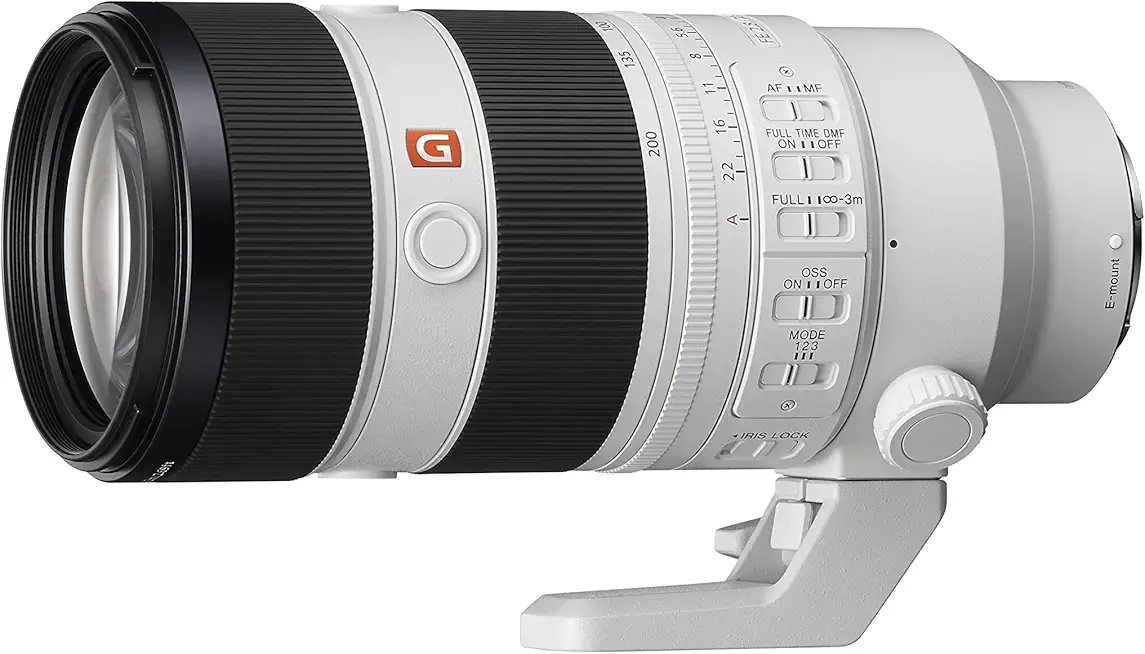
Sony FE 70-200mm F2.8 GM II OSS SEL70200GM2
Telephoto pro zoom with outstanding subject isolation, stabilized sharpness, rapid autofocus, and robust construction ideal for sports, portraits, and action photography.
Check PriceSony FE 70-200mm F2.8 GM OSS II is a go-to telephoto for shooters who need reach, speed, and image quality. It’s highly regarded for sports, wildlife, and event photography where tracking and subject isolation matter.
The lens delivers noted sharpness at the telephoto end and a creamy bokeh that really helps separate subjects from busy backgrounds. That rendering makes it a favorite for portraits at distance and for isolating athletes or animals in action.
Built-in image stabilization is a big practical advantage for handheld low-light work or when you want flexibility without a tripod. Autofocus is fast and accurate, with very capable tracking of moving subjects, so you spend less time missed-focus and more time shooting.
Handling has been improved and the weight reduced versus the previous version, which makes it easier to carry for longer shoots. Still, it’s a substantial pro-level zoom, so if you plan very long handheld days you should be mindful of the size and mass.
In short, if you prioritize sharp telephoto performance, smooth subject separation, strong in-lens stabilization, and reliable AF tracking, this lens will serve you extremely well. If you mostly shoot handheld for many hours or are shooting lots of video, the size and minor focus breathing may be limiting factors.
- Outstanding sharpness and creamy bokeh
- Effective image stabilization for handheld use
- Fast, reliable tracking autofocus
- Improved handling and reduced weight
- Relatively large and heavy for extended handheld use
- Minor focus breathing noticeable in video
4. Sony FE 200-600mm F5.6-6.3 G OSS

Sony FE 200-600mm F5.6-6.3 G OSS SEL200600G
Long-range zoom engineered for wildlife and birding, delivering reach, steady stabilization, excellent sharpness, and travel-friendly handling.
Check PriceThe Sony FE 200-600mm F5.6-6.3 G OSS is a go-to super-telephoto for wildlife and sports shooters who need dramatic reach without stepping into prime-only budgets. It reliably captures detailed images of distant birds and animals, making it easy to fill the frame when subjects stay far away. As a working tool it’s geared toward photographing action at a distance rather than low-light studio work.
Autofocus is fast and accurate with good tracking performance, so moving subjects like birds in flight or athletes on a field are easier to keep sharp. The lens’ robust build and effective weather sealing mean you can use it outdoors in less-than-perfect conditions without worrying about the elements. Built-in image stabilization reduces camera shake at long focal lengths, which helps when shooting handheld or when you can’t get a tripod into position.
There are a couple of trade-offs to consider before buying: it’s relatively heavy for extended handheld use, so long handheld sessions can become tiring. Also, the variable aperture (f/5.6–6.3) narrows as you zoom, which limits low-light performance compared with faster telephotos. If you prioritize reach, reliable AF tracking, solid construction, and in-lens stabilization for fieldwork, this lens is a strong, practical choice for the A7R V’s high-resolution sensor.
- Exceptional reach for wildlife and sports photography.
- Fast, accurate AF with strong tracking.
- Robust build quality and weather sealing.
- Built-in image stabilization for handheld shooting.
- Relatively heavy for extended handheld use.
- Aperture narrows as you zoom, limiting low-light performance.
5. Sigma 20mm F2 DG DN Contemporary

Sigma 20mm F2 DG DN Contemporary L-Mount
Compact wide-angle prime with bright aperture, edge-to-edge clarity, lightweight design, and exceptional performance for landscape and night-sky imaging.
Check PriceIf you shoot landscapes, interiors, or the night sky the Sigma 20mm F2 DG DN Contemporary is a lens you should test on the A7R V. It’s popular for astrophotography, landscapes, and interiors, and in real-world use it delivers the kind of wide-angle coverage that makes scenes sing.
Optically the lens is praised for sharpness and minimal distortion, even wide open. You get strong low-light performance from the fast f/2 aperture, which really helps when the Milky Way or dim interiors are the subject.
Handling is a strength: the lens is compact and lightweight, so it’s easy to carry on long hikes or pack into a travel kit. That portability doesn’t come at the expense of build — reviewers note a solid build quality with effective weather sealing, so it stands up to outdoor use.
Autofocus is quick and accurate, with minimal focus breathing reported, which makes it reliable for both stills and occasional video work. The AF performance helps you nail stars or foreground details without wrestling with slow focus hunts.
Overall, for photographers who want a sharp, portable wide-angle that’s usable in low light and built for the field, this Sigma is an excellent match. The only practical limitations to be aware of are a video-oriented quirk with the controls and a slight breathing issue when pulling focus.
- Exceptional sharpness and minimal distortion, even wide open
- Compact and lightweight for a pro wide-angle lens
- Fast, reliable AF for stills and video
- Solid build and weather sealing
- Aperture ring cannot be de-clicked (limitation for video)
- Minor focus breathing reported (noticeable in video)
Using Adapted Lenses on the A7R V
One of Sony E-mount’s biggest advantages is its openness. With the right adapter you can mount Canon EF, Nikon F, and Sony A-mount glass on the A7R V. That expands focal ranges and optical character without committing to native-only lenses.
For A-mount glass the official LA-EA adapters are the main choices. LA-EA4 has a built-in AF motor and a translucent-mirror system that preserves phase-detect AF and continuous AF for video. LA-EA3 supports exposure automation but uses contrast-detect AF and is slower for tracking.
For Canon EF lenses, third-party smart adapters like Metabones and Sigma MC-11 let EF optics communicate with the camera. They usually retain autofocus and aperture control, but behavior varies by lens and adapter firmware. Update firmware and test each lens-adapter pairing before client work.
Vintage and manual lenses benefit from specialized adapters that add electronic contacts for EXIF and focus-assist. Some also enable electronic front-curtain shutter on compatible bodies. Those features make manual focusing and cataloging much easier.
Protect mounts and balance weight. Use correct caps and consider adapters with tripod collars for heavy telephotos. A tripod foot on the adapter takes stress off the camera and makes long sessions more comfortable.
Expect trade-offs. Adapted lenses commonly lag native glass in AF speed and tracking, and electronic communication can be limited. Lens-based stabilization or full aperture control may not work through every adapter, so plan to use manual focus for critical stills when reliability matters.
Despite compromises, adapted glass gives unique looks and focal lengths you won’t otherwise get. My workflow is simple: check compatibility lists, update adapter and lens firmware, run real-world tests, carry a spare adapter and caps, and be prepared to work manually or on a tripod when needed. The character you get is often worth the compromises.
Optimizing Sharpness for 61MP A7R V
The A7R V’s 61MP sensor is unforgiving: any softness in the glass shows up as missing detail. Lenses that looked sharp on 24–36MP bodies can reveal weaknesses here.
To get the most out of those pixels, aim for the optical sweet spot. On most lenses that means stopping down to around f/5.6–f/8 where aberrations and diffraction are balanced.
Stability matters more than ever. Use a solid tripod or rely on effective in-lens or camera stabilization, and try to shoot at 1/250s or faster to avoid motion blur.
Keep ISO low — under about ISO 800 — so noise doesn’t obscure fine detail. Staying conservative with ISO preserves texture and the subtle tonal transitions that make high-res files sing.
Focus precisely. For fast native glass let the AF do its job, but when you’re using primes, manual or adapted lenses, use focus peaking, magnified live view and electronic confirmation to nail the critical plane.
Shoot RAW and resist the urge to fix softness with heavy sharpening. Apply accurate lens profile corrections and gentle, targeted sharpening so you enhance micro‑detail without amplifying artifacts.
Favor native G Master or other premium primes built for high-megapixel sensors; they tend to resolve better across the frame. Adapted lenses can still be lovely, but expect trade-offs in AF speed and stabilization support.
Finally, test each lens to find its best aperture and focus behavior, and preview images at 100% on the camera or computer. Those small habits — stabilized support, conservative ISO, precise focus — pay massive dividends with 61MP files.
What People Ask Most
What are the best lenses for the Sony A7R V?
The best lenses depend on your shooting priorities and subject types. Prioritize optics with high resolving power, reliable autofocus, and solid build quality for consistent results.
Which lenses are best for landscape photography on the Sony A7R V?
Wide-angle lenses and high-quality zooms or primes that deliver edge-to-edge sharpness are ideal for landscapes. Weather sealing and good handling make them more practical in changing outdoor conditions.
What is the best portrait lens for the Sony A7R V?
A fast short-tele prime or medium-tele zoom that produces pleasing background separation and sharp subject detail is commonly preferred. Reliable autofocus and comfortable ergonomics help when working with people.
Which wide-angle lens is recommended for the Sony A7R V?
Choose a native wide-angle zoom or a high-quality prime that minimizes distortion and remains sharp across the frame. Compact, well-built options are particularly useful for travel and landscape work.
What macro lenses work best with the Sony A7R V?
Dedicated macro lenses with close-focusing capability and consistent sharpness are the best choice for close-up work. Using stable support and careful technique will help capture maximum detail.
Which zoom lenses are ideal for the Sony A7R V?
Versatile standard zooms and telephoto zooms that combine sharp optics, dependable autofocus, and stabilization suit a wide range of shooting scenarios. Select focal ranges that match the subjects you shoot most often.
What prime lenses should I consider for the Sony A7R V?
High-quality primes that emphasize resolving power and optical performance are excellent for critical detail and low-light work. Building a set that covers wide, standard, and short-tele focal lengths gives the most creative flexibility.
Conclusion for Sony A7R V Lenses
In short, a thoughtful lens choice for the A7R V means covering the full focal range from wide to super-tele while prioritizing resolving power, reliable autofocus, effective stabilization, and solid weather sealing to get the most from the camera’s 61MP sensor.
Adapted lenses and careful technique remain practical ways to expand your creative options, provided you accept potential trade-offs in AF speed or electronic communication.
To fully exploit high-resolution results, favor steady support, precise focusing and mid-range apertures, and keep noise low with conservative ISO choices and careful post-processing.
If you want to sharpen your skills and learn more about matching lenses and technique to high-megapixel bodies, explore more articles on the site to build your knowledge and confidence.
Have questions or experiences to share about shooting with the A7R V or specific lenses? Leave a comment below — we usually reply within a few hours.




0 Comments