
Which single lens will unlock the Sony ZV-E1’s cinematic potential while staying light enough for all-day handheld work?
This quick guide highlights five carefully chosen E-mount lenses that pair especially well with the ZV-E1’s form factor and movie-focused features.
Whether you’re a vlogger chasing flattering talk-to-camera framing or a travel shooter who wants pro results without a heavy kit, this guide will help.
It’s also aimed at event shooters and hybrid photo/video creators who need reliable autofocus and flexible focal coverage.
We focus on practical options that balance size, low-light capability, autofocus reliability and versatile focal ranges.
These are choices that work equally well for handheld vlogging, wide-angle self-filming, portrait interviews and light telephoto needs.
All picks were selected to complement the ZV-E1’s compact body and movie-centric AF without pushing you into a bulkier setup.
That means a premium feel where it matters and manageable weight for long shoots.
We’ll keep jargon to a minimum and highlight which lens types best match specific creator needs so you can choose quickly.
If you want sharper portraits, wider vlogs, or telephoto reach without the bulk, this guide points the way.
Below you’ll find concise recommendations and practical notes to help you match lenses to your shooting style.
Let’s find the glass that makes your ZV-E1 look and feel more professional on every shoot.
1. Sony FE 24-70mm f/2.8 GM II

Sony FE 24-70mm f/2.8 GM II
Pro standard zoom delivering exceptional sharpness, creamy bokeh, and consistent f/2.8 speed for studio and location work.
Check PriceThe Sony FE 24-70mm f/2.8 GM II is a true workhorse for full-frame creators who need one lens that does almost everything. It covers wide to medium-telephoto with a constant f/2.8, giving you consistent exposure and shallow depth-of-field control throughout the zoom range.
Weighing 690 g, it’s relatively light for a G Master standard zoom and pairs very well with the compact ZV-E1 for handheld travel and run-and-gun vlogging. That weight advantage makes long days on location noticeably less fatiguing while still delivering professional image quality.
In real-world use it excels across assignments: travel, vlogging, events, portraits and general video. Users report excellent corner-to-corner sharpness and pleasing bokeh even in low light, so you get both resolution and cinematic separation when you need it.
Autofocus performance is fast, accurate and quiet, which is crucial for video work on the ZV-E1 since noisy focusing motors can ruin audio. The lens’s AF behavior pairs smoothly with the camera’s video AF systems, making face and subject tracking reliable during handheld shooting.
If you’re a content creator or hybrid photo/video shooter looking for a premium, flexible one-lens solution, this is a top candidate. Be aware there’s minor distortion at the wide end that may need correction in post, and the lens sits at a premium price compared to some third-party alternatives.
- Excellent sharpness across zoom range
- Constant f/2.8 for low light and shallow DOF
- Relatively light at 690 g for handheld use
- Fast, quiet, reliable AF optimized for video
- Minor wide-end distortion
- More expensive than third-party options
2. Tamron 28-75mm f/2.8 Di III RXD

Tamron 28-75mm f/2.8 Di III RXD (A036) for Sony E-mount + SanDisk Extreme Pro 128GB SDXC
Lightweight, versatile walkaround zoom with bright f/2.8 performance, bundled with a high-speed 128GB card for reliable RAW capture and fast transfers.
Check PriceThe Tamron 28-75mm f/2.8 Di III RXD is a standard full-frame zoom with a 28–75mm range and a constant f/2.8 aperture. It’s designed as a compact, third‑party option that keeps weight and bulk down without sacrificing versatility.
In real shooting this lens feels at home on a handheld camera for YouTube, travel and run‑and‑gun work. It’s noticeably lighter and more compact than many professional zooms, which makes long vlogging sessions and handheld travel work much less tiring.
Autofocus with native Sony bodies — including the ZV‑E1 — is reported as very quick and accurate. Users see reliable Eye AF and video AF performance, so face and subject tracking in movie mode behaves dependably for interviews and moving subjects.
Image quality is one of this lens’s strengths: real‑world sharpness is superb and often compares well with higher‑end options, giving crisp footage and usable detail across the range. The trade‑offs are practical: it doesn’t carry the reinforced weather sealing or the extreme bokeh and low‑light character of fast primes, but for creators who want professional results without the size, weight and price of heavier zooms, it’s a very compelling all‑purpose choice.
- Superb sharpness comparable to higher‑end lenses
- Compact, lightweight for handheld use
- Fast, reliable AF (Eye AF & video AF friendly)
- Great balance of quality and ease of use for vlogging
- Lacks advanced weather sealing/durability
- f/2.8 low‑light and bokeh not as strong as primes
3. Sony FE 16-35mm f/2.8 GM II

Sony FE 16-35mm f/2.8 GM II
Ultra-wide pro zoom offering edge-to-edge clarity, dramatic perspectives, and constant f/2.8 brightness for landscapes, architecture, and creative wide-angle shots.
Check PriceThe Sony FE 16-35mm f/2.8 GM II is a go-to ultra-wide zoom when you need top-tier image quality and flexibility. It’s a constant f/2.8 lens, which means consistent exposure and depth-of-field control across the zoom — great for moving subjects and dim interiors.
In real-world use it’s praised for corner-to-corner sharpness, minimal distortion and strong flare control, so your wide landscapes and interiors look clean and detailed. Autofocus is fast and accurate, and the near-silent operation is well suited to video work where you don’t want focus noise in the track.
On the ZV-E1 the extra-wide coverage becomes even more practical because the camera’s crop can make wide angles especially useful for self-filming and vlogging. This lens also handles landscapes, architecture and tight indoor spaces very well, giving you dramatic perspective without obvious optical compromises.
Build quality is robust with weather sealing, so you can shoot in tougher conditions without worrying about the elements. That said, it’s larger and heavier than some wide zooms, so if you’re shooting handheld for long stretches it can be fatiguing.
If your work demands cinematic wide fields, reliable low-light performance at f/2.8, and near-silent AF for video, this lens is a strong match. Expect excellent image quality and professional handling, with a small trade-off in size and a bit of vignetting at the widest setting.
- Outstanding image quality with advanced coatings and optics
- Constant f/2.8 for moving subjects and low light
- Smooth, near-silent autofocus suited to video
- Robust build quality and weather sealing
- Larger and heavier than some wide zooms
- Slight vignetting reported at the widest setting
4. Sony FE 85mm f/1.8

Sony SEL85F18 85mm f/1.8
Compact portrait prime producing creamy bokeh, flattering compression, and sharp subject separation in low-light and studio environments.
Check PriceThe Sony FE 85mm f/1.8 is a medium-telephoto prime designed for portraits, offering a bright f/1.8 aperture that gives you strong subject separation without the bulk or price of higher-end options. In real shooting it’s a popular, lightweight choice for video interviews and portraiture on the ZV-E1—comfortably sized for handheld work and long takes.
Autofocus performance is a highlight: the lens delivers fast, accurate AF and works well with the ZV-E1’s eye-tracking and video AF systems, so you can rely on clean face/eye acquisition during interviews and short-form content. Its ergonomics and weight make it easy to move with the camera for run-and-gun shooting or handheld portrait sessions.
Optically it gives sharp images and a pleasing, creamy background blur at f/1.8, which is exactly what portrait shooters want for subject separation and cinematic framing. The lens represents strong value for the quality it delivers, making professional-looking portraits accessible without the cost or size of flagship alternatives.
There are trade-offs to be aware of: the bokeh isn’t as silky or refined as the f/1.4 GM class, and f/1.8 simply won’t gather quite as much light or produce the absolute shallowest depths of field as an f/1.4. For most vloggers, YouTubers, and portrait photographers seeking professional results with a compact package, though, this lens is an excellent, practical choice.
- Sharp images with creamy background blur at f/1.8
- Lightweight and compact versus 85mm f/1.4 GM
- Fast, reliable AF optimized for video and stills on ZV-E1
- Strong value for quality delivered
- Bokeh not as smooth/refined as f/1.4 GM alternatives
- f/1.8 is less bright than f/1.4 for extreme low-light/ultra-shallow DOF
5. Tamron 70-180mm f/2.8 Di III VC/VXD G2

Tamron 70-180mm f/2.8 Di III VC VXD G2 for Sony E-mount
Lightweight telephoto zoom combining fast f/2.8 speed, optical stabilization, and responsive autofocus for sports, events, and run-and-gun shooting.
Check PriceThe Tamron 70-180mm f/2.8 Di III VC VXD G2 is a compact telephoto zoom that gives you pro-level reach without the usual 70–200mm bulk. It keeps a constant f/2.8 throughout the range, and pairs particularly well with the ZV-E1 when you need a lightweight telephoto for video and stills.
Size and weight are standout features — this lens is noticeably lighter than traditional 70–200mm f/2.8 designs, which makes handheld work and long event days far less tiring. Despite its compactness, Tamron has delivered excellent sharpness and contrast, so your footage remains crisp even when you push the ISO or crop in post.
Autofocus is driven by Tamron’s VXD linear motor, which in practice is very fast, silent and accurate for tracking moving subjects in video. That makes it a strong choice for wildlife, sports and event coverage where reliable subject tracking matters.
Optical image stabilization (VC) complements the ZV-E1’s in-body stabilization for impressively steady handheld footage. Combined stabilization is a real benefit when you’re shooting run-and-gun events or shooting wildlife from a hide without a tripod.
If you need telephoto reach that’s easy to carry, this lens is an excellent fit. It’s aimed at creators who want speed, stabilization and high image quality without the bulk of traditional pro telephoto zooms.
- Compact, lightweight for a pro tele zoom
- Optical stabilization complements camera IBIS
- Very fast, quiet and accurate VXD AF
- Excellent sharpness with minimal CA and distortion
- Top reach is ~180mm, not 200mm
- Some may prefer Sony-branded durability/weather sealing
How APS-C Lenses Crop on Full Frame
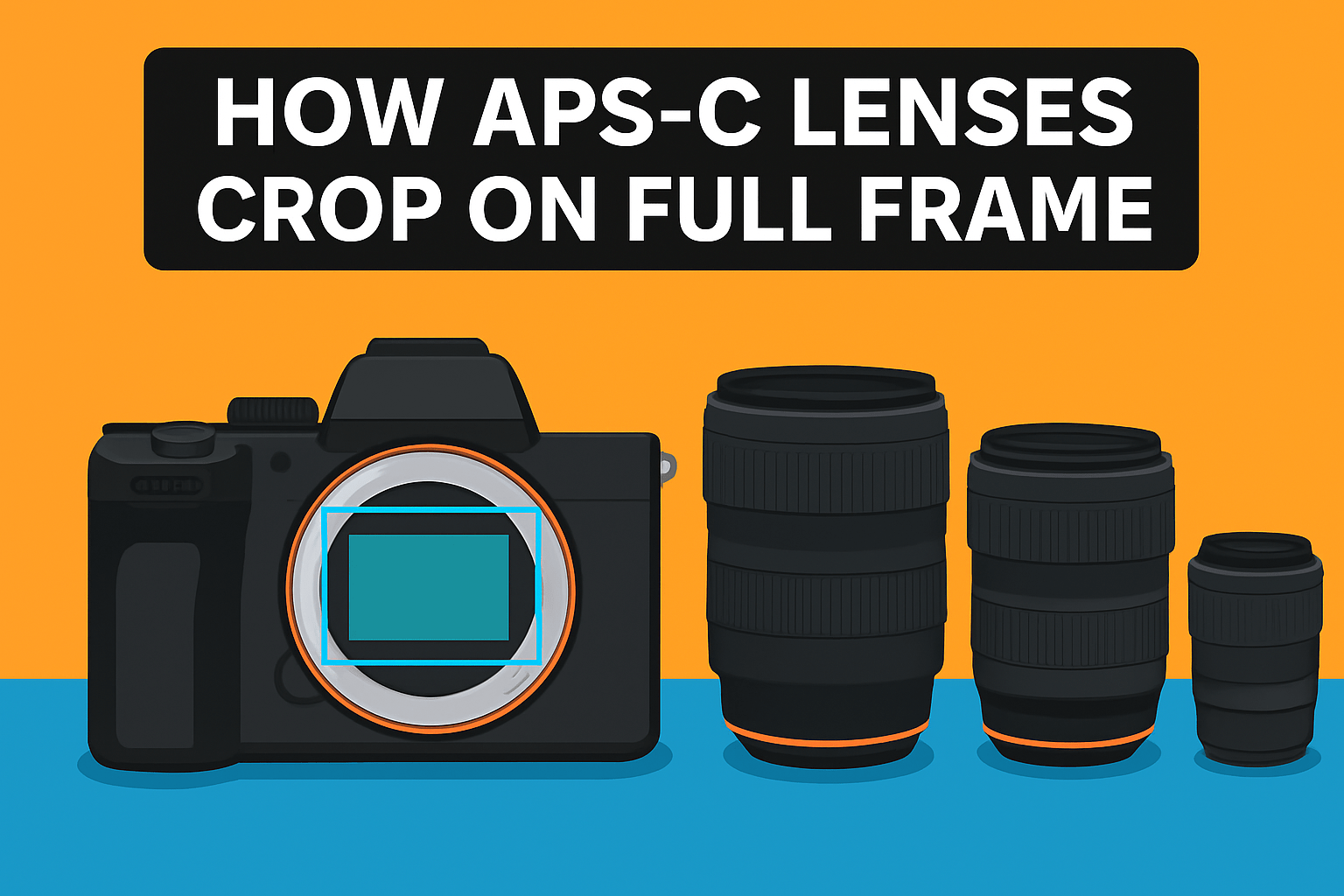
If you mount an APS-C E‑mount lens on the ZV‑E1 it will usually vignette because APS‑C glass projects a smaller image circle than the ZV‑E1’s full‑frame sensor (35.6 x 23.8 mm). That darkening is most obvious at ultra‑wide focal lengths — think 11mm or 17mm — where corners can go completely black.
Sony gives you ways to avoid that for video. Dynamic Active Mode applies an internal crop of roughly 1.2–1.3x to stabilize footage and often lands you inside the APS‑C image circle, which removes vignetting without changing lenses. It’s a great quick fix for handheld clips, but expect a noticeable loss of field of view.
For absolute avoidance of mechanical vignetting switch the camera to APS‑C crop mode. The camera reads only the central APS‑C area of the sensor (about a 1.5x crop) so the image is clean, but you lose full‑frame framing, resolution and some low‑light headroom.
There’s also Clear Image Zoom, which digitally crops up to 1.5x to hide dark corners. Use it for social clips or emergencies, but remember it’s still a digital enlargement — fine for YouTube, less ideal for archive‑quality video or prints.
Put into practical terms, that 11mm APS‑C lens will behave more like a 13–16mm on the ZV‑E1 depending on whether you use the Dynamic crop or full APS‑C mode; a 17mm will end up nearer a 25–26mm equivalent in APS‑C mode. That shift changes composition and apparent depth of field, so reframe and check focus before you roll.
My rule as a shooter: use APS‑C glass when weight and compactness matter and you accept a cropped look. If you want true full‑frame width, corner‑to‑corner image or maximum resolution, pick full‑frame glass. Always test the lens and toggled crop/stabilization modes on the camera before any important shoot.
Lens Autofocus Performance for Video
Autofocus on the ZV‑E1 is a real advantage for video. Real‑time Eye AF and Subject Recognition tailored for movies keep faces and moving subjects locked, freeing you from constant focus‑checking and letting you concentrate on composition and performance. That reliability translates to cleaner interviews and steadier run‑and‑gun footage.
But the lens you mount changes how that system behaves. Native full‑frame lenses usually deliver the smoothest, quietest focus because their motors and communication are optimized for Sony bodies; that matters when your mic is close. APS‑C glass will often work, but some models use noisier or slightly slower motors that become obvious on sensitive audio, so always test with your recording setup.
Use AF transition speed and subject‑shift sensitivity to shape how aggressively the camera moves between targets. Slow transitions and lower sensitivity produce cinematic rack‑focus and prevent the system from snatching onto background movement. Small tweaks here make a big difference to how natural your focus pulls look on playback.
Focus‑breathing compensation on the ZV‑E1 helps reduce field‑of‑view changes during focus pulls, which is a huge help for narrative work. It won’t completely erase heavy optical breathing, so test any zoom or prime you plan to rack focus with. When you need the smoothest pulls, favor lenses known for minimal breathing.
Stabilization and AF are a team: the camera’s 5‑axis IBIS combined with lens optical stabilization reduces hunting and keeps tracking steadier when handheld. That combo is especially useful on longer focal lengths and in low light where the AF system has to work harder. Whenever possible, pair stabilized glass with IBIS for the most reliable results.
Finally, know the limits: the ZV‑E1’s 12MP sensor can be less precise on very tiny focus zones, and APS‑C glass on full‑frame can introduce vignetting or force a crop that AF won’t fix. My routine is simple — test each lens with your audio rig, set transition speed and sensitivity before a take, prefer native full‑frame optics for quiet predictable AF, and use manual focus pulls when absolute control is required.
What People Ask Most
What are the best lenses for Sony ZV-E1 for vlogging?
Look for wide or standard zooms and compact ultra-wides that offer reliable autofocus and easy handling for handheld work. Lenses with good stabilization and a lightweight form factor are commonly preferred for self-filming.
Which Sony E-mount lenses are most compatible with the ZV-E1?
Native full-frame FE lenses generally provide the most consistent autofocus and video features with the ZV-E1. Many third-party E-mount lenses also work well, though some may differ in durability or AF noise characteristics.
What is the best lens for portraits on the Sony ZV-E1?
Medium-telephoto primes or short telephoto zooms with wide apertures are popular for portraits because they flatter subjects and separate backgrounds. Pick a lens that balances sharpness, autofocus performance and comfortable handling for interviews or headshots.
What are the best wide-angle lenses for the Sony ZV-E1?
Ultra-wide to standard wide zooms are ideal for vlogging, landscapes and tight interiors where a broad field of view helps with framing. Prioritize lenses with strong corner performance, controlled distortion and smooth autofocus for video.
Which lenses offer the best low-light performance on the Sony ZV-E1?
Lenses with larger maximum apertures typically perform better in low light and provide shallower depth of field for subject separation. Fast primes and constant-aperture zooms are common choices for improved low-light work.
Is a 35mm or 50mm lens better for handheld shooting with the Sony ZV-E1?
A 35mm gives a wider field of view that is often easier for handheld and selfie-style shooting, while a 50mm provides tighter framing and stronger subject isolation. Choose based on how much scene you want in frame and how close you’ll be to the camera.
Are APS-C E-mount lenses compatible with the Sony ZV-E1 and how do they perform?
APS-C E-mount lenses can be mounted on the ZV-E1 but they project a smaller image circle, which can cause vignetting on full-frame capture. Using camera crop or internal stabilization crop modes can reduce or eliminate vignetting at the cost of a narrower field of view.
Conclusion for Best Sony ZV-E1 Lenses
Whether you shoot vlogs, travel, portraits or events, the five lens types covered here give a clear range of choices that suit the ZV-E1’s strengths.
Use a standard all-purpose zoom for flexibility, a compact zoom when weight matters, an ultra-wide for self-filming and landscapes, a portrait prime for headshots, and a stabilized telephoto for reach, then prioritize weight, stabilization and AF to match your workflow.
Matching lens characteristics to the ZV-E1’s video features—like in-body stabilization and advanced subject AF—will pay dividends in smoother footage and more reliable tracking.
If you want to deepen your shooting and editing skills, browse more guides and gear articles on the site to refine your choices and techniques at your own pace.
Have a question or want personalized kit advice? Leave a comment below — we usually reply within a few hours.


0 Comments