

Ever captured the perfect shot only to find the audio ruins the whole story?
Bad sound can turn a cinematic moment into a distracted swipe on a viewer’s feed.
This quick guide to the five best mics for vlogging in 2026 helps you fix that problem fast.
We look at wireless lavaliers, directional shotgun mics, and simple plug-and-play options.
Each choice is picked for real-world performance, not just lab numbers.
The focus is on clarity, ease of use, and reliability across real shooting situations.
Recommendations are drawn from hands-on use and user feedback from creators in the field.
Expect straightforward pros and cons you’ll actually notice on busy streets, windy beaches, or in tight indoor spaces.
We also call out who each mic suits best so you can skip the guesswork.
Every product section outlines real-world use, clear pros and cons, and the ideal use case for creators.
No heavy jargon, just practical notes on setup, pairing, and how well background noise is handled.
Whether you shoot solo on a phone, interview guests, or run a DSLR rig, this guide helps you pick the right mic faster.

MAONO Wave T5 Wireless Lavalier Microphone USB-C (48kHz/24-bit, 300m, 30h)

Movo VXR10-PRO Compact Shotgun Microphone with Rycote Lyre Shock Mount (Battery-Free)
1. DJI Mic 2

DJI Mic 2 (1 TX + 1 RX)
Dual-channel wireless audio kit delivering crystal-clear capture, long-range reliability, and intuitive controls for on-the-go content creators.
Check PriceAs a photographer who also runs a YouTube channel, the DJI Mic 2 is the kind of wireless system I reach for when I need dependable, professional-sounding vocals without fuss. It’s genuinely versatile — designed for solo vloggers and small production teams who shoot both outdoors and indoors and want crisp vocal clarity every take.
Setup is delightfully simple: clip-on transmitters, a user-friendly OLED touchscreen on the receiver, and adaptive noise cancelling that really helps isolate the voice in noisy environments. Each transmitter also includes 8GB of built-in storage, so you have onboard recording as a safety net if the wireless link drops.
Where the Mic 2 stands out is in its recording flexibility. It can capture 32-bit float audio, which gives you more latitude in post-production to recover levels without clipping. That does mean a bit more work in editing, but the payoff is cleaner results and more headroom when levels are unpredictable during run-and-gun shoots.
Battery life is long and the charging case keeps you rolling through a full day of shooting. In practice you get a reliable signal, consistent audio capture, and minimal gear fiddling — which frees you to focus on framing and performance rather than audio troubleshooting.
If your priority is capturing natural ambient sound rather than focused vocal tracks, this might be overkill. But if you want clear, professional voice recordings with built-in redundancy and modern features, the DJI Mic 2 is a top pick for most vloggers.
- Crisp, clear vocals with minimal setup
- Intelligent noise cancellation works well outdoors
- Long battery life with charging case
- Onboard recording prevents audio loss during signal breaks
- Requires some post-production when using 32-bit float audio
- Not optimal if you rarely record vocals or only need ambient sound
2. SYNCO G2 Mega

SYNCO G2A2 MEGA Dual Transmitter Wireless Microphone System (Charging Case, 8GB)
Two-transmitter wireless system with charging case and onboard 8GB recording; seamless multi-guest audio with stable connectivity and easy management.
Check PriceThe SYNCO G2 Mega is a wireless lavalier built for run-and-gun shooting where discretion and reliability matter. As a photographer who also shoots my own scenes, I appreciate a system that stays out of frame while still delivering professional-sounding audio.
Its magnetic clip design is clever — the mic can be hidden under clothing without fuss, which keeps your visuals clean and your subject comfortable. In busy city streets it consistently delivers clear, stable sound, so you don’t lose vocal intimacy to background chaos.
What really sells it for me is the onboard recording with a safety channel. That backup recording prevents total audio loss during a wireless dropout, which is a lifesaver on single-operator shoots. The charging case gives good battery life, so you can get through long shooting days without constant swaps.
Noise cancellation is effective in real street environments, reducing traffic and crowd interference while keeping the voice natural. Users and field tests praise its reliability and real-world performance, making it ideal for travel vloggers and journalists who need clean audio without visible gear.
The trade-offs: it sits at a higher price point and some shooters find it a bit bulky compared with smallest competitors. If you prioritize unobtrusive placement, dependable backup recording, and solid outdoor noise handling, the SYNCO G2 Mega is a strong choice despite those compromises.
- Innovative magnetic clip
- Onboard recording with backup channel
- Long battery life via charging case
- Effective noise cancellation in street environments
- Higher price point
- Sometimes feels bulky vs smaller competitors
3. Maono Wave T5
MAONO Wave T5 Wireless Lavalier Microphone USB-C (48kHz/24-bit, 300m, 30h)
Professional wireless lavalier with USB-C, studio-grade 48kHz/24-bit audio, 300m range, and up to 30-hour battery life for all-day recording.
Check PriceThe Maono Wave T5 is a budget-friendly wireless mic system I often recommend for street interviews and outdoor vlogging. It’s built around practicality — you get dual transmitters which makes capturing two people simple without juggling extra adapters.
Sound quality in real use is noticeably better than a phone’s built-in mic. The kit includes foam and furry windscreens which really cut down wind noise when you’re shooting on busy streets or exposed locations.
One feature I appreciate as a photographer is the real-time audio monitoring via the app. That monitoring helps you catch level issues on the spot instead of discovering them in post.
Range and stability matter outdoors, and the Maono Wave T5 delivers with a stable signal up to 300 meters. That kind of distance gives you room to move and still get clean dialogue when shooting dynamic scenes.
There are trade-offs to consider. The receiver/transmitter design is slightly bulky, so it’s not the most discreet setup for run-and-gun vloggers who want invisible kit. Also, the app interface can be complex for beginners, so plan a short learning session before you head out on a day of interviews.
Overall, if you need a cost-effective system for two-person interviews, solid wind protection, and long-range reliability, the Maono Wave T5 is a smart, practical choice. Users often see it as a clear upgrade from smartphone audio and praise its outdoor performance and noise isolation.
- Dual transmitters included for two-person recordings
- Real-time monitoring via app
- Stable signal up to 300 meters
- Foam and furry windscreens for wind protection
- Slightly bulky receiver/transmitter design
- App interface can be complex for beginners
4. Coma CVM VM20
Compact directional shotgun mic with anti-vibration Rycote Lyre mount; battery-free design delivers clear, focused audio for cameras and mobile rigs.
Check PriceAs a photographer who shoots on the move, I appreciate the Coma CVM VM20 for its compact, professional shotgun design. It feels solid on a DSLR rig and punches above its size when it comes to isolating dialogue.
The VM20 gives you stepless gain control and an OLED display so you can fine-tune levels without guessing. That stepless dial is great for scenes that change quickly — just a small twist and you’re dialing out background hum or boosting a quiet voice.
Its supercardioid pattern really helps reject side and rear noise, and the built‑in highpass filter removes low-frequency rumble like traffic or handling thumps. There’s also a real-time headphone monitoring jack so you can hear exactly what’s being captured during takes.
Battery life is impressive — up to 60 hours — and USB-C charging keeps things simple between shoots. The mic ships with a shock mount and windshield, which means less vibration and much better wind protection straight out of the box.
If you want clean, directional audio for run-and-gun vlogging or interviews on a DSLR, this is a solid choice. Do note it’s not wireless, so mobility is more tied to your camera setup. Also plan a few test runs to learn the gain and filter settings — there’s a short learning curve.
- Precise stepless gain control
- Excellent noise rejection (supercardioid)
- Battery lasts up to 60 hours
- Includes shock mount and windshield
- Learning curve to adjust gain and filters
- Not wireless — less mobility than lavalier options
5. VXR10 Pro
Movo VXR10-PRO Compact Shotgun Microphone with Rycote Lyre Shock Mount (Battery-Free)
Versatile audio accessory offering plug-and-play setup, robust construction, and professional sound enhancement for creators and videographers.
Check PriceAs a photographer who shoots run-and-gun videos, I appreciate a mic that simply works when I mount it on a camera or plug it into a phone. The VXR10 Pro is a plug-and-play supercardioid shotgun mic that delivers directional sound without fuss, so you get usable audio straight away.
Setup is instant — plug it into your camera or smartphone and you’re recording. Because it’s battery-free and draws power from the host device, you won’t be swapping batteries mid-shoot, but do watch your camera or phone battery levels on long days.
The supercardioid pattern gives noticeably better background rejection compared to typical cardioid mics, which means cleaner dialogue in cafés, streets, or busy indoor locations. For beginner to intermediate vloggers this is a huge win: better voice focus without complicated positioning.
I also like that the package includes a shock mount, furry windshield, and various cables, so you can mount, protect, and connect immediately. Real-time headphone monitoring at this price point is a standout feature — it lets you catch clipping, wind noise, or handling noise on the spot.
Real-world caveats: while the bundled furry windshield helps, the VXR10 Pro is less suited to extremely windy or chaotic outdoor environments without additional wind protection or a more robust rig. And because it draws power from your device, longer shoots will eat into your camera or phone battery faster than a self-powered microphone.
For anyone starting out who wants a compact, directional upgrade over onboard mics, the VXR10 Pro is a smart, practical choice that keeps your workflow simple and your audio noticeably better.
- Quick, easy plug-and-play use
- Real-time headphone monitoring at this price point
- Solid accessory bundle included
- Good directional pickup to minimize ambient noise
- Draws power from phone/camera and may drain device battery faster
- Less suited for very noisy or windy outdoor settings without extra wind protection
Choosing the Right Microphone Type for Vlogging
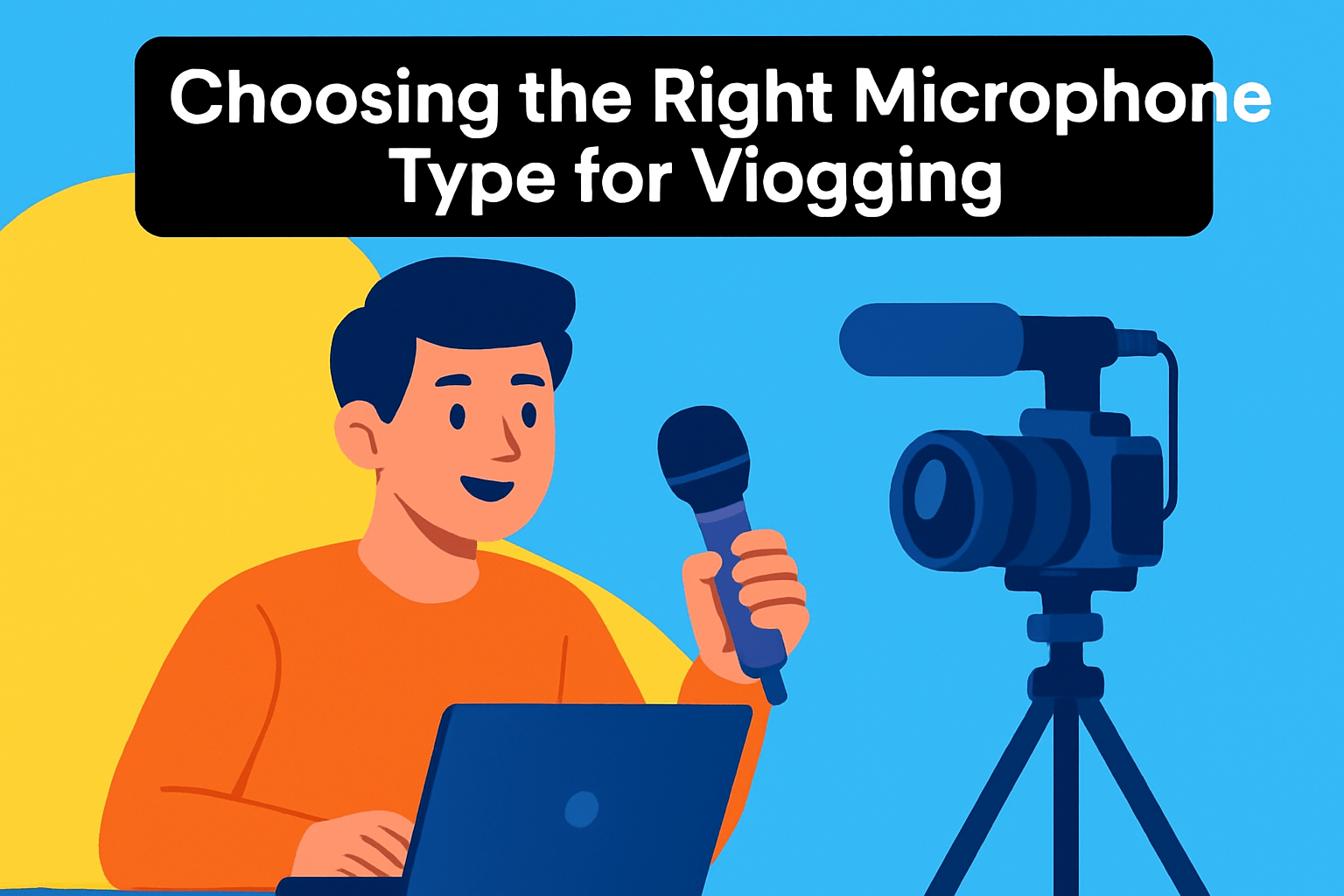
Choosing a mic isn’t just about specs — it’s about how you work. As a photographer who shoots run-and-gun vlogs, I pick gear that solves the real problems I face: wind, background noise, movement and limited time. Think of the mic as part of your kit, not an afterthought.
Shotgun mics are my go-to when I’m on a camera rig and need clean, directional sound. They reject side noise well and sit naturally on top of a camera. Use a good windshield and keep the mic aimed at the subject; if you’re moving a lot, pair it with a shock mount to avoid handling rumble.
Lavalier mics excel when hands-free and close-proximity voice capture matter. A clipped lav under a shirt gives consistent levels even if you wander. Be careful to avoid clothing rustle and test placement; wireless lavs add freedom but demand battery checks and occasional frequency-awareness in crowded RF environments.
Stereo or condenser mics aren’t for every vlog but they shine when you want atmosphere — ambient street sound, room tone or cinematic montages. They capture a sense of space that a single directional mic can’t, so I pull one out for establishing shots or sit-down pieces where nuance matters.
Wireless systems give clean visuals and mobility, which is excellent for interviews and multi-person shoots. Modern units are very reliable, yet I still carry spare batteries and enable onboard recording when available. That safety channel has saved me more than once.
USB mics are fantastic for voiceovers and desk work, but they’re not practical for field vlogging. If you record at home, go USB. If you’re out and about, choose a compact shotgun or wireless lav instead.
Ultimately match your mic to the scene. If you need rejection, pick a shotgun. If you need intimacy or multi-speaker setups, choose lavaliers. For atmosphere, bring a stereo condenser. And always monitor with headphones and bring a backup — good sound saves a shoot.
Wired vs Wireless Microphones for Vlogging
When I head out to shoot, the first question I ask is simple: will I be moving or staying put? That single choice usually decides whether I reach for a cable or a transmitter. Wired mics give you rock-solid reliability; wireless systems buy freedom and cleaner visuals.
Wired microphones are the go-to for any take where failure isn’t an option. They deliver consistent, low-latency sound without worrying about batteries or RF interference. For studio interviews, voiceovers, or any scene where you can control the environment, a good wired shotgun or lavalier will usually sound best and save you troubleshooting time on set.
Wireless setups are indispensable for run-and-gun vlogging and multi-person shoots. Modern digital systems can approach wired fidelity and add obvious benefits: no tangles, natural camera framing, and freedom to walk, demonstrate, or film active scenes. Bear in mind though, even the best systems can suffer dropouts or slight compression in busy RF environments, so don’t assume perfection.
Battery and backup strategy matters far more with wireless. Carry spare batteries or a charged case, and favor transmitters with onboard recording as a safety track. Real-world pros choose systems with monitoring options so you can confirm levels on location rather than discovering problems in the edit bay.
Often the smartest approach is a hybrid. I’ll mount a directional shotgun on the camera for general ambient and directional capture, and clip a wireless lavalier to the subject when movement or dialogue is critical. That combo gives you the reliability of a wired-like camera feed and the mobility of lavalier capture when you need it.
Before you roll, run a quick checklist: do a range test, listen on headphones, secure windscreens, and tidy cables or tape down loose transmitters. If you only ever film in controlled locations pick wired; if you’re a traveler, street vlogger, or active presenter, go wireless—but bring backups and test everything. That practical balance keeps your audio out of the “fix-it-in-post” zone and in the moment where it counts.
What People Ask Most
What is the best microphone for vlogging?
There is no one-size-fits-all best microphone for vlogging; the right choice depends on your shooting style and priorities. Pick the mic that balances sound clarity, mobility, and ease of use for your typical locations.
What type of microphone is best for vlogging?
The best type depends on your needs: lavaliers suit hands-free close-up voice capture, shotguns work well for directional on-camera pickup, and plug-and-play mics are convenient for quick setups. Match the mic type to how and where you film.
Do vloggers need an external microphone?
External microphones are recommended because they generally provide clearer voice capture and better background noise rejection than built-in mics. For casual clips a phone mic can be fine, but external mics improve overall production quality.
Are lavalier microphones good for vlogging?
Lavalier microphones are excellent for hands-free, close-proximity vocal capture and help keep audio consistent as you move. Wireless lavaliers add mobility while wired versions offer simplicity and reliability.
Is a shotgun microphone better for vlogging?
Shotgun microphones are better when you need focused, directional pickup and want to minimize background noise while filming. They work especially well for run-and-gun or on-camera setups where the subject stays in front of the mic.
Can I use my smartphone microphone for vlogging?
You can use a smartphone microphone for casual and spontaneous clips, but it will usually pick up more ambient noise and offer less control than an external mic. For more polished videos, adding an external microphone is advisable.
How do I choose the right microphone for vlogging?
Consider your shooting environment, whether you need mobility, how many people will be recorded, and how much post-production you plan to do. Use those priorities to narrow choices by mic type, ease of use, and budget.
Conclusion on the Best Vlogging Mics
This guide pulled together hands‑on impressions, clear pros and cons, and ideal use cases so you can weigh real-world trade‑offs when choosing a vlogging microphone in 2026.
Rather than chasing specs alone, focus on the practical factors we highlighted — mobility, environment and wind, how many speakers you’ll record, and whether you need directional or close‑mic capture.
With those considerations and the user feedback summarized here, you can pick a mic that fits your workflow and noticeably improves your on‑camera sound.
If you want to keep sharpening your audio and production skills, explore more articles on the site for guides, comparisons, and practical tips to level up your vlogging.
Have questions or want personalized advice? Leave a comment below and we usually reply within a few hours.




0 Comments