
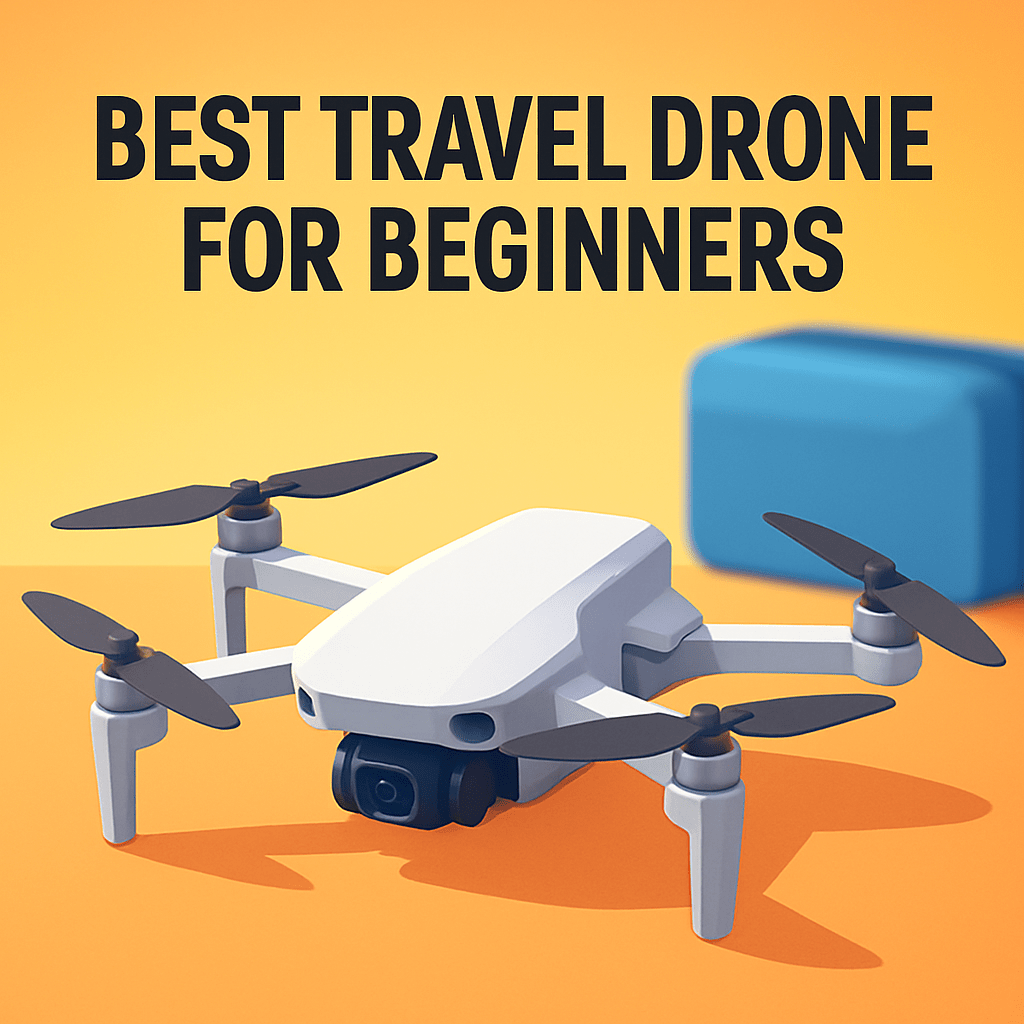
Want to make your next trip look like a cinematic postcard without hauling heavy gear or learning to fly like a pro?
Choosing the best travel drone for beginners can feel overwhelming. This guide narrows the field to five travel-friendly picks that prioritize portability, image quality, safety and ease of use.
Each selection comes with a short review, real-world pros and cons, and a clear look at key specs like battery life, size and weight. Expect candid takes on how these factors perform in real travel scenarios, not just lab numbers.
Some travelers want a pocketable companion; others need robust safety features or superior low-light performance. Read on for concise reviews and no-nonsense advice that steers you toward a travel-ready choice you’ll actually use. By the end, you should feel confident choosing the best travel drone for beginners and packing lighter for your next adventure.

DJI Mini 4 Pro Fly More Combo Plus with DJI RC 2, 4K drone, 3 Intelligent Flight Battery Plus
1. DJI Flip Overview
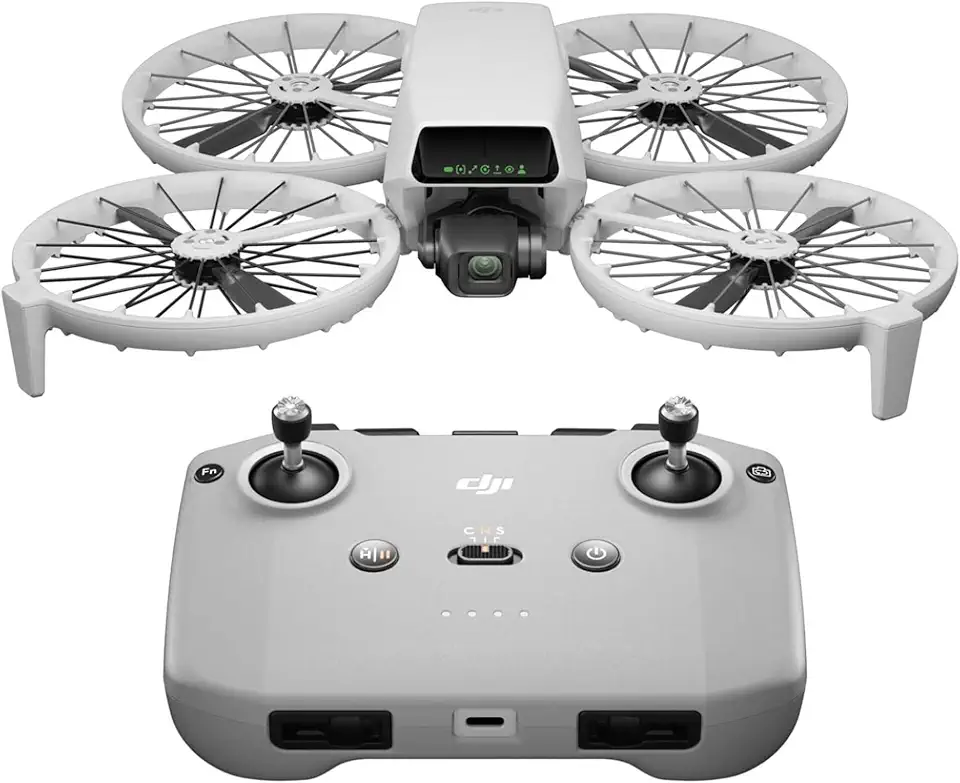
DJI Flip RC-N3 4K drone, 3-axis gimbal, under 249 g
Ultra-light 4K aerial camera with stabilized 3-axis gimbal for smooth footage and effortless portability under regulatory weight limits.
Check PriceThe DJI Flip is an ultra‑portable, foldable drone that literally disappears into a travel pack. It weighs less than 249 g and includes full propeller guards, so it fits many countries’ no‑license categories and feels safe in tight or indoor spaces.
Image quality punches above its size thanks to a 1/1.3″ CMOS sensor that shoots 48 MP photos and records 4K/60fps HDR video. You also get AI subject tracking and six intelligent shooting modes that make capturing polished clips fast and intuitive.
In practical use the prop guards are a real boon for beginners, protecting both the drone and whatever you’re flying around. Flight time is solid at about ≈ 30 minutes per battery, which is generous for such a small craft and lets you get meaningful footage without constant battery swaps.
As a working photographer I’d reach for the Flip on crowded streets, cramped interiors, or minimalist travel days when every gram counts. It’s not a wind‑fighter — the very light weight means it can struggle in breezy conditions — and it lacks active obstacle‑avoidance, so you still need cautious piloting indoors or around trees. Low‑light performance is also limited compared with larger‑sensor models, so plan shoots for golden hour or daytime when possible.
- Ultra‑portable, foldable design (<249 g)
- Propeller guards for safer indoor flying
- 1/1.3″ sensor with 48 MP photos and 4K/60fps HDR
- Battery life ≈ 30 minutes per battery
- Struggles in wind due to very light weight
- No active obstacle avoidance
2. DJI Mini 4 Pro Overview
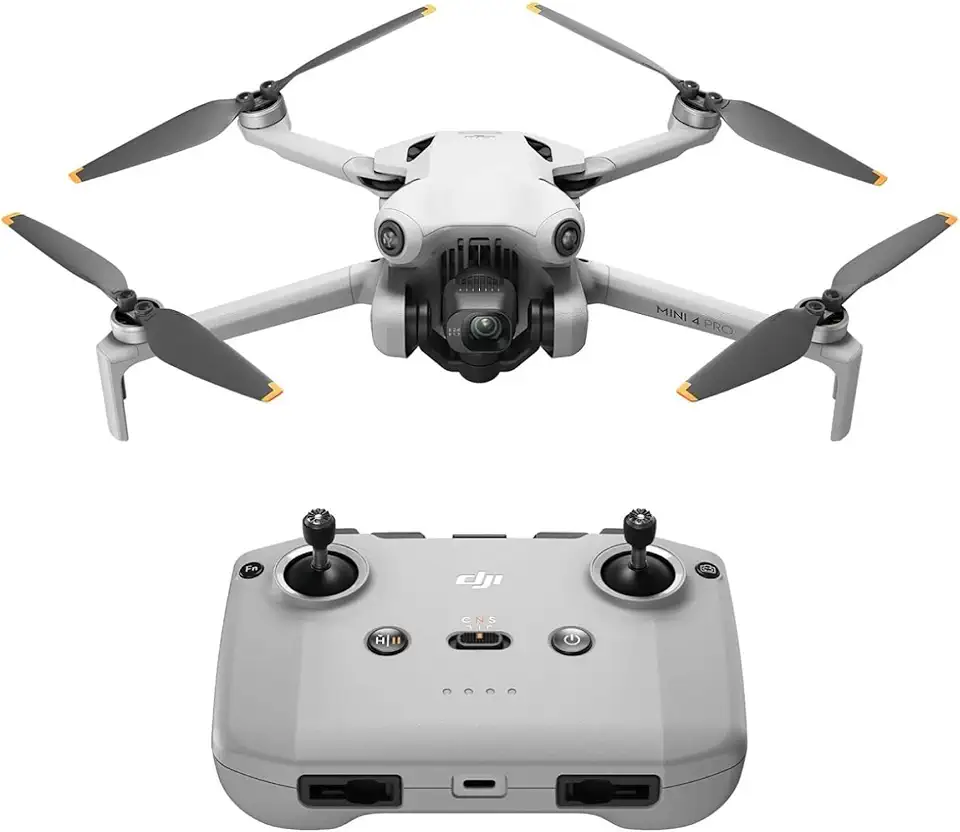
DJI Mini 4 Pro RC-N2 4K drone, 249 g, omnidirectional vision
Compact 4K performer offering advanced obstacle sensing and extended flight time for confident cinematic captures within recreational weight class.
Check PriceAs a travel drone that ticks nearly all the boxes for newcomers, the DJI Mini 4 Pro is often recommended as the definitive beginner choice. It weighs just under 249 g, which keeps it ultra-portable and helps avoid heavier regulatory burdens while still offering advanced capability.
Flight safety is a strong suit: the Mini 4 Pro includes 360° obstacle avoidance and delivers excellent flight stability, even in breezy conditions. That makes it forgiving for pilots still learning to read wind and handle moderate gusts.
Image and video are where this drone stands out for a beginner who cares about quality. A stabilized 3‑axis gimbal produces smooth 4K footage, the sensor and processing give improved low‑light performance, and the camera can rotate 90° for vertical shooting—great for social formats. It also records in D‑Log M, which is valuable if you want to color‑grade footage in post.
In real-world use the Mini 4 Pro feels like a long‑term tool rather than a toy: it’s easy to fly, the controls are approachable, and battery life plus quick charging keeps you shooting on the road. Be aware, though, it can be less handy in extremely windy conditions compared with heavier drones, and it comes at a higher price than entry‑level models.
Overall, if you’re a beginner who plans to travel light but wants professional-looking results and robust safety features, the DJI Mini 4 Pro is a very strong choice.
- Weighs just under 249 g
- 360° obstacle avoidance
- Stabilized 3‑axis gimbal with smooth 4K video
- Vertical shooting (rotates 90°) and D‑Log M
- Pricier than entry‑level models
- Less handy in extremely windy conditions versus heavier drones
3. Skydio 2+ Overview
DJI Mini 4 Pro Fly More Combo Plus with DJI RC 2, 4K drone, 3 Intelligent Flight Battery Plus
Complete kit with premium controller and three high-capacity batteries for extended 4K shooting sessions and hassle-free travel.
Check PriceThe Skydio 2+ is a beginner-friendly option when safety and autonomous flight matter most. As a photographer, I appreciate how it takes the pilot workload out of complex shots so you can focus on composition.
Its camera captures 12.3 MP photos and records 4K/60fps video, which is plenty for social, editorial, and many client uses. The footage is stable because the platform prioritizes reliable tracking over pushing megapixel counts.
Where this drone really shines is avoidance and tracking. It has a 360° collision‑avoidance system and very intuitive subject tracking, so it will follow athletes, vehicles, or wildlife without you micromanaging the sticks. In practice that means fewer ruined takes and more usable clips from active shoots.
At roughly ~775 g the Skydio 2+ is heavier than ultra‑compact travel drones. The added mass gives noticeably better stability in breezy conditions, but it makes the drone less pocketable and can change which regulations apply when you travel.
Range and endurance are solid for fieldwork: expect about ≈27 minutes of flight time and roughly a ~6 km control range in good conditions. For outdoors shoots, action sports or wildlife, that balance of autonomous smarts, decent range and near‑half‑hour endurance is very useful.
If your priority as a beginner is safe, confident autonomous tracking and collision avoidance, the Skydio 2+ is an excellent fit. If you need ultra‑light travel compactness or the highest megapixel counts, be aware of the tradeoffs.
- Industry‑leading 360° collision avoidance
- Effortless, reliable subject tracking
- Stable flight thanks to heavier ~775 g build
- 4K/60fps video and 12.3 MP stills
- Modest 12.3 MP stills compared with higher‑res options
- Heavier (~775 g) — less portable and affects regulations
4. Ryze Tello Overview
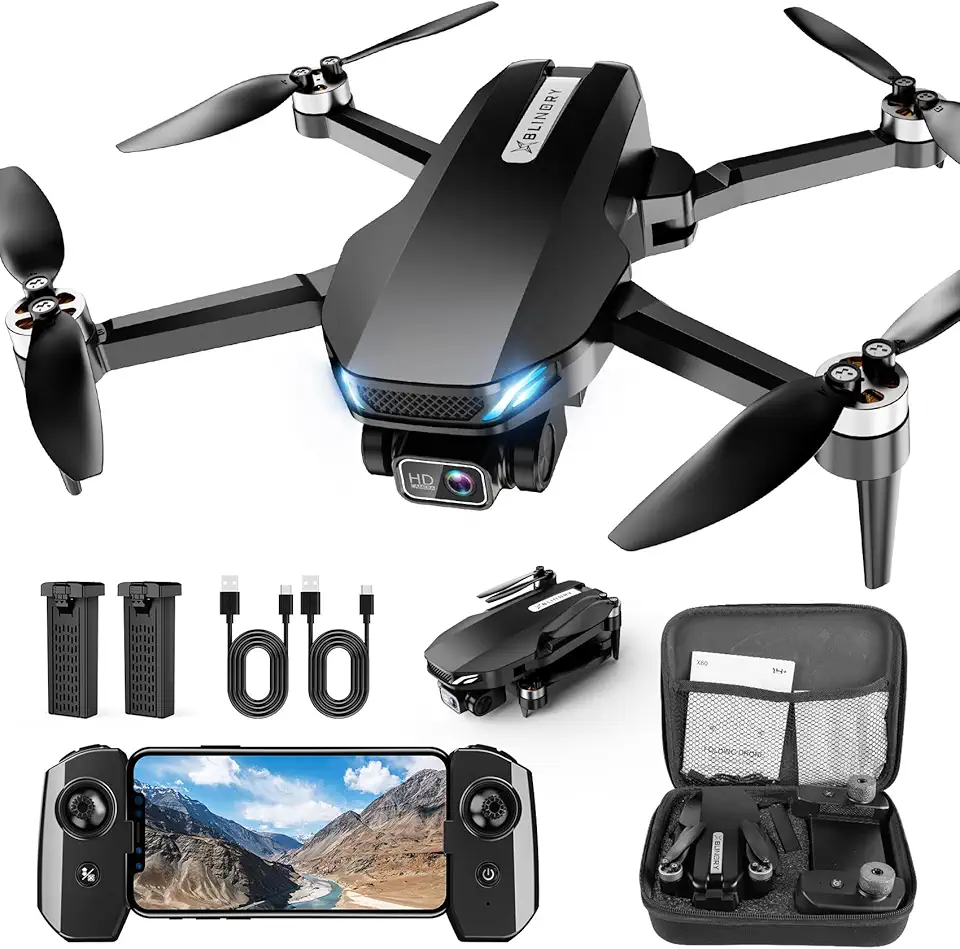
Foldable 2K HD FPV brushless drone with 2 batteries
Foldable FPV craft with brushless motors and dual batteries for longer flight, agile handling, and crisp 2K real-time video.
Check PriceThe Ryze Tello is a tiny, ultra‑affordable drone that’s perfect if your goal is to learn to fly and practice composition without breaking the bank. It has a basic camera — 5 MP photos and 720p video — so don’t expect magazine‑ready images, but it does let you experiment with framing, movement and quick aerial viewpoints.
From a pilot’s perspective the Tello is forgiving. Downward sensors help it hover steadily, and the control app is simple and responsive, so you’ll be spending more time shooting and less time wrestling the sticks. It also includes automated tricks that are fun for beginners and great for learning how motion translates into cinematic shots.
Battery life is short — about ≈ 13 minutes per charge — so plan short flights or bring multiple batteries if you want longer sessions. Likewise, its light weight and small size mean it fares poorly in wind; it’s best used indoors or outdoors only in calm weather.
Image quality is limited and compression is noticeable, so treat footage as social‑media content or practice material rather than high‑end deliverables. That said, for the price and portability, the Tello is a superb entry point: you learn piloting basics, safety awareness, and shot planning without risk to an expensive machine.
If you’re a hobbyist, parent buying a first drone for a kid, or a photographer wanting a no‑pressure way to try aerial framing, the Tello delivers real value. If you need stable, high‑resolution footage or plan to fly in breezy conditions, look elsewhere.
- Very easy to fly
- Affordable and highly portable
- Intuitive app control
- Durable for the price; great starter for kids/novices
- Low image/video quality with compression
- Poor wind resistance and short battery life (≈ 13 min)
5. Autel Evo Lite Plus Overview
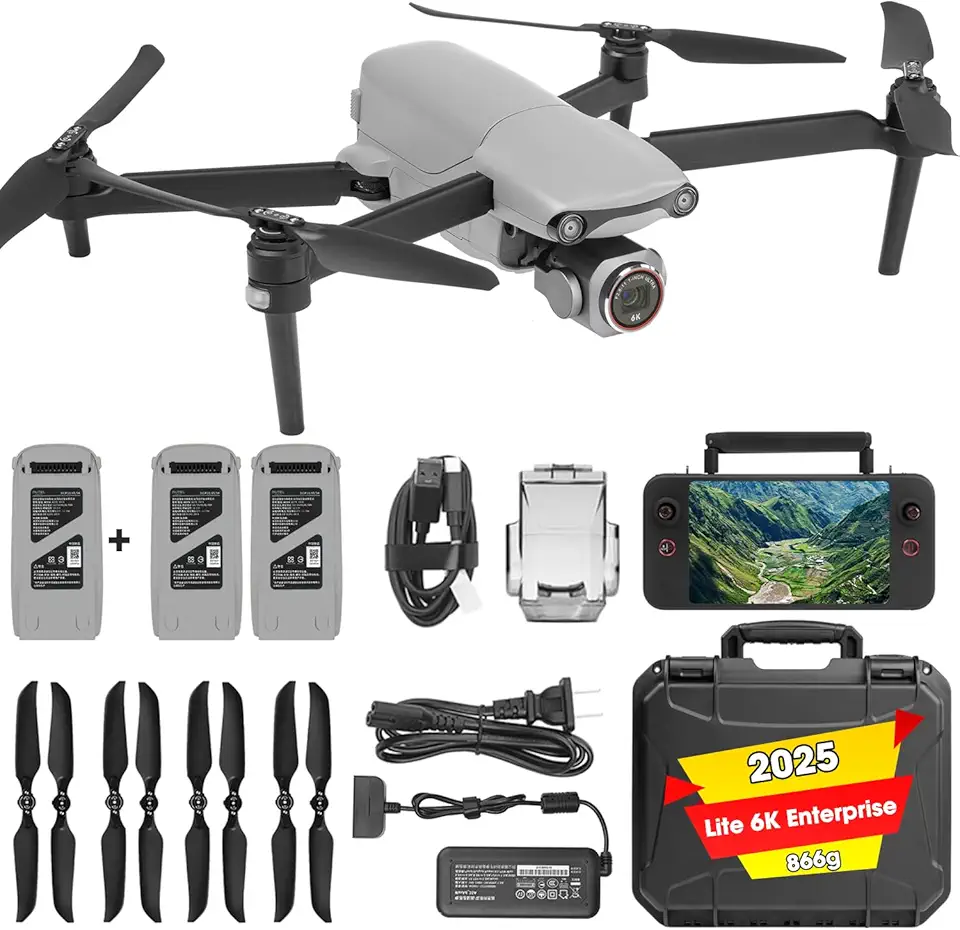
Autel Robotics EVO Lite 6K Enterprise 1-inch CMOS 6K drone with Autel Smart Controller SE V2
Professional-grade 6K imaging with large 1-inch sensor and rugged smart controller for enterprise inspections, surveying, and cinematic aerial mapping.
Check PriceAs a travel photographer I appreciate a drone that prioritizes image quality, and the Autel Evo Lite Plus does exactly that. It packs a 1-inch 6K sensor and shoots 20 MP photos, delivering noticeably cleaner files and better low‑light performance than toy‑class models. The color science is strong too — vivid reds and natural tones that cut down time in post.
It’s a mid‑tier, beginner‑friendly craft that feels more robust than ultra‑light hobby drones, so it handles moderate wind better during outdoor shoots. Video stabilization is solid, which means smoother footage straight out of the camera when you’re walking or shooting handheld‑style motion. Because it’s built for travel and exploration, the build and controls are tuned for real‑world use rather than gimmicks.
That said, the Evo Lite Plus leans toward a more serious beginner — it’s a good step‑up for photographers who want higher‑end imaging and are willing to invest. You also get a few niceties like a variety of body colors, which is a small perk if you care about gear aesthetics. Be aware, however, that some users find the flight controls a bit stiffer at first, so there’s a small learning curve.
In short, if your priority is image quality and you plan to grow into drone photography, the Autel Evo Lite Plus is mostly a great fit. If you want absolute plug‑and‑play simplicity or the cheapest option for casual fun, this model may feel like overkill both in price and software polish. For focused travel photography, though, it’s hard to beat the sensor and stabilization combination.
- 1-inch 6K sensor; 20 MP photos
- Strong video stabilization
- Performs well in moderate wind
- Great step-up option; variety of body colors
- Stiffer flight controls for some users
- Firmware/software support less polished; can be expensive for casual users
Battery Life Overview
Battery life for travel drones isn’t just a spec to glance at — it shapes how you plan a shoot. As a photographer, I treat flight time like film stock: know how much you have, and plan shots around it. For beginner-friendly minis, a single battery often delivers roughly 20–30 minutes of usable flight; toy-class models can be much shorter.
To put numbers on it, tiny training drones like the Ryze Tello only manage around 13 minutes per charge, while more capable travel options sit in the high‑20s to low‑30s per battery — the Skydio 2+ is about 27 minutes and some ultra‑light models like the DJI Flip roughly 30. Battery capacity (mAh) helps explain that: something like the Mini 3’s 2250 mAh translates to >30 minutes in calm testing.
Real world flight time will always be lower than bench numbers. Wind, cold temperatures, aggressive gimbal/rotor work, and extra payload all shorten endurance. Very light drones suffer most in breeze, so a 30‑minute spec can drop quickly on a windy coastline.
Bring spares and a charging plan. For most days I carry two spare batteries (three total) or a multi‑battery charger when space allows. That gives you flexibility for golden‑hour runs without hustling to recharge between passes. A quality power bank and a car adapter are travel essentials if you’re remote.
Small habits extend flight time: store batteries at moderate temperature, avoid full‑throttle climbs unless needed, update firmware for smart battery management, and replace worn props. Let batteries cool between flights and don’t try to squeeze every last percent out when conditions are sketchy.
If portability is your priority, accept shorter single‑battery time but pack compact spares. If long continuous flight matters for tracking or surveying, lean toward heavier models or those with detachable batteries and solid smart management. Planning beats panic — know the realistic minutes you’ll get and build a simple battery routine before takeoff.
Size and Weight Overview
Size and weight are the first things I check before dumping a drone into my travel kit. For a photographer on the move, a drone’s dimensions decide whether it slips into a daypack or needs its own carry case, and its weight often determines what regulatory hoops you’ll face when crossing borders.
Many travel-friendly models sit under the 250 g threshold, which is a real advantage for casual travel — lighter drones are easier to carry and usually exempt from stricter registration rules in many countries. Compact foldable frames that measure under about 30 cm across pack neatly alongside lenses and a mirrorless body, keeping your camera gear cohesive and mobile.
But there’s a tradeoff: very light drones sacrifice stability and payload. In windy, coastal, or high‑altitude locations you’ll notice a flutter or shortened flight time. Heavier, mid‑size drones give you steadier gimbal performance, longer airtime and the ability to handle more advanced cameras, but they take up space and can trigger more regulations.
Think about where you’ll fly. If your trips are beachy, breezy, or mountain‑based, prioritize stability over pocketability. If you mostly need quick scouting shots in cities and want something you can toss in a daypack, a sub‑250 g, foldable model will save you hassles. Either way, pack two batteries — the added minutes of shooting are worth the tiny extra weight.
Also plan for protection and real‑world weighing: always factor in prop guards, batteries and the case when you calculate carry weight, and use a compact hard case to prevent crushed props in transit. Finally, balance your priorities: if your primary goal is effortless travel, choose the smallest practical drone; if image quality and reliable flight are paramount, accept a bit more bulk for better results.
What People Ask Most
What is the best travel drone for beginners?
There is no single best option; the right drone depends on priorities like portability, image quality, safety, and budget. Choose the model that balances those priorities for your intended use.
What features should a travel drone for beginners have?
Ideal features include a lightweight, compact design, good flight stability, and safety measures such as obstacle sensing or protective guards. Also look for camera stabilization, simple controls, and reliable battery management.
Are foldable drones better for travel beginners?
Foldable drones improve compactness and packability and can be easier to carry while traveling. Keep in mind that very lightweight foldables may be less stable in wind and sometimes lack active obstacle avoidance.
What size and weight are ideal for a travel drone?
Many beginner travel drones aim to stay under weight thresholds that simplify travel and regulatory requirements, favoring compact minis for portability. Heavier models generally offer greater stability and payload at the cost of bulk.
How easy is it to learn to fly a travel drone as a beginner?
Beginner-focused models are typically easy to learn, offering intuitive controls, responsive apps, and automated flight modes to assist new pilots. Protective hardware and autonomous features can further reduce the skill needed to capture good footage.
Do beginner travel drones come with GPS and safety features?
Many entry-level travel drones include safety features such as obstacle avoidance, propeller guards, downward sensors for stable hovering, and smart battery management. GPS and specific features vary by model, so check individual specifications before buying.
What camera specifications should beginners look for in a travel drone?
Prioritize sensor size and stabilization for better image quality and improved low‑light performance, along with adequate photo resolution and stable video. Additional useful features include vertical shooting modes and log profiles for more flexible post‑processing.
Conclusion for Beginner Travel Drones
In short, the right travel drone for a beginner depends on what you value most: extreme portability and in‑flight safety, a balanced all‑rounder with strong stability, top‑tier autonomous tracking, an inexpensive practice model, or a step up for image quality.
Weigh size and weight against flight stability, safety features and how you plan to use it on the road, then pick the model that best matches your travel style and learning goals.
If you want to build skills and confidence quickly, keep exploring our site for more guides and practical tips that help you get better results with the gear you choose.
Have questions or already narrowed your choice? Leave a comment below and tell us which drone you’re leaning toward — we usually reply within a few hours to help you decide.



0 Comments