
Ever wondered why a tripod can make or break a portrait session? A tripod controls framing, sharpness, and the chemistry you build with subjects by freeing your hands and stabilizing compositions under studio lights or in uneven outdoor light. This guide compares five tripods selected for portrait photography and cuts through marketing copy to reveal how they actually perform when you need steady support, flexible height options, and quick setup between frames.
We concentrate on real-world impressions, essential specifications, clear pros and cons, and practical buying guidance so you can match a tripod to your workflow rather than a marketing blurb. From studio portraits that demand rock-solid steadiness to on-location shoots where compactness and quick deployment matter, these factors shape which model feels right in your hands. You’ll read candid notes on handling under changing light, setup speed between poses, and how each design copes with heavy glass, low angles, or windy conditions.
Along the way we’ll weigh tradeoffs between portability and rigidity, and offer practical tips for choosing the right height and load capacity to suit your camera and lenses. By the time you finish this piece you’ll have a clear sense of which tripod archetype fits your budget, shooting environment, and portrait style. Expect a concise roadmap that helps you stop guessing and start creating more flattering, sharper, and consistently framed portraits.

Manfrotto MT055CXPRO4 Carbon Fiber 4-Section Tripod with Horizontal Column

Vanguard Alta Pro 2+ 263CB 100 Carbon Fiber Tripod with BH-100 Ball Head and Multi-Angle Center Column
1. Gitzo GT3543XLSUS Systematic Tripod

Gitzo GT3543XLSUS Series 5 Systematic Tripod
Ultra-rigid, professional-grade support for heavy telephoto lenses; unparalleled stability, precision, and durability for demanding outdoor and studio shoots.
Check PriceWhen I need absolute stability for portrait work, the Gitzo GT3543XLSUS Systematic feels like bringing a rock to a photoshoot. Its carbon fiber construction and four-section legs with twist locks give it a rigid platform that hardly budges under pressure.
What stands out is the payload capacity: up to 61.7 lbs (28 kg), which means you can mount very heavy camera bodies and long lenses without worrying about flex. The tripod’s lack of a center column further improves stability and makes low-level and macro portrait setups far more reliable.
Maximum height reaches 79.5 inches, so eye-level portrait framing is easy without extending anything that compromises steadiness. At roughly 5.1 lbs it’s lighter than many heavy-duty aluminum options, yet the Systematic design prioritizes durability and rugged feet that grip varied terrain well.
For studio pros and outdoor portrait shooters who use substantial rigs, the modular Systematic range is a huge plus — you can add accessories or swap components as your kit evolves. The trade-offs are real: it folds relatively long, so it’s not the best choice for ultra-compact travel, and it sits at a premium price point that some photographers will find hard to justify.
- Payload up to 61.7 lbs (28 kg)
- Maximum height 79.5 inches
- Carbon fiber rigidity with twist-lock 4-section legs
- No center column — exceptional stability
- Relatively long when folded
- Considered expensive
2. Manfrotto MT055CXPRO4 Tripod
Manfrotto MT055CXPRO4 Carbon Fiber 4-Section Tripod with Horizontal Column
Versatile, lightweight carbon fiber legs with convertible center column for low-angle and horizontal shooting; quick adjustments for field and studio work.
Check PriceThe Manfrotto MT055CXPRO4 is a tripod I reach for when I need versatility and rock-solid support in portrait work. Its carbon fiber legs keep weight down to ≈4.6 lbs while offering the rigidity needed for heavier DSLRs, so you get stability without hauling an unwieldy stand. The folded length of ≈21.3 inches makes it compact enough for most studio-to-location shifts, though it’s not a lightweight travel companion.
What sets this tripod apart for portraiture is the Q90 center column that rotates 90°, turning the column horizontal for clean overhead shots and creative framing. That feature, combined with a minimum height of 3.5 inches, makes it excellent for low-angle portraits and macro-style takes without resorting to awkward body positions. You also get a 360° bull’s eye bubble level for quick, precise leveling—handy when you’re composing group portraits or ensuring consistent framing across a session.
In practical use it feels durable and well-built; I’ve used it indoors and outdoors and it handles heavier camera setups with confidence. The rotating center column is intuitive and opens creative possibilities, but bear in mind that this design and the robust build make the tripod slightly heavier and bulkier than travel-focused models. Folding and setup are straightforward but not as fast as ultralight travel tripods, so it’s best when stability and versatility matter more than speed.
- Q90 center column rotates 90° for overhead/creative angles
- Minimum height 3.5 inches — great for low-angle/macro work
- Solid carbon-fiber build; stable for heavier DSLRs
- Folded length ≈21.3 in, weight ≈4.6 lbs — reasonably portable
- Slightly heavier and bulkier than travel tripods
- Setup and folding slower compared to travel-focused models
3. Peak Design Carbon Fiber Travel Tripod
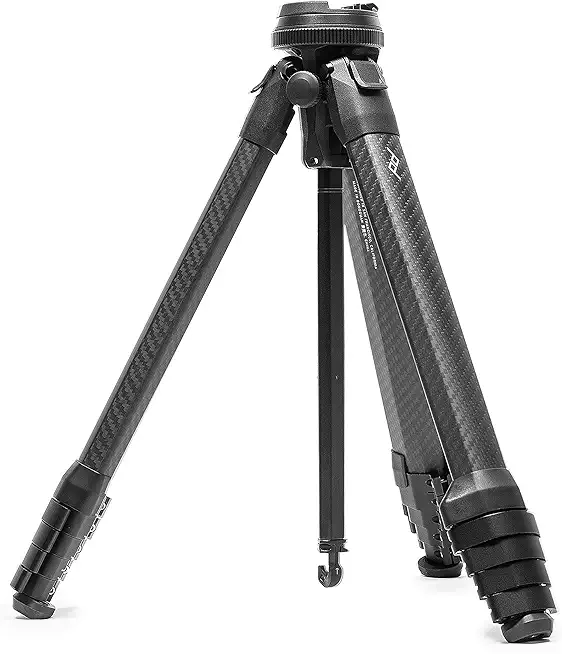
Peak Design Travel Tripod Carbon Fiber with Ball Head 20 lb capacity
Ultra-compact, packable tripod delivering exceptional strength for travelers; smooth ball-head performance supports cameras up to 20 pounds confidently.
Check PriceAs a travel-focused tripod, the Peak Design Carbon Fiber Travel Tripod blends real portability with usable height. It’s built from carbon fiber and uses 5 leg sections, folding down to just 15.5 inches while extending to 60 inches—handy when you need eye-level portraits without lugging heavy gear.
Weighing only ≈2.8 lbs, it’s one of those pieces of kit you barely notice until you need it. The maximum load capacity is 20 lbs, so it comfortably supports mirrorless systems and many DSLRs with standard portrait lenses.
Peak Design ships this tripod with an integrated ball head and a built-in smartphone mount. That makes it a great choice for hybrid shooters who switch between a mirrorless body and a phone for behind-the-scenes or client reference shots. The leg deployment is quick and intuitive, so you can change composition fast during a session.
Be mindful that stability does drop when the tripod is fully extended or carrying heavier loads. Also, leg angle options are limited to two, which restricts very low-angle portrait work or more creative low perspectives. Still, for on-location portrait shoots where travel weight and compactness matter, this tripod is mostly a win.
- Folded length 15.5 inches — ultra-compact for travel
- Weight ≈2.8 lbs — easy to carry all day
- Max load 20 lbs — supports mirrorless and many DSLRs
- Includes ball head and built-in smartphone mount — great for hybrid workflows
- Less stable when fully extended or heavily loaded
- Only two leg angle options — limits very low shots
4. Vanguard Alta Pro 2+ 263CB 100
Vanguard Alta Pro 2+ 263CB 100 Carbon Fiber Tripod with BH-100 Ball Head and Multi-Angle Center Column
Flexible multi-angle center column and precise ball head enable creative compositions; durable carbon fiber construction for steady shots in varied conditions.
Check PriceThe Vanguard Alta Pro 2+ 263CB 100 is a carbon fiber tripod that feels like a practical studio partner and a lightweight travel companion. Its adjustable center column can angle, which opens up creative portrait framing without contorting your camera setup.
Legs that open to three different angles give you real flexibility for low-angle portraits and uneven ground. In practice I use the wider leg spread for seated subjects and the higher settings for standing shots, and it holds position reliably for composed portraits.
With a max load capacity around 15–20 lbs it handles most DSLR bodies with mid-size lenses comfortably. It’s stable enough for routine portrait work, though I’d avoid pushing very heavy telephotos at full extension.
Setup is straightforward and fast, and the retractable spiked feet make a tangible difference outdoors, gripping soft or uneven terrain so you don’t waste time fussing with stability. Overall it’s lightweight enough to travel with yet sturdy enough for studio days, so it’s a solid choice if you shoot portraits both on location and in controlled environments.
- Angling center column for creative framing
- Supports ~15–20 lbs
- Legs open to three different angles
- Retractable spiked feet for grip
- Less stable with very heavy gear when fully extended
- Center column attachment slower to adjust on the fly
5. Really Right Stuff TVC-34L Series 3 Mk2 Versa Apex

Really Right Stuff TVC-34-MK2-S3 SOAR Series 3 Carbon Fiber Tripod
Precision-engineered, rock-solid support offering exceptional vibration damping and refined controls for professional photographers demanding ultimate stability.
Check PriceThe Really Right Stuff TVC-34L Series 3 Mk2 Versa Apex is a proper workhorse for portrait photographers who demand unshakeable stability. With a maximum working height up to 72 inches it reaches eye level for most shooters without relying on a center column, which makes composition and tethered shoots easier and steadier.
Its payload capacity is described as suited for heavy DSLRs and telephoto lenses, so you can confidently mount large camera bodies and long lenses for environmental portraits or studio setups. The tripod’s modular design with swappable feet and fully serviceable construction means you can customize it for rock, snow, or studio floors and keep it running for years.
In the field it’s praised for exceptional performance in cold, wet, and rugged environments — it simply won’t balk when conditions get tough. It’s quick to deploy and disassemble, so you won’t waste time between setups, and owners report longevity of 10+ years with routine maintenance, which makes it an investment piece rather than a disposable tool.
If you’re a professional using heavy rigs who prioritizes maximum stability over ultra-light travel weight, this is an excellent choice. Be honest though: it’s very heavy compared to travel tripods and comes with a premium price, so it’s less suited to shooters who hike long distances or need a lightweight carry option.
- Best-in-class stability and ruggedness
- Maximum working height: 72 inches
- Modular, swappable feet; fully serviceable
- Reported longevity: 10+ years
- Very heavy compared to travel tripods
- Premium price limits accessibility
Find Your Ideal Tripod Height
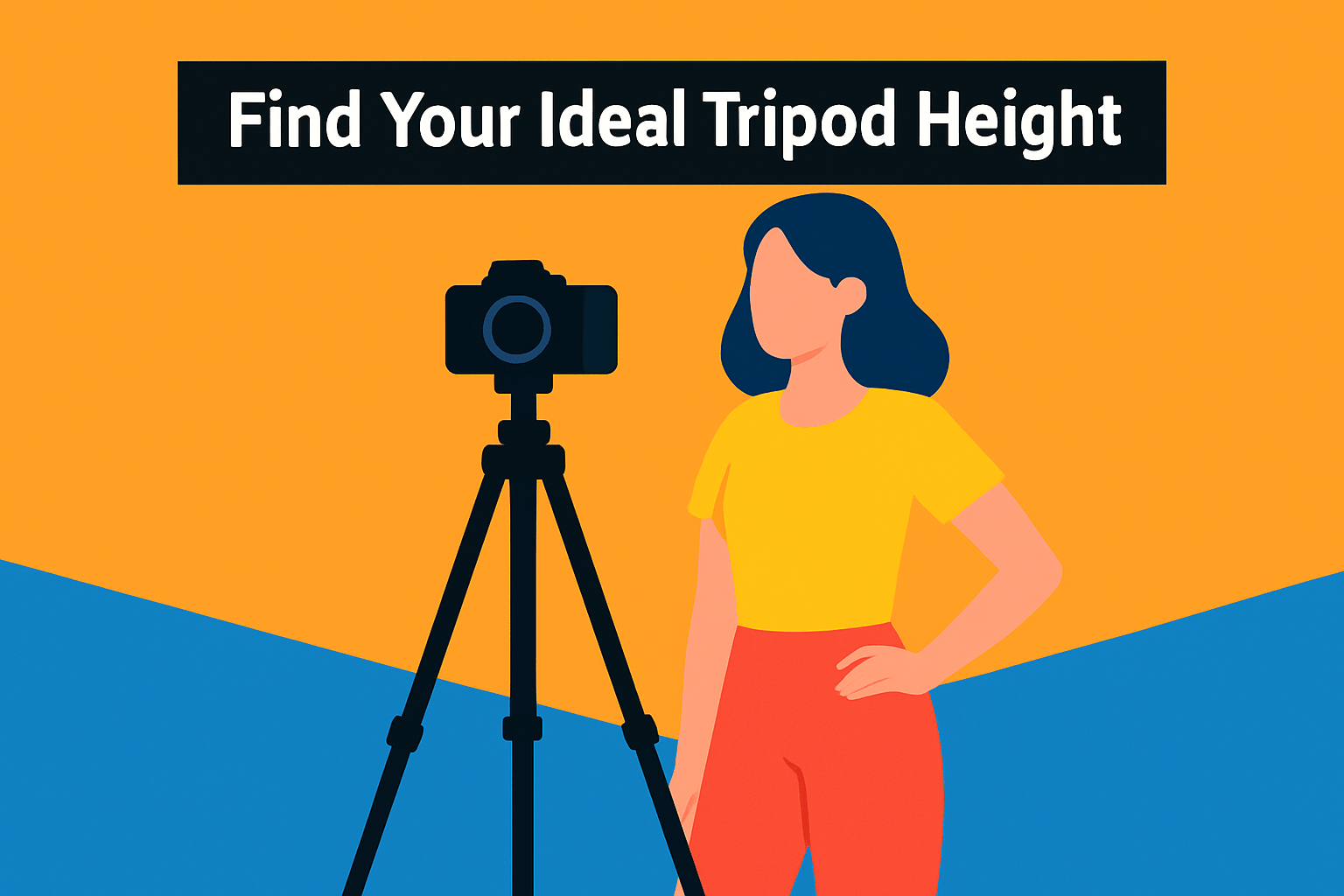
Think of tripod height as the foundation of your portrait. If the legs put the camera roughly at your eye level, composing and directing subjects becomes effortless and the resulting perspective feels natural and flattering.
A simple formula helps remove guesswork: tripod leg height = your eye level − camera viewfinder height − tripod head height. For example, if your eye level is 160 cm, your camera’s viewfinder sits 10 cm below the lens center, and your ball head is 8 cm tall, aim for tripod legs that reach about 142 cm.
Always measure with the camera and head you actually use. Tripod specs that advertise “maximum height” often include the center column. For stability, prefer a tripod that reaches eye level on the legs alone so you don’t need to crank the center column up.
If you shoot a lot outdoors, add a few centimeters to your target height. Uneven ground and wearing boots or layers can change your working eye level, and having a little extra reach keeps the legs spread at more stable angles.
Portraits don’t always need to be shot from eye height. Slightly higher camera positions slim faces and emphasize the eyes, while lower angles lend power or drama. Choose a tripod that lets you easily lower the camera close to the ground for sitter-eye-level with seated subjects or for creative low-angle shots.
Before you buy, test the tripod with your heaviest kit. Extend the legs to the height you’ll use most, lock them, mount your camera, and see if there’s any sway. Comfort, confidence, and stability at your working height always beat theoretical max specs.
Factors When Choosing a Tripod
When I pick a tripod for portrait work I start with stability and load capacity. Match the tripod to the combined weight of your camera, lens, and any accessories; if you’re using a heavy telephoto or a battery grip, err on the side of extra capacity. A stiff set of legs will deliver crisper images and fewer surprises during long exposures or windy on-location shoots.
Height matters more than people realise—aim to reach eye level with the legs alone so you’re not relying on an extended center column. Center columns are handy for odd angles, but they compromise stability and precision. If you frequently shoot standing portraits, choose a tripod that gets you to viewfinder height without extensions.
Portability is a constant compromise. For travel and run-and-gun portrait sessions I favour carbon fiber models with fewer sections for quick deployment and lighter packs. For studio or heavy-lens setups, a beefier tripod with fewer height compromises wins every time, even if it weighs more.
Leg design and angle options are practical features you’ll use daily. Tripods with multiple leg-angle stops or low-angle capability let you shoot intimate, floor-level portraits without awkward contortions. Retractable spikes and sturdy rubber feet make the difference when moving between grass, gravel, and polished studio floors.
Think head first: ball heads give speed and versatility for most portraits, while geared heads offer micro-adjustments when composition must be exact. Ensure the head’s footprint and height fit into your calculated working height so you don’t lose reach.
Material and lock type influence handling more than spec sheets show. Carbon fibre reduces vibration and shoulder burden, while aluminium can be budget-friendly but heavier. Twist locks are compact and weather-friendly, whereas lever locks are faster to operate—consider gloves and cold-weather shooting when choosing.
Finally, test a tripod with your actual camera kit before buying. Real-world feel—how quickly it deploys, how solid it feels at eye level, and how it behaves on uneven ground—will tell you more than any spec. The right tripod disappears into your workflow and makes creating portraits effortless.
What People Ask Most
What tripod height is best for portrait photography?
A tripod height that brings the camera to your eye level when standing produces natural, flattering portraits. Adjust higher or lower only for creative perspectives.
Should I avoid using the center column for portraits?
Avoid relying on an extended center column when possible because it reduces stability. Use leg height for primary support and reserve the center column for fine adjustments or special angles.
Do I need a tripod with a high payload capacity for portrait work?
Match the tripod’s load capacity to your camera and heaviest lens to ensure stability. A higher capacity gives more margin for heavier setups and accessories without risking flex.
Is carbon fiber worth the extra cost for portrait tripods?
Carbon fiber is lighter and tends to damp vibrations better than some other materials, which helps for travel and long shoots. Whether it’s worth the extra cost depends on your budget and how often you carry gear.
Can travel tripods like the Peak Design support DSLR portrait sessions?
Many travel tripods can support mirrorless and DSLR systems for portrait sessions when not heavily loaded. Consider stability at full extension and your typical lens weight to decide suitability.
Which tripod head is better for portraits: ball head or geared head?
Ball heads offer quick, versatile adjustments while geared heads provide precise, incremental control for composing. Choose based on whether speed or fine-tuned framing matters more to your workflow.
How do leg locks and leg-angle options affect outdoor portrait shooting?
Leg lock type affects setup speed and handling in different conditions, and adjustable leg angles let you reach low positions or work on uneven ground. Pick locks and angle options that match your shooting pace and typical terrain.
Conclusion For Portrait Photography Tripods
In short, the best portrait tripod for you balances rock‑solid stability and adequate payload with a height range that reaches eye level on the legs while fitting your portability needs and shooting environment.
Use the pros/cons and factors checklist from this guide to match a tripod to your camera, preferred framing, and on‑location demands, and test setups in realistic conditions before committing.
As a practical rule, favor leg height over extended center columns for steadier portraits, and consider leg‑lock type, head compatibility, and spiked feet or grip options for the terrain you shoot most.
If you want to keep improving your portrait workflow and gear choices, explore more articles on our site to deepen your technique and decision making at your own pace.
Have questions or experiences to share? Leave a comment below and we’ll usually reply within a few hours.


0 Comments