

Want to know if the Canon EOS 7D Mark II Camera will actually raise your hit rate on fast-moving subjects?
This review is aimed at working photographers who shoot action, wildlife, and events and need speed, reliability, and a rugged body that won’t quit mid-shoot.
We’re judging it on responsiveness, the optical viewfinder shooting experience, durability in real-world conditions, and usable image quality across the ISO range — plus how it plays with Canon’s EF/EF‑S lenses. I took one into the field to see how it holds up.
I’ll walk through autofocus, burst performance, handling, battery life, and practical video use, then compare it to a few rivals. Make sure to read the entire review as I put it through field tests and head‑to‑head comparisons — keep reading.
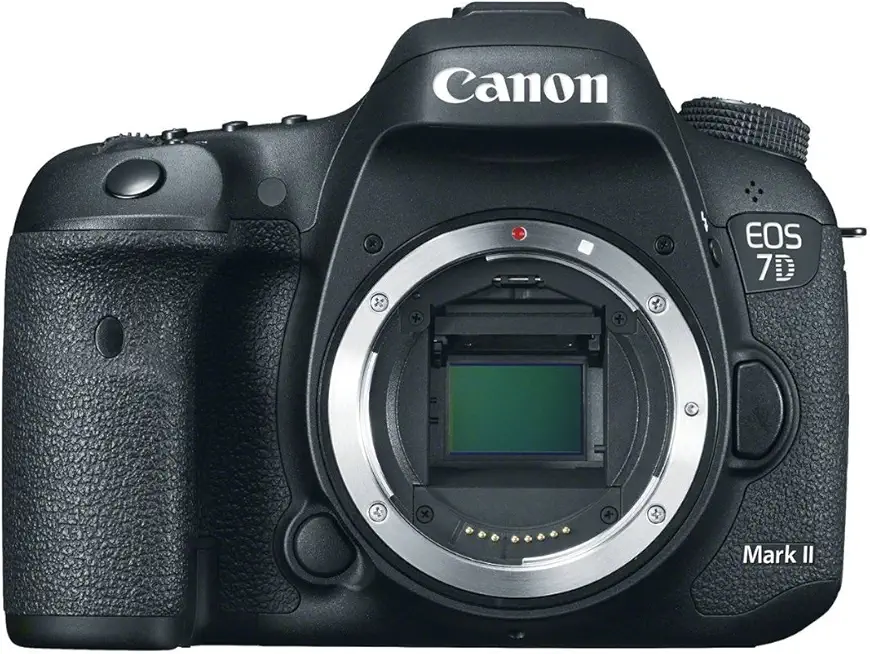
Canon EOS 7D Mark II Camera
Professional-grade APS-C DSLR delivering fast 10 fps continuous shooting, advanced autofocus and durable weather-sealed body. Optimized for sports and wildlife photography with dual memory card slots and robust handling.
Check PriceThe Numbers You Need
| Spec | Value |
|---|---|
| Sensor | 20.2 MP APS-C CMOS |
| Continuous shooting speed | 10 fps |
| Autofocus system | 65-point all cross-type AF |
| Processor | Dual DIGIC 6 |
| ISO range | 100–16,000 (expandable to 51,200) |
| Viewfinder | Optical pentaprism with approx. 100% coverage |
| LCD screen | 3.0-inch, 1,040,000-dot fixed rear screen |
| Lens mount | Canon EF/EF-S |
| Video recording | 1080p Full HD at 60 fps |
| Shutter speed range | 1/8000 to 30 seconds |
| Body material | Magnesium alloy, weather-sealed |
| Built-in flash | Yes, with external flash support |
| Storage media | Dual card slots (CF and SD) |
| Weight (body only) | Approx. 910 grams |
| Battery life | Approx. 670 shots per charge (CIPA standard) |
How It’s Built
In my testing the Canon EOS 7D Mark II feels like a tool built to be used hard. The metal body and weather sealing meant I could shoot through dust and light rain without worrying about the camera failing. That durability matters when you’re out all day chasing birds or covering an event.
Handling is firm and thought-out, with a grip that lets you hang on to large telephotos without fighting the camera. It is on the heavier side, so you will notice it on long handheld shoots or when hiking all day. For beginners that weight actually helps steady shots, but pack wisely for long treks.
The optical viewfinder is a joy for tracking fast subjects — what you see is what you get, with no lag. The fixed rear screen is bright and sharp, but not tilting, so low or high angle shots take more effort. In my testing I missed the flexibility a tilting screen gives for quick ground-level or above-crowd framing.
I liked the dual card slots for saving work safely and keeping RAWs separate from JPEGs; it’s a simple workflow win for pro shoots. The built-in flash works for fill and remote triggering, though it’s not much help when you’re pushed back behind a long lens. For Canon shooters the familiar lens mount meant my existing glass fit right away.
In Your Hands
Out on the sideline or tucked into a blind, the Canon EOS 7D Mark II Camera feels purpose-built for fast, unpredictable subjects, delivering a burst cadence that helps you catch decisive frames. Its optical viewfinder keeps the action immediate and framing intuitive, so tracking becomes more instinct than calculation. That visceral OVF experience makes long shoots less fatiguing and more satisfying.
Twin processors keep menus, autofocus, and image writes moving without hiccups, so you spend more time composing and less time waiting for the camera to catch up. Write times stay sensible even during sustained bursts, meaning sequences are far more likely to survive to your card. The responsiveness improves confidence when panning or following erratic movement.
The shutter mechanism is confidence-inspiring and geared toward hard use, freezing peak motion cleanly while still offering the flexibility to handle bright daylight with fast glass and longer creative exposures. It tolerates the rhythms of professional shooting without feeling fragile. Mechanically, it behaves like a tool designed for repeatable performance.
Battery endurance is a standout in the field, letting you work through long assignments with fewer swaps and less interruption. Dual card slots make on-the-fly workflow choices and redundancy simple, which is a real advantage when every frame counts. Together these traits keep you shooting rather than babysitting gear.
Video capability is practical for event highlights and behind-the-scenes clips but isn’t aimed at high-end 4K productions; it’s a solid supplement rather than the primary draw. In real-world sports, wildlife, and motorsports work the 7D Mark II’s OVF clarity, steady tracking, and rugged build make it a dependable, no-nonsense performer.
The Good and Bad
- 10 fps continuous shooting for action coverage.
- 65-point all cross-type AF for confident subject acquisition and tracking.
- Magnesium alloy, weather-sealed body for demanding environments.
- Optical pentaprism with approx. 100% coverage for precise framing and lag-free tracking.
- Fixed rear LCD limits flexibility for low/high angles.
- Video limited to 1080p (no 4K) for hybrid creators.
Ideal Buyer
The Canon EOS 7D Mark II is aimed squarely at shooters who live for decisive, fast-moving moments. If you chase sports, birds in flight, or high-energy events, its 10 fps burst rate and 65-point all cross-type AF deliver the kind of stickiness and timing that make or break a frame. The optical viewfinder experience feels intentionally old-school — lag-free, immediate and built for tracking erratic subjects.
It’s also a field camera: magnesium-alloy sealing, dual card slots and roughly 670-shot battery life mean you can work long days in tough weather without constant kit swaps. Existing Canon EF/EF-S owners will appreciate seamless lens compatibility and pro-style controls that keep you shooting, not menu-diving. For photographers who prioritize reliability, rugged balance with long telephotos and predictable performance, the 7D II earns its keep.
That said, if your work leans heavily into 4K video, ultra-high-resolution cropping, or you crave a lighter body with a tilting screen, there are more modern choices. Hybrid creators, travel shooters and print-focused photographers may find better fit elsewhere. But for anyone putting action, durability and OVF tracking at the top of their checklist, the 7D Mark II remains a compelling, purpose-built tool.
Better Alternatives?
We’ve gone through what makes the Canon EOS 7D Mark II a go-to for action, wildlife and event shooters: the fast 10 fps bursts, the tough weather-sealed body and the dependable optical viewfinder tracking. That camera is built around fast, repeatable OVF shooting and long days in the field, so it still makes a lot of sense for many pros.
But some shooters want different trade-offs — cleaner high-ISO performance, 4K video, more megapixels for extra crop, or a lighter, more modern body. Below are a few real-world alternatives I’ve used, with straight talk on what each one does better and where the 7D Mark II still holds the edge.
Alternative 1:

Nikon D500 Camera
Flagship crop-sensor body offering blazing 10 fps shooting, exceptional low-light performance and industry-leading autofocus. Built for fast-paced action, it also records sharp 4K video and resists challenging conditions.
Check PriceHaving shot sports and birds with the Nikon D500, the thing that stands out is the autofocus confidence. In messy light or when subjects cross in front of each other, its tracking stayed locked on more often than my 7D Mark II did in the same situations. That makes the D500 a real option if you’re chasing erratic action and need more wins per burst.
The D500 also felt cleaner at higher ISOs and gave me a bit more breathing room when shooting indoor sports or dusk wildlife. And the added 4K video and tilting screen made switching to handheld video or awkward-angle shots much easier than on the fixed-screen 7D Mark II. If you like shooting both stills and clips, the D500 simply makes that part of the job less fiddly.
What you trade for those gains is ecosystem and habit. The 7D Mark II’s Canon controls, lens choices and viewfinder feel are familiar to many shooters and the camera’s handling still wins for long-day OVF tracking work for those used to Canon ergonomics. The D500 is also more costly and moving to Nikon means thinking about lenses and extras. Buyers who want top-tier APS-C AF and cleaner low-light images — and who don’t mind switching systems — will prefer the D500. If you value existing Canon glass and that tried-and-true OVF tracking loop, the 7D Mark II keeps its edge.
Alternative 2:

Canon EOS 90D Camera
High-resolution APS-C shooter with 32-megapixel sensor, 10 fps burst and uncropped 4K capture. Ideal for hybrid creators seeking detailed stills, dependable autofocus and long battery life for extended shoots.
Check PriceUsing the Canon 90D after time with the 7D Mark II felt like stepping into a more modern DSLR. The extra resolution gives you a lot more room to crop or to print larger, which is really handy for wildlife or editorial work where you can’t always get closer. Live View autofocus and uncropped 4K video made framing and recording run-and-gun clips far simpler than the 7D Mark II’s 1080p workflow.
Where the 7D Mark II still beats the 90D is in long, sustained action runs. In my experience the 7D Mark II’s OVF tracking and sustained burst feel a bit more purpose-built for full-day sports shoots, especially when paired with big telephotos. The 90D is very capable, but if your job is non-stop sideline shooting you might notice the difference in how the camera handles long tracking sequences.
If you already own Canon glass and want a modern, higher-res body that shoots solid stills and much better video, the 90D is a great pick. It’s aimed at hybrid shooters, nature photographers who need extra crop reach, and Canon users who want an easier upgrade path without changing lenses. If your top priority is ultimate OVF action tracking and rugged, all-day pro handling, the 7D Mark II still holds up very well.
Alternative 3:

Canon EOS 90D Camera
Versatile, user-friendly body featuring a fully articulating touchscreen and speedy autofocus for sharp subject tracking. The high-resolution sensor provides extra crop reach for wildlife and sports, while remaining compact and nimble.
Check PriceI’ve also used the 90D in travel and wildlife setups where the fully articulating touchscreen made a real difference for low-angle shots and on-the-go video. That screen plus the improved live-view autofocus makes hand-held shooting and vlogging much more comfortable than the fixed LCD on the 7D Mark II. In tight spaces or when you need a quick flip-out screen, the 90D simply speeds up the job.
On the flip side, the 7D Mark II’s body feels a touch more workhorse — the OVF experience and the way it handles big telephoto lenses for long sessions still feel more stable and familiar for some pro sports shooters. The 90D is lighter and more nimble, which helps for travel, but if you’re used to the hard-wearing feel of the 7D Mark II you might miss that extra solidity on rough shoots.
This flavor of the 90D suits photographers who want a more flexible, user-friendly camera for mixed shooting — travel wildlife, freelance assignment work, or creators who need a bright articulating screen for video and photos. If you want modern conveniences and more pixels while staying in the Canon system, it’s an easy choice. If your job is heavy-duty, long-hour sideline sports or you need the exact OVF tracking behavior of the 7D Mark II, stick with the 7D Mark II or weigh both bodies side-by-side.
What People Ask Most
Is the Canon 7D Mark II worth buying?
Yes — if you need a fast, rugged APS-C camera for action and don’t require 4K or the latest low-light performance, it’s a great value used buy.
How does the Canon 7D Mark II compare to the Canon 80D?
The 7D II is faster with a tougher build and better AF for action, while the 80D has newer sensor tech, easier handling and slightly better low-light JPEGs.
Is the Canon 7D Mark II good for sports and wildlife photography?
Yes — its 10 fps burst rate, crop-friendly APS-C sensor and advanced 65-point AF make it excellent for tracking fast subjects.
Does the Canon 7D Mark II shoot 4K video?
No, it records up to 1080p Full HD only, so it’s not suitable if you need 4K footage.
How is the autofocus performance on the Canon 7D Mark II?
The 65-point all cross-type AF system is fast and reliable for moving subjects, especially in good light, and still performs well for action work.
What is the image quality and high-ISO performance of the Canon 7D Mark II?
Image quality is sharp and detailed on the 20MP APS-C sensor, but high-ISO noise is more noticeable than on newer cameras, so keep ISO conservative or use noise reduction.
Conclusion
The Canon EOS 7D Mark II is a purpose-built workhorse that still rewards photographers who prioritize speed, tracking confidence, and field toughness. Its responsive burst capability, stout autofocus performance, rock-solid weather sealing, optical viewfinder experience and dual-card reliability make it an easy camera to trust on the sideline or in the blind. For action, wildlife, and event pros who need a camera that simply behaves under pressure, it delivers exactly that.
That focus comes with trade-offs. The fixed rear screen, 1080p-only video, moderate resolution and a fairly hefty body mean it’s not the best pick for hybrid shooters chasing 4K, for travelers chasing lightness, or for those who want maximal cropping freedom. Those are real compromises if video features or compact ergonomics are priorities.
If your shoot list is dominated by fast-moving subjects, long days, and unpredictable weather, the 7D Mark II remains a smart, pragmatic buy. If you want newer video codecs, higher megapixels or a lighter mirrorless system, look seriously at the Nikon D500, Canon 90D or Fujifilm X-T4 instead.
Bottom line: choose the 7D Mark II when ovf speed, dependable AF and rugged durability matter more than headline-grabbing specs. It isn’t the flashiest choice, but for its intended users it’s still one of the most reliable tools you can put on a shoulder.
Canon EOS 7D Mark II Camera
Professional-grade APS-C DSLR delivering fast 10 fps continuous shooting, advanced autofocus and durable weather-sealed body. Optimized for sports and wildlife photography with dual memory card slots and robust handling.
Check Price


0 Comments