
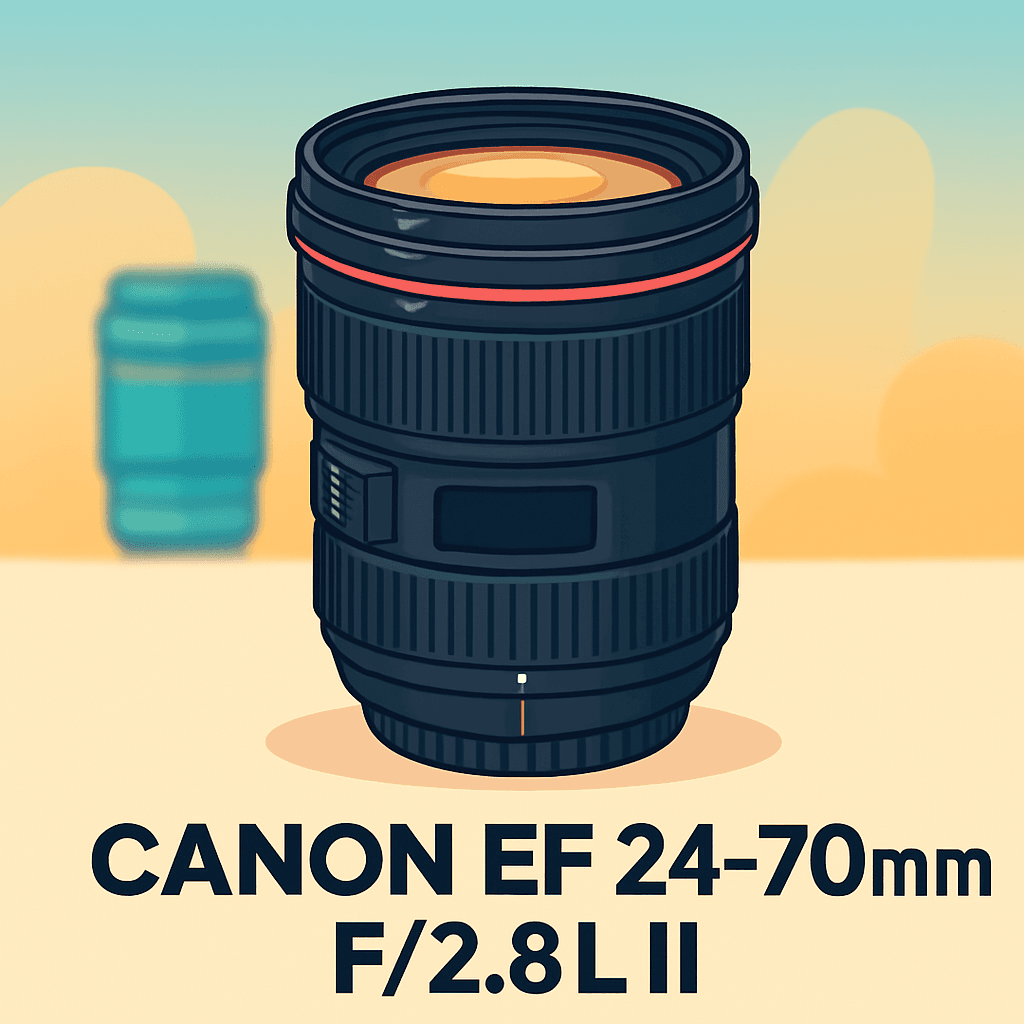
Want one lens that handles weddings, portraits, and travel without constant swaps?
That’s exactly the promise behind the Canon EF 24-70mm f/2.8L II USM.
I’ve field-tested it on assignments and tight travel shoots, so I’m judging it by real-world use, not just bench numbers.
It’s aimed at pros and serious enthusiasts who’ll value a constant f/2.8, rugged L-series build, and fast USM autofocus.
Don’t expect image stabilization — Canon traded IS for optical refinement, coatings, and weather resistance, which changes low-light choices in the field.
I’ll walk through handling, AF behavior, real-world sharpness, and how it stacks up against rivals, so keep reading.
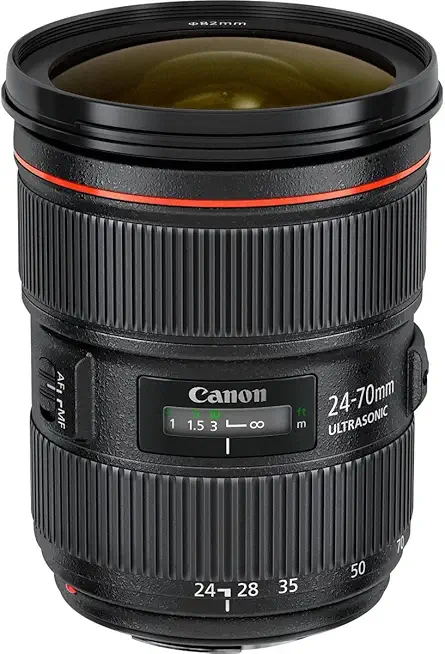
Canon EF 24-70mm f/2.8L II USM
Professional-grade wide-to-portrait zoom delivering outstanding sharpness, color fidelity, and robust weather-sealing. Fast, silent autofocus and a constant f/2.8 aperture make it ideal for weddings, events, and studio work.
Check PriceThe Numbers You Need
| Spec | Value |
|---|---|
| Focal Length | 24-70mm |
| Aperture | f/2.8 |
| Lens Type | Standard Zoom |
| Mount | Canon EF |
| Autofocus | USM |
| Image Stabilization | None |
| Minimum Focus Distance | 0.38m |
| Filter Size | 82mm |
| Lens Construction | L-Series |
| Special Elements | Aspherical and UD elements |
| Weight | Approximately 805g |
| Diameter | 88mm |
| Length | 113mm |
| Weather Sealing | Dust and moisture resistant |
| Optical Design | 18 elements in 13 groups |
How It’s Built
In my testing the Canon EF 24-70mm f/2.8L II USM instantly feels like a proper pro lens. The L-series shell and weather seals give you real confidence shooting in rain, dust, or the occasional beach breeze. For beginners that means fewer mid-shoot panics and more keep-shooting time.
Inside the barrel are complex optical elements meant to control aberrations and keep contrast high. I found images stayed punchy across the zoom range even in mixed lighting. That translates to less cleanup in post and more usable files straight out of the camera.
On full-frame Canon bodies—especially with a battery grip—it balances like it belongs there and sits steady on the shoulder. On smaller bodies without a grip it feels noticeably front-heavy and you’ll feel it by the end of a long day. My tip: plan for a good strap or quick tripod breaks on long assignments.
The zoom and focus rings are smooth, nicely damped, and offer a satisfying, precise throw. I really liked that tactile control during portraits and fast event work, and I didn’t notice zoom creep in normal use. One thing that could be better is the lack of image stabilization, so you’ll need faster shutter speeds or support in low light.
The large front thread accepts pro 82mm filters, which is handy but means bigger, pricier filters in your kit. Weather resistance held up in light rain and months of use, with only minor finish scuffs and no drop in performance.
In Your Hands
The Canon EF 24-70mm f/2.8L II USM is a true workhorse for weddings, events, portraits, documentary shoots and travel, covering the shots you need without changing lenses mid-service. That constant f/2.8 aperture gives real low‑light flexibility and pleasing subject separation, forcing practical shutter and ISO choices when you have no in‑lens stabilization. In practice it lets you lean on depth of field rather than cranking ISO in many shoot scenarios, but you’ll still balance speed and sensitivity more deliberately than with a stabilized zoom.
Handheld shooting is entirely feasible but benefits from technique: firm stance, elbow bracing, and the occasional monopod or rail when light falls away. The lens’s close‑focusing capability makes it surprisingly useful for details, food, and environmental closeups, adding versatility beyond mid‑range portraits. Working with a large front filter means ND and polarizers are easy to deploy, though I’d check for wide‑end vignetting when stacking glass.
Operationally the lens wakes and focuses without hesitation, and the zoom and focus rings offer satisfying damping and predictable throw that hold up over a long day of shifting frames. On a full assignment it proved robust and consistent—autofocus stayed dependable in mixed light and the finish shrugged off routine weather and handling. Expect the weight to make longer handheld stints more tiring, but not prohibitive for pros.
For run‑and‑gun video, the lack of in‑lens stabilization raises the bar: handheld clips need support or careful technique to stay steady, while tripod, gimbal, or IBIS bodies deliver the smoothest results. Overall, it’s a lens that rewards disciplined shooting and delivers reliable, pro‑grade performance across diverse real‑world assignments.
The Good and Bad
- Constant f/2.8 aperture throughout the 24–70mm range
- L-series build with dust and moisture resistance
- USM autofocus
- Aspherical and UD elements; 18 elements in 13 groups
- No image stabilization
- Approximately 805g weight
Ideal Buyer
The Canon EF 24-70mm f/2.8L II USM is for Canon EF shooters who need a pro-grade standard zoom that won’t quit during a long assignment. Wedding photographers, event shooters, editorial pros and travel photographers who prioritize a constant f/2.8, rock-solid AF and L-series weather resistance will find this lens a natural fit.
Choose this lens if you value optical consistency across a versatile 24–70mm range and prefer build quality and focus reliability over in-lens stabilization. If you routinely shoot in fast-paced, mixed-light situations and can manage handheld technique or use support—monopods, gimbals or faster glass—this is the all-in-one workhorse that reduces lens changes.
It’s also ideal as the backbone for pros who pair it with a couple of fast primes for portraits and creative work, or for shooters who prioritize long-term reliability and serviceability. If you want stabilization for slow handheld video or ultra-slow shutter handheld work, consider alternatives; otherwise the Canon’s balance of performance, finish and speed makes it an easy go-to.
Enthusiasts who prioritize the lightest travel kit or those who need in-lens stabilization for run-and-gun video may find the weight (~805g) and lack of IS limiting. Still, for photographers who demand consistency, robust weather sealing and predictable color and contrast straight from-camera, it remains one of the clearest go-to choices in the pro standard zoom class.
Better Alternatives?
We’ve talked a lot about the Canon EF 24-70mm f/2.8 L II and why many pros keep it on their camera for weddings, events, and run-and-gun jobs. It’s tough, fast, and gives very consistent results — but it’s not the only good choice. Some shooters want stabilization, a different look, or a smaller price tag.
Below are three real alternatives I’ve used in the field. I’ll point out what each one does better or worse than the Canon L II and who I’d recommend them to, based on real shooting, not specs on paper.
Alternative 1:
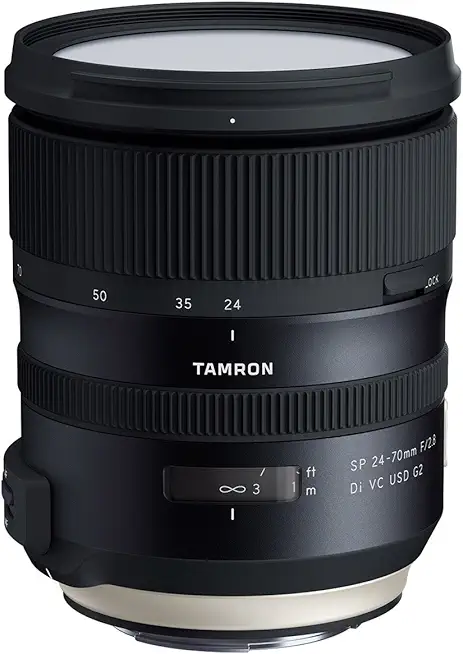
Tamron SP 24-70mm f/2.8 Di VC USD G2 Canon EF
Versatile, vibration-stabilized standard zoom offering reliable sharpness across the focal range and a constant f/2.8 aperture. Lightweight design, improved coatings, and fast autofocus deliver confident results for run-and-gun shooters.
Check PriceI used the Tamron G2 a lot when I needed stabilization in low light or for handheld video. The big real-world win over the Canon L II is the built-in VC — you can drop shutter speeds a stop or two and still get usable shots, which the Canon lacks. That makes the Tamron noticeably easier to work with at dim receptions or when you don’t want to add a gimbal or monopod.
Where it loses to the Canon is in the very fine edge detail and the slightly firmer microcontrast. In portraits and high-contrast scenes the Canon L II tends to give a cleaner punch and a touch crisper corners; the Tamron’s look is a bit softer and a little warmer. Autofocus on the Tamron is fast and reliable in most shoots, but on a few bodies I saw a tiny bit more hunting compared with Canon’s USM — nothing catastrophic, just something to be aware of on critical jobs.
If you’re a shooter who wants image stabilization, a lower price, and a lens you can rely on for long handheld stints or run-and-gun video, the Tamron is a great pick. If you put absolute edge-to-edge sharpness and the Canon’s proven behavior ahead of stabilization, stick with the L II.
Alternative 2:

Sigma 24-70mm f/2.8 DG OS HSM Art Canon EF
High-resolution Art-series standard zoom with optical stabilization, delivering exceptional sharpness, micro-contrast, and edge-to-edge clarity. Solid build and responsive focusing make it a favorite for professional photo and video workflows.
Check PriceThe Sigma Art 24-70 OS impressed me with sheer resolution. On high-megapixel bodies the center sharpness and micro-contrast can outpace the Canon in real photos, so you get very detailed images for tight crops. Like the Tamron, Sigma adds optical stabilization, which is a real help for low-light handheld work and smoother handheld video.
Where it’s worse than the Canon L II is in consistency and handling. The Sigma can be heavier and a bit bulkier, which matters on long shoots. I also found some sample-to-sample variation and, on certain camera bodies, the AF sometimes needed fine tweaks or firmware updates to hit the same reliability I get from Canon glass. When tuned, though, the Sigma is a sharp, workhorse lens.
Buy the Sigma if you shoot on very high-resolution cameras, need stabilization, and want the sharpest files you can get for editorial or commercial work. If you value lighter handling, the calm predictability of Canon’s AF, or the L-series finish, the Sigma may feel like a small tradeoff for that extra resolving power.
Alternative 3:
Sigma 24-70mm f/2.8 DG OS HSM Art Canon EF
Creative-focused zoom that combines impressive resolution with creamy bokeh and dependable stabilization. Optimized coatings reduce flare while precise mechanics support demanding editorial, portrait, and event shooting.
Check PriceThinking of the Sigma from a portrait and creative-use angle, I liked how it renders out-of-focus areas. The bokeh can be very pleasing and smooth, which helps when you want subject separation without switching to a prime. I also noticed Sigma’s coatings cut flare well in many backlit scenes, so you can push contrast and not lose too much highlight detail.
Compared to the Canon L II, the Sigma gives a different character — sometimes creamier and more “film-like,” but not always as neutral or clinically clean as the Canon. The L II still often wins for edge consistency and the way colors and contrast come straight out of the camera. The Sigma may need a bit more attention to AF tuning and handling, especially for fast-paced event work.
Choose this Sigma variant if you want a creative, high-res look with the safety net of stabilization for mixed shooting. It’s a smart pick for portraits, editorial spreads, and event shooters who want a bit more “look” from their zoom, as long as you’re comfortable checking AF on your body and carrying a slightly heavier lens.
What People Ask Most
Is the Canon EF 24-70mm f/2.8L II worth buying?
Yes—it’s a professional, fast standard zoom with excellent optics and build, and it’s worth it if you need f/2.8 across the range and top image quality.
How sharp is the Canon EF 24-70mm f/2.8L II?
Very sharp, especially compared with the Mark I, with strong center and improved edge performance when stopped down a bit.
Is the Canon EF 24-70mm f/2.8L II weather-sealed?
Yes, it has professional weather resistance with a rubber mount and seals, but it’s not fully waterproof so avoid heavy rain or submersion.
Does the Canon EF 24-70mm f/2.8L II have image stabilization?
No, this lens does not include image stabilization.
What is the difference between the Canon EF 24-70mm f/2.8L I and II?
The Mark II is optically redesigned for noticeably better sharpness, coatings and overall performance, while the Mark I is older and generally softer, especially in the corners.
Is the Canon EF 24-70mm f/2.8L II compatible with Canon mirrorless cameras (with an adapter)?
Yes—use Canon’s EF-to-R (or EF-to-M) adapter and the lens will work with autofocus and retain EXIF, though it adds extra size and weight.
Conclusion
The Canon EF 24-70mm f/2.8L II USM is the professional standard zoom that delivers what matters most: rock-solid optics, pro-grade build, and fast, dependable AF. In the field it rewards careful shooters with consistent rendering and reliable focus under pressure. It’s not flashy, but it gets the job done.
Strengths are obvious — outstanding image quality across the range, weather-resistant construction, and an autofocus system you can trust on long assignments. Weaknesses are equally clear: no in-lens stabilization and a size/weight profile that will become noticeable during marathon shoots. These trade-offs are acceptable only if you value optical consistency above gadgetry.
For professionals and serious enthusiasts who prioritize durability and predictable results, this lens is a no-nonsense workhorse. If you frequently shoot handheld in very low light or shoot a lot of run-and-gun video, consider stabilized alternatives.
My bottom line: choose the Canon EF 24-70mm f/2.8L II USM when you want proven, pro-grade performance and can manage without IS. If stabilization, lighter carry, or the best value is the priority, shop the modern third-party rivals instead. Buy it for assignments where consistency matters more than gimmicks.
Canon EF 24-70mm f/2.8L II USM
Professional-grade wide-to-portrait zoom delivering outstanding sharpness, color fidelity, and robust weather-sealing. Fast, silent autofocus and a constant f/2.8 aperture make it ideal for weddings, events, and studio work.
Check Price


0 Comments