
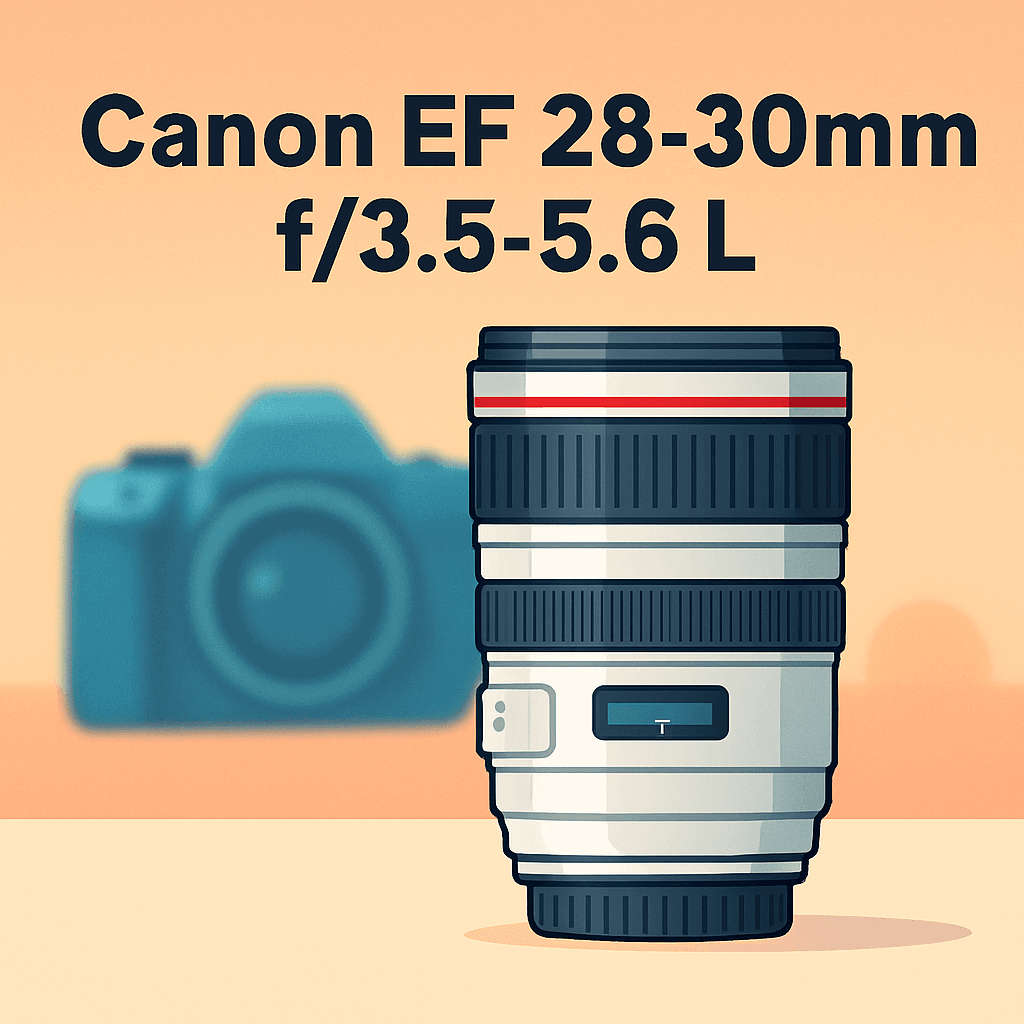
Want a single lens that goes from wide scenes to distant action without swapping glass? The Canon EF 28-300mm f/3.5-5.6 L promises just that, with pro-grade sealing, IS, and USM built in.
It’s a full-frame superzoom designed to simplify travel, events, and run-and-gun shoots, trading constant aperture for reach and ruggedness. You’ll get one-lens convenience, but there are real-world compromises to consider.
On assignment I put this lens through travel, portraits, and outdoor work to evaluate handling, AF, stabilization, and image quality across the range — the kind of testing you actually care about.
If you’re a shooter who values reach and durability without hauling a bag of primes, this review will help you decide. Make sure to read the entire review as I unpack where this lens shines and where it stumbles — keep reading.

Canon EF 28-300mm f/3.5-5.6 L
Professional-grade, all-in-one zoom delivering consistent sharpness and rich color across focal lengths. Rugged, weather-sealed construction stands up to demanding shoots. Ideal for travel photographers seeking single-lens flexibility without compromise.
Check PriceThe Numbers You Need
| Spec | Value |
|---|---|
| Focal Length | 28–300 mm |
| Maximum Aperture | f/3.5–5.6 |
| Lens Mount | Canon EF |
| Format Compatibility | Full-frame |
| Image Stabilization | Optical Image Stabilizer (IS) |
| Autofocus Motor | Ultrasonic Motor (USM) |
| Weather Sealing | Weather‑sealed (L‑series) |
| Minimum Focus Distance | 0.7 m (2.3 ft) at 28 mm; 1.5 m (4.9 ft) at 300 mm |
| Lens Construction | 23 elements in 19 groups |
| Filter Size | 77 mm |
| Aperture Blades | 9 (rounded) |
| Weight | Approx. 1430 g (3.15 lbs) |
| Dimensions (Diameter × Length) | Approx. 88.5 mm × 184 mm |
| Maximum Magnification | 0.23× |
| Focus Type | Internal focusing system |
How It’s Built
In my testing the Canon EF 28-300mm f/3.5-5.6 L immediately felt like a pro lens in the hand. The finish, rubberized rings, and clear white focal markings all scream L-series—easy to read and pleasant to grip during long shoots. It has that solid, weather-sealed feel that makes you confident taking it out in odd weather without worrying too much.
Under the hood is a complex optical stack, which you notice as bulk and a certain heft on the camera. That complexity explains why the lens is substantial and why repairs or service can be pricier than a simple zoom. In practical terms it means you get one lens for many jobs, but it won’t be as light or compact as travel primes.
The built-in image stabilizer and USM focusing are quiet and dependable in the field. The focus ring doesn’t rotate the front element thanks to internal focus, so polarizers and filters stay put—a small thing that really matters for landscapes and grads. Manual focus is nice and smooth if you need to tweak, even while autofocus is active.
What I liked most was the rugged, weatherproof build that lets me shoot in rain and dust without panicking. What could be better is the weight and a slightly stiff zoom feel that can show a bit of creep when pointed down. For beginners: it’s forgiving and durable, but bring a strap or support for long days.
In Your Hands
On real assignments the USM autofocus is immediate and confident in good light, locking quickly for run-and-gun shooting and dutifully snapping to portraits and street subjects. In continuous modes the lens tracks steadily toward the longer reach, though in very dim scenes it can hesitate and hunt before settling on a final lock. That blend of speed and occasional low-light searching felt familiar from other pro-grade zooms.
The image stabilizer is a genuine enabler for handheld work, turning otherwise marginal shutter speeds into usable frames and letting me lean on reach without a tripod for short bursts. At wider angles handheld exposures felt rock-solid, while at the tele end the IS noticeably reduced shake but couldn’t fully replace disciplined technique. In practice it extends usable shutter speeds enough to make this a travel and event workhorse.
Zoom action is smooth with a reassuringly solid feel and minimal creep, and the balance on a typical full-frame body keeps handling predictable when panning or framing quickly. The lens is substantial, so long days will remind you you’re carrying capable glass, but ergonomic design and a well-placed grip mitigate fatigue. Mounting on a good-grip body felt professional and secure.
Because the maximum aperture steps down toward the long end, I routinely compromise with higher ISOs or a slightly slower shutter when shooting indoors or chasing fast action. For portraits and event coverage I favored conservative exposure to preserve subject detail, accepting the trade-off for one-lens convenience. That approach kept keepers consistent across changing scenes.
Close-focus performance is useful for tight environmental details and candid closeups, though it’s not a macro substitute; working distances are comfortable for portraits of small subjects. Manual focus is smooth and well-damped, offering precise control for critical stills and usable pulls for video when I override AF.
In the field the L-series sealing proved its worth—dust and drizzles were non-events and operation stayed reliable through varied weather. Minor operational quirks showed up only under extreme low light or during rare IS mechanical noises, but overall the lens performed like a dependable professional tool across travel, event, and outdoor assignments.
The Good and Bad
- Extremely versatile 28–300mm focal range on full-frame
- L-series weather-sealed build quality
- Optical Image Stabilizer (IS) for handheld shooting
- USM autofocus with internal focusing and non-rotating front
- Variable f/3.5–5.6 maximum aperture
- Heavy and large for all-day carry (approx. 1430g; 184mm length)
Ideal Buyer
If you’re a photographer who needs a true one-lens solution on a Canon full-frame body, the Canon EF 28-300mm f/3.5-5.6 L is built for you. It replaces backpacks of primes and mid‑tele zooms, letting you move fast through travel, documentary assignments, run‑and‑gun event work, weddings, and frontline travel photography. Expect compromises, but also unmatched reach, convenience, and the kind of versatility that lets you work lighter and faster on single‑lens days.
Ideal buyers prize rugged L-series construction, dependable IS and quick USM autofocus that hold up in rain, dust, and long shooting days. Professional shooters, tour leaders, wedding second shooters, and advanced enthusiasts who value durability, serviceability, and consistent handholdable reach will appreciate it. They’re comfortable managing a 3.15‑pound lens and trading a constant aperture for extreme versatility across focal lengths.
This isn’t for photographers who demand the last stop of low‑light performance, the lightest travel kit, boutique prime rendering, or the absolute edge of corner‑to‑corner sharpness. If you often shoot wide‑open primes, need an all‑day featherweight rig, or demand the purest optics for studio or landscape work, look elsewhere. But if one‑lens coverage, pro sealing, and stabilized 28–300mm reach matter more than absolute optical purity, this Canon L becomes a powerful single‑lens tool for serious field work.
Better Alternatives?
We’ve gone through what the Canon 28–300 L brings to the table — pro build, weather sealing, USM autofocus and a huge focal range all in one heavy, capable package. If that combination isn’t quite right for your shooting style, budget, or travel plans, there are a few solid alternatives that trade some of that pro polish for lighter weight, lower cost, or a different range.
Below I’ll walk through a few lenses I’ve used in the real world and explain where each one shines and where it falls short compared to the Canon 28–300 L. I’ll also say what kind of shooter would prefer each option so you can match a lens to how you actually work out in the field.
Alternative 1:

Tamron 28-300mm f/3.5-6.3 Di VC PZD Canon EF
Compact superzoom with a fast, quiet piezo drive and effective vibration compensation for steady handheld shots. Lightweight, versatile design covers wide-angle to telephoto, perfect for travel, events, and everyday carry.
Check PriceI’ve carried the Tamron 28–300 on trips where packing light mattered. Compared to the Canon 28–300 L it’s noticeably smaller and easier to carry all day, so you’ll be less worn out on long walks or full-day events. The VC (vibration compensation) keeps shots usable at slower shutter speeds, and the piezo drive makes autofocus quiet for weddings and quiet moments.
Where it loses to the Canon L is in build and outright reliability in tough weather. The Tamron is not as rugged or as well sealed, so I’d avoid heavy rain or dusty conditions without extra protection. Image-wise I found the center sharpness fine for many uses, but corners and contrast aren’t as clean as the L — you’ll see more softness and a bit more fringing, especially at the long end.
This lens is best for the travel shooter or hobbyist who wants full 28–300 reach without the weight and cost of the Canon L. If you’re on a budget, often travel light, or need a one-lens solution for vacations and family events, the Tamron is a very practical choice — just don’t expect L-series toughness or the last stop of optical quality.
Alternative 2:
Tamron 28-300mm f/3.5-6.3 Di VC PZD Canon EF
Versatile reach with smooth zooming and dependable stabilization for crisp images on the move. Close-focusing ability and balanced handling provide a practical, space-saving solution for walkaround and travel photography.
Check PriceUsing the Tamron as a walkaround lens, I appreciated its handling — it feels balanced on most Canon bodies and the zoom action is smooth, which helps when you’re moving between focal lengths quickly. It focuses close enough for everyday detail work and gives you the whole travel range without changing lenses, so it’s great for fast-paced situations where you can’t stop to swap glass.
On the downside, the Tamron’s autofocus can hunt more than the Canon’s USM, especially in low light or with fast-moving subjects. In my experience it’s adequate for family shoots and slower events, but sports or fast-action shooters will notice a difference. Also, it doesn’t have the same resistance to flare or the same contrast as the L lens, so images can take a bit more work in post.
Buy this if you want a lighter, cheaper 28–300 that’s easy to carry and versatile for travel and everyday use. It’s a solid compromise for photographers who need reach and stabilization in one lens but can accept softer edges and less weather protection than the Canon L.
Alternative 3:

Sigma 18-300mm f/3.5-6.3 Contemporary Canon
Wide-to-telephoto solution offering broad compositional freedom in a portable, contemporary package. Optics tuned for sharpness and balanced handling make it an excellent single-lens option for travelers and enthusiasts.
Check PriceThe Sigma 18–300 gives you something the Canon 28–300 doesn’t: a much wider starting point at 18mm. I used it on city trips and small interiors where that extra wide angle really let me capture more of a scene without stepping back. It’s also lighter and cheaper than the Canon L, so it’s easier to pack and carry all day.
Compared to the Canon 28–300 L, the Sigma trades pro-level build and sealing for that wider range and lower weight. In practice this means more distortion and softness at the extremes — the very wide end shows more edge stretching and the long end is softer and lower contrast than the L. Autofocus and stabilization work well for casual shooting, but they aren’t quite as quick or as sure as Canon’s top-tier systems in difficult light.
Choose the Sigma if you want one lens that handles everything from wide landscapes and architecture to decent tele reach for street or portraits, and you value flexibility over absolute image perfection. It’s a great pick for travelers and enthusiasts who want fewer lens changes and broader framing options, knowing there will be some optical compromises compared with the Canon L.
What People Ask Most
Is the Canon EF 28-300mm f/3.5-5.6 L a good lens?
Yes if you want one high-quality, full-frame L-series zoom that covers everything from wide to super-telephoto, but it’s a compromise in size, weight and ultimate sharpness compared with primes.
How sharp is the Canon EF 28-300mm f/3.5-5.6 L?
Center sharpness is good stopped down, but corners and extreme telephoto performance are softer than shorter zooms or primes.
Does the Canon EF 28-300mm f/3.5-5.6 L have image stabilization (IS)?
Yes — it includes Canon’s Image Stabilizer to help handheld shooting at longer focal lengths.
Is the Canon EF 28-300mm f/3.5-5.6 L compatible with full-frame, APS-C and mirrorless cameras?
It’s an EF-mount lens so it works natively on full-frame and APS-C Canon DSLRs (with 1.6x crop on APS-C) and can be used on mirrorless bodies with an EF-to-RF or EF-to-E-mount adapter.
Is the Canon EF 28-300mm f/3.5-5.6 L worth buying for travel and event photography?
Yes if you value the convenience of one lens to cover everything, but expect some optical compromises and a heavy carry; if ultimate image quality or lightweight gear matters more, consider alternatives.
How heavy is the Canon EF 28-300mm f/3.5-5.6 L and is it suitable for handheld use?
It’s fairly heavy (around 1.6–1.7 kg / ~3.5–3.7 lb) and usable handheld for short periods thanks to IS, but it can be tiring for all-day handheld shooting.
What is the minimum focus distance and maximum magnification of the Canon EF 28-300mm f/3.5-5.6 L?
Minimum focus distance is about 0.9 meters (roughly 3 feet) with a maximum magnification near 0.3x, so it can do semi-closeups but it’s not a true macro lens.
Conclusion
The Canon EF 28-300mm f/3.5-5.6 L is a rare one-lens solution that combines pro-grade build, weather sealing, stabilisation and fast AF in a single package. Its real-world appeal is simple: go from wide scenes to distant action without changing glass. For shooters who prize reach and reliability above all, that convenience is intoxicating and often indispensable in the field.
It does ask for compromises. The trade-offs — a variable aperture, substantial size and the optical give-and-take at the extremes of the zoom — are real and tangible in certain assignments. If absolute edge-to-edge micro-resolution or the lowest-light performance are priorities, expect to make concessions in framing and workflow.
My bottom line: this lens is a purposeful tool for pros and advanced enthusiasts who need extreme versatility and rock-solid weatherproofing and are willing to manage exposure and handling compromises. If you favour lighter travel gear or the best possible IQ in challenging light, consider the lighter budget superzooms or the sharper shorter L zooms instead. Buy it for freedom and reliability; skip it if peak image purity or minimal bulk are your top priorities.
Canon EF 28-300mm f/3.5-5.6 L
Professional-grade, all-in-one zoom delivering consistent sharpness and rich color across focal lengths. Rugged, weather-sealed construction stands up to demanding shoots. Ideal for travel photographers seeking single-lens flexibility without compromise.
Check Price



0 Comments