
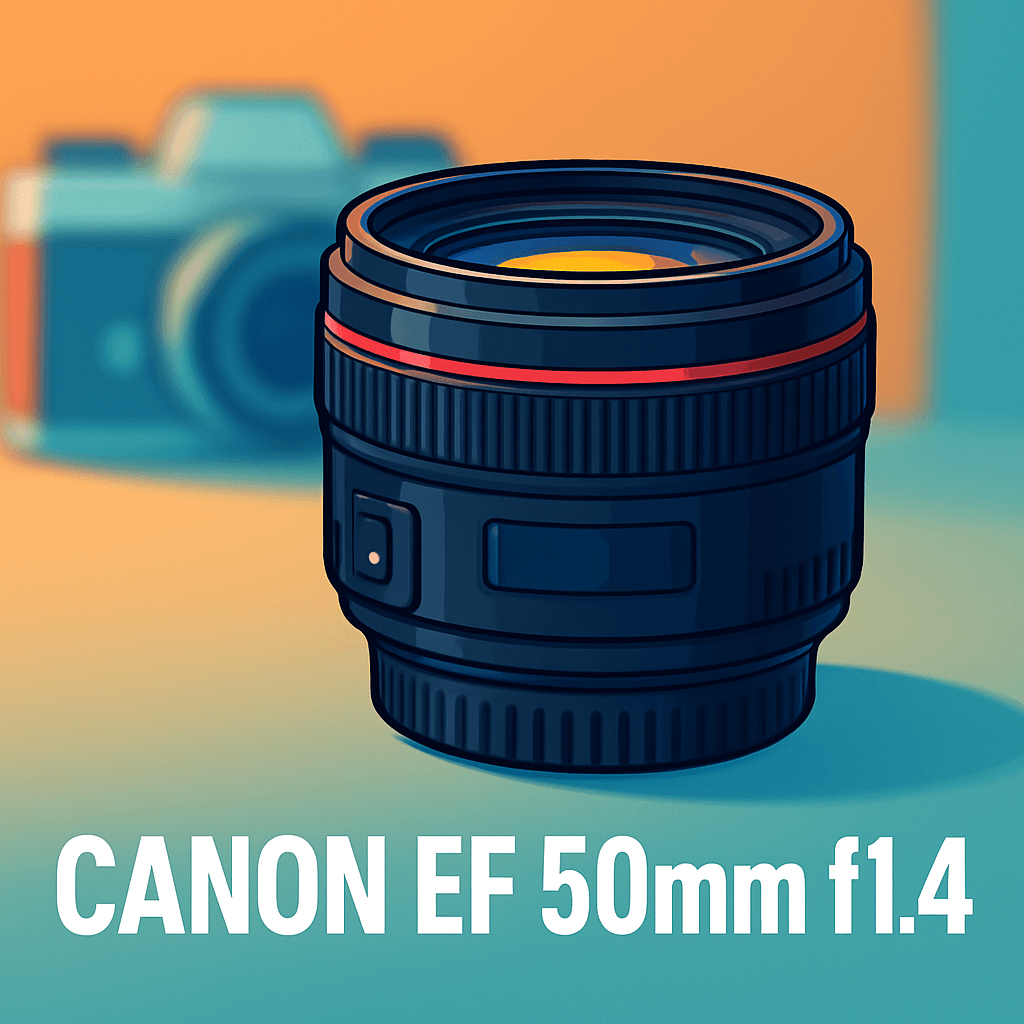
Want better portraits and low-light shots without hauling pro-sized glass everywhere? The Canon EF 50mm f/1.4 USM is Canon’s classic fast fifty for EF mount, with a bright f/1.4 aperture and USM autofocus that’s aimed at everyday shooters.
It’s compact and light, with an established optical formula that delivers subject separation, but it doesn’t offer weather sealing or image stabilization. After field-testing it on real shoots, I’ll weigh those practical trade-offs against what matters in the field.
If you’re a portrait or walkaround stills shooter who wants shallower depth-of-field than the f/1.8 without pro-tier heft, this review is for you. We’ll explore build compromises, AF behavior versus STM for video, and the lens’s bokeh and contrast personality.
I’ll show real-world payoffs and how it stacks up to popular 50mm alternatives, so you can pick the right fifty for your work—keep reading.

Canon EF 50mm f/1.4 USM
Fast f/1.4 aperture with USM-driven autofocus delivers lightning-quick, near-silent focusing and creamy bokeh. Built for low-light shooting and expressive portraits with classic rendering and dependable build quality.
Check PriceThe Numbers You Need
| Spec | Value |
|---|---|
| Mount | Canon EF |
| Focal Length | 50mm |
| Aperture | f/1.4 |
| Lens Type | Prime |
| Autofocus | USM (Ultrasonic Motor) |
| Elements | 7 |
| Min Focus Distance | Approximately 0.45 meters |
| Max Magnification | 1:6.8 |
| Diameter | Approximately 73.8mm |
| Length | Approximately 50.5mm |
| Weight | Approximately 290 grams |
| Filter Size | 58mm |
| Lens Coatings | Super Spectra Coatings |
| Weather Sealing | No |
| Image Stabilization | No |
How It’s Built
In my testing the Canon EF 50mm f/1.4 USM felt like a classic fast fifty — compact and light with a solid metal mount. I didn’t mind carrying it all day. For beginners that means more chances to shoot without lugging heavy gear.
The barrel is nicely built without feeling bulky. After using it I liked the smoother focus ring and the solid mount compared with the cheaper 50mm. One thing that could be better is the lack of weather protection — I avoid shooting in rain or dusty conditions.
USM autofocus was quick for stills and the focus ring has a friendly, moderate throw. It’s noticeably nicer to use by hand than the cheapest 50mm option, but critical focus wide open still needs care. Beginners will find autofocus reliable for most shots.
Its small size balances nicely on Canon DSLRs and feels even more discreet on crop bodies, so it’s great for street and travel. There’s no image stabilization, so I used faster shutter speeds or higher ISO in low light. Overall it’s portable and honest — it disappears on camera and is a reliable everyday lens if you accept the trade-offs.
In Your Hands
The 50mm perspective here feels familiar and unobtrusive, making this lens an instinctive choice for portraits, street work and everyday stills. Its compact, light design encourages discreet shooting and keeps your kit minimal, so you’re more likely to have it on you when a candid moment appears.
Wide-open the lens delivers strong subject separation and a very usable low-light capability that lets you lean on faster shutter speeds without switching to flash. That shallow plane of focus is a creative tool—great for headshots and portraits—but you’ll often stop down slightly for more reliable sharpness across a subject.
Close-focus performance is practical rather than obsessive; it will handle product and food detail acceptably but it’s not a macro substitute. The lens coatings do a solid job holding contrast against bright sources, though very strong backlighting can still introduce subtle veils or flare if you’re not careful with angle and framing.
Rendering is where this fifty shines: backgrounds melt away with a smooth, three-dimensional quality wide-open, and micro-contrast improves noticeably as you stop down for more uniform frame sharpness. Combined with its small footprint, that character makes it a versatile everyday optic—flattering for faces, unobtrusive for street scenes, and reliable for general-purpose work.
The Good and Bad
- f/1.4 aperture for low light and shallow depth-of-field
- More refined bokeh and micro-contrast than the 50mm f/1.8 STM
- Compact, lightweight build (approx. 290 g) with small 58 mm filter size
- USM autofocus for responsive stills performance
- No weather sealing
- No image stabilization
Ideal Buyer
If you shoot stills more than video and crave that classic 50mm look without lugging pro glass, the Canon EF 50mm f/1.4 USM is aimed at you. It gives noticeably shallower depth‑of‑field than the inexpensive f/1.8 while staying compact and light enough for daily carry.
Portrait and low‑light shooters who prioritize subject separation and natural rendering will appreciate its f/1.4 aperture and smoother bokeh. The lens balances pleasing micro‑contrast with manageable handling, so you get flattering skin tones without the bulk of larger fast primes.
Photographers who want an upgrade over the 50mm f/1.8 STM’s character but who don’t need the extreme look or heft of the 50mm f/1.2L or a Sigma Art will find the sweet spot here. It’s a practical compromise: better out‑of‑focus rendering and low‑light performance without tipping the scales on weight or budget.
If you shoot hybrid stills and video, be aware the USM autofocus favors viewfinder work; STM alternatives are smoother and quieter in live view. For street, travel and everyday portrait work where carryability and classic rendering matter most, this lens is an ideal, versatile choice.
Better Alternatives?
We’ve gone through the Canon EF 50mm f/1.4 USM in detail — its balance of size, speed, and that classic 50mm look. It’s a great all-rounder for portraits and low-light work, but it isn’t the only way to get that 50mm feel. Depending on priorities like budget, video AF, ultimate sharpness, or build, other lenses can make more sense.
Below are the alternatives I reach for in real shoots and why I’d pick each one over the Canon f/1.4 in different situations. I’ll point out what each lens does better and where it gives up something compared to the f/1.4, and who should consider each option.
Alternative 1:
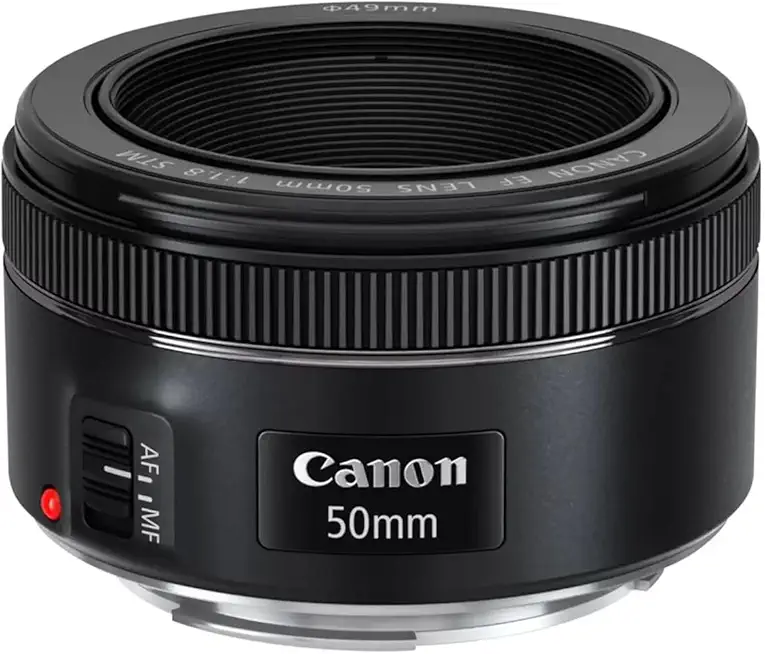
Canon EF 50mm f/1.8 STM
Compact, lightweight optic with STM stepper motor for smooth, whisper-quiet autofocus—ideal for hybrid shooters and vloggers. Affordable, sharp performance that excels in everyday, low-light, and portrait work.
Check PriceI’ve used the 50mm f/1.8 STM as a daily carry lens and for run-and-gun shoots. Compared to the Canon f/1.4, the f/1.8 is much lighter, smaller, and far cheaper. For video and live view work its STM motor is noticeably smoother and quieter, so subjects and audio don’t get bothered by the lens hunting or grinding.
What you give up is shallow depth of field and some of the bokeh smoothness the f/1.4 gives you. Wide open the f/1.8 can be a bit harsher and its background blur isn’t as creamy. The build is more plastic and the manual focus ring is simpler, so it doesn’t feel as solid when you’re doing precise focus work.
If you’re on a budget, want a lightweight walkaround, or shoot a lot of video with a small kit, this is the one I hand to students and travel shooters. It’s also great as a backup body lens — low cost, good image quality, and surprisingly punchy when stopped down.
Alternative 2:

Sigma 50mm f/1.4 Art Canon EF
Premium Art-series optic produces exceptional sharpness and stunning micro-contrast across the frame. Fast aperture creates silky bokeh and excellent low-light capability—perfect for portraits, studio, and high-resolution imaging.
Check PriceThe Sigma Art 50mm f/1.4 is my pick when I need the cleanest, sharpest files. In real shoots it resolves more detail across the frame than the Canon f/1.4, especially on high-resolution cameras. That extra crispness and contrast makes a difference for studio work, product shots, and when I need to crop in tightly.
Where it loses to the Canon f/1.4 is size and weight — the Sigma is noticeably bigger and heavier, and it changes how a camera balances for long handheld days. It can also feel a touch clinical compared to the Canon’s milder, more familiar rendering; some people prefer the Canon’s look for portraits. On a few bodies I’ve needed to fine-tune autofocus to get the best results.
Choose the Sigma if you’re a pro or enthusiast who cares about edge-to-edge sharpness and working on high-megapixel cameras. Wedding photographers who deliver tack-sharp images and commercial shooters who need detail will find it worth the extra bulk.
Alternative 3:
Sigma 50mm f/1.4 Art Canon EF
Engineered for resolving power, this model offers razor-sharp center-to-edge detail and creamy background separation. Solid construction, precise manual focus feel, and consistent performance for demanding commercial and wedding work.
Check PriceI’ve also used the Sigma over long wedding days and commercial jobs where consistency matters. Its build and focus feel are solid and repeatable; the manual focus ring has a good, precise throw that makes fine adjustments faster than the Canon f/1.4’s shorter ring. The Sigma’s bokeh is very pleasing, with great subject separation when shot wide open.
The trade-offs are the same: more weight to carry and a bigger footprint on the camera. In fast-moving run-and-gun situations I sometimes miss the lighter, more nimble Canon f/1.4. The Sigma can also be a little more demanding of good technique — its extra resolving power shows mistakes like minor focus slips or camera shake more clearly.
This version of the Sigma is for photographers who need a workhorse that delivers consistent, high-detail results day after day — commercial, editorial, and wedding shooters who don’t mind the extra weight in exchange for better resolution and a sturdier feel. If you value compactness and a slightly softer, more forgiving look, the Canon f/1.4 might still be the better everyday choice.
What People Ask Most
Is the Canon EF 50mm f/1.4 worth buying?
Yes — it’s a versatile 50mm with a true f/1.4 aperture, offering better low-light performance and smoother bokeh than the cheaper 1.8 for a reasonable price.
How sharp is the Canon EF 50mm f/1.4?
It’s sharp when stopped down (f/2–f/8); at f/1.4 it can be a bit soft but still perfectly usable for portraits and creative work.
How does the Canon EF 50mm f/1.4 compare to the Canon EF 50mm f/1.8?
The 1.4 gives a wider aperture, stronger build and creamier bokeh, while the 1.8 is lighter, cheaper and often a touch sharper wide open.
Is the Canon EF 50mm f/1.4 good for portraits and low-light photography?
Yes — the wide f/1.4 aperture delivers shallow depth of field for portraits and lets you shoot in lower light with lower ISO.
Does the Canon EF 50mm f/1.4 have USM autofocus and is the AF reliable?
Yes, it uses a USM motor and autofocus is generally reliable for stills, though it’s not as fast or as quiet as newer ring-USM or STM designs.
Can the Canon EF 50mm f/1.4 be used on APS-C and on mirrorless bodies with an adapter?
Yes — on APS-C it acts like about an 80mm equivalent (great for portraits), and it works on mirrorless bodies with an EF adapter, with AF speed depending on the camera and adapter.
Conclusion
The Canon EF 50mm f/1.4 USM remains one of those lenses that simply makes everyday shooting more enjoyable, marrying pleasing subject separation and low‑light ability with a compact, carry‑friendly package. In practice its USM autofocus is quick and reliable for stills and its rendering is noticeably more refined than the cheapest 50mm options, giving portraits and street work a subtle, three‑dimensional feel. It isn’t without tradeoffs, though—there’s no weather sealing or in‑body stabilization, and its AF character is better suited to viewfinder shooting than quiet, continuous live‑view pulls.
Placed against modern alternatives it occupies a pragmatic middle ground. It won’t outclass the Sigma Art for sheer wide‑open resolution, nor will it deliver the ultra‑shallow, signature look or pro‑grade build of Canon’s top‑end 50, but it delivers a far friendlier size, handling and consistency for daily use. For shooters who value nicer bokeh and tactile control over headline specs, that balance is compelling.
My bottom line is simple: buy this lens if you want a portable, stills‑focused fast fifty that upgrades your images without forcing you to shoulder bigger, heavier glass. If absolute corner‑to‑corner sharpness or the most extreme shallow‑DOF is your obsession, look elsewhere; otherwise this lens is a smart, versatile choice that earns its place in many camera bags.
Canon EF 50mm f/1.4 USM
Fast f/1.4 aperture with USM-driven autofocus delivers lightning-quick, near-silent focusing and creamy bokeh. Built for low-light shooting and expressive portraits with classic rendering and dependable build quality.
Check Price

0 Comments