
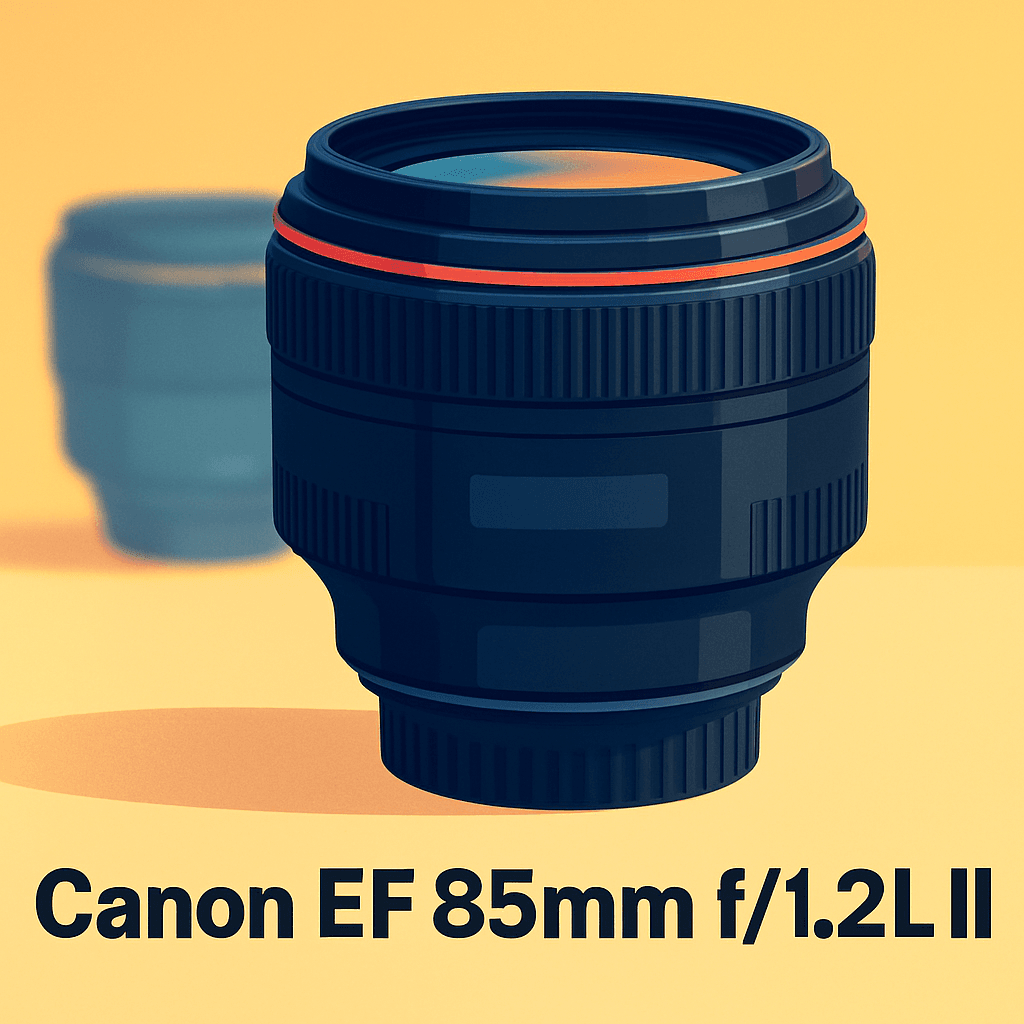
Want to know if one lens can instantly lift your portraits to a more cinematic, dreamy level?
The Canon EF 85mm f/1.2L II promises that with its ultra-wide aperture and L-series build, and I took it on real shoots to see how it performs in practice.
This review walks through build, handling, AF behavior, bokeh character, real-world shooting notes, and smart alternatives for different budgets. If you prioritize extreme subject separation and low-light freedom over lightness and speed, this one’s for you — but there are trade-offs to weigh, so keep reading.

Canon EF 85mm f/1.2L II
Iconic pro-grade short-telephoto offering an ultra-fast f/1.2 aperture for dreamlike bokeh, outstanding low-light performance and luxurious subject separation. Delivers silky backgrounds and studio-quality rendering for portrait professionals.
Check PriceThe Numbers You Need
| Spec | Value |
|---|---|
| Focal length | 85 mm |
| Maximum aperture | f/1.2 |
| Lens mount | Canon EF |
| Lens series | L-series (professional) |
| Optical design | 8 elements in 7 groups |
| Autofocus motor | Ultrasonic Motor (USM) |
| Minimum focusing distance | 0.95 ft (0.29 m) |
| Maximum magnification | 0.11× |
| Filter size | 72 mm |
| Image stabilization | None |
| Aperture blades | 8 rounded blades |
| Dimensions (diameter × length) | Approx. 3.3 × 4.7 in (83.5 × 119.4 mm) |
| Weight | Approx. 950 g (2.1 lbs) |
| Compatible sensor format | Full-frame and APS-C (with 1.6× crop factor) |
| Weather sealing | Yes (dust and moisture resistant) |
How It’s Built
In my testing the Canon EF 85mm f/1.2L II feels like a proper pro lens. Solid L-series build, weather sealing — it just survives being used in real shoots. I really liked how confident it feels in my hands when I’m out at a wedding or on location.
It is a large, heavy prime and that matters in practice. On smaller bodies it tips the balance, so carrying it all day can get tiring; it’s happiest on a big DSLR or sitting on a stand in the studio. One thing that could be better is the lack of image stabilization — you have to be deliberate with your shutter speeds or bring support.
The control layout is simple and the focus ring is smooth and precise for careful portrait work; in my testing it encouraged me to slow down and nail focus. The filter thread is big, so ND and specialty filters are an extra cost to consider when shooting wide open outside. For beginners: bring a good strap or monopod and you’ll get the most from its feel and weather resistance.
In Your Hands
As a portrait-length prime on a full-frame body this lens delivers a classic headshot-to-half-body perspective, and on crop bodies it tightens the frame for even more intimate isolation. The focal length invites a respectful working distance that keeps features natural while allowing tight background separation.
That enormous maximum aperture is the headline — it turns late-afternoon window light and candlelit receptions into usable portrait light while rendering subjects almost sculptural against a soft background. Shooting wide open rewards careful exposure and ISO discipline; small changes in focus or camera movement are amplified by the shallow depth of field. Stopping down a bit brings more forgiving depth for groups or environmental context.
Close-focus capability is adequate for head-and-shoulders work but it isn’t a macro tool; for tight detail or product-style closeups you’ll want a longer reach or a dedicated close-up lens. I often pair it with a slight step back and a gentle crop rather than trying to squeeze in too close.
In practice this is a lens for deliberate shooters — natural-light portraits, on-location weddings, and editorial captures where separation and character matter more than agility. In the studio I use it wide open for dreamy, characterful frames and stop down when I need edge-to-edge sharpness with strobes. Because there’s no built-in stabilization, plan your shutter speed, embrace monopods or thoughtful technique when handholding in low light.
The Good and Bad
- f/1.2 aperture for extreme background blur and low-light flexibility
- L-series build with weather sealing
- 8 rounded blades for pleasing aperture shape
- Distinctive rendering/character at wide apertures
- No image stabilization
- Large and heavy for an 85 mm prime (~950 g)
Ideal Buyer
If you chase subject separation and painterly out-of-focus rendering, the Canon EF 85mm f/1.2L II is made for you. The f/1.2 aperture isn’t a spec—it’s a creative tool that reshapes backgrounds and sculpts faces. It’s a tool for photographers who favor mood over maximum edge-to-edge sharpness.
Portrait, wedding and fashion shooters will get the most from this lens. It shines in available-light, editorial sessions and studio portraits where that wide-open character is the point. On full-frame bodies it frames classic headshots while on APS-C it tightens composition for intimate detail.
This is not a run-and-gun lens for fast action or handheld video where stabilization and blink-fast AF are priorities. Buyers should be comfortable with deliberate focusing, using single-point AF and planning shots around the lens’ weight and reach. Expect to work methodically, and you’ll be rewarded with portraits that feel cinematic.
If you value portability, rapid autofocus or built-in stabilization more than the unique f/1.2 look, there are better practical alternatives. But if your work demands a signature, ethereal rendering and you’re prepared to shoot deliberately, this lens remains uniquely alluring. In short, choose it for look first and convenience second.
Better Alternatives?
We’ve already dug into what makes the Canon EF 85mm f/1.2L II special: that wide f/1.2 look, the heavy L-series build, and the kind of shallow focus that really separates a subject from the background. It’s a lens you either want for that signature “dreamy” rendering or you don’t—there are clear trade-offs in size, speed, and handling.
If the 85/1.2L II isn’t the perfect match for your needs or budget, there are several solid alternatives that give you parts of the same picture—sometimes more practical, sometimes sharper, and often much lighter. Below are three lenses I’ve used in real shoots that cover different styles of portrait work and budgets.
Alternative 1:

Sigma Canon EF 85mm f/1.4 DG Art
Art-series short-telephoto combining razor-sharp resolution, refined microcontrast and creamy background blur. Engineered for portrait and wedding photographers seeking flagship-level detail, consistent performance and a robust, professional build.
Check PriceI’ve shot studio headshots and outdoor golden hour portraits with the Sigma 85mm f/1.4 Art, and it’s a different tool from the Canon 85/1.2. The Sigma gives you noticeably sharper results across the frame, especially when you stop down a bit, and that can be a big help for group portraits or when you want crisp eyes and more detail in clothing and hair.
Where it’s worse than the 85/1.2L II is in the “character” department. The Sigma’s look is more clinical and less of that soft, dreamy subject glow you get at f/1.2. Autofocus on the Sigma feels faster and more confident for moving subjects, so it’s superior for quick wedding work, but it won’t quite match the unique background separation of the f/1.2 lens.
If you want a lens that balances modern sharpness and reliability with a still-very-pleasing bokeh, and you don’t need the absolute widest f/1.2 aperture, the Sigma is a smart pick. I’d recommend it to wedding shooters and studio photographers who value edge-to-edge crispness and faster AF over that last stop of shallow depth.
Alternative 2:

Tamron 85mm f/1.8 SP Di
Lightweight professional short-telephoto with a bright f/1.8 aperture that provides impressive sharpness, fast autofocus and pleasing bokeh. Compact and versatile, ideal for on-location portraiture and event work.
Check PriceI’ve carried the Tamron 85mm f/1.8 on long event days and trips when weight mattered, and it really pays off. It’s noticeably lighter and easier to handle than the Canon 85/1.2, and in real shooting the autofocus is quick and reliable for most portrait situations. That makes it a comfortable lens for long weddings or on-location sessions.
Compared to the 85/1.2L II, the Tamron gives you less of that ultra-shallow look—f/1.8 still isolates a subject well, but don’t expect the same dreamy foreground/background separation. Where the Tamron wins is in practicality: easier carry, faster handling, and very usable sharpness without the bulk and slow AF quirks of the 85/1.2.
Pick the Tamron if you want a practical, workhorse portrait lens that you can use for hours without getting tired. It’s a good choice for event photographers, run-and-gun portrait shooters, and anyone who wants a balance of image quality and everyday usability rather than the artistic extremes of f/1.2.
Alternative 3:

Canon EF 85mm f/1.8
Affordable, compact portrait optic delivering crisp images, smooth background separation and dependable autofocus in a lightweight package. Excellent value for hobbyists and pros who need a portable short-telephoto solution.
Check PriceI use the Canon 85mm f/1.8 when I need light, fast gear for travel or quick shoots. It’s tiny compared to the 85/1.2 and autofocus snaps into place faster in many real-world situations. For quick headshots, street portraits, or as a walk-around lens on a wedding day, it’s hard to beat for comfort and speed.
The trade-off is obvious: it won’t give you the same buttery, painterly look of the f/1.2. Bokeh is good for the price, but it’s crisper and less “dreamy.” Build quality and weather resistance are also not on the same level as the L-series Canon, so I wouldn’t trust it in harsh conditions without care.
If you’re on a budget, travel a lot, or want a fast 85mm that won’t tire you out, the Canon 85/1.8 is the practical choice. It’s great for hobbyists, second shooters, and pros who need a portable option that still produces very pleasing portraits without the weight and cost of the f/1.2L.
What People Ask Most
Is the Canon EF 85mm f/1.2L II worth buying?
Yes—if you want ultra-creamy bokeh, exceptional subject separation, and can accept the size, weight, and high price; otherwise cheaper 85mm options give similar sharpness when stopped down.
Is the Canon EF 85mm f/1.2L II good for portraits?
Absolutely—its focal length and very shallow depth of field produce flattering compression and beautifully smooth backgrounds for headshots and portraits.
What is the difference between the Canon EF 85mm f/1.2L II and the EF 85mm f/1.2L III?
The Mark III, where available, generally adds updated optics, improved coatings, and faster, more reliable autofocus compared with the older II while keeping the same classic rendering.
Is the Canon EF 85mm f/1.2L II sharp at f/1.2?
Not razor-sharp—it’s softer wide open but produces a pleasing, film-like look; stopping down to f/2–f/2.8 yields much crisper results.
Does the Canon EF 85mm f/1.2L II have autofocus?
Yes, it has autofocus, but the AF is relatively slow and heavy compared with modern lenses, so manual focusing is often preferred for critical work.
Is the Canon EF 85mm f/1.2L II compatible with Canon mirrorless bodies (with an adapter)?
Yes—use Canon’s EF-to-R adapter (or equivalent) and you’ll retain autofocus and exposure control, though AF speed and handling may be slightly reduced.
Conclusion
The Canon EF 85mm f/1.2L II remains a unique tool for photographers who prize shallow depth of field and a signature, almost painterly portrait look. Its L-series construction and weather resistance make it feel like a professional instrument built to be used, not just admired. If rendering and subject separation are your primary goals, few lenses deliver the same emotional impact wide open.
That character comes with practical trade-offs: the lens is large and heavy, lacks image stabilization, and its AF behavior is less sprightly than many newer designs. Those limitations turn this into a deliberate lens — one that rewards careful technique, single-point focusing, and thoughtful composition. For fast-paced, handheld or run-and-gun work, the compromises can be real and noticeable.
Put simply, choose the Canon EF 85mm f/1.2L II if you want an unmistakable wide‑open aesthetic and are willing to accept slower AF and extra heft for that look. If you prioritize clinical sharpness, speed, stabilization, or lighter handling, modern alternatives like the Sigma 85/1.4 Art, Tamron 85/1.8 with VC, or Canon’s 85/1.8 USM are smarter pragmatic choices. For portraitists chasing atmosphere and subject glow, this lens still stands apart and earns its keep.
Canon EF 85mm f/1.2L II
Iconic pro-grade short-telephoto offering an ultra-fast f/1.2 aperture for dreamlike bokeh, outstanding low-light performance and luxurious subject separation. Delivers silky backgrounds and studio-quality rendering for portrait professionals.
Check Price



0 Comments