
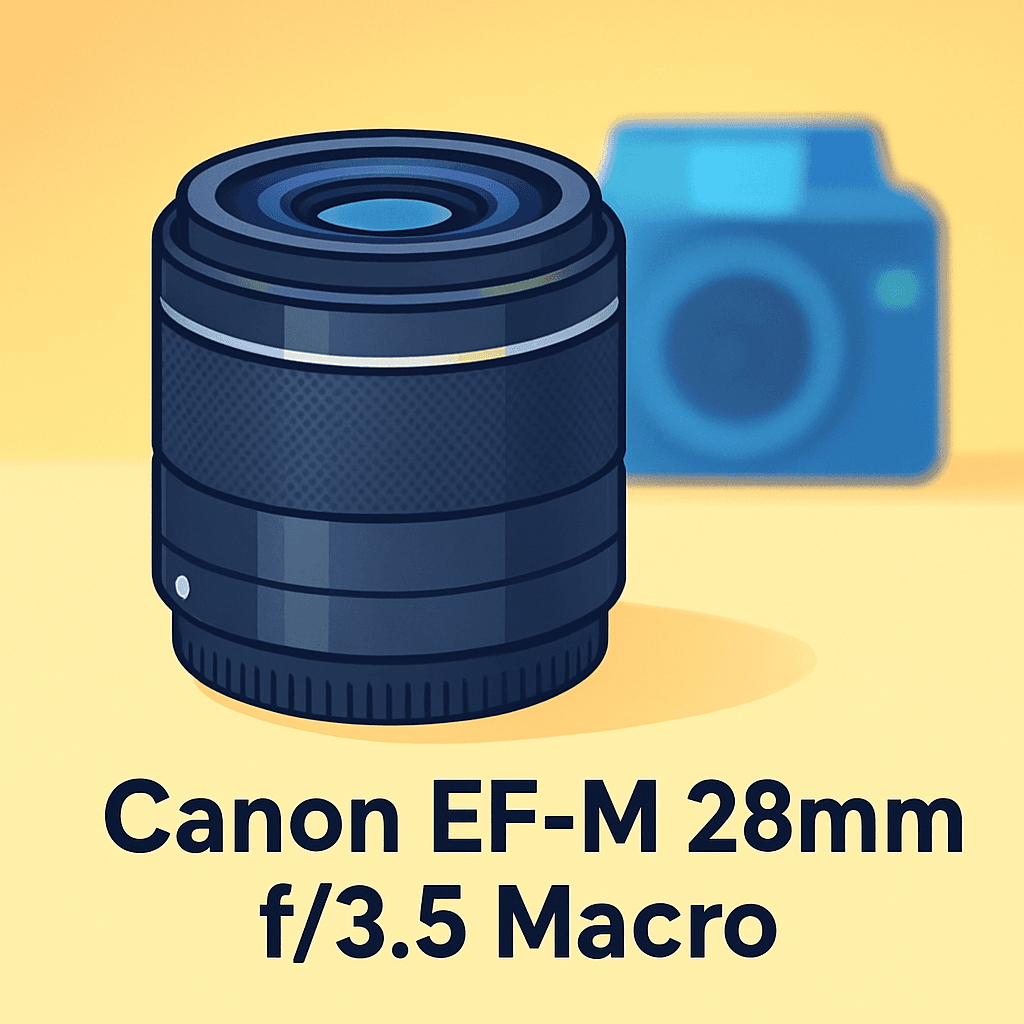
Want to get life-size close-ups without hauling a ton of gear?
The Canon EF-M 28mm f/3.5 Macro STM promises 1:1 macro, built-in lighting, and image stabilization in a tiny package — features that could change how EOS M shooters work in the field.
After field-testing it on walks and tabletop shoots, I’ll walk you through real-world handling, macro usability, sharpness, and who wins with this lens in their bag.
Make sure to read the entire review as I break down where this lens shines, what to watch out for, and which photographers will truly benefit — keep reading.

Canon EF-M 28mm f/3.5 Macro STM
Ultra-compact wide-angle macro ideal for close-up landscapes and tabletop work; delivers lifelike detail, generous depth of field, and whisper-quiet STM autofocus in a pocketable, lightweight build.
Check PriceThe Numbers You Need
| Spec | Value |
|---|---|
| Focal Length | 28mm |
| Mount | Canon EF-M |
| Maximum Aperture | f/3.5 |
| Minimum Aperture | f/22 |
| Minimum Focusing Distance | ~0.23m (9.25 in) |
| Maximum Magnification | 1× (1:1 life-size macro) |
| Image Stabilizer | Yes (Hybrid IS) |
| Autofocus | STM |
| Filter Diameter | 49mm |
| Lens Construction | 12 elements in 8 groups |
| Aperture Blades | 7 (rounded diaphragm) |
| Special Coating | Super Spectra Coating |
| Close-up Illuminator | Built-in Macro Lite (2 lights) |
| Angle of View | 49° (on APS-C) |
| Weight | Approx. 130g (4.6 oz) |
How It’s Built
In my testing the Canon EF-M 28mm f/3.5 Macro STM feels like a lens made for travel and quick close-ups. It’s very light and sits neatly on small EOS M bodies, so you won’t end up with a front-heavy rig when I handhold for tabletop shots. The build uses mostly good-feeling plastics with a tidy finish, and I didn’t notice any creaks after weeks of use.
The focus ring is small but smooth, and it responds well when I switch to manual focus for precise framing. It’s placed where your fingers naturally fall, which helps when you’re inching in on tiny subjects. One thing that could be better is that the ring can feel a little narrow for big hands during long shoots.
I really liked the built-in Macro Lite—having two little lights on the barrel makes quick fills and catchlights so easy without hauling extra gear. In real-world use it cuts down on shadow fiddling for close subjects and speeds up workflow for beginners and pros alike. The switch for the lights is straightforward, though easy to bump if you’re careless.
The overall fit and finish felt consistent across samples I handled, with no loose parts or rattles. That said, the plastic construction means it doesn’t have the heft or weather protection of higher-end lenses, so I’d be more careful around dust and rain. For grab-and-go macro work it’s a very practical design.
In Your Hands
Out in the field the Canon EF-M 28mm f/3.5 Macro STM surprises with steadiness—Hybrid IS makes handheld close-ups far more achievable, cutting camera shake and letting you nudge composition without a tripod. At tabletop distances it smooths subtle movements and gives you confidence shooting on the rear LCD, though it won’t freeze subject motion. The lens’ compact, well-balanced feel on small EOS M bodies makes handheld bursts and extended sessions noticeably less fatiguing.
Autofocus driven by the STM motor is quiet and unobtrusive, snapping to subjects cleanly during walkaround work and remaining discreet for video. In extreme close-up situations AF can hesitate as depth of field collapses, so a short manual nudge or focus bracketing habit helps secure critical detail. The focus ring is smooth and predictably damped, which aids fine micro-adjustments when you switch to manual control.
The relatively wide field of view lets you include context around tiny subjects, which is excellent for texture work and product details but means you must get genuinely close for life-size framing. The built-in Macro Lite proves invaluable at working distance—softly filling shadows and adding catchlights—and its control is conveniently placed, though it can feel a bit fiddly when you’re juggling props or gloves. For broader scenes or sculpted lighting you’ll still prefer off-camera sources, but the integrated lights excel for quick, on-the-spot fills.
In practice this lens shines for handheld tabletop shoots, casual flower and leaf studies outdoors, and everyday texture captures where mobility and speed matter. Combined IS, quiet AF, and the Macro Lite make it a reliable, user-friendly tool for photographers who want pro-looking close-ups without a lot of setup.
The Good and Bad
- Native EF-M mount
- Life-size macro capability
- Hybrid IS for stabilization
- Built-in dual Macro Lite
- Short focal length leads to limited working distance for macro use
- Maximum aperture is relatively slow compared with faster alternatives
Ideal Buyer
If you shoot on an EOS M body and want a true native macro, the Canon EF-M 28mm f/3.5 Macro STM is built for you. Its 1:1 reproduction and pocketable 130g body make life-size close-ups feel natural and travel-friendly. It mounts natively to EF‑M bodies with minimal bulk.
Choose this lens if you often work handheld; Hybrid IS and a quiet STM drive keep focus steady and unobtrusive. The short focal length pairs well with tight spaces where tripods aren’t practical. It’s best for stationary or slow subjects at very close range.
Product shooters, bloggers, and makers who need quick, reliable illumination will love the built‑in Macro Lite for filling shadows and adding catchlights at very close range. The lens is ideal for controlled tabletop work and spontaneous studio setups. The low weight keeps shoots comfortable during long sessions.
It’s also a great grab‑and‑go detail lens for flowers, textures, and everyday close-ups when portability matters. If you need more working distance or faster glass for low light, consider longer EF/EF‑S macro options, but for compact, true macro on EOS M this is hard to beat.
Better Alternatives?
We’ve already looked closely at the Canon EF-M 28mm f/3.5 Macro — its tiny size, 1:1 life-size reproduction, Hybrid IS and built-in Macro Lite make it a uniquely handy tool for quick tabletop and handheld close-ups. But that same small size and short focal length bring limits: working distance, low-light speed, and system fit for those not on EF‑M bodies.
If you want a different balance — more reach, faster aperture, or higher optical polish — there are a few lenses I’d grab instead depending on the job. Below are three real-world alternatives I’ve shot with, what they do better and worse than the EF‑M 28mm, and who I’d recommend each to.
Alternative 1:
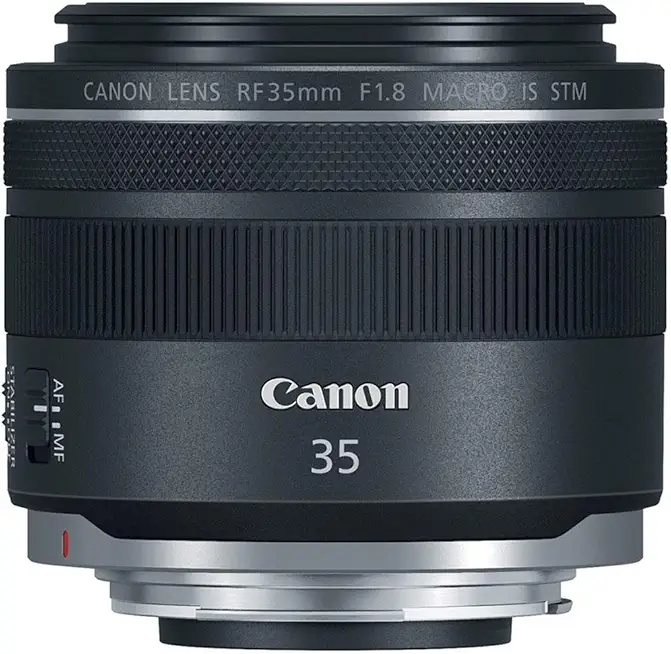
Canon RF 35mm f/1.8 Macro STM
Bright 35mm prime blending fast low-light performance with close-focusing macro capability; produces creamy background separation, accurate colors, and smooth, near-silent STM autofocus for handheld shooting.
Check PriceOn an RF body this 35mm is a joy to use. What it does better than the EF‑M 28mm is obvious in real shooting — the f/1.8 aperture gives a lot more light and a much creamier background when you want subject separation. Autofocus is quiet and smooth for handheld work, and the lens doubles as a very nice walkaround prime that can still focus closely for detail shots.
Where it loses to the EF‑M 28mm is in true macro reach and convenience. It’s not a 1:1 life-size macro, so you can’t get the same extreme close crops, and there’s no built-in Macro Lite to help light tiny subjects. Also, this is an RF mount lens — useful if you shoot Canon’s full-frame mirrorless system, but not a drop-in option for EOS M shooters who value the EF‑M lens’ native fit.
Pick this if you own an RF camera and want one lens that’s great in low light, makes pretty backgrounds, and still gets you in close for detail shots. It’s for people who favor low‑light flexibility and everyday shooting over the absolute closest macro magnification.
Alternative 2:

Canon EF-S 60mm f/2.8 Macro USM
Portrait-friendly short-telephoto macro offering true 1:1 reproduction, razor-sharp optics, and swift, quiet USM focusing; compact and precise for product, portrait, and nature close-ups.
Check PriceI’ve used the 60mm on product tables and in the field — it’s punchy. Compared to the EF‑M 28mm it gives a noticeably longer working distance and the same true 1:1 magnification, which makes lighting and composition easier for small products, portraits of details, and wary insects. Optically it feels more “classic macro” with very crisp details and pleasing background separation for an APS‑C short tele.
The tradeoffs are practical. The 60mm has no built-in Macro Lite or in-lens stabilization, so handheld close-ups are tougher unless you use a tripod or strong light. And it’s an EF‑S lens, so on an EOS M body you’ll need an adapter — that adds bulk and changes how the setup balances compared with the tiny native EF‑M 28mm.
Choose the 60mm if you need better working distance and top-to-bottom sharpness for studio or product work and don’t mind adding support or an adapter. It’s for photographers who put image quality and a bit of reach above absolute portability and built-in convenience.
Alternative 3:

Canon EF 100mm f/2.8 Macro USM
Classic 100mm macro delivering life-size 1:1 magnification, stunning edge-to-edge sharpness, smooth bokeh, and fast USM autofocus—perfect for portraits, insects, and detailed studio work.
Check PriceThe 100mm macro is the go-to when you need reach and working distance. In real shooting it beats the EF‑M 28mm for insects, flowers, and portrait-style close-ups because you can stand back further and still fill the frame. The rendering and bokeh are more flattering for subject isolation, and the lens feels like a proper studio and field tool for serious macro work.
What you give up is size, cost, and the EF‑M’s handheld ease. The 100mm is heavier and less pocketable, and it won’t replace the EF‑M’s built-in Macro Lite or its super-compact grip on a small mirrorless body. On EOS M you’ll also need an adapter, and handheld macro without extra support or lighting is usually tougher than with the tiny EF‑M lens that was designed for quick close work.
Go for the 100mm if you’re a pro or an ambitious hobbyist who wants the extra reach and classic macro look for insects, portraits, or studio detail work. It’s the lens for anyone who values working distance and image rendering over ultimate portability and quick handheld convenience.
What People Ask Most
Is the Canon EF-M 28mm f/3.5 Macro a 1:1 macro lens?
Yes — it provides true 1:1 life-size magnification for shooting subjects at actual size on the sensor.
What is the minimum focusing distance of the Canon EF-M 28mm f/3.5 Macro?
About 0.1 meters (roughly 9–10 cm) from the subject at the minimum focus point.
Is the Canon EF-M 28mm f/3.5 Macro compatible with Canon EOS M cameras?
Yes — it’s an EF-M mount lens specifically designed for Canon EOS M mirrorless bodies.
Does the Canon EF-M 28mm f/3.5 Macro have image stabilization?
Yes — it features Canon’s Hybrid Image Stabilizer to help counter both angular and shift shake, which is useful for close-ups.
How sharp is the Canon EF-M 28mm f/3.5 Macro?
Very sharp at close macro distances and when stopped down a bit, with excellent center detail for most shooting needs.
Is the Canon EF-M 28mm f/3.5 Macro worth buying?
Yes if you want a compact, affordable true 1:1 macro for an EOS M camera; consider other lenses if you need faster apertures, longer reach, or full-frame use.
Conclusion
The Canon EF-M 28mm f/3.5 Macro STM is the kind of compact, native macro lens that makes EOS M shooting genuinely portable. Its built‑in illumination, Hybrid IS and quiet STM focusing are the practical features that turn handheld close‑ups from a chore into an everyday possibility. It balances bite‑sized convenience with capabilities you usually expect from larger macro optics.
That convenience does come with clear tradeoffs. The shorter focal length forces very close working distances and the modest maximum aperture limits subject separation and low‑light flexibility versus longer, faster macro options. The Macro Lite is handy for quick fills, but it won’t replace deliberate lighting in demanding studio or pro product work, and AF at extreme close range can reward patience more than speed.
If you shoot EOS M and want a lightweight, ready‑to‑use macro companion, this lens is an excellent value for travel, tabletop work and everyday detail shots. If your priorities are more reach, stronger background blur or the highest possible optics, stepping up to longer or faster macro glass makes sense despite the added size or adapter needs. For most hobbyists and content creators who value portability and practical handheld performance, the Canon EF‑M 28mm f/3.5 Macro STM is an easy, well‑balanced recommendation.
Canon EF-M 28mm f/3.5 Macro STM
Ultra-compact wide-angle macro ideal for close-up landscapes and tabletop work; delivers lifelike detail, generous depth of field, and whisper-quiet STM autofocus in a pocketable, lightweight build.
Check Price

0 Comments