
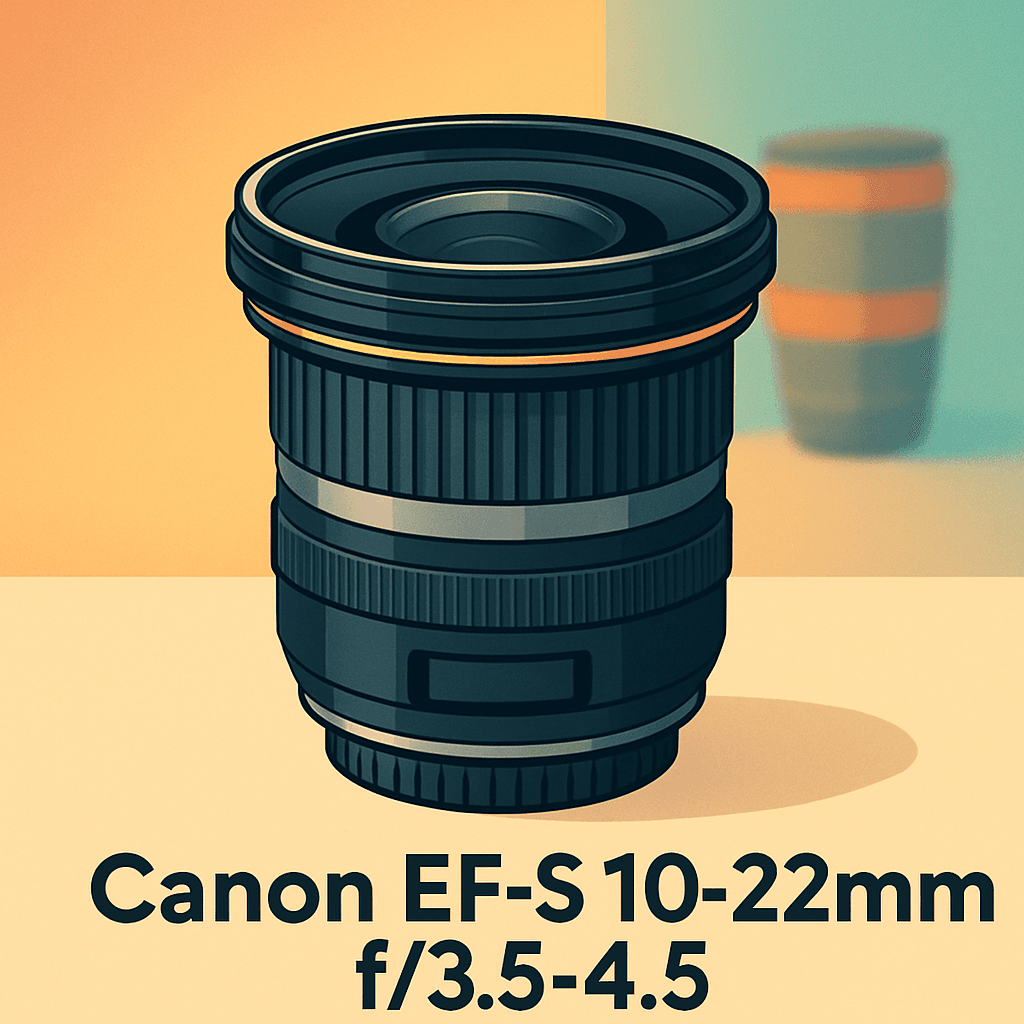
Want noticeably wider, more dramatic photos from your Canon APS-C camera without buying full-frame glass? If you’re picturing bigger skies, tighter interiors, or sweeping architecture, this review’s for you.
The Canon EF-S 10-22mm f/3.5-4.5 USM is an ultra-wide zoom made for crop-sensor bodies, and I’ve taken it into the field on travel and architecture shoots to see how it performs in real situations.
You’ll see who benefits most — travel shooters, interior and architecture photographers, and anyone who needs a compact ultra-wide with responsive autofocus — and what that extra width actually delivers in the real world.
I’ll walk through handling, image performance, autofocus behavior, and when to choose alternatives, so you can decide if it belongs in your kit. Make sure to read the entire review as I break it down — keep reading.

Canon EF-S 10-22mm f/3.5-4.5 USM
Ultra-wide-angle zoom tailored for APS-C photographers, delivering expansive perspectives, strong edge-to-edge sharpness, responsive autofocus and solid build. Ideal for architecture, landscapes and interiors with smooth background rendering.
Check PriceThe Numbers You Need
| Spec | Value |
|---|---|
| Mount | Canon EF-S |
| Focal Length | 10–22 mm |
| Aperture Range | f/3.5–4.5 |
| Format Compatibility | APS-C (crop factor ≈ 1.6x) |
| Lens Construction | 13 elements in 10 groups |
| Angle of View | 107° 6′ to 63° 30′ |
| Minimum Focus Distance | 0.24 m (9.4 in) |
| Maximum Magnification | 0.24× |
| Image Stabilization | No (relies on camera body stabilization) |
| Autofocus Motor | Ultrasonic Motor (USM) with full-time manual focus override |
| Filter Size | 77 mm |
| Dimensions (Diameter × Length) | approx. 83.5 x 86.8 mm |
| Weight | approx. 385 g |
| Aperture Blades | 6 rounded blades |
| Lens Hood | Included petal-type hood |
How It’s Built
In my testing the Canon EF-S 10-22mm f/3.5-4.5 USM feels like a lens built for serious use. The zoom and focus rings are nicely damped and easy to find by touch, so I could change framing quickly without fumbling. On a typical Canon APS-C body it balances well and feels natural on a strap or tripod.
I found the petal-shaped hood very practical — it snaps on securely and really cuts flare when the sun creeps into the frame. The front thread accepts common filters, which makes adding a polarizer or ND filter straightforward for beginners. Having that common filter size means you can reuse glass across other lenses and save money.
After using it for a while I appreciated how portable the whole package is for travel and architecture work. It’s light enough to carry all day without tiring, yet solid enough that you don’t worry about it in the field. One thing I really liked was the sturdy mount and confident hand-feel; one thing that could be better is a slightly stiffer zoom action to prevent any accidental creep when pointed down.
For new photographers this lens’ build means less fuss and more shooting — it behaves predictably, takes everyday filters, and won’t weigh you down on long days. The practical design choices make it easy to focus on composition instead of gear, which is always a win in my book.
In Your Hands
The ultra‑wide coverage here changes how you compose interiors, architecture, and sweeping landscapes; the lens lets you compress a room or expand a skyline with dramatic perspective that’s hard to replicate with longer glass. That breadth also invites creative foreground play — the close‑focus ability rewards placing near subjects prominently while keeping distant detail intact. These are the situations where the lens’s character really shines, making it a go‑to for travel and tight spaces.
On camera the build and balance feel reassuringly solid for an ultra‑wide, and the compact footprint makes it an easy companion for long days on foot. The included hood tames stray light and is simple to mount, while the front filter size fits into a standard filter workflow for grads and ND plates. In short, it travels well without compromising practicality.
Because there’s no optical stabilization in the barrel, handheld shooting nudges you toward faster shutter choices or using any in‑body stabilization your camera may offer; for deliberate long exposures a tripod becomes a sensible default. Filters sit comfortably up front for graduated or neutral density work, and swapping between handheld and tripod setups is straightforward thanks to the lens’s manageable weight.
In everyday shooting you’ll notice the usual wide‑angle tradeoffs: perspective distortion at the widest angles, and some corner darkening and fringe at the extremes that some photographers correct in RAW. Flare control is respectable but shooting into strong light can demand careful framing or a hood. Overall color and contrast feel natural with pleasing microcontrast that renders scenes with clarity and punch straight out of the camera.
The Good and Bad
- Ultra-wide coverage on APS-C (10mm; AOV up to 107° 6′)
- Lightweight and compact for an ultra-wide (~385 g; 83.5 x 86.8 mm)
- USM autofocus with full-time manual override
- Accepts common 77mm screw-in filters
- No image stabilization
- Variable maximum aperture (f/3.5–4.5)
Ideal Buyer
This is the lens for Canon APS-C shooters who need true ultra-wide coverage — the Canon EF-S 10-22mm f/3.5-4.5 USM gives roughly a 16–35mm full‑frame equivalent. If you photograph tight interiors, architecture, sweeping landscapes or cityscapes, that 10mm field of view makes compositions possible you simply can’t get with a standard zoom. Its USM autofocus with full‑time manual override keeps pace with fast-paced shooting while the compact, lightweight body stays comfortable on walk-around shoots.
Bring this when weight, filter use and handling matter — the 77mm front thread accepts grads and big NDs without awkward adapters. Close-focus to 0.24 m lets you use exaggerated foregrounds for dramatic wide-angle perspective. Just remember it lacks in-lens stabilization, so handholding at the very slow shutter speeds depends on your body or a tripod.
Ideal buyers are travel shooters, real‑estate and interior photographers, and landscape lovers who value width and a predictable Canon focus feel. Skip it if you need built‑in IS, a constant fast aperture, or if you run a full‑frame system. If you prioritize reach, stabilization, or very low‑light performance there are alternatives, but for pure ultra‑wide APS‑C work this lens remains a compelling choice.
Better Alternatives?
We’ve gone through the Canon EF-S 10-22mm f/3.5-4.5 in detail — how it handles, how it shoots, and where it shines. It’s a great ultra-wide for Canon APS-C bodies, but no single lens fits every need, so it helps to look at other options before you decide.
Below are a few lenses I’ve used in the field that I’d reach for instead of the 10-22 in certain situations. I’ll tell you what each one does better and where it gives ground, and who I think should consider it.
Alternative 1:
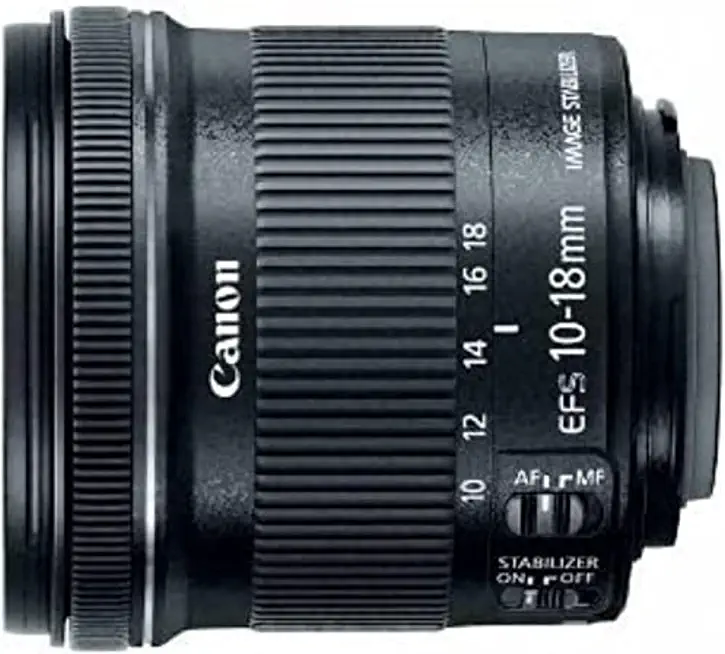
Canon EF-S 10-18mm f/4.5-5.6 STM
Compact, travel-friendly ultra-wide optimized for crop sensors, offering quiet stepping-motor autofocus and impressive sharpness for its size. Perfect for vlogging, landscapes and interiors when portability and discreet operation matter.
Check PriceI’ve used the Canon 10-18 a lot as a travel lens. Compared to the 10-22 it’s smaller, lighter and much cheaper, and it adds image stabilization and a quiet STM motor. In real shooting that translates to steadier handheld shots and very smooth autofocus in live view and video — great if you shoot handheld interiors, travel or vlogs.
Where it gives ground is low-light and out at the edges. The 10-18 is slower (f/4.5–5.6), so you’ll need higher ISO or slower shutter speeds in dim situations than with the 10-22’s f/3.5–4.5. I’ve also noticed the very corners can be softer on high-resolution bodies and you’ll want to watch for vignetting at the widest end. The build feels more plastic, too — light and nice for carrying, but not as solid in the hand as the 10-22.
Pick the 10-18 if you want something tiny and easy to carry, you shoot a lot of video or live view, or you’re on a tight budget. If you need the widest edge-to-edge quality or a bit more low-light headroom, the 10-22 still has an advantage.
Alternative 2:

Tokina AT-X 11-16mm f/2.8 Pro DX II Nikon
Fast constant f/2.8 ultra-wide zoom for APS-C cameras, delivering excellent low-light performance, crisp detail and contrast. Rugged construction and precise optics make it excellent for astrophotography and interior work.
Check PriceThe Tokina 11-16 f/2.8 is a different animal. I reach for it when I need a bright, constant aperture — night sky, indoor scenes with low light, or when I want shallower depth of field. That f/2.8 makes a real difference: you can keep ISO lower or use faster shutter speeds than with the 10-22.
On the downside, it starts at 11mm so you lose that extra 10mm ultra-wide view the Canon gives you. It’s also heavier and lacks stabilization. Autofocus on Tokina lenses can feel stiffer and louder compared to Canon’s USM/STM, and on some bodies I’ve found manual focus or a quick focus-check helpful for precise work.
If you shoot a lot of astro, indoor events, or you want the extra speed for creative wide-angle work, the Tokina is a great pick. If your main need is the absolute widest framing or the smooth, light touch of Canon AF, stick with the 10-22.
Alternative 3:
Tokina AT-X 11-16mm f/2.8 Pro DX II Nikon
Bright constant-aperture wide-angle built for APS-C shooters, offering reliable low-light performance, vivid color rendition and tough build. Perfect for night-sky, street and architectural photography.
Check PriceUsed another way, the same Tokina gives you a very solid feel and punchy color straight out of the camera. I’ve pushed it for street and architecture work where I wanted consistent exposure and color across the frame while keeping a fast shutter in mixed light. The build feels tough and it holds up when you’re working in rougher conditions.
That said, compared to the Canon 10-22 you’ll miss the extra 10mm of width and the Canon’s quieter, faster AF in many situations. The Tokina’s corners are very good centrally, but the slightly narrower field of view matters for very tight interiors or when you want dramatic ultra-wide perspectives.
Choose this Tokina variant if you prize a bright, constant aperture and rugged feel over the absolute widest angle. It’s a smart choice for night-sky shooters, street photographers who like a fast wide option, or anyone who wants solid color and contrast without swapping lenses in low light.
What People Ask Most
Is the Canon EF-S 10-22mm f/3.5-4.5 a good lens for landscape photography?
Yes — its ultra‑wide view and good overall sharpness (especially when stopped down) make it a strong landscape choice for APS‑C shooters.
Is the Canon EF-S 10-22mm compatible with full-frame Canon cameras?
No — EF‑S lenses are designed for APS‑C bodies and won’t mount or cover full‑frame DSLRs properly; on some mirrorless bodies they’ll force an APS‑C crop.
How does the Canon EF-S 10-22mm compare to the Canon EF-S 10-18mm?
The 10‑22 offers better build, a slightly wider zoom range and generally stronger optics, while the 10‑18 is lighter, cheaper and (in some versions) includes image stabilization.
Does the Canon EF-S 10-22mm have image stabilization?
No — the 10‑22mm does not include IS, so use a tripod or faster shutter speeds for low‑light or long exposures.
Is the Canon EF-S 10-22mm sharp at the wide end?
Yes in the center — corners can be a bit soft at 10mm but improve noticeably when stopped down to around f/5.6–f/8.
Can the Canon EF-S 10-22mm be used on Canon mirrorless cameras with an adapter?
Yes — it works with Canon EF‑to‑R or EF‑to‑M adapters, but on full‑frame R bodies it will typically force APS‑C crop mode, reducing resolution.
Conclusion
The Canon EF-S 10-22mm f/3.5-4.5 USM is an unabashedly practical ultra-wide zoom that leans into coverage, handling and autofocus responsiveness. It feels like a purposeful tool for photographers who need dramatic perspective and dependable AF without extra bulk. That focus makes its value proposition clear and honest.
Where it shines is straightforward: genuine ultra-wide coverage, a compact, balanced footprint that travels well, and Canon’s smooth USM with full-time manual control. The lens also plays nicely with standard filters and lets you get close to foreground subjects for strong compositional impact. Those are real-world advantages you feel every shoot.
The compromises are equally straightforward and unavoidable for some users. There’s no in-lens stabilization and the aperture varies across the zoom, so low-light handheld work and video shooters may find it limiting. It’s an EF-S design, so you must weigh those trade-offs if you ever work on full-frame bodies.
If your priority is width, tactile control and classic Canon handling, this is an excellent pick. If you need stabilization, faster apertures, or extra reach, consider the IS-equipped, faster or longer-reach alternatives mentioned earlier. Match the lens to your shooting priorities and it will reward you with reliable, characterful wide-angle images.
Canon EF-S 10-22mm f/3.5-4.5 USM
Ultra-wide-angle zoom tailored for APS-C photographers, delivering expansive perspectives, strong edge-to-edge sharpness, responsive autofocus and solid build. Ideal for architecture, landscapes and interiors with smooth background rendering.
Check Price




0 Comments