
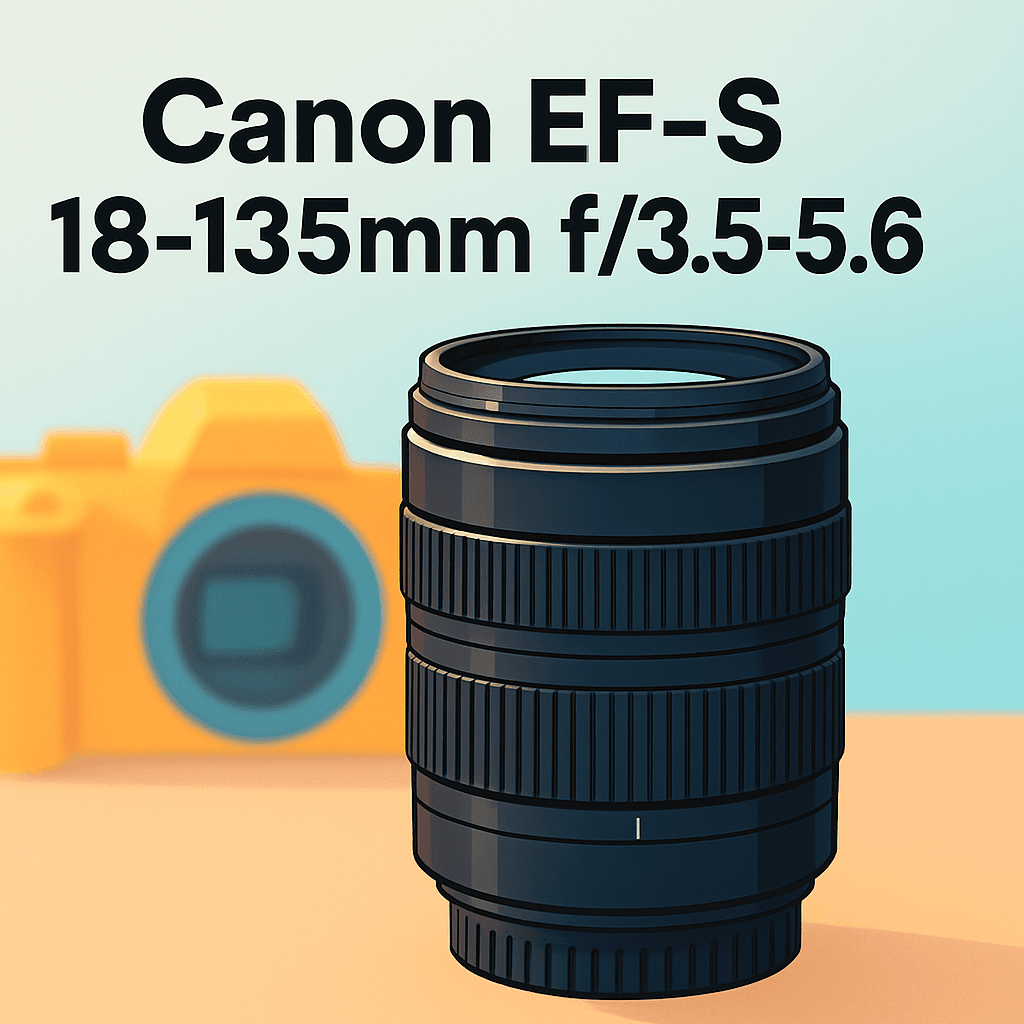
Want one lens that can handle landscapes, portraits, and street shots without swapping glass? If you use a Canon APS-C body, that’s a common question.
The Canon EF-S 18-135mm f/3.5-5.6 IS USM gives wide-to-tele coverage with Optical IS and USM in one compact zoom. I field-tested it on city walks and hikes.
It’s aimed at APS-C shooters who want an everyday, travel-ready lens that cuts down lens changes. Expect flexible coverage, useful close-focus, and stabilizer help for handheld shooting.
I’ll focus on handling, sharpness through the zoom, AF behavior, and how it fits an APS-C kit. Make sure to read the entire review — keep reading.

Canon EF-S 18-135mm f/3.5-5.6 IS USM
Versatile travel zoom delivering crisp images across a broad range, with fast ultrasonic autofocus and effective image stabilization. Lightweight construction and responsive handling make it ideal for everyday shooting and dynamic subjects.
Check PriceThe Numbers You Need
| Spec | Value |
|---|---|
| Focal length | 18–135 mm |
| Aperture | f/3.5–5.6 |
| Lens mount | Canon EF-S (APS-C sensor cameras) |
| Lens type | Standard zoom (wide-angle to medium telephoto) |
| Image stabilization | Optical IS (Image Stabilizer) |
| Autofocus motor | Ultrasonic Motor (USM) |
| Minimum focusing distance | 0.39 m (1.28 ft) |
| Maximum magnification | 0.28× |
| Lens construction | 16 elements in 12 groups |
| Angle of view | 74°20′ – 11°30′ (APS-C) |
| Filter size | 67 mm |
| Aperture blades | 7, rounded |
| Minimum aperture | f/22–38 (variable by focal length) |
| Dimensions (diameter × length) | Approx. 76.6 mm × 97.5 mm |
| Weight | Approx. 515 g (1.14 lbs) |
How It’s Built
In my testing the Canon EF-S 18-135mm f/3.5-5.6 IS USM felt like a true do-it-all lens for Canon APS-C bodies. It sits comfortably on a typical camera and doesn’t throw the balance off, so handheld shooting all day is easier than you’d expect. That makes it a great choice if you want one lens to cover most situations.
The zoom and focus rings have a pleasant, confident feel when you’re changing focal lengths on the fly. Zooming is smooth and predictable, which helps when you’re walking through a city or chasing family moments. The focus ring is smaller and a bit light, so manual focus isn’t the most precise, but it works fine for everyday use.
I really liked how practical the lens is in the field — the filter size is a common one, so finding polarizers or ND filters is simple. The barrel does extend when you reach for longer focal lengths, which is normal, but it does make the lens feel longer and a bit more exposed. That matters if you pack light or shoot in crowded spots.
After using it for a while I found the build feels more plastic than metal, so it could be a touch more solid. For beginners this means it’s easy to carry and use, but treat it with a little extra care in rough conditions.
In Your Hands
On the street or on the trail the Canon EF-S 18-135mm f/3.5-5.6 IS USM proved to be a true do-everything companion, easily moving from wide-angle context shots to tighter, compressed portraits without the constant lens swaps that slow a shoot. That reach makes it effortless to capture landscapes, family moments, and environmental portraits in a single outing, and I often found myself framing a scene at one end and isolating a subject at the other with minimal fuss.
Because the lens uses a variable maximum aperture, low-light work asks for some give-and-take—raising ISO or dropping shutter speed—so I leaned on careful exposure choices rather than wide-open glass. In practical terms the tradeoff is easy to manage for everyday use; the lens pairs well with modern APS-C bodies that handle higher ISOs gracefully.
The Optical Image Stabilizer is noticeably helpful for handheld shooting, especially when composing at the longer focal lengths or working in dimmer light. It steadies both stills and run-and-gun video, reducing the need for a tripod on casual walks or at events.
Close-focus capability makes this lens surprisingly useful for detail and product-style shots, though it isn’t a macro performer. I used it for flowers, table-top scenes, and textured details where its working distance and rendering produced pleasing subject separation.
Handling in the field is intuitive: zoom transitions are smooth, autofocus is confident, and the balance on typical APS-C bodies feels natural for extended handheld use. For city walks, hikes, and family gatherings this lens simplified my kit while delivering consistently usable images across everyday scenarios.
The Good and Bad
- Versatile 18–135 mm range (wide-angle to medium telephoto) for APS-C
- Optical Image Stabilizer (IS)
- USM autofocus motor
- Manageable size and weight for an all-in-one zoom (approx. 76.6 × 97.5 mm; 515 g)
- Variable maximum aperture f/3.5–5.6 limits light intake vs faster lenses
- EF-S mount limits use to APS-C bodies
Ideal Buyer
If you shoot on Canon APS-C bodies and want one lens to do almost everything, the Canon EF-S 18-135mm f/3.5-5.6 IS USM is that practical Swiss‑Army option. It covers wide-angle to medium telephoto without constant lens changes. The balance of size and reach makes it an easy daily carry.
Travel photographers, city walkers, and parents who shoot kids at events will appreciate the 18–135mm range and the handy Optical Image Stabilizer. USM autofocus gives quick, confident locks on portraits and casual action, while the 0.39 m close‑focus and 0.28× magnification handle detail shots that aren’t true macro. For one‑lens kits it’s a great compromise between coverage and weight.
If you demand fast low‑light apertures or plan to migrate to full‑frame, this lens will feel limiting because of the variable f/3.5–5.6 and EF‑S mount. Landscape purists or studio shooters after edge‑to‑edge microsharpness might prefer primes or higher‑end zooms. But for most run‑and‑gun situations the tradeoffs are sensible.
Buy this if you value convenience, steady handheld shooting, and a compact system that still reaches out to 135mm. Video‑centric creators who prioritize buttery continuous AF might instead consider the STM variant, while those chasing ultimate IQ can look to the 15–85mm alternative. For families, travelers, and casual pros who don’t want to change lenses constantly, it’s a solid, do‑it‑all choice.
Better Alternatives?
We’ve walked through the Canon EF-S 18-135mm and what it does best: a true grab-and-go zoom that covers wide through medium-tele in a single lens. If you liked that one-lens convenience but want something different—faster AF for video, a wider view for landscapes, or a lens that favors image quality over reach—there are a few practical swaps worth considering.
Below are three real-world alternatives I’ve used in the field. I’ll say plainly what each one does better and where it gives up ground compared to the 18-135mm, and who I think should pick each one.
Alternative 1:

Canon EF-S 18-135mm f/3.5-5.6 IS STM
Smooth, whisper-quiet focusing makes this an excellent choice for hybrid shooters; image stabilization and a versatile zoom range enable steady handheld video and stills, offering compact portability for creators on the move.
Check PriceThe STM version feels almost identical in size and balance to the USM 18-135mm, but where you notice the difference is in the way it focuses. In real shooting the STM motor is quieter and the focus moves very smoothly—this matters a lot when you’re shooting video or run-and-gun vlogs because you get near-silent AF transitions and less focus hunting noise on the soundtrack.
Where the STM loses a bit is in pure stills speed and zero-hesitation tracking. In daylight and slow-moving subjects it’s fine, but when I chased kids or pets the USM model locked a touch faster and felt more confident. Optically they’re close for everyday use, but if you push for fast action shots the STM can lag behind the USM setup.
Pick the STM if you shoot a lot of video or hybrid content and want smooth, quiet focusing on a budget. It’s a good choice for vloggers, travel shooters who use a lot of handheld video, or anyone who values calm AF noise over split-second stills performance.
Alternative 2:

Canon EF-S 15-85mm f/3.5-5.6 IS USM
Wide-angle-friendly optic with strong edge-to-edge sharpness and punchy color rendition; robust build quality, effective image stabilization and fast ultrasonic autofocus make it a top pick for landscapes, architecture and travel photography.
Check PriceThe 15-85mm is the first lens I reach for when I need better wide-angle coverage and sharper results at the short end. Shooting cityscapes and interiors, the 15mm view gives you more room to work and the images often look crisper at 15–24mm than the 18mm shots from the 18-135. In practice that means less need to stitch or crop for landscapes and architecture.
The trade-off is obvious in the field: you lose the long reach. I’ve missed the extra telephoto when trying to compress distant subjects or grab candid shots from far away—the 85mm top end simply can’t match the framing options of 135mm. The 15-85 is also a bit heavier and pricier, but you get a more solid feel and slightly better corner rendering on real scenes.
Choose the 15-85 if you’re an enthusiast or traveler who shoots a lot of landscapes, buildings, or interiors and prefers better edge-to-edge sharpness over tele reach. It’s great for photographers who value image quality and color punch over the convenience of a super-long one-lens range.
Alternative 3:
Canon EF-S 15-85mm f/3.5-5.6 IS USM
Flexible mid-range zoom that balances wide coverage with tele reach, delivering reliable contrast and accurate color. Stabilization and responsive autofocus ensure dependable results for portraits, events and everyday shooting scenarios.
Check PriceUsed as a go-to for portraits and events, the 15-85mm gives a nicer look on people at moderate distances—colors feel a little punchier and the center contrast is reassuring when you need reliable results quickly. The USM focus is quick and confident during ceremonies or family shoots, which makes it feel more “ready” than the 18-135 in busy situations.
On the downside, you do give up the extreme telephoto reach of the 18-135. For wildlife, distant sports, or tight headshots from far away you’ll find yourself stepping closer or swapping lenses more often. Also, if you want the lightest possible travel setup the extra weight and bulk of the 15-85 can be a factor after a long day of shooting.
If your work is portraits, events, or everyday shooting where mid-range flexibility and consistent color/contrast matter, the 15-85 is a solid pick. It’s aimed at photographers who want a higher-quality, reliable walkaround zoom and don’t need the 135mm long reach the 18-135 offers.
What People Ask Most
Is the Canon EF-S 18-135mm f/3.5-5.6 a good lens?
Yes — it’s a versatile, affordable all-purpose zoom for APS-C bodies, great for travel and everyday use though not a pro-grade, super-sharp optic.
Does the Canon EF-S 18-135mm f/3.5-5.6 have image stabilization (IS)?
Yes — most versions include Canon’s IS to help steady handheld shots, especially at longer focal lengths.
Is the Canon EF-S 18-135mm compatible with full-frame Canon cameras?
No — EF-S lenses are designed for APS-C cameras and won’t properly mount or cover a full-frame sensor.
What is the full-frame (35mm) equivalent focal length of the Canon EF-S 18-135mm on an APS-C camera?
On Canon APS-C bodies (1.6x crop) it’s roughly a 29–216mm full-frame equivalent.
How sharp is the Canon EF-S 18-135mm f/3.5-5.6 across the zoom range?
Sharpness is decent in the center at wide and mid focal lengths but tends to soften at the long end and in the corners, suitable for casual work but not critical large prints.
Should I upgrade from the Canon 18-55mm kit lens to the 18-135mm?
Yes if you want more reach and convenience — the 18-135 offers longer focal range and generally better handling, making it a useful upgrade for travel and versatility.
Conclusion
The Canon EF-S 18-135mm f/3.5-5.6 IS USM is a clear-minded, do‑everything lens for Canon APS‑C shooters who value convenience and dependability. In ordinary, everyday use it delivers the combination of reach, steady handheld performance, and fast-enough autofocus that keeps you shooting instead of swapping glass. It’s the kind of lens you pack when versatility beats obsession with absolute edge-to-edge perfection.
Its real-world strengths are obvious: broad coverage that handles streets, travel, family events and environmental portraits with ease, paired with stabilization and a confident AF system that simply gets the job done. The handling and balance encourage one‑lens shooting, which is priceless on hikes or busy days. For the photographer who wants fewer decisions and more frames, this lens is a pragmatic winner.
The compromises are equally real. It isn’t a low‑light specialist or a substitute for fast primes or enthusiast-grade zooms when ultimate sharpness, shallow depth‑of‑field or maximum reach matter. And its ecosystem focus on APS‑C means it’s built for a specific camera class rather than universal use.
If you want a reliable, travel-ready single lens for most situations on Canon APS‑C, this is an easy recommendation. Choose the STM for video priorities, step up to the wider 15–85 option for image-quality focus, or grab a super-tele zoom if reach is everything — but for balanced, everyday performance, this lens earns its place in the bag.
Canon EF-S 18-135mm f/3.5-5.6 IS USM
Versatile travel zoom delivering crisp images across a broad range, with fast ultrasonic autofocus and effective image stabilization. Lightweight construction and responsive handling make it ideal for everyday shooting and dynamic subjects.
Check Price



0 Comments