
Want better photos without hauling a big camera? The Canon PowerShot G16 Camera promises fast glass, full manual control, and pocket-friendly handling — but is it the right fit for your shooting style?
I’ve taken it out on shoots to test stills, video, and handheld low‑light work, so you’ll get practical takeaways, not just spec talk. This review is for travel, street, casual event shooters and enthusiasts wanting a pocketable companion to an ILC.
It shines for handheld, low‑light shooting thanks to bright glass and OIS, yet it’s from the 1080p/smaller‑sensor era and shows its age in certain areas. Make sure to read the entire review as I unpack those real‑world tradeoffs — keep reading.
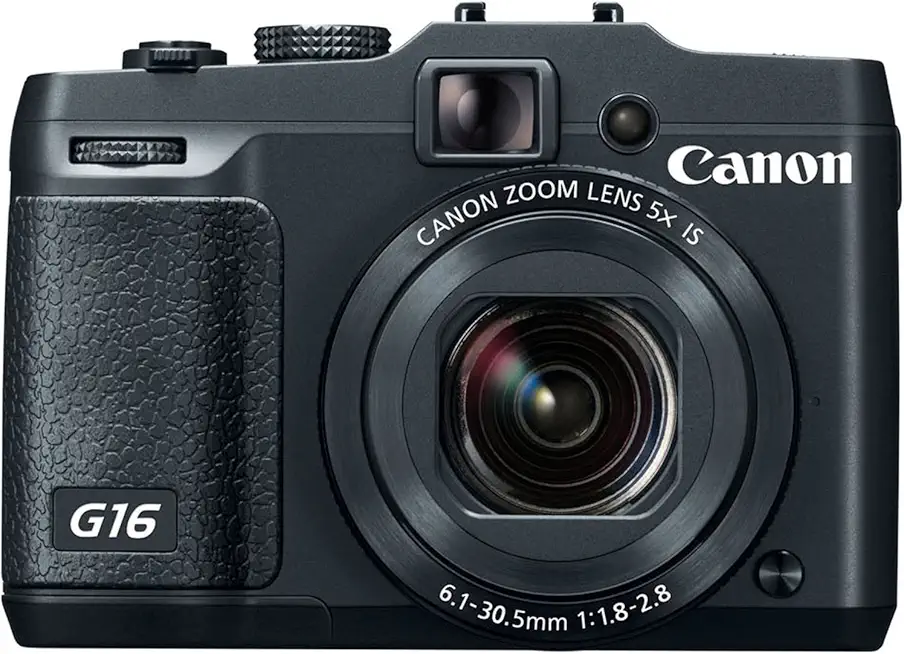
Canon PowerShot G16 Camera
Classic enthusiast compact delivering rich color, intuitive controls, bright zoom lens, and fast performance for travel, street, and everyday photography. Trusted handling with RAW capture and creative shooting modes.
Check PriceThe Numbers You Need
| Spec | Value |
|---|---|
| Sensor | 1/1.7-inch CMOS |
| Resolution | 12.1 MP |
| Lens | 5x Optical Zoom |
| Aperture | f/1.8 – f/2.8 |
| Image Stabilization | Optical Image Stabilizer (OIS) |
| ISO Range | 80 – 12,800 |
| Video Resolution | 1080p Full HD |
| RAW Image Capture | Yes |
| Manual Controls | Full |
| Display | 3.0-inch LCD Screen |
| Storage | SD/SDHC/SDXC card compatible |
| Flash | Built-in with multiple modes |
| Connectivity | Wi-Fi and NFC |
| Dimensions | Approx. 109.6 x 75.6 x 40.5 mm |
| Weight | Approx. 326 g |
How It’s Built
In my testing the Canon PowerShot G16 Camera felt like a proper little tool rather than a toy. It’s compact enough to carry every day but not so slim that it’s uncomfortable to hold for long shoots. That means you can stash it in a jacket pocket and shoot all day without hand cramps.
I found the physical controls to be a real pleasure. The dials and buttons have firm travel and make changing aperture or shutter speed quick and instinctive. For beginners that means you spend less time in menus and more time composing, which really speeds up learning.
The rear screen is a decent size and the brightness control helps outdoors, but it can struggle in very bright sun — that’s one thing that could be better. The built-in flash is handy for fill light, but don’t expect fancy bounce tricks; it’s best for quick fixes. Storage is simple with standard SD cards, though be mindful of access if you use a tripod plate.
In terms of build, I found the G16 solid and well put together with no annoying creaks during daily use. Wi‑Fi and NFC setup was straightforward and reliable for moving shots to my phone on the go. Overall it feels like a camera designed to be used, not babied.
In Your Hands
Out of the bag the Canon PowerShot G16 feels eager — menus are snappy, dials respond without fuss, and it gets shots in the frame quickly when moments pop up. It never stood between me and a scene, though occasional brief pauses in complex menus reminded me this is a compact built around shooting, not benchmarks.
The optical stabilization is one of the camera’s quiet superpowers; handheld stills come out steady even when the light fades and walking-video feels usable without a gimbal. You can push handholdability further than you might expect from a camera this size, which makes it a terrific companion for travel and street work.
When action appears, the camera’s burst cadence is best for short sequences — nimble enough to catch decisive moments but not intended as a sports specialist. AF keeps up for most everyday movement and yields a satisfying keeper rate for candid shooting.
Metering is broadly trustworthy across mixed lighting, tending toward natural contrast with a pleasant, slightly warm skin-tone rendering in ambient light. Auto white balance does a solid job in daylight and tricky indoor scenes, though rich tungsten can still tempt a manual tweak for more faithful color.
Video remains straightforward and usable for casual projects; the Full HD look is clean and stabilization smooth when filming on the move. Switching between stills and video is seamless, and manual exposure tools behave predictably while recording.
Wireless transfers are convenient and reliable for quick sharing, though active connections do take a toll on battery during long outings. Reliability in the field was reassuring — sustained shooting didn’t produce overheating or lockups, making the G16 a dependable daily carry.
The Good and Bad
- Bright lens: f/1.8–2.8 helps in low light and for background separation
- Optical Image Stabilizer enhances handheld shooting
- Full manual controls and RAW capture for enthusiast workflow
- 1080p Full HD video for casual content
- Smaller 1/1.7-inch sensor compared with many modern 1-inch compacts
- No 4K video; limited modern video features
Ideal Buyer
The Canon PowerShot G16 Camera is best for enthusiasts who prize a fast lens, real manual controls and RAW files in a compact body. If you want photographic tools rather than point‑and‑shoot auto modes, this is for you.
Travelers and street shooters who need a pocketable workhorse will appreciate the G16’s bright f/1.8–2.8 glass and effective OIS for handheld low‑light shooting. It pairs nicely with a mirrorless kit as a lighter, always‑ready option. Strong handling and solid build make it easy to carry all day.
Casual event photographers who want clean 1080p video without a complicated video ecosystem will find the G16 perfectly adequate. Built‑in Wi‑Fi/NFC and tactile dials keep workflow simple and let you capture and share fast. Battery life and simple menus keep long days manageable.
Choose the G16 if you value feel, control and a small package over cutting‑edge specs like 4K or a 1‑inch sensor. If you need modern AF tracking, deeper low‑light headroom or 4K video, look to newer compacts — otherwise this remains a charming, stills‑first companion. It’s ideal for photographers who put stills first and want a tactile tool.
Better Alternatives?
We’ve gone deep on the G16 — its bright f/1.8–2.8 lens, solid handling, and where it still holds up for travel and street shooting. But camera tech has moved on: newer pocket cameras give you bigger sensors, 4K video, and faster autofocus that change how you shoot in real life.
If you like the G16’s size and controls but want more image quality, better video, or faster focus, here are three practical alternatives I’ve used and what each will actually do differently in your hands.
Alternative 1:
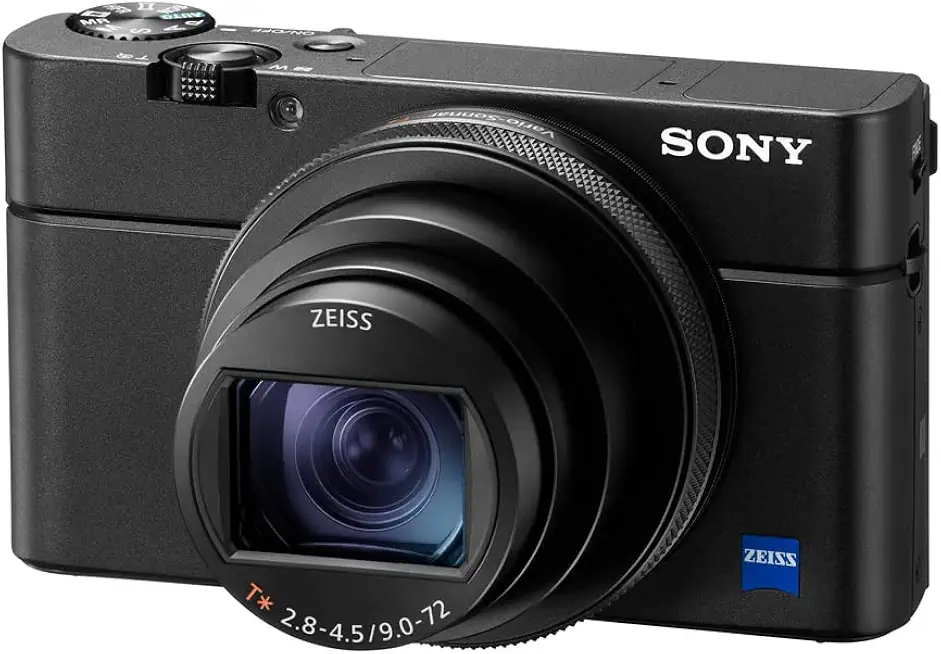
Sony RX100 VII Camera
Premium pocketable camera with lightning-fast autofocus, superb low-light performance, high-speed continuous shooting, and versatile zoom — ideal for vloggers, travelers, and professionals who need pro features in a tiny body.
Check PriceI’ve used the RX100 VII a lot when I needed one camera that can do almost everything while staying in a jacket pocket. Compared to the G16 it gives cleaner photos in low light, much better subject tracking for moving people and kids, and 4K video — so you’ll get sharper stills and steadier-looking video in real shoots. The built-in pop-up EVF and longer zoom reach make it more flexible for travel and candid work.
What it trades away is that the RX100 is smaller and a bit fiddly to hold for long shoots, and the controls aren’t as chunky as the G16’s dials. Battery life runs shorter too, and there’s no hot shoe for a bigger flash if you like external lighting. In fast telephoto use the lens also closes down more, so it doesn’t feel as bright at the long end as the G16’s wider aperture does at shorter ranges.
If you shoot a lot of moving subjects, vlog, or travel light, you’ll like the RX100 VII. It’s for photographers who want top-notch autofocus and 4K in the smallest package — but if you prefer big, tactile controls and longer battery life, the G16 still feels nicer in hand.
Alternative 2:

Canon PowerShot G7 X Mark III Camera
Compact vlogging powerhouse offering clear low-light images, 4K video, flip touchscreen for selfies, and simplified live-streaming features — perfect for content creators wanting pro video on the go.
Check PriceThe G7 X Mark III is the closest Canon answer if you want the G16’s handling but with modern video and better low-light chops. I’ve used it for quick travel videos — the flip touchscreen and 4K make framing and shooting easy, and images look cleaner than the G16’s in the same dim bars or evenings. It’s very pocketable, so it’s great when you don’t want to carry much.
Compared to the G16, you lose some of the G16’s physical controls and the built-in flash options. Battery life is also shorter when shooting lots of 4K or live streams. Autofocus is faster than the old G16 in everyday stills, but it won’t track action as well as the Sony RX100 VII. Also, real-world streaming often needs extra mics or adapters since the handling of external audio is more limited than some would expect.
Buy the G7 X Mark III if you’re a content creator or vlogger who wants simple, good-looking video and better low-light photos than the G16, all in a very small body. If you still want lots of physical controls or you rely on long battery life, stick with the G16 or look at larger bodies.
Alternative 3:
Canon PowerShot G7 X Mark III Camera
Lightweight creator-ready camera with fast autofocus, impressive image quality, built-in mic input, and easy connectivity for livestreams and social sharing — great for solo filmmakers and travel content creators.
Check PriceTalking about the G7 X Mark III again from a slightly different angle: in real shoots it feels like a modernized G16 — sharper photos, much better high-ISO behavior, and video tools that actually help when you’re shooting stories for social. The touchscreen and simple menus speed up quick setups compared with fiddling through the older G16 interface.
Where it’s worse is in raw, hands-on shooting: you don’t get the same range of physical controls the G16 offers, and there’s no hot shoe for pro flashes. If you’re used to the G16’s dial layout, the Mark III feels more consumer-focused. Also, for long shoots you’ll notice the battery and heat limits when shooting lots of 4K video.
This camera fits solo filmmakers, travel vloggers, and anyone who wants better image quality and easy streaming out of a tiny camera. It’s not for photographers who need the G16’s tactile controls, long battery life, or very flexible flash options — but it’s a big step up for everyday video and social-first stills.
What People Ask Most
Is the Canon PowerShot G16 worth buying?
Yes if you want a compact with a fast zoom, full manual controls and RAW files at a bargain, but skip it if you need the best low-light performance or a more modern sensor.
How does the Canon PowerShot G16 compare to the Canon PowerShot G15?
The G16 brings small but useful upgrades over the G15 — slightly better sensor, improved ISO handling and AF — while keeping the same excellent handling and fast lens.
How does the Canon PowerShot G16 compare to the Sony RX100?
The RX100 has a larger 1″ sensor and better low-light image quality, while the G16 offers a longer zoom, more physical controls and a slightly brighter lens in some ranges.
What are the pros and cons of the Canon PowerShot G16?
Pros: fast, versatile zoom, strong handling, RAW support and good image quality for its class; Cons: small 1/1.7″ sensor limits high-ISO performance and battery life is only average.
Does the Canon PowerShot G16 shoot RAW?
Yes — the G16 records RAW (CR2) files for flexible editing and better image control.
What is the image quality of the Canon PowerShot G16?
Image quality is very good at low to mid ISOs for a 1/1.7″ sensor with sharp optics, but noise and dynamic range lag behind 1″ and larger-sensor rivals.
Conclusion
The Canon PowerShot G16 Camera remains a compelling pocketable tool for photographers who put stills first. Its bright lens, effective stabilization, full manual controls and RAW capture combine into a shoot-now, refine-later workflow that still sings. Wi‑Fi transfer and dependable Full HD video round out a camera that simply gets the basics right.
It does show its age in areas that matter to some buyers. The smaller sensor and absence of 4K place it behind newer compacts with bigger sensors and modern video toolkits. Autofocus and continuous shooting are competent but no match for today’s hybrid AF systems.
If you prioritize low-light handheld stills, tactile dials and a forgiving RAW workflow, it’s an honest choice. Travel shooters, street photographers and enthusiasts who want a pocketable companion will appreciate the handling and lens speed. If you prize cutting-edge video or long-reach telephoto, look elsewhere.
The Canon PowerShot G16 Camera is a capable classic — not revolutionary, but reliably effective for stills-first shooters. It’s a camera I’d recommend to anyone who values lens speed, stabilization and manual control over headline specs. For buyers chasing 4K, faster AF or a larger sensor, modern 1‑inch compacts are the better direction.
Canon PowerShot G16 Camera
Classic enthusiast compact delivering rich color, intuitive controls, bright zoom lens, and fast performance for travel, street, and everyday photography. Trusted handling with RAW capture and creative shooting modes.
Check Price

0 Comments