
Want a DSLR small enough to travel with but still make a real jump in your images?
After field-testing the Canon EOS Rebel SL1 Camera on a few short trips, I focused on real-world shooting, not lab numbers. We’ll evaluate stills, viewfinder vs live-view AF, low-light ISO, video usability, and handling with kit and prime lenses.
This one’s aimed at beginners and travel shooters who want a straightforward, pocketable DSLR that lets you shoot more and carry less. It’ll highlight the SL1’s compact strengths and the practical trade-offs you should expect.
If you’re weighing portability against modern AF and video conveniences, this hands-on review will show what the SL1 actually delivers in the field—keep reading

Canon EOS Rebel SL1 Camera
Ultra-compact DSLR delivering crisp APS-C images, intuitive controls, and fast autofocus in a lightweight body—ideal for travel and beginners seeking DSLR quality without bulk.
Check PriceThe Numbers You Need
| Spec | Value |
|---|---|
| Model | Canon EOS SL1 (EOS 100D) |
| Sensor | 18 MP APS-C CMOS |
| Image processor | DIGIC 5 |
| ISO range | 100–12800 (expandable to 25600) |
| Autofocus | 9-point AF system with 1 cross-type point |
| Viewfinder | Optical pentamirror, approx. 95% frame coverage |
| LCD screen | 3.0-inch, 1,040,000 dots |
| Continuous shooting speed | Up to 4 fps |
| Video recording | Full HD 1080p at 30 fps |
| Lens mount | Canon EF/EF-S |
| Weight | Approximately 407 g (body only) |
| Built-in flash | Yes |
| Connectivity | HDMI output, USB 2.0, mini-DIN remote control terminal |
| Battery | LP-E12 lithium-ion battery |
| Body size | Approx. 116.8 × 90.7 × 69.4 mm |
How It’s Built
In my testing the Canon EOS Rebel SL1 Camera felt like a full DSLR shrunk down. It’s delightfully compact and easy to stash in a small bag, so I found myself taking it places I normally leave a bigger camera at home. That portability makes it a great travel or beginner option without feeling toy-like.
I shot with a small prime and a compact EF-S zoom to see the balance. With the prime it felt perfectly balanced and nimble, and with the zoom it leaned a bit forward but stayed manageable for hand-held walks. One thing I really liked was how natural it felt to shoot all day, and one area that could be better is the grip for larger hands — it’s a touch snug.
The optical viewfinder gives familiar DSLR framing, although it doesn’t show every inch of the scene so you may need to watch your edges. The rear screen is high-res and very usable for checking focus and reviewing shots, which made live view more pleasant than I expected. The built-in flash is handy for quick fill shots and casual indoor work.
Port access is straightforward with HDMI, USB, and a remote terminal for basic tethering or remote triggering. It runs on the LP-E12 battery, so packing a spare is simple for day trips. After using it for a while, I found the layout and ports perfectly practical for beginners and travel shooters.
In Your Hands
Out in the field the Canon EOS Rebel SL1 feels purpose-built for travel and everyday shooting; startup is quick and the camera settles into a steady, predictable rhythm rather than a race-car pace. The burst behavior is modest — fine for family moments and street sequences but it shows its age when you try to chase fast action and the buffer fills sooner than on more modern bodies.
Shooting through the optical viewfinder is the most satisfying way to work, with focus locking reliably on static subjects and the camera feeling responsive in the hand. When I switched to Live View the autofocus was noticeably slower and prone to hunting, so I found myself defaulting to the viewfinder for decisive frames.
In good daylight the sensor and image engine deliver pleasant color and usable fine detail, and in typical indoor or travel situations the camera handles moderate high‑ISO settings with dignity. As light falls you’ll see more grain and softened microdetail, but RAW files still give you room to recover shadows and tame noise for prints or web use.
Full HD video is straightforward for short clips in decent light, though Live View focus and exposure shifts remind you this is a basic movie tool rather than a production camera. The LP‑E12 battery is small and easy to pack spares for long days, and practical test scenes I used included a daylight street walk with an EF‑S zoom, indoor low‑light portraits, and brief handheld Full HD clips to judge handling and focus behavior.
The Good and Bad
- Compact and lightweight DSLR body (approx. 407 g; 116.8 x 90.7 x 69.4 mm)
- EF/EF-S mount access to a wide range of lenses
- 3.0-inch, 1,040,000-dot LCD is clear and detailed
- Full HD 1080p at 30 fps for basic video needs
- 9-point AF with only 1 cross-type point limits tracking sophistication
- Contrast-detect live view AF is slower than newer Dual Pixel systems
Ideal Buyer
If you’re new to interchangeable lenses and crave a small, familiar DSLR layout, this is for you. The SL1 pares controls down to essentials so you can learn exposure without being overwhelmed. It’s forgiving and instantly recognizable to anyone who’s used a Canon.
Travelers and family shooters benefit most from its pocketable footprint and light weight. Pair it with a compact EF‑S zoom or a small prime and the in‑hand balance feels right for long walks. The clear 3.0-inch screen and optical viewfinder keep framing simple and dependable.
If you prioritize fast live‑view autofocus, 4K video, or high burst rates, look elsewhere. Video‑first creators and sports shooters will feel the limits of the older AF system and 4 fps shooting. The SL1 shines when simplicity and size matter more than cutting‑edge specs.
For someone stepping up from a phone or basic point‑and‑shoot and who plans to build an EF/EF‑S kit, the Canon EOS Rebel SL1 Camera is a practical, low‑friction companion. It teaches core skills, fits in a small bag, and gets the job done for everyday moments. Buy it if portability and straightforward DSLR handling are your top priorities.
Better Alternatives?
We’ve gone through the Canon SL1 in detail — what it shoots well, where it struggles, and how it feels in the hand. If you like the SL1’s tiny DSLR footprint but want something with faster live-view focus, better video, or simply a different price point, there are a few easy choices to consider.
Below are three real-world alternatives I’ve used. For each one I’ll point out what it does better and worse than the SL1, and the kind of buyer I think would prefer it. I’ll keep it practical and to the point so you can pick the right path for your shooting needs.
Alternative 1:

Canon EOS Rebel SL3 Camera
Versatile, travel-friendly DSLR with 4K video, vari-angle touchscreen, and responsive autofocus for smooth vlogging and photography. Beginner-friendly interface and long battery life make it great for creators on the go.
Check PriceI’ve shot with the SL3 a fair bit and its live-view autofocus feels like a real step up from the SL1. When I switch to live view or record video, the focus locks on faster and smoother, so I spend less time wrestling with hunting focus. The flip-out screen also makes it much easier to frame low or high shots and to vlog, something the SL1’s fixed handling can’t match.
Where the SL3 loses to the SL1 is in sheer compactness and price. It’s a touch larger and a bit heavier, so if pocketability was your main reason for choosing the SL1, you’ll notice the difference. Also, the 4K mode on the SL3 has limits in real shooting (cropping and some quirks), so it isn’t a flawless win for video, just more capable overall than the SL1’s 1080p-only setup.
Who should pick the SL3: shooters who want the same small-DSLR idea but need quick live-view focus and a flip screen for vlogging or awkward-angle shots. I’d recommend it for travel creators and beginners who want a modern, easy-to-use camera and don’t mind a little extra size and cost.
Alternative 2:

Nikon D3500 Camera
Entry-level DSLR with 24MP sensor and superb battery life, offering easy-to-use Guide Mode and reliable autofocus for sharp images—perfect for new photographers learning DSLR basics and shooting outdoors.
Check PriceI’ve used the D3500 on long days of shooting and one thing you notice right away is the battery life — it keeps going much longer between charges than the SL1 in my experience. The camera is simple and solid for stills, and the color and detail in daylight shots look great straight out of the camera. If you’re shooting outdoors all day, the D3500 is forgiving and easy to rely on.
On the downside, the D3500’s live view and video focus are slow compared with modern Canon bodies, and it lacks the SL1’s very compact feel. For video work or fast live-view shooting the D3500 feels sluggish; it’s best used as a pure stills camera. It also doesn’t have a flip screen, which makes vlogging or awkward-angle shooting less convenient than the SL1 or SL3.
Who should choose the D3500: a beginner who cares about long days in the field, steady stills, and easy handling rather than fast live-view autofocus or video. If you value battery life and a simple, dependable camera for outdoor and travel photography, this is a very sensible pick.
Alternative 3:
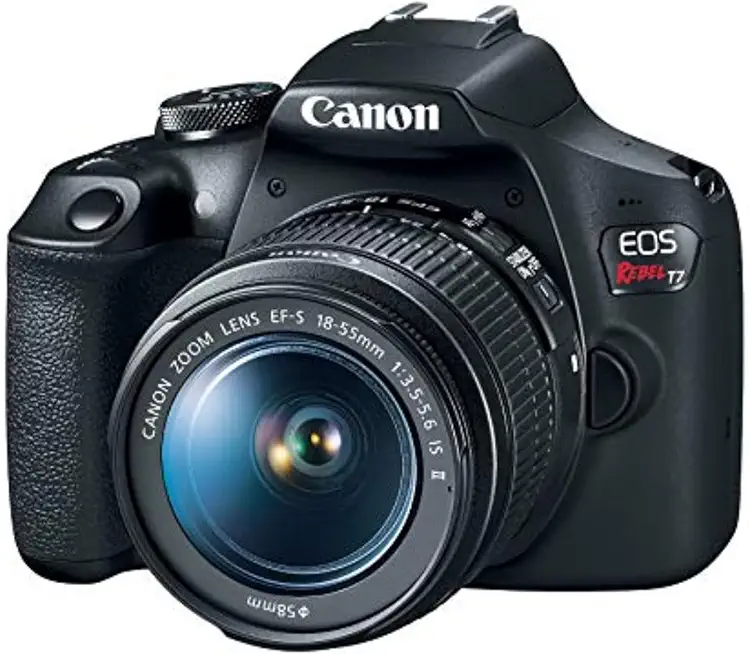
Canon EOS Rebel T7 Camera
Affordable, user-friendly DSLR with high-resolution sensor and straightforward controls, delivering detailed photos and built-in connectivity for quick sharing—an excellent starter camera for everyday photography.
Check PriceI’ve shot with the Rebel T7 as a budget option and what stands out is the price-to-image-quality balance. For the money you get larger file sizes and decent detail for prints and social sharing, which is a noticeable jump over phone cameras. It’s easy to use and makes getting good photos quick for new shooters.
Compared to the SL1, the T7 gives you similar basic photo quality but feels bulkier and less refined in handling. Live view focusing is also slow, so for video or quick framing in live view the SL1 still feels nippier. The T7 is great when cost is the main concern, but you’ll miss the SL1’s very compact body and clearer live-view experience.
Who should go for the T7: an absolute beginner on a tight budget who wants the best possible stills for the price and doesn’t need fast live-view autofocus or a flip screen. It’s a good first DSLR if you plan to focus on photos and keep gear costs low.
What People Ask Most
Is the Canon SL1 a good camera for beginners?
Yes—it’s a compact, easy-to-use DSLR with a friendly learning curve and optical viewfinder, but newer mirrorless bodies offer better autofocus and video today.
How does the Canon SL1 compare to the Canon SL2?
The SL2 has a higher-resolution sensor, faster processor and much better live-view/video autofocus (Dual Pixel), so it feels noticeably more modern than the SL1.
Is the Canon SL1 good for video recording?
It records 1080p video but its autofocus in live view is slow and prone to hunting, so it’s fine for basic clips but not ideal for run-and-gun shooting.
What is the image quality like on the Canon SL1?
Image quality is good in daylight with punchy colors and decent detail from the APS-C sensor, though high-ISO performance trails newer cameras.
Is the Canon SL1 worth buying used today?
Yes if you want a small, affordable DSLR for stills and learning, but only buy used at a low price if you accept older autofocus and video limits.
What lenses are compatible with the Canon SL1?
It accepts all Canon EF and EF-S lenses, giving you a wide range of options from kit zooms to primes.
Conclusion
The Canon EOS Rebel SL1 Camera is a rare compact DSLR that actually delivers a comfortable, familiar shooting experience without the bulk. It’s ideal for beginners and travel shooters who prioritize pocketable handling, clear rear LCD feedback, and straightforward controls. In real-world shooting it rewards careful framing and lens choice with pleasing daylight images and reliable viewfinder operation.
Those benefits come with clear trade-offs: the autofocus system and live-view focusing are from an older generation and can feel slow when tracking motion or recording video. Burst speed and video capabilities are modest compared with newer rivals, and you’ll notice limits when pushing high-ISO or demanding continuous action. For casual family, street, and travel work these compromises are acceptable; for more demanding use they become frustrating.
If you value portability, tactile DSLR controls, and access to Canon lenses, keep the SL1 as a purposeful, pocketable tool. If you need faster live-view AF, 4K video, higher burst rates, or longer runtime, look at newer models instead. The SL1 is a confident niche choice — small, simple, and satisfying for the right shooter.
Canon EOS Rebel SL1 Camera
Ultra-compact DSLR delivering crisp APS-C images, intuitive controls, and fast autofocus in a lightweight body—ideal for travel and beginners seeking DSLR quality without bulk.
Check Price



0 Comments