
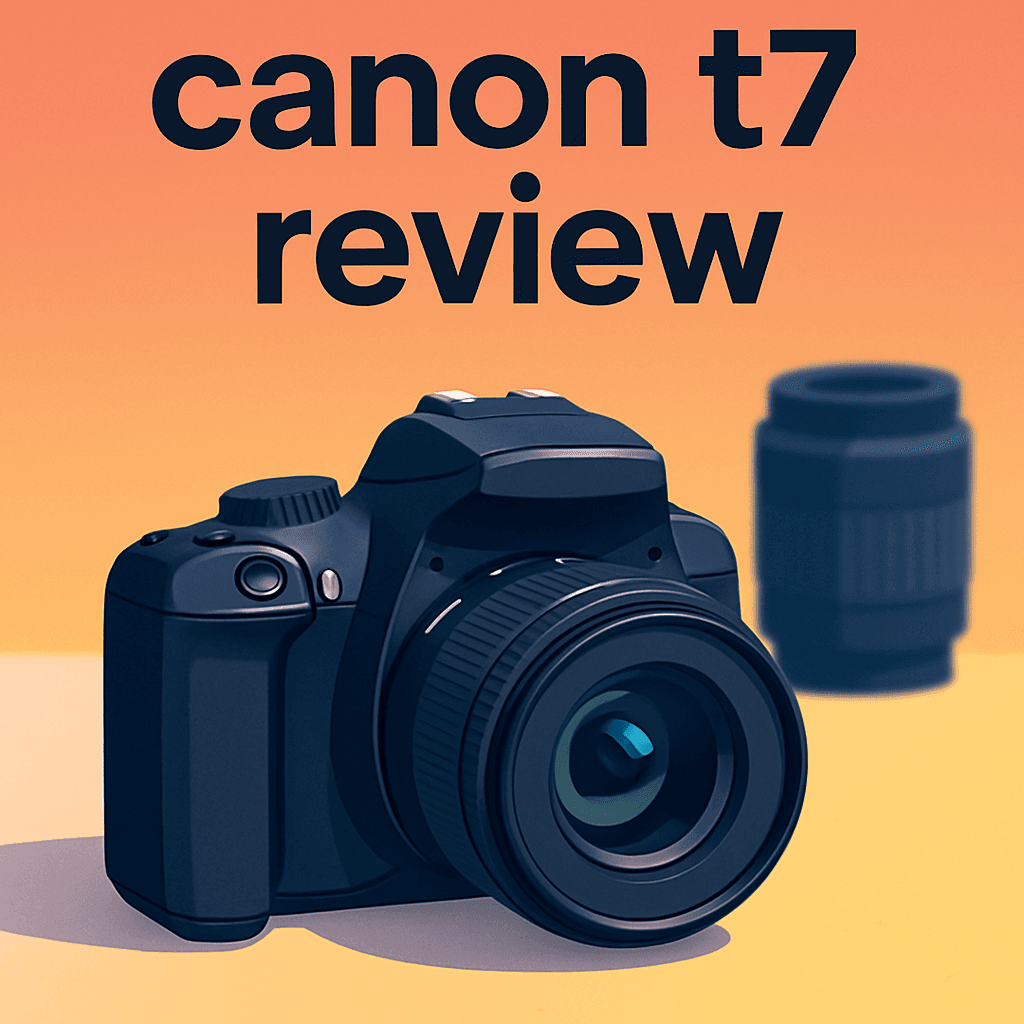
Looking for a simple DSLR that won’t overwhelm your first steps into photography?
I personally field-tested the Canon EOS Rebel T7 Camera and compared it with a couple of close rivals. I’ve shot street, portraits, and low-light scenes to see what really matters.
This camera is built for beginners and casual shooters who want straightforward controls and good stills. It’s a handy step-up from phone photography without breaking the bank.
You’ll get reliable image quality, long battery life, and easy wireless sharing. The learning curve is gentle, so you’ll keep shooting and improving.
The headline compromise is simple: it doesn’t offer 4K video and the autofocus is basic. That limits action shooting and advanced videography.
There’s more to it than you expect. So keep reading as I reveal one shocking trick about the Canon EOS Rebel T7 Camera that could boost your photo quality.

Canon EOS Rebel T7 Camera
Compact, user-friendly DSLR with a 24.1MP APS-C sensor, intuitive controls and built-in Wi‑Fi. Capture crisp photos and Full HD video effortlessly—ideal for beginners wanting reliable performance and everyday versatility.
Check PriceThe Numbers You Need
| Spec | Value |
|---|---|
| Sensor | 24.1 MP APS-C CMOS |
| Image processor | DIGIC 4+ |
| ISO range | 100–6400 (expandable to 12800) |
| Autofocus system | 9-point AF with 1 cross-type point |
| Continuous shooting | 3 fps |
| Video resolution | 1080p at 24/25/30 fps |
| Lens mount | Canon EF/EF-S |
| Kit lens | 18–55mm f/3.5–5.6 IS II |
| Battery life | Approximately 500 shots per charge |
| Connectivity | Built-in Wi‑Fi and NFC |
| Viewfinder | Optical; ~95% coverage, 0.80× magnification |
| Screen | 3.0″ fixed LCD, 920k dots (non-touch) |
| Body construction | Plastic body; no weather sealing |
| Weight | Approximately 475 g (with battery and memory card) |
| RAW support | Yes — Canon CR2 RAW format |
How It’s Built
In my testing the Canon EOS Rebel T7 feels light and friendly in the hand because the body is made of plastic. That keeps the camera easy to carry around for a day of shooting, which is great for beginners who don’t want to lug heavy gear. I really liked how the grip and button layout make it simple to point and shoot without fuss.
One thing that stood out was the traditional optical viewfinder — it’s clear in bright sun and makes framing fast and intuitive. The screen, however, is fixed and not touch sensitive, and that can be annoying when you want low-angle shots or quick menu taps. For real use that means you’ll often move the whole camera instead of tilting the screen, which is fine but less convenient.
After using it for a while I found the build feels sturdy for casual use but it won’t take heavy weather or rough handling. There’s no weather sealing, so you’ll want a rain cover or to stay under shelter when shooting outdoors. Overall it’s a forgiving, beginner-friendly body that’s easy to learn on, just treat it with a little extra care.
In Your Hands
The Canon EOS Rebel T7’s autofocus is straightforward and predictable, making it easy to lock onto stationary and slowly moving subjects. In everyday shooting it feels responsive and reliable, but it can struggle to track quick action or erratic motion, so expect a few missed frames when things get hectic. For casual portraits, landscapes and street work the AF is entirely up to the task.
In mixed lighting the camera delivers pleasing results with a natural color palette and usable detail, and shooting RAW (CR2) gives room to rescue shadows and refine tones in post. Noise becomes more noticeable as light dwindles, yet images remain perfectly serviceable for web and print at typical sizes. The sensor and processor pairing favors good-looking stills with minimal fuss.
Burst performance is modest and not geared toward sports or wildlife, so plan around single-frame timing rather than rapid-fire sequences. Video is limited to Full HD, which is fine for vlogs, home movies and quick social clips; the simple controls make getting rolling painless. Autofocus while recording works for basic subjects but can hunt under more demanding conditions.
Battery life and ergonomics support extended casual sessions without constant recharge, and the built-in Wi‑Fi/NFC makes sharing and remote control straightforward. Together these traits make the T7 a forgiving, no-nonsense tool for beginners learning DSLR workflow and building foundational skills.
The Good and Bad
- Easy to use for beginners and straightforward learning curve
- Delivers good image quality for an entry-level DSLR
- Affordable option for first-time DSLR buyers
- No 4K video recording capability
- Limited autofocus system with only 9 AF points
Ideal Buyer
Photographers taking their first deliberate steps beyond smartphone shots will find the Canon EOS Rebel T7 an easy, confidence-building choice. Its straightforward controls, optical viewfinder and 24.1MP sensor make learning composition and exposure simple. It also benefits from an intuitive menu layout.
Budget-conscious buyers who still want solid image quality and access to the Canon EF/EF-S lens ecosystem will appreciate the value here. Built-in Wi‑Fi and NFC let you share images quickly without a steep learning curve. Battery life that supports long outings keeps it practical for travel and family use.
If your priority is sharp stills rather than cutting-edge video, the T7 delivers dependable JPEG and RAW results for portraits, landscapes and everyday shooting. Casual videographers will be fine with Full HD, but don’t expect 4K capabilities. It’s ideal for portraits, travel, and learning creative techniques.
This camera is not aimed at sports shooters or videographers chasing fast autofocus, 4K video or a touchscreen interface. If you need faster burst rates, more AF points or weather sealing, consider stepping up to a newer Rebel or mirrorless model. For everyone else, it’s an affordable, forgiving introduction to DSLR photography.
Better Alternatives?
We’ve already gone through the Canon T7 and what makes it a good, simple starter DSLR. It’s great for steady, careful shooting and learning the basics, but some shooters will want faster focus, a flip screen, or 4K video as they grow.
Below are three real-world alternatives I’ve used that step up in different ways from the T7. I’ll tell you what each one does better or worse in actual shooting, and what kind of buyer will likely prefer it.
Alternative 1:

Canon EOS 850D Camera
Advanced yet approachable DSLR featuring a responsive Dual Pixel autofocus system, articulating touchscreen and 4K/Full HD video capture. Fast continuous shooting and customizable controls suit aspiring photographers and content creators.
Check PriceIn real shooting, the Canon EOS 850D feels like a more capable version of the T7. Autofocus is noticeably quicker and more reliable when I’m tracking people or kids running around, and the articulating touchscreen makes low-angle or vlog-style shots much easier. 4K video is handy when I want to crop or pan in post without losing quality — something the T7 can’t do.
Where it’s worse than the T7 is mainly cost and battery life. The 850D is a bit pricier and its battery doesn’t last as many shots as the T7 in long days of shooting, so I carry a spare. Also, with more buttons and options it can feel more complicated for someone who liked the T7’s simple layout.
If you’re an aspiring shooter who plans to make videos, vlog, or wants better autofocus for kids or pets, the 850D will suit you. It’s a good step-up body for someone who started on a T7 and wants more speed and a flip screen without leaving the DSLR world.
Alternative 2:
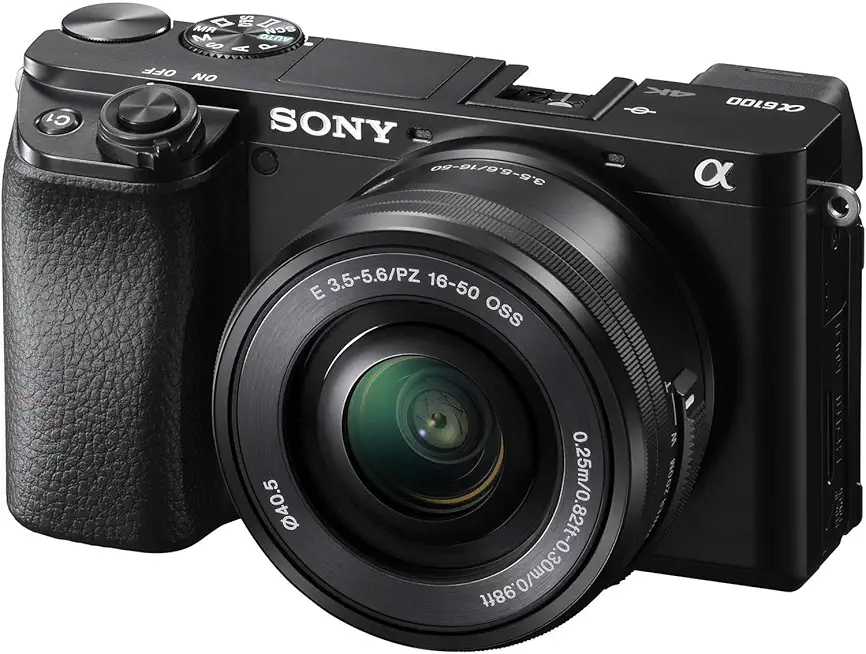
Sony Alpha A6100 Camera
Compact mirrorless with a 24MP APS-C sensor and real-time autofocus, offering smooth 4K video, fast burst shooting and a flip-up screen—perfect for travel photographers and vloggers seeking speed and clarity.
Check PriceThe Sony A6100 is a different kind of camera compared to the T7 — it’s mirrorless and much faster in autofocus and burst shooting. In the field I loved how reliably it locked onto eyes and kept subjects sharp while moving, and the compact body makes it easier to carry all day. Video is cleaner and the quick autofocus makes run-and-gun work much less stressful than on the T7.
Its downsides versus the T7 are practical: battery life is shorter, and you don’t get an optical viewfinder so the feel of shooting is different. Also, if you already own Canon EF lenses you’ll need adapters to use them, which adds bulk and cost. The menus can be fiddly until you learn them.
The A6100 is great for travelers, vloggers, and anyone who wants quick autofocus and light weight. If you value speed and small size over the tried-and-true handling of a DSLR, this is the camera I’d pick over a T7.
Alternative 3:

Nikon Z 50 Camera
Stylish, compact mirrorless offering sharp APS-C image quality, 4K video, responsive autofocus and a solid grip. Controls and wireless connectivity make it an excellent choice for enthusiasts and travel shooters.
Check PriceThe Nikon Z50 sits in between the other two in feel: it’s mirrorless like the Sony but has a comfy grip and a very natural shooting feel that I liked straight away. In real use its autofocus and low-light performance were better than the T7, so handheld evening shots and quick street scenes come out cleaner. The flip screen and 4K video give modern shooting options the T7 lacks.
Where the Z50 falls short versus the T7 is lens choice and sometimes price. If you’re invested in Canon EF glass, switching to Nikon’s Z mount means learning a new system or using adapters. Also, in very long shoots the battery life won’t match the T7’s older DSLR endurance.
If you want a small, modern camera with great handling and better low-light and video than the T7, the Z50 is a strong pick. It’s especially good for travel shooters and hobbyists who want compact gear without giving up control and image quality.
What People Ask Most
Does the Canon EOS Rebel T7 support 4K video recording?
No, it records up to 1080p Full HD only.
Is the Canon EOS Rebel T7 good for beginners?
Yes, it’s designed with a user-friendly interface and is ideal for new photographers.
How durable is the Canon EOS Rebel T7?
It has a plastic body and lacks weather sealing, so it needs careful handling.
Can I use RAW image format with the Canon EOS Rebel T7?
Yes, the camera supports RAW capture in Canon CR2 format.
Does the Canon EOS Rebel T7 have built-in Wi‑Fi?
Yes, it includes built-in Wi‑Fi and NFC for easy sharing and transfer.
How is the autofocus performance of the Canon EOS Rebel T7?
It uses a basic 9-point AF system that works for general shooting but can struggle with fast-moving subjects.
Conclusion
The Canon EOS Rebel T7 Camera is a dependable, straightforward DSLR that makes learning photography less intimidating. It delivers pleasing stills, a simple control layout, and handy wireless sharing for everyday shooters, while ergonomic handling and a traditional optical viewfinder make it comfortable to use. For someone buying their first interchangeable‑lens camera, its combination of image quality and price is hard to beat.
Its compromises are unapologetic and obvious. The video capabilities stop at Full HD, autofocus is basic and can struggle with fast action, and the body omits weather sealing and a touchscreen, so you’ll need to be careful in challenging conditions. If you need video versatility, rapid action performance, or rugged handling, this won’t be your best match.
As a first camera it represents smart value — you get a camera that teaches and produces results without breaking the bank, making it a practical purchase for students and hobbyists. If your priorities are still photos and an easy entry point, I recommend the Canon EOS Rebel T7 Camera. If you foresee needing advanced AF, 4K, or modern conveniences like a vari‑angle touchscreen, plan to step up sooner rather than later.
Canon EOS Rebel T7 Camera
Compact, user-friendly DSLR with a 24.1MP APS-C sensor, intuitive controls and built-in Wi‑Fi. Capture crisp photos and Full HD video effortlessly—ideal for beginners wanting reliable performance and everyday versatility.
Check Price



0 Comments