
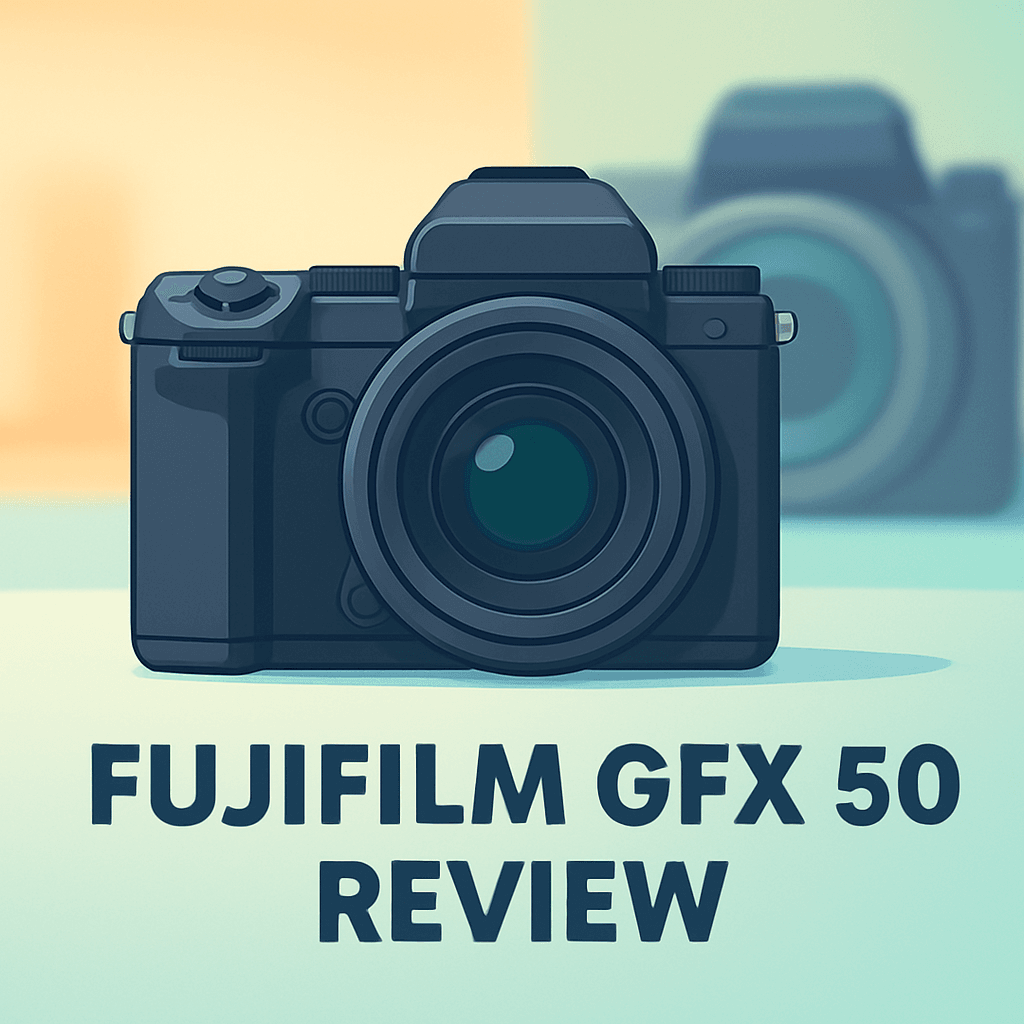
Want noticeably better image quality and richer tones in your stills? If you’re wondering whether a medium-format camera could change your work, this intro will help you decide.
After spending weeks shooting with the Fujifilm GFX 50S Camera, I saw how its resolution and build translate to real shoots. It’s a stills-first tool that rewards deliberate shooting — ideal for portrait, landscape, and studio photographers who value detail over speed.
This review focuses on real-world payoffs: handling, workflow, and where the GFX 50S struggles in everyday assignments rather than just specs. Make sure to read the entire review as I break down where it shines and where the compromises matter — keep reading.

Fujifilm GFX 50S Camera
Compact medium-format mirrorless with a 51.4MP sensor that delivers outstanding dynamic range and tonality. Perfect for studio, landscape, and portrait work with intuitive controls and renowned color rendition.
Check PriceThe Numbers You Need
| Spec | Value |
|---|---|
| Sensor | 51.4MP medium format |
| Lens Mount | Fujifilm G Mount |
| Image Stabilization | None |
| Autofocus | Contrast-detection AF |
| Continuous Shooting | Up to 3 fps |
| ISO Range | 100–51200 |
| Video Resolution | 1080p (Full HD) @ 30 fps |
| LCD Screen | 3.2″ tilting touchscreen |
| Viewfinder | 3.69M-dot OLED EVF |
| Memory Slots | Dual SD card slots |
| Battery Life | Approx. 400 shots (CIPA) |
| Weight | Approx. 920 g |
| Dimensions | 147.5 × 94.2 × 91.4 mm |
| Weather Sealing | Dust- and moisture-resistant |
| Card Format | UHS-II SD cards |
How It’s Built
In my testing the Fujifilm GFX 50S feels solid and substantial in the hand, not like a toy camera you worry about. That solidity translates to confidence on a tripod and when mounting heavier G-mount lenses. For beginners, it’s reassuring—this camera tells you it’s built for serious stills work without being scary to use.
I found the grip and control layout surprisingly user-friendly for such a big body; dials and buttons land where you expect them. With the typical G-mount lenses I used the balance was good and the rig didn’t feel front-heavy during long portrait sessions. That makes longer shoots less tiring and keeps you focused on the frame, not fighting the setup.
The detachable EVF is a nice studio-minded touch in real shoots — I swapped and reconfigured it depending on the job and it played well with my viewfinder gear. The tilting touchscreen is handy for low-angle landscapes or tight still-life setups on a tripod. Those options make the camera flexible whether you’re in the studio or out in the field.
Dual UHS-II card slots were a big plus for my workflow, offering fast writes and easy backup without extra fuss. I really liked that redundancy; it removes a layer of worry during client work. What could be better is the lack of in-body stabilization, which pushes you toward tripods or faster lenses more often than I’d prefer, so plan to bring spares and support gear.
In Your Hands
In practice the Fujifilm GFX 50S’s contrast-detection autofocus rewards patience more than sprinting after subjects. It acquires clean locks for portraits and static scenes but will hesitate with fast-moving faces or erratic motion, so I default to single-point AF and focus-recompose techniques for precise framing. For editorial or event work where subjects move unpredictably, expect to lean on anticipation and timing rather than machine tracking.
The camera’s burst capability encourages a measured shooting style rather than continuous-fire tactics, which suits studio, landscape, and deliberate documentary work. The EVF is detailed and very usable for critical focus, though it isn’t as instantaneous as the snappiest mirrorless systems; in bright highlights or dim corners I sometimes noticed brief lag when panning rapidly. Overall the viewing experience remains excellent for composed shooting.
Because there’s no in-body stabilization, handheld low-speed shooting demands either a solid support or faster lenses and conservative shutter choices. On a tripod the sensor’s resolving power really shines, and for handheld assignments I choose optics with wider apertures or optical stabilization where available to keep keeper rates healthy. Landscapes and studio sets are where the platform feels most at home.
High-ISO behavior is forgiving if you keep exposures cautious; grain has a film-like quality and detail holds up well within practical ranges I use for client work. Video is strictly utility-level—great for behind-the-scenes clips and reference footage but not a replacement for a dedicated cinema tool.
Outdoors the weather sealing inspires confidence during long shoots in variable conditions, and dual card slots provide fast, dependable overflow or instant backup for critical jobs. Battery life comfortably lasts a full session with sensible power management, but I always carry a spare for multi-day shoots and tether-adjacent workflows.
The Good and Bad
- 51.4MP medium-format sensor for high detail
- Weather-sealed body for dust and moisture resistance
- 3.69M-dot OLED EVF for precise composition
- Dual UHS-II SD card slots for speed and redundancy
- No in-body image stabilization
- Contrast-detect AF limits speed and subject tracking
Ideal Buyer
If you live for immaculate detail and tonal nuance, the Fujifilm GFX 50S Camera is your tool. It’s tailored to portrait, landscape, and studio photographers who prefer medium-format rendering over speed. The 51.4MP sensor rewards careful composition and premium output.
This camera shines in deliberate workflows — studio shoots, tripod-bound landscapes, and controlled-light commercial jobs. Dual UHS-II slots and rock-solid build make it a dependable backstop on paid work. The tilting touchscreen and high-res EVF help craft critical focus and framing.
It’s not for fast-action shooters or video-first creators. Contrast-detect AF, a 3 fps burst rate, and no IBIS mean sports, weddings with run-and-gun moments, and handheld low-light video will frustrate. Expect to lean on stable supports, slower lenses, and conservative shutter speeds.
Buy it if your priorities are print-scale detail, skin rendering, and archival-quality files for commercial portraiture, fine-art landscape, or product still life. Be ready to accept the trade-offs: measured pace, extra batteries, and thoughtful lens choices. If those fit your workflow, the GFX 50S rewards with files that truly stand apart.
Better Alternatives?
We already dug into the GFX 50S and how it handles lenses, files, and real shoots. Before you buy, it helps to see other cameras that give a similar medium-format look but trade different things — like size, speed, stabilization, or higher resolution.
Below are a few clear choices I’ve used in the field. I’ll point out what each one does better and worse than the GFX 50S, and who I’d recommend them to based on real shoots, not just specs.
Alternative 1:
Fujifilm GFX 50S Camera
Versatile medium-format body offering 51.4MP resolution and exceptional detail. Lightweight handling, customizable controls, and a broad lens ecosystem make it ideal for high-end commercial and fine-art photography.
Check PriceThis is the camera we’ve been reviewing — the GFX 50S. From hands-on work I can say it delivers that classic medium-format stills look: big files, creamy tones, and very good shadow-to-highlight handling. On a tripod for landscapes or in a studio for portraits it feels like a slow, deliberate tool that rewards careful shooting.
Compared to the GFX 50S itself there’s nothing it does better or worse — it is the baseline. Compared to other bodies it’s better for photographers who want the medium-format look with simpler files and a more studio-first workflow. What it lacks versus newer models are features like in-body stabilization and faster autofocus, so if you need handheld flexibility or speed the 50S shows its age.
If you want the medium-format image quality without the complexity or extra cost of higher-resolution bodies, this is the one. I’d point studio portrait, fine-art, and landscape shooters who work methodically and can use a tripod toward the 50S every time.
Alternative 2:

Fujifilm GFX 100S Camera
Breakthrough 102MP medium-format featuring in-body stabilization and fast autofocus for ultra-high-resolution files. Designed for large prints and demanding pro workflows, combining incredible detail with reliable field performance.
Check PriceI’ve used the GFX 100S on location and in studio — the first thing you notice is the resolution and the IBIS. The extra pixels let you crop hard or make enormous prints without losing the medium-format look. The in-body stabilization alone changes how you shoot: I could handhold longer lenses at slower shutter speeds and get usable frames that the 50S would have needed a tripod for.
Where it’s better than the GFX 50S is obvious: much higher detail, steadier handheld shooting, and a more modern autofocus feel that gives you more keepers with slight motion. The trade-offs are real though — files are much bigger, you’ll need more storage and a faster computer, and the camera costs more. That bigger workflow footprint matters when you’re traveling or on tight deadlines.
The 100S is for shooters who need the absolute detail and also want to work handheld sometimes — commercial landscape photographers, high-end product shooters, or anyone making very large prints. If you don’t want to wrestle with huge files or you mainly shoot in the studio, the 50S might still be the simpler choice.
Alternative 3:
Fujifilm GFX 100S Camera
102MP powerhouse with 5-axis IBIS enabling handheld ultra-detailed capture and smooth 4K video. Delivers rich color, deep dynamic range, and hybrid capabilities tailored to photographers and filmmakers alike.
Check PriceUsed as a hybrid tool, the GFX 100S brings medium-format stills into situations where you also need video or quicker turnaround. The IBIS helps keep handheld video steadier and lets you take more grab shots without swapping to a tripod. In real shoots I found it easier to capture a mix of portraits and short clips for client previews compared with the 50S.
Compared to the GFX 50S it’s stronger for mixed workflows and for shooters who want both high-res stills and usable video; it smooths out handholding and reduces wasted frames. Where it’s worse is that its video still isn’t cinema-class, and the camera’s bigger files plus slightly heavier processing needs mean more time in post. Battery and card demands also climb when you use IBIS and shoot video.
This version of the 100S is best for hybrid shooters — boutique studios that need polished stills and occasional 4K, landscape shooters who film short clips for clients, or content creators who want a premium look without carrying a separate cinema rig. If pure stills simplicity is your goal, stick with the 50S; if you want one body that handles stills and a bit of video, reach for the 100S.
What People Ask Most
Is the Fujifilm GFX 50S worth buying?
Yes—if you care most about top-tier image quality, color and detail for studio, portrait or landscape work; it’s less ideal if you need speed, light weight, or low-light autofocus.
How is the image quality of the Fujifilm GFX 50S compared to full-frame cameras?
Image quality is superior in resolution, dynamic range and tonality, giving a distinct medium-format look that outperforms most full-frame bodies for large prints and fine detail.
What are the main pros and cons of the Fujifilm GFX 50S?
Pros: exceptional image quality, rich color and solid build; Cons: bulky, slower AF, no IBIS and slower overall shooting speed.
How does the autofocus and overall performance of the Fujifilm GFX 50S hold up?
Autofocus is competent for stills and studio work but slower and less reliable for fast action or tracking compared with modern full-frame systems.
Does the Fujifilm GFX 50S have in-body image stabilization (IBIS)?
No, the GFX 50S does not have IBIS, so use stabilized GF lenses or a tripod for slower shutter speeds.
How does the Fujifilm GFX 50S compare to the Fujifilm GFX 50R or GFX 100?
The 50S is a modular, studio-oriented body; the 50R is a lighter, rangefinder-style variant with similar image quality, while the GFX100 adds much higher resolution, IBIS and faster AF at a significantly higher price.
Conclusion
The Fujifilm GFX 50S Camera is a stills-first medium-format tool that prizes image quality and build over speed and video. Its high-res files, durable weather resistance, and usable EVF/LCD make it a reliable studio and landscape workhorse. Expect trade-offs: no IBIS, contrast-based AF, modest burst and video, and a weighty, deliberate handling experience.
Buyers who shoot portraits, studio commissions, or fine-art landscapes will get the most from its tonal rendering and file latitude. If you crave portability or more modern AF and stabilization, the GFX 50R, GFX 100S, or Hasselblad X1D II are sensible alternatives. Weigh ergonomics and workflow needs before choosing.
If you can design shoots around its measured pace and bring the right lenses, tripods, spare batteries and cards, the rewards are obvious. For commercial portrait and landscape work the Fujifilm GFX 50S Camera still delivers images that justify the commitment. This fujifilm gfx 50s review verdict: a specialist’s tool and a smart buy for image-first pros, not a do-it-all system.
Fujifilm GFX 50S Camera
Compact medium-format mirrorless with a 51.4MP sensor that delivers outstanding dynamic range and tonality. Perfect for studio, landscape, and portrait work with intuitive controls and renowned color rendition.
Check Price

0 Comments