
Want a simple camera that spits out credit-card-sized prints and actually makes picture-taking fun?
The Fujifilm Instax Mini 9 Camera is a point-and-shoot instant that’s built for parties, travel, and casual snaps. It leans on a brightness dial, fixed-focus lens, built-in flash, small selfie mirror and AA battery power, and I personally field-tested it in real-world shoots to see how it performs.
If you want instant prints without fuss—beginners, travelers, or anyone who loves tactile photos—this review will cover the real-world payoffs: ease of use, portability, and playful results. Make sure to read the entire review as I dig into sample shots, handling, and how it compares to rivals—keep reading.
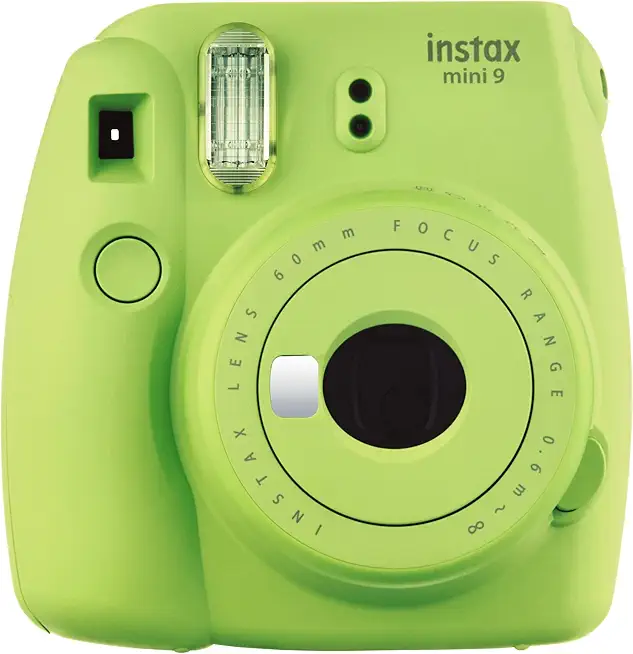
Fujifilm Instax Mini 9 Camera
Compact instant camera that produces credit-card sized prints on demand, featuring easy automatic exposure, a selfie mirror and close-up lens for playful, spontaneous snapshots at parties and on the go.
Check PriceThe Numbers You Need
| Spec | Value |
|---|---|
| Film format | Instax Mini instant film |
| Print size | 62 × 46 mm (credit-card sized) |
| Lens | 60 mm f/12.7 fixed-focus |
| Shutter speed | Approximately 1/60 s (fixed) |
| Exposure control | Automatic exposure measurement; brightness adjustment dial |
| Flash | Built-in automatic flash with automatic recharge |
| Close-up lens | Built-in macro for 35–50 cm shooting |
| Viewfinder | Optical viewfinder with target spot |
| Selfie mirror | Small mirror beside the lens for framing selfies |
| Battery | 2 × AA batteries |
| Dimensions | Approx. 116 × 118.3 × 68.2 mm |
| Weight | Approx. 307 g (including batteries and film) |
| Film advance | Manual advance lever |
| Film counter | Built-in film counter displaying remaining shots |
| Body colors | Multiple pastel color options available |
How It’s Built
In my testing the Fujifilm Instax Mini 9 felt instantly familiar — light, friendly, and ready for snapshots. It slips into a small bag or hangs comfortably around your neck, so it’s easy to bring to parties or trips. The pastel colors make it fun to own, and that matters when you want to reach for it without thinking.
I found the front-mounted brightness dial and the big lens ring simple to use, even for a beginner. The manual film advance lever and the little built-in film counter make the shot-to-shot rhythm obvious, so you won’t accidentally double-expose or run out of film mid-party. Buttons and controls are few and well placed, which is exactly what most first-time users want.
The tiny optical viewfinder takes some getting used to at close range, so I learned to aim a touch higher for tighter shots. The small selfie mirror beside the lens is a neat shortcut for arm’s-length shots, and the snap-on close-up lens helps when you want to get closer without ruining the framing. In practice you just adjust where you stand and the camera does the rest.
What I liked most was the camera’s playful, no-fuss design that actually encourages you to shoot. What could be better is the small viewfinder and the all-plastic feel, which sometimes makes framing and handling feel a bit less sturdy. Still, for beginners who want instant prints and zero complexity, the Mini 9’s design makes it easy and fun to use.
In Your Hands
The Mini 9’s meter encourages you to pick a brightness setting rather than dive into menus, and in practice I followed its cue for most scenes, nudging the dial only in extreme light. Its single shutter pace favors steady, posed shots over fast-moving subjects, so slow down and anticipate the click for the best results.
The built-in flash is the camera’s reliable workhorse indoors and in backlit situations, popping on automatically when the meter thinks it’s needed. Expect punchy fills and occasional harsh shadows on close subjects, so step back a bit or soften with ambient lighting when possible.
With a fixed-focus lens the Mini 9 excels at mid-distance portraits and simple group shots where everything sits roughly on the same plane. For tighter compositions the clip-on close-up option delivers pleasing softness rather than clinical detail, which suits the camera’s playful instant aesthetic.
The small optical viewfinder with its target spot keeps framing straightforward for everyday shooting, but you’ll want to compensate at closer ranges to counter parallax. The manual film advance becomes a satisfying rhythm between clicks and the built-in shot counter is a handy reminder to avoid surprises at the end of a pack.
AA batteries are a practical choice on the road and swapping them is trivial, so the camera stayed usable through full days of casual shooting without fuss. Its light, compact feel makes it easy to sling over a shoulder or pop in a tote for parties and travel.
Because prints are credit-card-sized, composition leans toward bold, simple subjects and close-up faces rather than tiny details. I tested it in dim living-room gatherings, bright daylight portraits, arm’s-length selfies and close-up flower shots — and each time the instant physical print delivered immediate, tactile satisfaction.
The Good and Bad
- Point-and-shoot simplicity; minimal learning curve
- Automatic exposure measurement with intuitive brightness dial
- Built-in automatic flash with auto recharge
- Credit-card-sized Instax Mini prints are portable and fun
- Fixed shutter speed (~1/60) limits creative control and action-stopping ability
- Fixed-focus 60 mm f/12.7 lens; no manual focus or advanced controls
Ideal Buyer
If you want forgiving, instant fun with minimal fuss, the Fujifilm Instax Mini 9 Camera is designed for you. It’s perfect for beginners, teens, and casual shooters who want credit-card-sized prints without a learning curve. Parties, weekend travel, and everyday snapshots are where it truly shines.
Buyers who prize portability and simplicity will love the Mini 9’s light weight, pastel finishes, and AA-battery convenience. The built-in flash, brightness dial, small selfie mirror, and close-up capability keep results predictable and playful. The tactile film advance and visible counter make shot management feel satisfying rather than technical.
Photographers seeking creative exposure control, long exposures, or high-precision results should look elsewhere. This isn’t a tool for studio work, action-stopping shutter speeds, or advanced manual modes. For anyone after charming, pocketable prints and maximum ease, the Mini 9 is a very friendly entry point.
Think of it as a party prop, a travel companion, or a beginner’s camera to teach the joy of physical photos. It’s a popular gift for teens, campus life, and family gatherings where instant mementos matter. If you like tangible prints, pastel styling, and predictable, friendly operation, this is the camera you’ll keep reaching for.
Better Alternatives?
We’ve gone through the Instax Mini 9—how it shoots, how the fixed lens and brightness dial feel in hand, and where it shines as a simple, fun instant camera. It’s great for quick snaps, parties, and people who want prints without fuss, but it does leave room for other options depending on what you value most.
If you want more consistent exposure, easier selfies, or more creative control, there are a few close alternatives that change the trade-offs. Below are three real-world choices I’ve used and how they compare to the Mini 9 in real shooting situations.
Alternative 1:

Fujifilm Instax Mini 11 Camera
Sleek, user-friendly instant camera with automatic exposure and a dedicated selfie mode that delivers bright, tactile prints instantly; perfect for casual portraits, celebrations, and capturing everyday memories with flair.
Check PriceThe Instax Mini 11 feels like an evolution of the Mini 9 for everyday shooting. In real use the automatic exposure is more consistent — I found fewer under- or over-exposed prints in mixed indoor light — and the lens retracts which makes it easier to carry. The built-in selfie mode and slightly larger selfie mirror made arm’s-length portraits much less hit-or-miss than the Mini 9 with its clip-on close-up lens.
What it gives up compared to the Mini 9 is the tactile brightness dial some people liked; you lose that little bit of hands-on control. It’s also not a big jump in image quality or film size — prints are the same Instax Mini format — and it still won’t match the creative flexibility of higher-end Instax models when you want long exposures or double exposures.
This is the one I’d pick for people who want simpler, more consistent results and easier selfies — party-goers, travelers who want fewer failed prints, or parents handing a camera to teens. It’s the least fussy upgrade from the Mini 9 if you want better auto exposure and selfie convenience without learning new shooting modes.
Alternative 2:

Fujifilm Instax Mini 90 Camera
Retro-styled instant camera offering advanced creative controls—double exposure, bulb, macro and party modes—plus rechargeable power and a tripod mount, enabling versatile artistic shots and high-quality analog prints.
Check PriceThe Mini 90 is a noticeably more capable camera when you’re trying to do creative work. I used it for night shots and double exposures far more successfully than the Mini 9 — the bulb and long-exposure modes let you keep the shutter open for light trails and low-light scenes instead of relying on a flash. The rechargeable battery, tripod mount, and better flash control are real gains if you want to craft specific looks.
That capability comes with trade-offs. The Mini 90 is heavier, more expensive, and not as instantly simple as the Mini 9; you need to think about modes and settings. In fast social settings where you just want one-handed, no-brain snaps, it can feel slower. It also uses a rechargeable battery, which is great for serious shoots but less convenient than AA cells for some users.
Choose the Mini 90 if you’re the hobbyist who wants to experiment with your instant prints — people who care about long exposures, double exposures, macro shots, or using a tripod. It’s the one to reach for when you want artistic control and better low-light results rather than pure point-and-shoot simplicity.
Alternative 3:
Fujifilm Instax Mini 90 Camera
Advanced instant camera built for enthusiasts, providing manual exposure options, high-performance flash and multiple shooting modes to craft expressive, vintage-feeling prints with reliable performance and creative flexibility.
Check PriceUsed as an enthusiast’s tool, the Mini 90’s manual exposure and flash options are where it shines next to the Mini 9. For portraits I could dial exposure to keep skin tones and avoid blown highlights in bright sun, and the flash behaves more predictably when I wanted fill light instead of the full-power pop the Mini 9 often gives. The result is more reliable, intentional prints when I care about the look.
On the downside, that precision requires more attention. If you want the carefree Mini 9 experience—turn it on and shoot—the Mini 90 asks you to learn modes and think about settings. It’s also bulkier in a bag and costs more, so it’s overkill for someone who only wants casual party shots or a camera for kids.
This model suits the creative shooter who treats instant prints as part of their craft — people who want to control exposure, use the flash creatively, or make stylized prints. If you’re into experimenting and don’t mind a learning curve, the Mini 90 will give you looks you can’t get from the Mini 9.
What People Ask Most
Is the Fujifilm Instax Mini 9 worth buying?
Yes if you want an inexpensive, fun instant camera for parties and casual snaps — it’s simple, reliable, and gives instant credit-card sized prints, but it’s not for fine-art image control or high resolution work.
How does the Instax Mini 9 work?
It’s a basic point-and-shoot with a fixed-focus lens, automatic flash and a brightness dial that suggests exposure settings; you frame, press the shutter, and the camera ejects a developed print seconds later.
What are the main features of the Instax Mini 9?
Main features include a fixed 60mm-equivalent lens, built-in flash, brightness/exposure dial, a close-up lens attachment and a small selfie mirror, using Instax Mini instant film for credit-card sized prints.
How much does the Instax Mini 9 cost?
New units typically run about $50–$70 depending on retailer and color, while packs of Instax Mini film cost around $10–$20 per 10 exposures.
What battery does the Instax Mini 9 use and how long does it last?
It uses two AA batteries and on fresh alkalines you can expect roughly 100–200 shots depending on flash use and battery brand.
How do you change the film in the Instax Mini 9?
Open the back, drop in a Fujifilm Instax Mini film cartridge aligning the marks, close the back, and the camera will show the remaining shots and eject the dark slide on the first shot.
Conclusion
The Fujifilm Instax Mini 9 is a delightful, point-and-shoot instant camera that rewards anyone who wants small, tangible prints and uncomplicated fun. Its cheerful colors, tactile brightness dial, automatic flash, close-up capability and small selfie mirror make candid portraits and party snaps feel effortless and immediate. For casual shooters, travelers and first-time instant users it’s an easy, smile-inducing way to turn moments into keepsakes without a steep learning curve.
That simplicity is also the Mini 9’s chief limitation. Fixed focus, a single shutter approach and only a basic exposure dial mean you’ll sacrifice creative control, low-light finesse and action-stopping ability compared with more advanced models. A small optical viewfinder and the need to manually advance film can lead to missed framing or rhythm when you’re moving quickly between shots.
Overall the Mini 9 is excellent value for anyone prioritizing immediacy, portability and the tactile pleasure of credit-card sized prints over technical versatility. If you crave more consistent automation for selfies and quick group shots, or creative exposure tools for low-light work, consider stepping up within the Instax lineup. But if your aim is playful simplicity and instant gratification, the Mini 9 remains a charming, affordable choice that delivers smiles more reliably than complexity.
Fujifilm Instax Mini 9 Camera
Compact instant camera that produces credit-card sized prints on demand, featuring easy automatic exposure, a selfie mirror and close-up lens for playful, spontaneous snapshots at parties and on the go.
Check Price

0 Comments