

Want to know if a camera will actually improve your images and make your job easier on a real shoot?
After taking the Fujifilm X-H1 Camera into rain, low-light weddings and fast documentary days, I dug into handling, tracking, stabilization and color workflow. I tested it as a hybrid stills/video tool to see where it shines and where it shows its age.
If you care about rugged build, confident ergonomics, steady handheld performance and Fujifilm’s color options, this review is for you. Make sure to read the entire review as I break down real-world payoffs, trade-offs and whether the X-H1 still deserves a place in your bag—keep reading.

Fujifilm X-H1 Camera
Robust, pro-grade mirrorless offering exceptional in-body stabilization and cinematic 4K capture. Built for demanding shoots with ergonomic control, weather-sealed magnesium body, and rich color science for stunning stills and motion.
Check PriceThe Numbers You Need
| Spec | Value |
|---|---|
| Sensor | 24.3MP APS-C X-Trans III |
| Stabilization | 5-axis in-body |
| Video | 4K at 30fps |
| F-Log | Supported |
| Autofocus | Phase Detection |
| Frames Per Second | 8fps mechanical, 11fps electronic |
| ISO Range | 200-51200 |
| Lens Mount | Fujifilm X-mount |
| Weather Sealing | Yes |
| Viewfinder | 3.69 million dot OLED |
| Rear LCD | 3-inch 1.62 million dot touchscreen |
| I/O | HDMI, USB, Audio input |
| Card Slots | Dual UHS-II |
| Dimensions | 139.8 x 97.3 x 85.5 mm |
| Weight | Approximately 623 g |
How It’s Built
In my testing the Fujifilm X-H1 feels like a serious tool — solid and weather-sealed so you don’t panic when a shoot gets wet or dusty. That tank-like build gives real confidence in the field, especially if you’re shooting events or on location. What I really liked was how reassuring it felt in rough conditions.
The grip is beefy and balanced for heavier lenses, so handheld telephoto work stays steady longer. I found it easier to hold for long sessions compared with slimmer Fuji bodies, though that extra mass can fatigue you on long walks. For beginners that means steadier shots out of the gate, but plan for a strap or support on long days.
The viewfinder is bright and detailed, which helps a lot when nailing focus or composing in bright light. The rear screen tilts but doesn’t flip all the way out, which could be better for vlogging or weird angles. Dual card slots and the built-in I/O made my backup workflow and external rigging simple and stress-free.
The X-mount gives you tons of lens choices and the body balances nicely with both primes and zooms in real use. Controls remain tactile even with gloves, so it’s easy to learn the layout quickly. After using it for a while I felt this camera is built for people who want reliability and a pro feel more than pocketable convenience.
In Your Hands
In day-to-day shooting the X-H1’s in-body stabilization makes a noticeable difference — handheld low-light work and slower shutter handheld portraits suddenly feel much more doable. It’s an older implementation compared with Fujifilm’s later bodies, so it steadies shots very well but doesn’t quite match the newest generation’s super-smooth results for every walking shot.
The autofocus behaves like a competent pro tool: phase-detection delivers confident single-frame locks and quick re-acquisition, but long-duration subject tracking and eye-detection aren’t as aggressive or reliable as more modern systems. For weddings, events and street work the camera keeps up with most candid moments, and its burst capability is more than sufficient for moderate action and decisive-frame hunting.
Across varied lighting the sensor and color rendering remain familiar and forgiving, with usable high-ISO performance that lets you push into evening assignments without losing the Fuji look. Film Simulations give you attractive JPEGs straight out of camera while RAW retains latitude for recovery and grading in tougher scenes.
Operationally the body inspires confidence: weather resistance and dual-card redundancy let you stay in the field without second-guessing. The heft and ergonomics pay dividends when paired with longer glass, and the tactile dials and buttons work well even with gloves, making this a reliable hand tool for professional days on the job.
The Good and Bad
- 5-axis in-body stabilization
- Weather-sealed, pro-grade build and ergonomics
- Dual UHS-II card slots for speed and redundancy
- Film Simulations and F-Log support
- AF and subject tracking feel older compared with newer Fujifilm bodies
- 4K limited to 30p; lacks higher frame-rate options
Ideal Buyer
If you’re a working photographer who values build and reliability over headline specs, the Fujifilm X-H1 Camera is targeted at you. It’s built like a pro tool with weather sealing and a brick‑like feel that reassures on tough assignments. You get in‑body stabilization and dual UHS‑II slots that keep images safe when it matters.
Hybrid shooters who prize Fujifilm’s color science will like how Film Simulations speed turnaround. F‑Log gives a grading‑ready video lane and IBIS steadies handheld 4K up to 30p for client work. The camera’s I/O and card redundancy fit into professional workflows without fuss.
Event, documentary and travel photographers who hang heavier primes or long zooms on a body will appreciate the X-H1’s balance and beefier grip. Its tactile controls are usable with gloves and its EVF makes manual focus and critical framing easier in the field. The trade‑off is weight, but many pros prefer the confidence of a tank‑like camera on long shoots.
Existing Fujifilm users who want stabilization without jumping to the newest AF or high‑frame‑rate video can add the X‑H1 to their kit with minimal lens compromise. Choose this model if you favor proven ergonomics, dependable IBIS and Fuji color over cutting‑edge subject tracking. If fastest AF, 4K60 or a fully articulating screen are non‑negotiable, newer bodies may be a better fit—otherwise the X‑H1 still earns its keep.
Better Alternatives?
We’ve already gone through the X-H1’s strengths and its trade-offs — the solid build, reliable IBIS for handheld shooting, and that older but still capable autofocus. If those traits matter to you, the X-H1 is a strong choice. But if you want newer AF, better stabilization for video, a lighter body, or a flip-out screen, there are other Fujifilm bodies that address those points.
Below are three solid alternatives I’ve shot with myself. I’ll point out what each one does better and where it gives ground to the X-H1, and who I think would prefer each option.
Alternative 1:

Fujifilm X-T4 Camera
Versatile flagship body delivering pro-level image quality, 6.5-stop in-body stabilization, fast autofocus and silent mechanical shutter. Flip-out touchscreen and extended battery life make it perfect for photo and video creators.
Check PriceI’ve used the X-T4 a lot for both photo and video. What stands out right away is the much improved autofocus and IBIS compared with the X-H1 — the camera locks on faster and the footage is noticeably steadier when I walk and shoot. The flip-out screen and higher-frame-rate video options also make it easier to shoot vlogs and smooth slow motion, so it feels like a proper all-in-one upgrade.
Where the X-T4 gives ground to the X-H1 is in sheer heft and that “pro” feel. The X-H1’s bigger, tank-like body sits better with very large telephotos and feels more bombproof in bad weather. I also find some shooters prefer the X-H1’s grippier, uncluttered control layout for long event days. The X-T4 is smaller and lighter, which is great for mobility but not as reassuring when you’re hanging a long zoom off the front.
This is the camera I’d point a hybrid shooter to who wants the newer autofocus and better in-body stabilization, plus a fully articulating screen for self-shooting. If you do a lot of video or want a more modern AF system while staying in the Fuji color world, the X-T4 is a very practical step up from the X-H1.
Alternative 2:
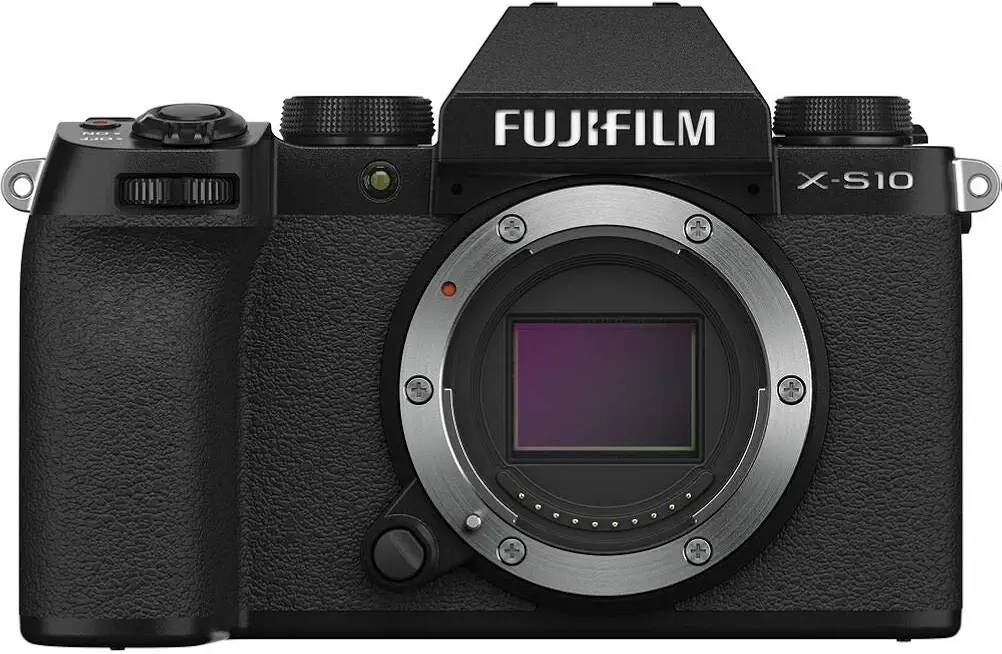
Fujifilm X-S10 Camera
Compact, image-stabilized powerhouse with intuitive controls and a fully articulating screen. Lightweight design, outstanding film-simulation colors and reliable autofocus make it ideal for travel, vlogging and everyday shooting.
Check PriceThe X-S10 is the grab-and-go body I reach for when I don’t want the bulk of the X-H1. I’ve shot it for travel, street, and quick video runs; the IBIS works well for handholding, and the fully articulating screen plus simple controls make it easy to set up shots fast. Colors and film simulations are the same lovable Fuji look, but in a much smaller package.
Compared to the X-H1 it loses a bit on build and long-session comfort. The X-S10 isn’t as weather-sealed and the smaller grip can get tiring with big lenses. It also lacks the same level of physical control and card redundancy the X-H1 gives you, so for heavy professional work I still trust the X-H1 more. For everyday shooting though, the X-S10 feels less intrusive and easier to carry all day.
If you travel a lot, vlog, or want a lightweight hybrid body that still stabilizes well, the X-S10 is a great pick. It’s for photographers who value portability and quick setup over the rugged, pro-level handling of the X-H1.
Alternative 3:
Fujifilm X-S10 Camera
Portable enthusiast mirrorless combining strong stabilization and creative color profiles in a pocketable body. Smooth 4K video, responsive handling and easy-to-use dials speed up workflows for hybrid shooters.
Check PriceShot after shot, the X-S10 shows you can get excellent Fuji color and steady video without hauling a big camera. I like it for quick assignments where you need reliable autofocus, good IBIS, and a camera that won’t intimidate people on the street. The handling is responsive and it lets you move faster than the heavier X-H1 setup.
What it won’t do as well as the X-H1 is stand up to sustained professional use in harsh weather or long event days with heavy glass. The stabilization and AF are strong for its size, but they don’t have the same “built-for-the-field” robustness that the X-H1 brings. If you need that extra confidence for back-to-back, high-stakes shooting, the X-H1 still wins.
Choose the X-S10 if you’re a hybrid shooter who values portability, creative color options, and easy video features. It’s ideal for vloggers, travel shooters, and anyone who wants Fujifilm image quality in a compact, easy-to-use body rather than the bulk and feel of the X-H1.
What People Ask Most
Is the Fujifilm X-H1 worth buying?
Yes if you want strong IBIS, better video features and a rugged pro body; skip it if you need the latest autofocus or a lighter camera for travel.
How good is the in-body image stabilization (IBIS) on the Fujifilm X-H1?
Very effective — rated up to about 5.5 stops on paper and typically gives 4–5 stops in real use depending on the lens.
How does the Fujifilm X-H1 compare to the Fujifilm X-T2?
The X-H1 adds IBIS, improved video specs and a more ergonomic, weather-sealed body, while the X-T2 is smaller, lighter and often preferred for pure stills work.
Is the Fujifilm X-H1 good for video and filmmaking?
Yes — it offers F‑Log, high bitrate 4K options, clean HDMI output and headphone/mic jacks, making it a strong choice for serious video work.
What are the pros and cons of the Fujifilm X-H1?
Pros: IBIS, solid build, great video and handling; cons: heavier body, older AF system by modern standards and average battery life.
Does the Fujifilm X-H1 have good battery life?
Battery life is average — expect around 300–350 shots per charge in typical use, so carry a spare for longer shoots.
Conclusion
The Fujifilm X-H1 Camera is a stubbornly competent pro body that earns its keep in the field. Its weather‑sealed construction, solid handling, effective in‑body stabilization, a crisp viewfinder and reliable dual card slots make it a dependable choice for demanding shoots, with a control layout that favors experienced hands. Fujifilm’s Film Simulations and log workflow give you professional color options straight out of the gate, letting you deliver polished JPEGs or grade confidently in post.
That practicality comes with trade‑offs. Autofocus and stabilization show their age compared with newer systems, the screen only tilts rather than fully flips, and the camera is noticeably heavier than later Fuji bodies. For fast-action work or run‑and‑gun hybrid shooters chasing the latest AF and higher-frame-rate video, the X-H1 won’t be the top pick.
Bottom line: choose the X-H1 Camera if robustness, steady handheld performance and Fujifilm’s color workflow are your priorities and you prize dual‑card reliability on tough assignments. If you want cutting‑edge subject detection, a fully articulating screen, or the lightest possible kit, consider newer models such as the X-T4, X-S10 or modern rivals. I still reach for the X-H1 when reliability, tactile controls and field confidence matter more than headline specs.
Fujifilm X-H1 Camera
Robust, pro-grade mirrorless offering exceptional in-body stabilization and cinematic 4K capture. Built for demanding shoots with ergonomic control, weather-sealed magnesium body, and rich color science for stunning stills and motion.
Check Price


0 Comments