
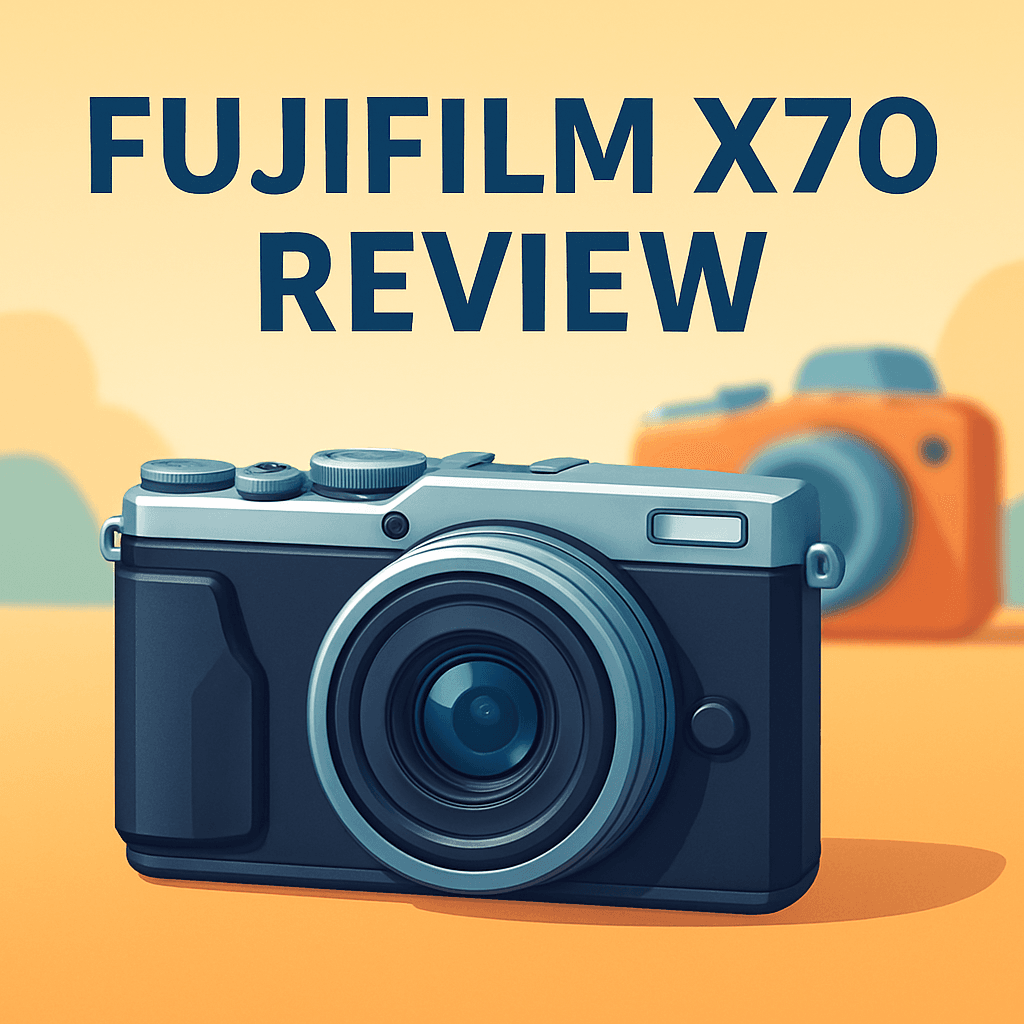
Want better images without hauling a big camera everywhere you go?
As a working photographer who’s always testing compact gear, I’ve taken the Fujifilm X70 Camera on shoots to see how it performs in real-world street and travel situations.
It’s built as a pocketable APS-C with a fixed wide prime and a tilting touchscreen, which brings clear strengths and obvious tradeoffs like no viewfinder and no optical stabilization. If you’re after a discreet, image-first camera, this review will look at handling, low-light practicality, and everyday use—make sure to read the entire review as I dig into where it truly shines and where you’ll want alternatives, so keep reading

Fujifilm X70 Camera
Compact wide-aperture APS-C street camera delivers gorgeous color, fast prime lens, pocketable design, intuitive controls, and superb low-light performance—ideal for photographers seeking high-quality travel and candid shots without bulk.
Check PriceThe Numbers You Need
| Spec | Value |
|---|---|
| Sensor | APS-C X-Trans II |
| Resolution | 16.3 MP |
| Lens | Built-in 18.5mm f/2.8 (28mm equivalent) prime lens |
| Autofocus | Hybrid AF system |
| ISO Range | 100–51200 |
| Shutter Speed | 30 sec to 1/4000 sec |
| LCD Screen | 3.0-inch tilting touchscreen, 1.04 million dots |
| Video | Full HD 1080p at 60 fps |
| Viewfinder | None (compact rangefinder style without electronic viewfinder) |
| Image Stabilization | None (digital stabilization only) |
| Connectivity | Wi‑Fi |
| Battery Life | Approx. 330 frames per charge |
| Focus Modes | Single, continuous, manual |
| Storage | SD/SDHC/SDXC card support |
| Film Simulations | Multiple Fujifilm film simulation modes (Classic Chrome, Velvia, Provia, etc.) |
How It’s Built
In my testing the Fujifilm X70 Camera feels like a tiny workhorse. The aluminum body gives it a reassuring, not-plastic heft while staying pocketable. For beginners that means a camera you won’t be scared to take everywhere.
The rangefinder-style layout is simple and charming, but there’s no built-in viewfinder. I found composing on the tilting screen works well most of the time, yet bright sun can make framing harder. That lack of an eyepiece is the single design choice that tripped me up the most.
I really liked that the lens is built into the body so it’s always ready when something interesting happens. It nudges you to move for better framing, which is great for street and travel photography. The tradeoff is obvious: you can’t swap lenses when a different view is needed.
The tilting touchscreen made low and high angle shooting effortless and helped me be discreet in crowds. Wi‑Fi and a simple card slot kept my workflow quick, and battery life handled casual days fine. What could be better is the lack of optical image stabilization, so I tightened my stance or nudged ISO up to keep shots sharp.
In Your Hands
The Fujifilm X70 is the kind of camera you’ll find yourself slipping into a jacket pocket and forgetting until a moment begs to be captured; its compact, quiet presence encourages a steady, curious shooting pace. The fixed wide prime nudges you forward—into scenes, into conversations—so your compositions include context rather than relying on zooming or heavy cropping.
Exposure tools are flexible enough for creative work, letting you hold long exposures when the light falls and reign things in when sunlight gets aggressive, though you’ll need to be mindful of wide‑open daylight limits. High‑sensitivity performance lets you work into evening and interior scenes with sensible tradeoffs between noise and shutter speed, so thinking in terms of balance pays off.
Autofocus is a hybrid setup that feels dependable for everyday street and travel use: fast and accurate in clear light, competent for moving subjects, but it can hunt when contrast drops. Continuous AF will carry most casual tracking needs while manual focus remains satisfying when you want absolute control.
The tilting touchscreen is a surprisingly liberating tool for low and high angles, letting you compose discreetly and stay connected to your subject without hoisting the camera to your eye. Touch control makes quick framing and menu navigation feel modern and unobtrusive.
Battery life covers a typical day, though I keep a spare on longer shoots; onboard Wi‑Fi is handy for instant sharing and remote triggering. Video is perfectly adequate for casual clips, but without a finder or optical stabilization you’ll rely on steady posture, faster shutter choices, or propping the camera to keep images usable.
The Good and Bad
- APS-C X-Trans II sensor with 16.3MP
- Built-in 18.5mm f/2.8 (28mm equivalent) prime well-suited to street/travel
- Compact, lightweight aluminum build
- 3.0-inch tilting touchscreen (1.04M dots)
- Hybrid AF system; single/continuous/manual focus modes
- ISO 100–51200 range
- Full HD 1080p at 60 fps
- Wi‑Fi connectivity
- Approx. 330 frames battery life
- SD/SDHC/SDXC card support
- Multiple film simulation modes
- No viewfinder (optical or electronic)
- No optical image stabilization (digital stabilization only)
- Fixed lens limits flexibility (no zoom or lens changes)
- 1/4000 sec max shutter may constrain bright-light, wide-aperture shooting
- Video limited to 1080p (no 4K)
Ideal Buyer
As a pocketable APS-C tool the Fujifilm X70 Camera is built for photographers who refuse to be weighed down. Street and travel shooters who want serious image quality in a camera that fits a coat pocket will feel at home with it. It slips into a jacket pocket and disappears until the decisive moment.
If you favor a 28mm‑equivalent view, this fixed wide prime forces you to look for context and tell fuller stories. It rewards getting close and thinking in scenes rather than tight portraits. Photographers who like decisive, environmental framing will love the discipline it imposes.
You should be comfortable composing on a tilting LCD and accepting no EVF and no optical stabilization. If you crave an eye‑level finder or IBIS this isn’t your camera. But if you value Fujifilm film simulations and straight‑out‑of‑camera JPEGs, the X70 shines for quick edits and fast sharing.
This camera is for minimalists who prefer a single‑prime, tactile experience over zoom flexibility. Casual videographers content with 1080p60 clips will find it perfectly adequate. Grab a spare battery for long days and carry on shooting without fuss.
Better Alternatives?
We’ve already walked through what the Fujifilm X70 does well: a compact APS-C body, a clean 28mm-ish field of view, nice Fujifilm color, and a simple, street-ready layout. That gives you a clear idea of its sweet spot and where it compromises — no viewfinder, no optical stabilization, and a fixed wide lens are the big tradeoffs in real shooting.
If you like the X70’s idea but need something that leans more into image quality, handling, or pocketability, here are a few real-world alternatives I’ve shot with and trusted on the street and while traveling. I’ll note what each one actually feels like in use compared to the Fujifilm X70 Camera and what kind of shooter will get the most from it.
Alternative 1:

Fujifilm X100V Camera
Elegant premium compact combines a refined fixed prime, advanced hybrid viewfinder, and improved weather resistance to capture film-like colors and razor-sharp detail—perfect for street, portrait, and everyday photography.
Check PriceI’ve shot with the X100V a lot, and compared to the Fujifilm X70 Camera it gives cleaner files, better dynamic range, and a very useful built-in viewfinder. In bright sun I could compose and lock exposure with the hybrid finder without hunting for the LCD, and the lens rendering feels a touch more modern and punchy for portraits and close street work.
The tradeoffs in real life are obvious: the X100V is bigger and heavier, and it’s not as easy to slip into a shallow pocket like the X70. It also has a tighter field of view (35mm equivalent) so you step back more or change how you frame scenes compared to the X70’s wider look. And yes, it costs a lot more — the jump in feel and IQ is real, but so is the price and size.
Choose the X100V if you want a premium, more capable everyday camera and you care about an EVF and slightly better images. If you mostly want the smallest possible carry or prefer the X70’s wider, more environmental framing, the X100V may feel like overkill.
Alternative 2:
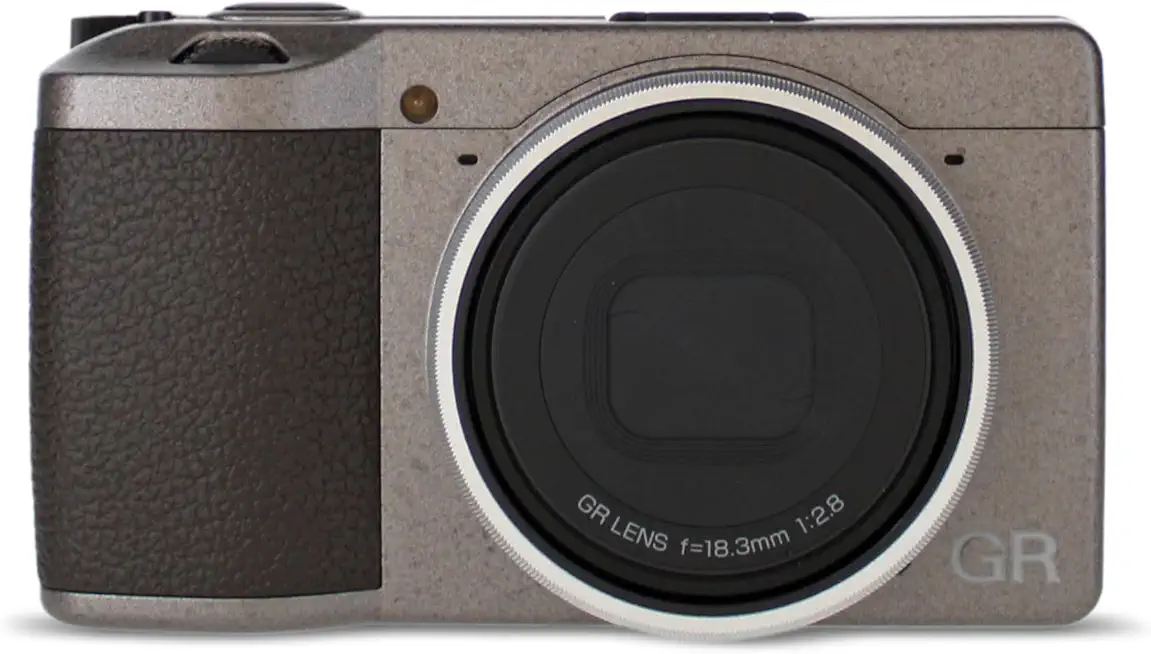
Ricoh GR III Camera
Ultra-compact powerhouse with an APS-C sensor and sharp wide-angle lens for instant, high-resolution street and travel images; lightning-fast startup, intuitive controls, and stealthy form for candid shooting.
Check PriceThe Ricoh GR III is the pocket ninja. In actual city shooting it beat the Fujifilm X70 Camera for being utterly stealthy and ready the moment you pull it out — boot time and responsiveness are noticeably faster, and people barely notice you shooting. The GR’s files are very sharp and the JPEGs from the camera often needed little tweaking for street use.
Where it loses to the Fujifilm X70 Camera is handling and flexibility. The GR is very small and that means fewer physical controls and less comfortable grip for long shoots. It also lacks a tilting screen, so low or high-angle shots are harder unless you crouch or lie down. Autofocus can be quick for static scenes but doesn’t track moving subjects as well as some larger cameras.
If you want the slimmest, most invisible camera for street and travel and you value instant readiness and crisp straight-out pictures, the GR III is a great pick. If you prefer an easier grip, a tilting screen, or the Fujifilm color and menus, the X70 might suit you better.
Alternative 3:
Ricoh GR III Camera
Pocket-sized professional tool delivering crisp, detailed RAW files thanks to a large sensor and optimized optics; customizable controls, stabilization, and rapid responsiveness make it an indispensable companion for urban photographers.
Check PriceUsed as a RAW-file shooter, the GR III gives very detailed files and some real-world advantages over the Fujifilm X70 Camera — the built-in stabilization and quick responsiveness helped me hold shots at lower shutter speeds in dim cafes without raising ISO as much. The files have a crispness that makes cropping or printing from street sets easier.
That said, the GR III’s small size also brings limits: its controls are minimal compared to the X70, so dialing in settings on the fly is less convenient. It still won’t give you a viewfinder or the Fujifilm film simulations that some shooters love, so the color and shooting experience feel different in practice even if the raw detail is excellent.
Pick this version of the GR if you want the sharpest, most pocketable RAW files and value stabilization for handheld low-light street work. If you want easier controls, an LCD that tilts, or the look and workflow of Fujifilm’s cameras, the X70 remains the simpler, more forgiving choice.
What People Ask Most
Is the Fujifilm X70 worth buying?
Yes, if you want a pocketable APS-C camera with a sharp wide lens and excellent JPEGs; skip it if you need a viewfinder, stabilization, or zoom flexibility.
What are the pros and cons of the Fujifilm X70?
Pros: very compact body, APS-C image quality, fast 28mm-equivalent lens and great film-simulation JPEGs; Cons: no built-in viewfinder, no image stabilization, and a fixed wide-angle focal length.
How does the Fujifilm X70 compare to the Fujifilm X100 series?
The X100 series offers a built-in hybrid viewfinder and a 35mm-equivalent lens for a more traditional rangefinder feel, while the X70 is smaller, wider (28mm equiv.) and more pocketable but lacks the X100’s finder and some refinements.
Is the Fujifilm X70 good for street photography?
Yes—its compact size, discreet handling and wide 28mm-equivalent lens make it an excellent low-profile street camera.
Does the Fujifilm X70 have a viewfinder?
No, it does not have a built-in viewfinder; you compose using the tilting rear LCD.
Does the Fujifilm X70 have image stabilization?
No, the X70 has no in-body or optical image stabilization, so plan for faster shutter speeds or a tripod in low light.
Conclusion
The Fujifilm X70 Camera is a rare honest compromise: a truly pocketable metal-bodied shooter that delivers big-sensor image quality, a characterful wide prime look, fuss-free film simulations, and a tilting touchscreen that makes street and travel work effortless. In the hands of someone who values color, compactness, and a single focal-length discipline it feels purposeful and fast to use. The built-in Wi‑Fi and JPEG philosophy keep a simple mobile workflow painless.
That clarity of purpose is also its constraint. You give up a viewfinder, optical stabilization, and zoom flexibility, and video capabilities stop short of the latest standards. Those tradeoffs force technique over automation — which will frustrate operators who need absolute versatility or cutting-edge video and autofocus performance.
If you want a minimalist, always-with-you APS-C camera that prioritizes color and a wide-street point of view, the X70 Camera is an easy recommendation. If you need an EVF, lens choices, or modern video and AF headroom, look at newer alternatives instead. Either way, this is a camera for photographers who choose discipline over features.
Fujifilm X70 Camera
Compact wide-aperture APS-C street camera delivers gorgeous color, fast prime lens, pocketable design, intuitive controls, and superb low-light performance—ideal for photographers seeking high-quality travel and candid shots without bulk.
Check Price



0 Comments