
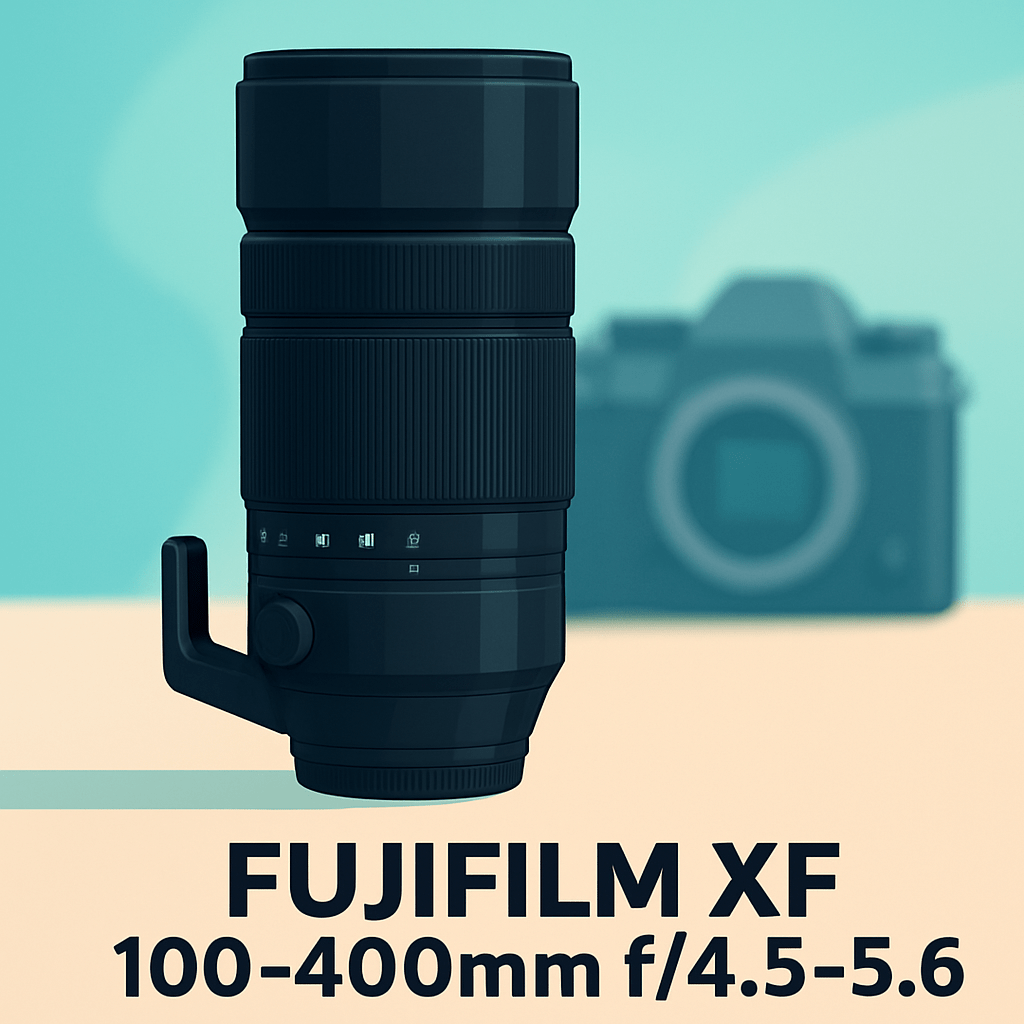
Want to get closer to distant action with your Fuji X?
The Fujifilm XF 100-400mm f/4.5-5.6 R LM OIS WR is a long-reach X-mount zoom aimed at shooters who need serious telephoto coverage.
It combines 100–400mm reach with image stabilization, a linear-motor AF system and weather-resistant construction, so you can shoot birds, sports and airshows with more confidence.
I’ve spent time testing this lens in the field, and this review focuses on real-world payoffs: handling, AF/OIS behavior, image quality across the zoom, and reliability.
Make sure to read the entire review — I’ll show where it really earns its reach and where you might want an alternative, so keep reading.

Fujifilm XF 100-400mm f/4.5-5.6 R LM OIS WR
Reach distant subjects with sharp, stabilized long-range performance—ideal for wildlife and sports. Durable weather-resistant construction, quiet fast autofocus and powerful zoom deliver consistent handheld results in challenging outdoor conditions.
Check PriceThe Numbers You Need
| Spec | Value |
|---|---|
| Lens Type | XF 100-400mm |
| Focal Length Range | 100-400mm |
| Aperture | f/4.5-5.6 |
| Equivalent Focal Length | 150-600mm (Full Frame) |
| Focal Length Multiplier | 1.5x |
| Lens Mount | Fujifilm X-mount |
| Image Stabilization | Yes, Optical |
| Weather Resistance | Yes |
| Linear Motor | Yes (LM) |
How It’s Built
In my testing the Fujifilm XF 100-400mm f/4.5-5.6 R LM OIS WR feels built like it means business. The weather sealing gave me real confidence shooting in drizzle and dusty trails, so I didn’t baby it on wet safaris. On a Fuji body it’s substantial up front, so expect some weight on your shoulder after a long day.
I found the aperture control easy to reach and the ring feels solid under my fingers, so changing exposure on the fly was natural. The lens doesn’t fiddle around — the controls are simple and forgiving for beginners learning to dial settings quickly. That makes it a friendly tool when things move fast.
The zoom ring has a smooth, predictable throw and enough resistance to stop most zoom creep while handheld. I could precisely frame distant birds without the barrel sliding down when pointing low. In short, it’s confidence-inspiring when you need reach without fuss.
The focus ring offers decent manual finetuning at the long end, and the AF/MF and OIS switches are placed where you can flip them without taking your eye off the viewfinder. Manual focus isn’t a toy, but it’s usable for careful tweaks when AF struggles on tiny targets.
Build materials and fit are very good and the tripod collar is solid and rotates smoothly with a familiar plate fit. What I loved was the weather-ready confidence and robust feel; what could be better is the size and heft for long hikes — bring a monopod or good bag if you plan all-day use.
In Your Hands
The Fujifilm XF 100-400mm f/4.5-5.6 R LM OIS WR delivers the kind of sharpness that makes distant subjects usable without feeling overly clinical; the center remains punchy across the range while the edges tighten up when you stop down for serious crops. Contrast and micro-contrast are satisfying for outdoor work, and color rendition stays consistent whether you’re shooting morning light or late afternoon sun.
Bokeh at the longer reaches is creamy enough to separate subjects from busy backgrounds, with background highlights rendering smoothly rather than aggressively. Backlit scenes can challenge it—veiling and subtle ghosting appear under extreme angles but are easy to manage with a lens hood and mindful framing.
Chromatic aberrations are modest in everyday shooting and often tamed by in-camera correction, while vignetting and any barrel/pincushion tendencies are similarly mitigated in raw converters. You’ll notice a touch more character toward the frame edges at the longest focal positions, but nothing that derails a good image.
Autofocus is snappy in good light and stays composed for most moving subjects, though the very longest reaches require a steadier setup in low light to avoid brief hunting. Focus breathing is present but not distracting for casual video work, and the close-focus capability is handy for filling the frame without feeling gimmicky.
On real assignments this lens shines for wildlife and airshows—the reach and stabilization encourage more handheld shots than you’d expect, yet long days reveal the physical toll of extended handholding. It’s rugged and weather-resistant so you can push through bad conditions, but minor annoyances like hood handling and cap fit crop up once you’ve used it enough to notice.
The Good and Bad
- 100–400mm range (150–600mm full-frame equivalent) offers substantial reach
- Optical Image Stabilization for handheld telephoto shooting
- Weather-resistant construction for outdoor work
- Linear Motor AF for potentially fast/quiet focusing
- Variable maximum aperture f/4.5–5.6 limits low-light performance and subject isolation vs faster lenses
- Size/weight and long-lens handling fatigue to be evaluated by the writer in field use
Ideal Buyer
The Fujifilm XF 100-400mm f/4.5-5.6 R LM OIS WR is for X‑mount shooters who need reach you can actually use in the field, especially when stepping closer to your subject isn’t possible. With a 100–400mm range (about 150–600mm equivalent) it suits wildlife, birds, airshows, distant landscapes and outdoor sports. The combination of OIS and weather resistance makes it a sensible tool when conditions and subjects are unpredictable.
Buy this lens if you accept a variable f/4.5–5.6 aperture and prioritize framing flexibility over the shallowest background blur, and if you don’t mind a bit more size when chasing distant action. The Linear Motor AF and effective stabilization mean you can handhold more often and still get sharp keepers, though long days will reward a monopod or collar-mounted setup. Travel shooters who value reach and confidence in poor weather will find it a reliable workhorse.
This isn’t the lens for shooters who live in dim gymnasiums or demand constant f/2.8 subject isolation, or for minimalist travelers who prize the smallest, lightest kit above all else. If you need faster apertures or the smallest footprint, consider the 50‑140 f/2.8 or the 70‑300 as practical alternatives.
Better Alternatives?
We’ve spent time with the Fujifilm XF 100-400mm f/4.5-5.6 and covered how it behaves in the field: excellent reach, solid stabilization, and weather sealing, but a variable, relatively slow aperture and a size that can tire you out. That lens is a clear choice when you need long reach on a Fuji body, but it’s not the only way to get good telephoto results.
If you want something lighter, faster in low light, or simply more affordable, there are lenses that trade reach for other strengths. Below I’ll run through three real-world alternatives I’ve used, what each does better or worse than the 100-400, and who would prefer each one.
Alternative 1:

Fujifilm XF 70-300mm f/4-5.6 R LM OIS WR
A compact, lightweight telephoto that balances reach and portability for travel photographers. Smooth stabilized zoom, responsive autofocus, and weather-sealed design enable crisp images of wildlife, landscapes, and distant details.
Check PriceThe XF 70-300 is noticeably smaller and lighter than the 100-400, and you feel that in the field. I’ve hiked all day with the 70-300 on my shoulder and it’s much easier to move quickly, point at birds and small mammals, and handhold shots for long stretches. Compared to the 100-400 it gives up about 100mm of reach at the long end, so you’ll be cropping more or needing to get closer for tiny, distant subjects.
Optically and operationally, the 70-300’s OIS and AF are very capable — fast enough for most wildlife and travel work and reliable in mixed light. It won’t quite match the 100-400 for ultimate resolution at long distances or the extra headroom when subjects are very far away, but for everyday birding, roadside wildlife, and travel it’s a far friendlier companion.
If you’re a travel photographer, casual birder, or someone who hates lugging heavy kit, this is the one I’d recommend. Choose the 70-300 if portability and price matter more than squeezing out every last pixel at extreme reach.
Alternative 2:

Fujifilm XF 50-140mm f/2.8 R LM OIS WR
Professional-grade constant-aperture zoom delivers brilliant low-light performance and creamy background separation. Fast, accurate autofocus, rock-solid stabilization, and rugged weather sealing make it perfect for sports, events, and portraits.
Check PriceThe XF 50-140mm f/2.8 is a different tool: it’s much faster in low light and gives far better subject separation than the 100-400. I’ve shot indoor sports, concerts, and portraits with it and the f/2.8 aperture makes a big difference — you get cleaner backgrounds and higher keeper rates when light is low. What you lose is reach: 140mm tops out far short of the 100-400’s long end, so distant wildlife and airshow work are not its strength.
Handling and focus are excellent. The 50-140 feels solid and is built to work hard; AF locks quickly and OIS keeps handheld shots usable at slower shutter speeds. Compared to the 100-400 it’s heavier than smaller tele options but still more versatile for everyday pro work where speed and subject separation matter more than long reach.
Pick the 50-140 if you shoot a lot of indoor sports, events, weddings, or portraits and need a reliable, fast zoom. It’s for photographers who want a pro-grade, all-purpose telephoto for action and low light, not for those who need extreme reach.
Alternative 3:
Fujifilm XF 50-140mm f/2.8 R LM OIS WR
Versatile telephoto for pro shooters seeking speed and consistency—exceptional corner-to-corner sharpness, smooth bokeh, and reliable image stabilization allow creative framing and decisive action capture in demanding conditions.
Check PriceHere I’ll underline a slightly different angle on the same 50-140: think of it as a precision tool rather than a long-reach tool. On assignments where I needed consistent results across sequences — trackable AF, dependable colors and contrast, and creamy bokeh — the 50-140 delivered more often than the 100-400 simply because of the faster aperture and consistent rendering.
Where it’s worse than the 100-400 is obvious: distance. If your job is birds at a distance or subjects you can’t approach, the 50-140 will leave you short unless you add a teleconverter or get much closer. But for magazine work, portraits, and sideline sports photography where you can be nearer the action, its images often look more “finished” straight out of camera.
Choose this lens if you’re a pro or serious enthusiast who values low-light speed, consistent bokeh, and top-notch AF for action and portraits. If you need to cover very distant subjects every day, stick with a longer zoom like the 100-400 or the lighter 70-300 instead.
What People Ask Most
Is the Fujifilm XF 100-400mm f/4.5-5.6 worth buying?
Yes — its long reach, good sharpness and OIS make it a strong buy for Fujifilm shooters shooting wildlife, sports and other distant subjects.
Is the Fujifilm XF 100-400mm f/4.5-5.6 weather-sealed?
Yes — it’s Fuji’s WR design with dust, moisture and cold resistance for reliable field use.
Does the Fujifilm XF 100-400mm f/4.5-5.6 have image stabilization (OIS)?
Yes — it features optical image stabilization that noticeably helps handheld shots at long focal lengths.
How sharp is the Fujifilm XF 100-400mm f/4.5-5.6?
Very sharp in the center across the zoom range, with only slight softness at the extreme tele end wide open; it sharpens up nicely stopped down a bit.
Is the Fujifilm XF 100-400mm f/4.5-5.6 good for bird and wildlife photography?
Yes — the focal range, fast AF and OIS make it an excellent choice for birds and wildlife, though a monopod or gimbal helps for long shoots.
Is the Fujifilm XF 100-400mm f/4.5-5.6 compatible with Fujifilm teleconverters?
Yes — it works with Fuji’s 1.4x and 2x teleconverters, but expect reduced autofocus performance, less light and some image-quality loss, especially with the 2x.
Conclusion
If you shoot distant wildlife and need reliable long reach on Fuji X bodies, the Fujifilm XF 100-400mm f/4.5-5.6 R LM OIS WR is a straightforward, workhorse choice. It brings the combination of usable reach, steady stabilization, weather-resistant build and fast, quiet linear-motor focusing that lets you stay in the action.
That capability comes with trade-offs: the lens isn’t a low-light specialist and won’t deliver the shallowest backgrounds compared with faster glass. Its size and handling demand support or stamina for long days afield.
In the field I found AF to be dependable, OIS to meaningfully widen handheld shooting options, and image rendering to be solid across the range with expected softening at the extreme long end. Balance is manageable on X-T and X-H series bodies but long sessions favor monopod or tripod use.
Choose this lens when reach, stabilization and weather-sealed reliability are the priority; it’s the lens you pack when distance matters more than ultimate low-light speed or minimal weight. If you want something lighter, consider the shorter zoom; if low-light performance or subject isolation rules, favor the faster zoom or the big prime. For wildlife and action-focused Fuji X shooters after proven reach and real-world dependability, this is the pragmatic pick.
Fujifilm XF 100-400mm f/4.5-5.6 R LM OIS WR
Reach distant subjects with sharp, stabilized long-range performance—ideal for wildlife and sports. Durable weather-resistant construction, quiet fast autofocus and powerful zoom deliver consistent handheld results in challenging outdoor conditions.
Check Price



0 Comments