
Looking to lift your wide-angle work — especially in low light — without lugging around a huge kit?
The Fujifilm XF 16mm f/1.4 R WR promises a bright, weather-sealed wide prime that’s built for X-mount shooters who tell stories across city streets, interiors, and night skies.
After field-testing it on rainy nights and mountain overlooks, I saw how that speed and close-focus ability translate to real shots, not just specs.
We’ll explore who benefits most, the lens’ strong suits and compromises, and when it really shines in the field — make sure to read the entire review as we dig into the details, so keep reading.

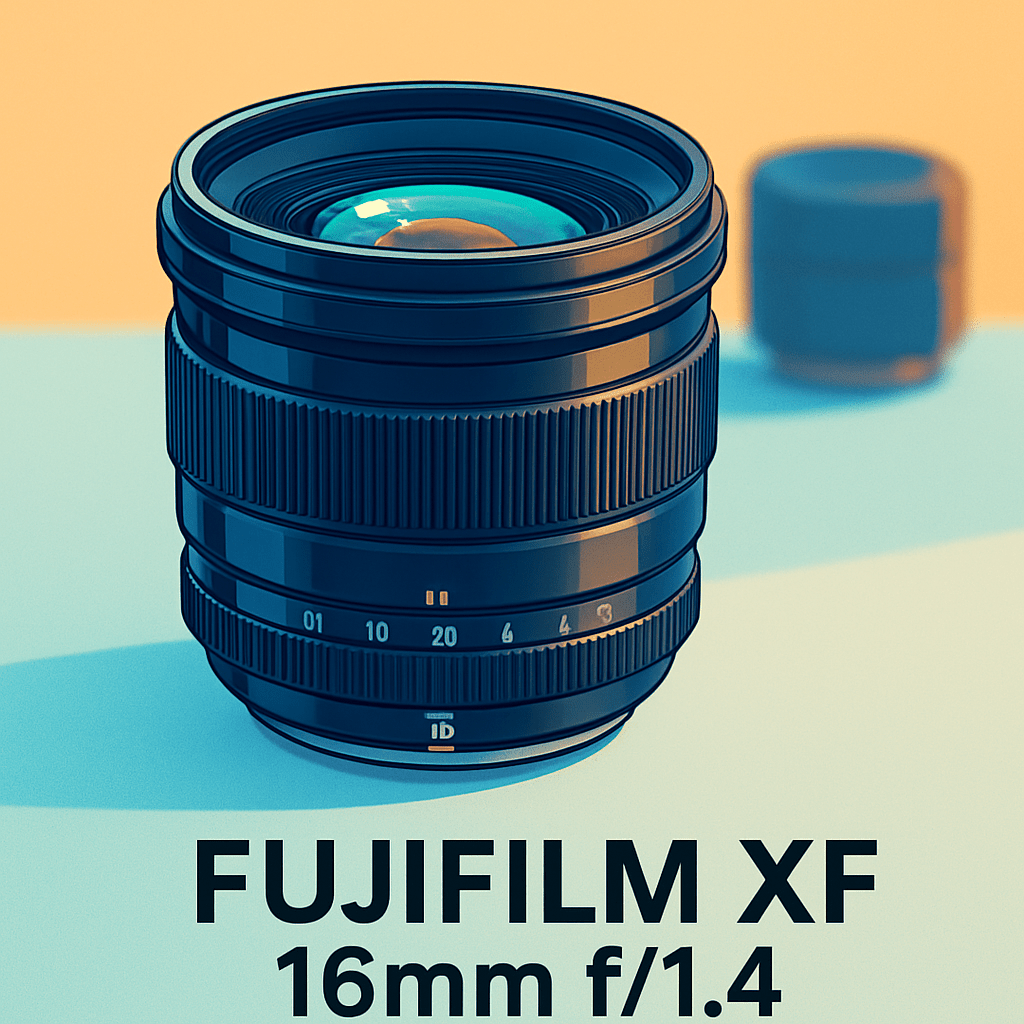
Fujifilm XF 16mm f/1.4 R WR
Ultra-fast wide-angle optic delivers exceptional low-light performance and edge-to-edge sharpness, with weather-sealing and responsive autofocus for landscape, astro, and environmental portrait work—clean rendering and creamy background separation.
Check PriceThe Numbers You Need
| Spec | Value |
|---|---|
| Mount | Fujifilm X-mount |
| Focal Length | 16 mm |
| Maximum Aperture | f/1.4 |
| Lens Type | Wide-angle prime |
| Format Compatibility | APS-C sensor |
| Minimum Focus Distance | 15 cm (0.15 m) |
| Maximum Magnification | 0.15× |
| Optical Construction | 13 elements in 11 groups |
| Aperture Blades | 9, rounded |
| Autofocus | Yes, linear motor |
| Image Stabilization | None (relies on camera body IS) |
| Weather Sealing | Yes, WR (Weather Resistant) |
| Filter Size | 67 mm |
| Weight | Approx. 375 g |
| Dimensions (Diameter x Length) | 73 mm x 77.3 mm |
How It’s Built
In my testing, the Fujifilm XF 16mm f/1.4 R WR feels solid and built to go out with you. It has a reassuring heft and finish that tells you it can take a day in the field. The X-mount sits secure on my Fuji bodies and the weather-resistant design gave me real confidence shooting in light rain, seaside spray, and dusty trails.
Handling is pleasant: the focus ring is smooth and direct, so nailing focus for close wide-angle shots is intuitive and repeatable. On smaller Fuji bodies it does lean a bit to the front, which you’ll notice when walking around all day with the kit. On larger bodies the balance feels more natural, so consider your camera when packing it for a shoot.
The lens accepts standard screw-on filters which made adding a polarizer or neutral density filter for daytime long exposures easy during shoots. The aperture produces a pleasing out-of-focus transition and the rounded blades help keep highlights soft and natural, which is great for beginners learning to control background separation.
What I liked most was the confidence the build gave me in rough conditions — I kept shooting when others were packing up, and the lens kept working after a splash or a dusty walk. What could be better is making it a touch lighter and more compact for long hikes and street runs, which would reduce fatigue on long days. For someone starting out, this lens feels like a dependable, easy-to-use tool that rewards creative play and lets you focus on making pictures instead of babysitting gear.
In Your Hands
In practical shooting the Fujifilm XF 16mm f/1.4 R WR really comes into its own after dark; its bright maximum aperture routinely lets you lower sensitivity and choose faster shutter speeds for events, night streets and dim interiors. That extra light yields cleaner files and more freedom to chase decisive moments rather than worry about exposure.
At wide-angle focal lengths the lens offers surprisingly pleasing subject separation, so environmental portraits feel intimate without losing context. You can keep the scene readable while emphasizing a person or detail, a look that suits reportage and lifestyle work exceptionally well.
Close-focus capability encourages bold foregrounds and dramatic perspective, turning nearby textures and objects into dominant compositional anchors. Moving in close rewards you with immersive shots, though the pronounced perspective shifts require deliberate framing to avoid distortion pitfalls.
The expansive field of view makes composing landscapes, interiors and architecture intuitive, allowing you to capture more of a scene without stitching. In tight spaces the lens is forgiving, helping convey scale and place in a single frame rather than relying on multiple exposures.
Weather sealing gives real-world confidence on rainy shoots and dusty travel days, so you can keep working when conditions turn sour. There’s no optical stabilization in the barrel, so pairing with a stabilized body or steady technique helps for low-speed handheld work, and the handling and AF responsiveness make it a reliable tool for fast, on-the-go assignments.
The Good and Bad
- f/1.4 maximum aperture for low light and shallow DOF
- Weather Resistant (WR) build for outdoor reliability
- 16mm wide field of view (~83°) for landscapes and interiors
- Close focusing to 15 cm with 0.15x magnification for dramatic perspectives
- No optical image stabilization (relies on camera body IS)
- APS-C-only design
Ideal Buyer
This lens is for Fujifilm X shooters who need a fast, wide prime for low-light storytelling. The Fujifilm XF 16mm f/1.4 R WR excels at events, night street work, and indoor documentary where speed and angle matter. It gives the reach and brightness to freeze moments without pushing ISO too hard.
Landscape and travel photographers will appreciate the 16mm field of view and weather-resistant build. It’s rugged enough for damp hikes and versatile enough for broad vistas and tight interiors. The weight and balance pair comfortably with most X-series bodies for long days on the road.
Environmental portrait and close-up shooters who like subject separation will love the f/1.4 look at 16mm. The close 15 cm focus and 0.15x magnification let you dramatize foregrounds and emphasize context without losing atmosphere. That wide-angle separation creates immersive portraits that keep place and person together.
Astrophotographers and interior shooters who need speed and framing will find it useful, though remember there is no in-lens stabilization. Pairing with IBIS-equipped X bodies or a tripod gives the best low-light results. If you prioritize reliable AF, WR construction, and creative wide-angle options on X, this is a compelling, versatile choice.
Better Alternatives?
We’ve already gone deep on the Fujifilm XF 16mm f/1.4 R WR — it’s a great all-around fast wide prime that shines in low light, environmental portraits, and wet-weather travel. Still, no single lens does everything, and depending on your style you might want something that leans harder into portraits, into even wider views, or into pure night-sky performance.
Below are three real alternatives I’ve used in the field. I’ll point out what each one does better and where it gives up ground versus the XF 16mm, plus who I’d recommend it to based on how it actually feels and performs on shoots.
Alternative 1:

Viltrox XF 56mm f/1.2
Fast short-teleprime produces dreamy shallow depth of field and velvety bokeh, offering impressive clarity and contrast for portraits and low-light shooting—smooth focus, robust build, excellent subject isolation attractive value.
Check PriceThe Viltrox XF 56mm f/1.2 is a completely different tool compared to the 16mm. Where the 16mm is about wide scenes and environmental context, the 56mm is about subject isolation. I’ve used this lens for headshots and tight portraits and it gives that creamy background blur and strong subject separation the 16mm simply can’t—faces pop and skin tones render smoothly at f/1.2.
What it gives up versus the XF 16mm is obvious: you lose wide framing, the ability to include context, and the close-to-wide creative options that make the 16mm so versatile. The Viltrox also isn’t weather-sealed like the Fujifilm, and it’s heavier on the longer end of short telephoto primes, so it’s less convenient for run-and-gun work or rough weather. Autofocus is good in normal light, but it won’t be the fast, razor-accurate wide-angle AF experience you get from Fuji’s native lenses in some situations.
Choose the Viltrox if your work is centered on portraits, weddings, or editorial where smooth bokeh and subject isolation matter most. If you mainly shoot streets, interiors, or landscapes, stick with the 16mm. But if you want one lens to add creamy short-tele reach to an X-body kit, this is a strong, budget-friendly pick.
Alternative 2:

Fujifilm XF 14mm f/2.8 R
Ultra wide angle optic delivers expansive framing with precise corner-to-corner sharpness, minimal distortion, and fast aperture for dramatic landscapes, architecture, and environmental interiors—lightweight handling and reliable manual control.
Check PriceThe Fujifilm XF 14mm f/2.8 is noticeably wider than the 16mm and that extra room changes how you shoot. I’ve taken it to architecture and landscape shoots where straight lines and maximum angle of view mattered — it frames more of a scene and keeps corners very usable, so it’s easier to show dramatic perspectives or tight interiors without stepping back constantly.
Compared to the XF 16mm f/1.4, the 14mm is slower (f/2.8), so you’ll feel the difference in low-light and when trying to get shallow depth of field. The 16mm’s f/1.4 will let you shoot in darker places handheld and separate subjects more. The 14mm also feels a bit older in handling and doesn’t match the 16mm’s close-focus flexibility or weather resistance, so it’s less forgiving on wet hikes or fast-paced jobs.
Pick the 14mm if you prioritize maximum field of view and clean corners — landscape, architecture, real-estate or travel photographers who work mostly on tripod or in daylight will love it. If you need low-light speed or want one-lens versatility for street and environmental portraits, the 16mm remains the better everyday choice.
Alternative 3:

Rokinon X 14mm f/2.8 Series II
Manual ultra-wide lens optimized for nightscapes and landscapes, delivering wide, immersive views with excellent edge sharpness, low coma, and minimal distortion—compact, durable construction ideal for astrophotography and travel.
Check PriceThe Rokinon X 14mm is a manual-focus, ultra-wide that I’ve used a lot for nightscapes and star fields. It gives a very wide view and handles stars well near the edges — that made it a go-to on tripod nights where I wanted as much sky in the frame as possible. It’s compact and sturdy, and the price-to-performance for night and landscape work is hard to beat.
But compared to the XF 16mm f/1.4, the Rokinon is slower and manual-focus only, so you lose the quick autofocus, close-focusing fun, and the low-light handheld flexibility of the 16mm. There’s also no weather sealing and no in-camera conveniences; this is a lens you use when you can control the scene (tripod, manual focus). For fast street nights or run-and-gun interior work the 16mm wins hands down.
If you’re into astrophotography, wide-night landscapes, or you want a lightweight ultra-wide on a budget and don’t mind focusing by hand, the Rokinon is a smart choice. If you need a do-it-all wide that’s quick, weatherproof, and better in dim handheld situations, stick with the Fujifilm XF 16mm f/1.4.
What People Ask Most
What is the full-frame (35mm) equivalent focal length of the Fujifilm XF 16mm f/1.4?
On Fujifilm APS-C bodies the 16mm behaves like a 24mm full-frame equivalent (16mm × 1.5 crop factor = 24mm).
How sharp is the Fujifilm XF 16mm f/1.4 across the frame?
Very sharp in the center right at f/1.4, with corners a little softer wide open but noticeably improved by f/2–f/2.8.
Is the Fujifilm XF 16mm f/1.4 good for astrophotography and night-sky shots?
Yes — the f/1.4 aperture and good optical control make it excellent for stars and nightscapes, though you may see some corner coma wide open.
Does the Fujifilm XF 16mm f/1.4 have optical image stabilization (OIS)?
No, this lens does not have OIS, so use a tripod or a body with in-body stabilization for long exposures.
What is the minimum focus distance of the Fujifilm XF 16mm f/1.4?
The minimum focus distance is about 15 cm (0.15 m), letting you get surprisingly close for wide-angle foreground shots.
How much does the Fujifilm XF 16mm f/1.4 cost and is it worth buying?
It typically sells around $900–$1,100 new, and it’s worth it if you want a fast, sharp wide-angle for landscapes, astro, and environmental portraits.
Conclusion
The Fujifilm XF 16mm f/1.4 R WR is a fast, wide prime that earns its place when speed, low-light ability, and environmental storytelling matter. It combines a bright f/1.4 aperture with weather resistance and confident autofocus to deliver a very usable, go-anywhere wide-angle tool.
Where it truly shines is in low light, run-and-gun reportage, and creative wide‑angle separation that keeps subjects grounded in their surroundings. Its close-focusing capability and robust build make it an excellent companion for travel, street, interiors, and night work.
That said, the lens isn’t without trade-offs. There’s no in-lens stabilization and it’s larger than some budget or ultra-compact alternatives, which matters on long carries. It’s also an APS-C specialist, so photographers seeking full-frame versatility will want to weigh that limitation.
If versatility and raw speed are your priorities, the XF 16mm f/1.4 is my recommendation; if you favor lighter weight, tighter budgets, extreme width, or zero-distortion optics, consider the Viltrox 17mm, Fujinon XF 14mm, or Laowa 15mm alternatives. Pair it with an IBIS-equipped body when you can, and try one on your camera to confirm handling and edge performance before committing.
Fujifilm XF 16mm f/1.4 R WR
Ultra-fast wide-angle optic delivers exceptional low-light performance and edge-to-edge sharpness, with weather-sealing and responsive autofocus for landscape, astro, and environmental portrait work—clean rendering and creamy background separation.
Check Price



0 Comments